In This Guide
- Why We Have to Ask "Is It Okay?" in the First Place
- The Rules of the Blue: Laws and Guidelines
- Your Pre-Swim Checklist: Getting It Right From the Start
- The Art of the Gentle Encounter: In-Water Etiquette
- Different Turtles, Different Personalities?
- What About Swimming with Sea Turtles on Your Own?
- The Ripple Effect: Beyond Your Swim
- Straight Answers to the Questions You're Actually Asking
I remember the first time I saw one underwater. It was off the coast of Hawaii, just floating there, munching on some algae like I wasn't even there. It felt... magical. But then I saw another tourist, maybe ten feet away, trying to grab its shell for a photo. The turtle flinched, kicked hard, and vanished into the blue. That moment stuck with me. That's the core of the question, isn't it? Is it okay to swim with sea turtles? The short, messy, human answer is: it depends entirely on you.
It's not a simple yes or no. It's a "yes, but..." that comes with a huge responsibility. For many people, a close encounter with these ancient mariners is a bucket-list dream. I get it. They're dinosaurs that made it, living relics gliding through our modern oceans. But treating them like a selfie prop or a petting zoo attraction? That's where we fail them, and ourselves. This guide isn't about scaring you off. It's about making sure that if you do get the chance, you do it right. You leave no trace on the animal, and you take away a memory that's genuinely respectful, not just a photo for the 'gram.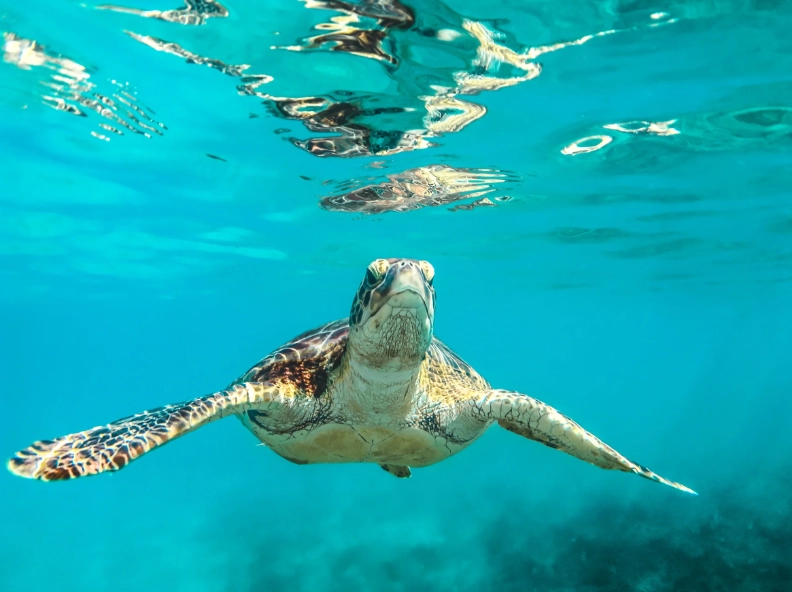
The Bottom Line Up Front: Yes, you can swim with sea turtles in an ethical way, but it's a privilege, not a right. Your primary goal should be passive observation without causing stress or altering the animal's natural behavior. If your presence changes what the turtle is doing, you're too close, too intrusive, or doing something wrong.
Why We Have to Ask "Is It Okay?" in the First Place
Let's not kid ourselves. Sea turtles have it tough. They face a gauntlet of threats from the moment they hatch: plastic pollution, fishing net entanglement (bycatch), coastal development destroying their nesting beaches, climate change messing with sand temperatures and ocean currents, and, yes, poorly managed tourism. Six out of the seven sea turtle species are classified as threatened or endangered. That's not a great report card for humanity.
When we enter their home—the ocean—we become part of that environment, for better or worse. A stressed turtle burns precious energy it needs for migration, foraging, and reproduction. A turtle chased by swimmers might abort a crucial feeding session or flee a safe resting spot into more dangerous waters. In some places, constant harassment can make turtles avoid certain reefs or bays altogether, fragmenting their habitat even more.
So, asking "is it okay to swim with sea turtles?" is us acknowledging that our fun has a potential cost. The good news? When done mindfully, tourism can be a powerful force for good. It creates economic value for live turtles, giving local communities a direct reason to protect them and their habitats. My money paid to a responsible guide in Hawaii directly funds conservation work there. That's a win-win.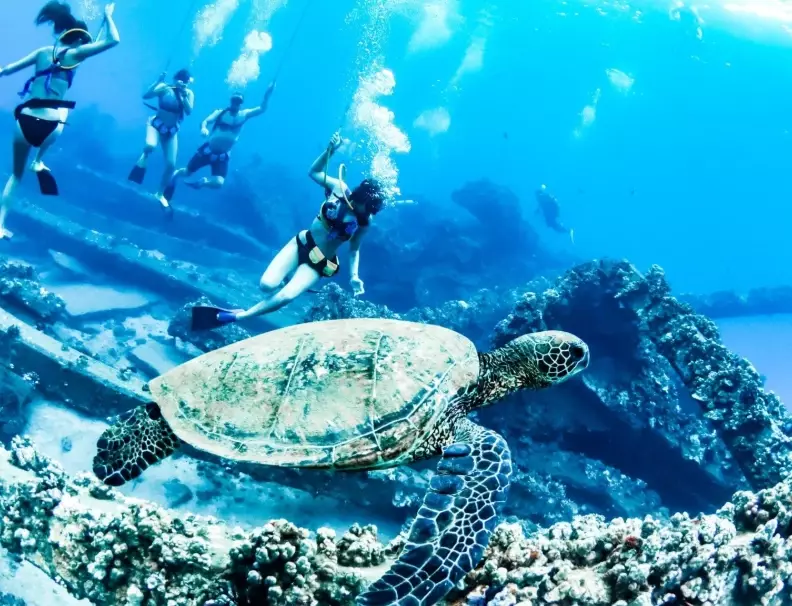
The Rules of the Blue: Laws and Guidelines
This isn't just about being nice. In many places, it's the law. Ignorance won't save you from a hefty fine.
In the United States, all sea turtles are protected under the Endangered Species Act (ESA). This is a big deal. The National Oceanic and Atmospheric Administration (NOAA) Fisheries is the federal agency that lays down the law in the water. Their stance is clear: it is illegal to harass, hunt, capture, or kill any marine turtle. Harassment is legally defined as any act that has the potential to injure or disturb turtles by disrupting their normal behavioral patterns.
But what does "disturbing" actually look like? It's not always obvious. Let's break down the universal rules, which are a great baseline no matter where you are in the world.
The Absolute Do-Not-Do List (Seriously, Don't)
- Never touch a sea turtle. Not its shell, not its flippers, never. Their shells have a sensitive layer, and human touch can remove protective mucus and algae, making them vulnerable to infection. You can also transfer harmful bacteria or sunscreen chemicals.
- Never chase or corner a turtle. You're a large, noisy, bubble-blowing predator in their eyes. Let them control the encounter. If they want to leave, let them.
- Never ride a sea turtle. It should go without saying, but I've seen videos. It's incredibly stressful and physically harmful to the animal.
- Never feed a sea turtle. It alters their natural foraging behavior, can make them dependent or aggressive, and human food is terrible for their health.
- Never use flash photography. It can startle and disorient them, especially at night on nesting beaches.
These rules aren't just for the turtle's sake. A scared turtle with powerful flippers can give you a serious whack, and those beaks are designed for crushing crustaceans and jellyfish. You do not want to be on the receiving end.
Your Pre-Swim Checklist: Getting It Right From the Start
Okay, so you've booked a trip to a known turtle spot. What now? The preparation starts long before you get in the water. This is where most people drop the ball, but it's what separates a good experience from a great, responsible one.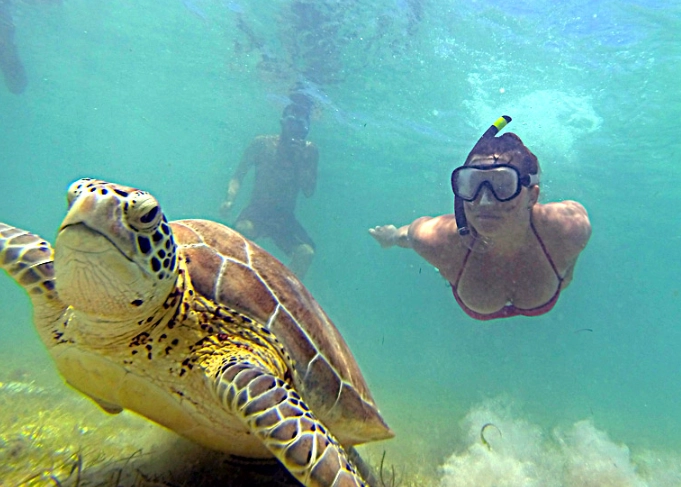
Choosing Your Outfitter: Ask These Questions
Not all tour operators are created equal. Some are in it for the quick buck, herding people onto crowded boats. Others are genuinely passionate. Here's how to tell:
- Do they give a thorough briefing? A good guide will spend 10-15 minutes before the swim explaining the rules, turtle behavior, and why it matters. If they just hand out gear and say "go see turtles," that's a red flag.
- What's their group size policy? Smaller groups (8-10 people max per guide) are always better. It's less stressful for the turtles and you get a more personal experience.
- Do they partner with or donate to local conservation projects? Ask them directly. Reputable companies are proud of this and will tell you.
- Check their online reviews. Look for comments about how the crew handled the wildlife. Phrases like "respectful," "educational," and "kept distance" are green lights. Reviews complaining about "not being able to touch the turtle" are a massive red flag about the clientele they attract.
Pro Tip: Look for operators certified by eco-tourism bodies like Blue Flag or those affiliated with the SEE Turtles conservation network. Their business depends on healthy turtles, so their practices are usually top-notch.
Gear Up Responsibly
Your equipment choices matter more than you think.
Sunscreen: This is a huge one. Chemicals like oxybenzone and octinoxate in many sunscreens are proven to bleach coral reefs, harm marine life, and can damage turtles. Hawaii, Key West, and several other destinations have banned these "reef-toxic" sunscreens. Go for mineral-based sunscreens with non-nano zinc oxide or titanium dioxide as the active ingredient. Better yet, wear a rash guard or long-sleeved swim shirt. You'll use less sunscreen and protect your skin better.
Snorkel Gear: Make sure your mask fits well to avoid constant flooding and clearing, which creates noise and bubbles. Practice floating calmly in a pool first if you're not comfortable. Frantic, splashy swimming will scare everything away.
So, you've picked a good guide, you've got your reef-safe sunscreen on, and you're listening to the briefing. Now you're in the water. A turtle is right there. What do you do?
The Art of the Gentle Encounter: In-Water Etiquette
This is the moment of truth. All the theory goes out the window, and it's just you, the turtle, and your instincts. Fight the urge to sprint towards it.
Here’s a step-by-step mindset for the encounter:
- Spot the turtle. Point it out to your buddies with a calm gesture, don't yell or splash.
- Approach with extreme caution, if at all. The best approach is often no approach. Position yourself slightly to the side and ahead of its path, then stop moving. Let it swim past you. Never approach head-on (that's predatory) or from directly above (you'll look like a shark).
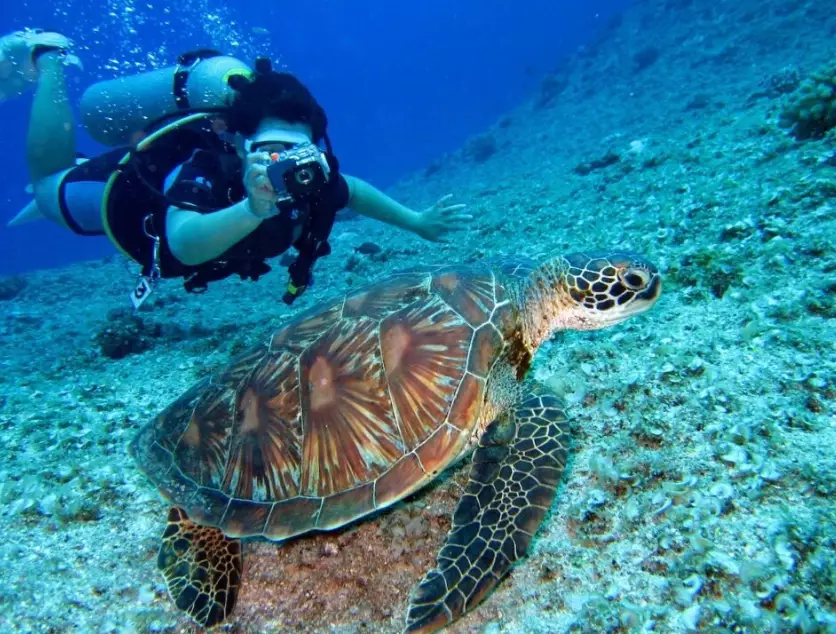
- Maintain a respectful distance. Most guidelines recommend 10 feet (about 3 meters) as a minimum. I prefer to think of it as an arm's length plus your snorkel. If you can reach out and touch it, you're way too close.
- Observe its behavior. Is it eating? Breathing at the surface? Resting on the bottom? Your behavior should adapt. A feeding turtle might be more tolerant. A turtle coming up for air needs to breathe—give it a clear, wide path to the surface. Never block its way to air.
- Watch for stress signals. If a turtle suddenly changes direction, speeds up its swimming, tucks its head in, or repeatedly looks at you, it's stressed. Back off immediately. The encounter is over for you.
- Limit your time. Even if the turtle seems relaxed, don't hover over it for 20 minutes. A few minutes of quiet observation is plenty. Give it space and move on.
I messed this up once. I was so excited to see a hawksbill I ended up following it just a bit too long, my fins kicking a little too hard. It gave me one side-eye, a powerful thrust of its flippers, and was gone. I felt awful. It was a clear "you're bothering me" signal I chose to ignore in my excitement. Lesson learned the hard way.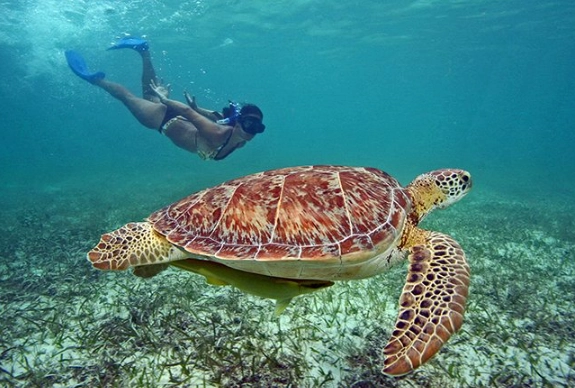
Different Turtles, Different Personalities?
You might encounter different species. While the rules are the same, their behavior can hint at how to act.
Often seen calmly grazing on seagrass or algae. Can be quite mellow if not disturbed.
Busy foragers, poking their beaks into coral crevices for sponges. Often focused on eating.
Powerful swimmers. Often just passing through or resting on the bottom.
| Species | Common Habitats | Typical In-Water Behavior | What to Watch For |
|---|---|---|---|
| Green Turtle | Seagrass beds, coral reefs, lagoons | If it's head-down eating, you might get a longer look. Don't interrupt its meal. | Often seen calmly grazing on seagrass or algae. Can be quite mellow if not disturbed. |
| Hawksbill Turtle | Coral reefs, rocky areas | Busy foragers, poking their beaks into coral crevices for sponges. Often focused on eating. | They can be skittish. Sudden movements will send them darting into the reef. |
| Loggerhead Turtle | Coastal bays, estuaries, open ocean | Powerful swimmers. Often just passing through or resting on the bottom. | Respect their size. They are strong and need space. Often less tolerant of close approaches. |
This table isn't an invitation to test their limits. It's just to say that a green turtle munching on grass might seem more "chill" than a hawksbill, but both deserve the same space and respect. Never assume.
What About Swimming with Sea Turtles on Your Own?
Maybe you're not on a tour. You're snorkeling from a public beach, and you stumble upon a turtle. The rules are, if anything, even more important here because there's no guide to gently correct you.
Everything we've discussed applies doubly. You are the sole person responsible for your impact. The urge to call over your friends or get that perfect shot is strong. Resist it. Enjoy the private moment for what it is—a lucky, wild encounter. Your memory is the best souvenir.
I've had some of my best turtle moments just floating alone off a quiet beach, completely by chance. They feel more special because they were unforced, a secret between me and the turtle.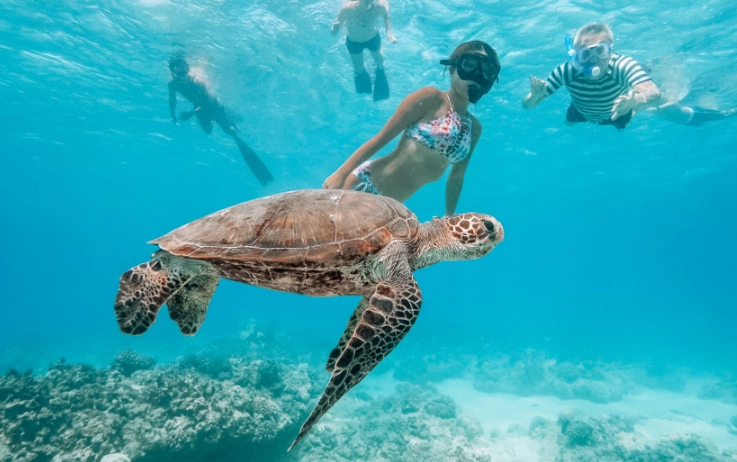
The Ripple Effect: Beyond Your Swim
Being a responsible turtle tourist doesn't end when you dry off. Your choices have a ripple effect.
Talk about it the right way. When you share your photos and stories, mention the rules. Caption your photo with "Kept a respectful distance from this amazing green turtle" or "Used reef-safe sunscreen to protect his home." It educates others and normalizes good behavior.
Support conservation directly. Consider donating to organizations that do the hard, unglamorous work of turtle conservation. Groups like the State of the World's Sea Turtles (SWOT) or the Sea Turtle Conservancy work on research, policy, and protecting nesting beaches worldwide. That $20 donation might do more good than your entire trip.
Be a plastic warrior. The single biggest threat to sea turtles is plastic pollution. They eat plastic bags thinking they're jellyfish. They get entangled in discarded fishing line. Reduce your single-use plastic, participate in beach cleanups, and support businesses that do the same. Protecting their home is the ultimate act of respect.
Straight Answers to the Questions You're Actually Asking
Look, at the end of the day, we all want that connection with nature. We want to share the water with these incredible creatures. The question "is it okay to swim with sea turtles?" is our conscience checking in. And that's a good thing.
If your goal is to tick a box on a list, you might come away disappointed, or worse, you might be the reason a turtle has a bad day. But if your goal is to witness a wild animal in its home, to observe its grace and power without demanding anything in return, then you are answering the question perfectly.
Be the quiet observer. Be the guest who leaves no trace. That's how we make sure the answer to "is it okay to swim with sea turtles?" is a resounding, sustainable "yes" for generations to come. Now go enjoy the ocean, and be cool out there.


Comments