Quick Navigation
- The Big Picture: Whale Sharks on a Map
- The Top Global Destinations: A Detailed Breakdown
- How to Choose: It's More Than Just a Pin on a Map
- Planning Your Trip: The Nitty-Gritty Details
- The Day Of: What Actually Happens
- Safety & Respect: For You and For Them
- Beyond the Swim: Contributing to Conservation
- Frequently Asked Questions (The Real Ones)
- Final Thoughts: Making Your Dream a Reality
Let's be honest. That question has probably popped into your head after seeing one too many breathtaking Instagram reels or YouTube videos. A massive, spotted shadow gliding peacefully through blue water, surrounded by tiny, awestruck humans. It looks like a dream, right? I thought so too, until I found myself floating in the warm water off Isla Mujeres, Mexico, my heart pounding as a bus-sized whale shark casually swam right under my fins.
The experience is humbling, a bit surreal, and absolutely worth the planning it requires. But it's not as simple as just booking a flight to any coastal town. These gentle giants (they're sharks, but they filter-feed on plankton, so no worries there) congregate in specific spots around the globe, and your chances of a successful encounter depend massively on where and when you go. Some places are legendary, others are hidden gems, and a few... well, let's just say the ethics can be murkier than the water.
This guide is the one I wish I had before my first trip. We're going to cut through the noise and answer that core question: Where in the world can you swim with whale sharks? We'll map out the top spots, break down what makes each one unique, and arm you with the practical, no-nonsense info you need to choose your adventure. We'll also talk about the not-so-fun stuff—like how to pick an ethical operator and why your sunscreen choice matters more than you think—because loving these creatures means protecting them too.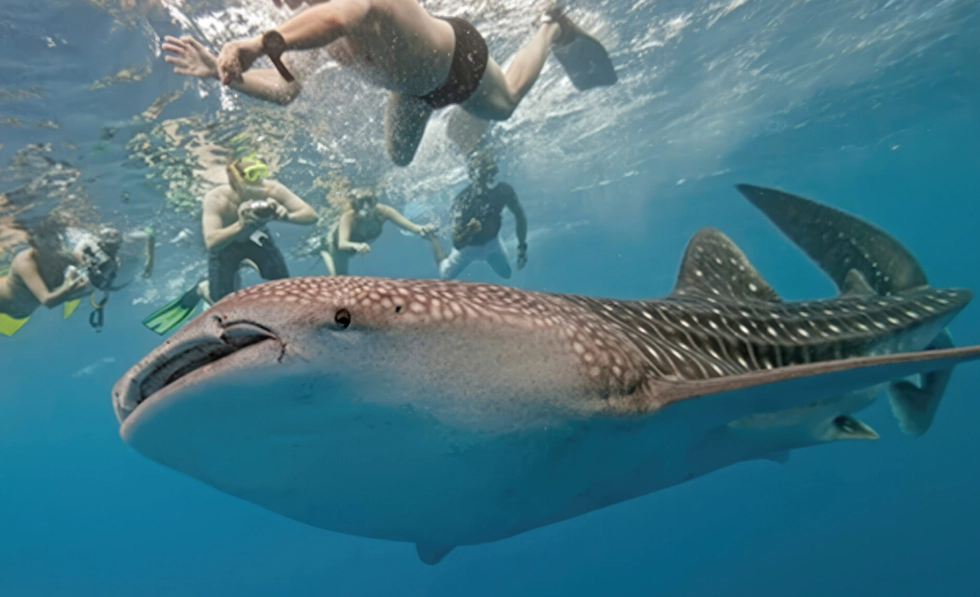
The Big Picture: Whale Sharks on a Map
Whale sharks (Rhincodon typus) are wide-ranging. They pop up in tropical and warm-temperate seas all over. But for reliable, seasonal aggregations where tourism is well-established, the list narrows down to a handful of key regions. Think of it like this: they follow the food. Where there's a seasonal explosion of plankton, fish spawn, or coral eggs, you'll often find whale sharks gathering for a feast. Tourism has simply learned to show up at the dinner party.
The Top Global Destinations: A Detailed Breakdown
Here’s where we get into the meat of it. I’ve split these into tiers based on reliability, infrastructure, and the overall nature of the experience. This isn't just a list; it's a comparison to help you match a destination with your travel style.
The Heavy Hitters (Reliable & Well-Known)
These are the classics. The places that consistently deliver and have a well-oiled (sometimes too well-oiled) tourism machine around the phenomenon.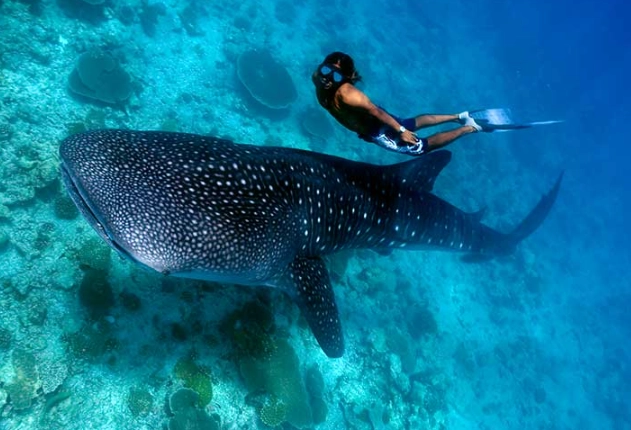
| Destination | Country | Peak Season | The Vibe & Key Notes |
|---|---|---|---|
| Isla Holbox & Isla Mujeres | Mexico | June - September | The Caribbean giant. Massive aggregations (100+ sharks possible). Can feel crowded with boats. Warm, clear water. |
| Ningaloo Reef | Australia | March - July | The gold standard for ethics. Strictly regulated, in-water guides, often combined with pristine reef snorkeling. A more controlled, eco-focused experience. |
| Oslob | Philippines | Year-round | The controversial one. Sharks are baited/feed, leading to guaranteed sightings. Heavily debated ethically. A completely different, almost “zoo-like” experience. |
| South Ari Atoll | Maldives | Year-round (best Aug-Nov) | Resort-based luxury. Often accessed via liveaboard dive safaris. Smaller groups, chance to see them while diving, not just snorkeling. |
Mexico's Yucatan coast is probably the first answer that comes to most people's minds when asking where in the world can you swim with whale sharks. And for good reason. The sheer number of animals from mid-summer to early fall is staggering. But that fame comes with a cost. On a peak day, the designated zone can feel like a marine parking lot. The rules are there (no touching, keep your distance), but enforcement varies. My personal take? Go with a smaller, reputable operator from Isla Holbox rather than the bigger Cancun/Isla Mujeres fleets if you want a slightly less chaotic feel. The water is stunningly blue, and when you're in the water with one, the other boats fade away. But the surface scene can be a buzzkill.
Now, let's talk about Australia's Ningaloo Reef. It's often held up as the model for how to do this right. The season is shorter, the groups are smaller, and every participant must be briefed and accompanied by a guide in the water. The sharks here seem less habituated to boats, and the experience feels more like a genuine wildlife encounter. You're also on the edge of a magnificent coral reef. It's more expensive and logistically trickier (you have to get to Exmouth), but for a premium, low-impact experience, it's top-tier. It answers the question of where in the world can you swim with whale sharks with an emphasis on sustainability.
The Emerging & Seasonal Spots
These locations have strong seasonal patterns but might be less crowded or offer a different cultural backdrop.
- Mafia Island, Tanzania: A quieter alternative to the East African coast. Season runs October-March. The channel between Mafia and the mainland creates rich feeding grounds. Tourism is still relatively small-scale here.
- Tofo Beach, Mozambique: Historically a major hotspot, though populations have fluctuated in recent years. Season is roughly November-February. The vibe is adventurous, and sightings are less guaranteed but can be spectacular.
- Utila, Honduras: Part of the Bay Islands. Whale sharks, mostly juvenile males, are spotted here, particularly during the "whale shark weeks" around the full moons from March to April and August to September. It's more serendipitous than the guaranteed aggregations elsewhere.
- Al Shaheen, Qatar: A unique, recently documented aggregation in the Persian Gulf from April to September. This is primarily for researchers and very limited tourism expeditions, not your typical holiday add-on.
Mafia Island is a gem if you're already planning an East African trip. It's raw and beautiful. The operators are keen to prove their eco-credentials. You won't find the armada of boats from Mexico here. Instead, you might share the water with just one other boat. It feels more exclusive, more like a discovery.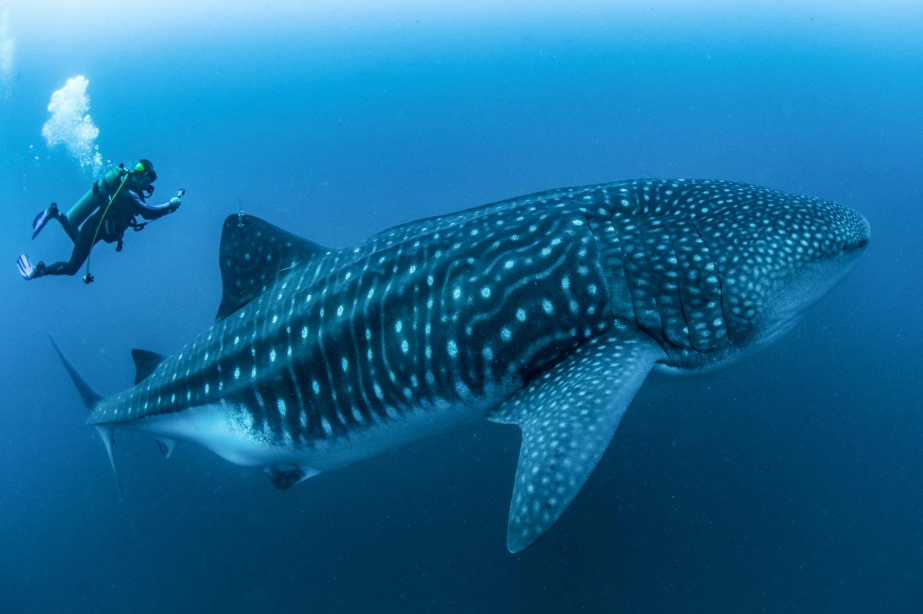
How to Choose: It's More Than Just a Pin on a Map
Okay, so you know where in the world you can swim with whale sharks. Picking one? Consider these factors, they matter more than the flight price.
- For Guaranteed Sights (Ethics Aside): Oslob, Philippines. It's a fact.
- For the Best Eco-Practice: Ningaloo Reef, Australia or Mafia Island, Tanzania.
- For the Biggest Numbers: Isla Mujeres/Holbox, Mexico (in peak season).
- For a Luxury/Combo Trip: South Ari Atoll, Maldives (adds diving & resort relaxation).
- For the Adventure & Lower Crowds: Tofo, Mozambique or Utila, Honduras (but accept lower odds).
The Ethics Question: It's Not Black and White
This is the big one. Your choice has an impact. Let's break down the main issues:
1. Provisioning vs. Natural Aggregations: In Oslob, and to a lesser extent in some parts of the Philippines, whale sharks are fed ("provisioned") to keep them near shore for tourists. This alters their natural behavior, migration, and diet. Scientific studies, like those referenced by the International Union for Conservation of Nature (IUCN), raise concerns about long-term effects on the health and ecology of these animals. A natural aggregation (Mexico, Australia, Tanzania) is where they come of their own accord to feed naturally.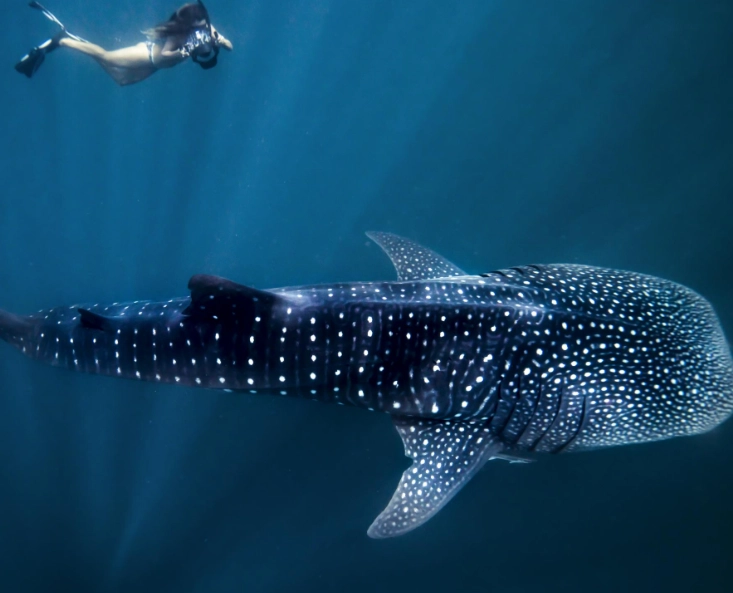
2. Crowding and Physical Interaction: Too many boats and swimmers cause stress. The ideal operator enforces strict rules: no touching, no flash photography, maintaining a 3-4 meter distance. In practice, not all do. Look for operators who talk about these rules upfront and cap their group sizes.
3. Boat Strikes and Pollution: Propellers can injure sharks. Fuel and sunscreen pollute the water. Good operators use experienced captains who idle near sharks and enforce reef-safe sunscreen policies (mandatory in some places like Hawaii and parts of Mexico).
My own stance? I avoid provisioning sites. Seeing a whale shark should feel like a privilege, not a paid performance. The uncertainty of a natural encounter is part of its magic. But I also get why people go to Oslob—if you have limited time and a deep desire to see one, it delivers. It's a personal choice, but an informed one.
Planning Your Trip: The Nitty-Gritty Details
You've picked a spot. Now what? Here's the step-by-step that most generic blogs gloss over.
Booking Your Tour: What to Look For
Don't just book the cheapest option online. Do some digging.
- Small Groups: Ask how many people will be on the BOAT, and more importantly, how many will be in the WATER at one time. 6-8 snorkelers in the water max is ideal.
- Guide in the Water: Do they just drop you in, or does a guide jump in to position the group and ensure rules are followed? The latter is a sign of a quality operator.
- Their Eco-Policy: Do they mention marine park fees, conservation contributions, or sunscreen rules? If their website only says "guaranteed sighting!" with no mention of ethics, be wary.
- Logistics: What's included? Just the boat ride? Snorkel gear? Lunch? Wet suits? (Water in some places like Ningaloo can be chilly!). How long is the boat ride to the site?
I learned this the hard way. My first-ever whale shark tour was a budget deal in Southeast Asia. The gear was leaky, the boat was overcrowded, and the crew was more interested in getting their tip than protecting the animals. Never again.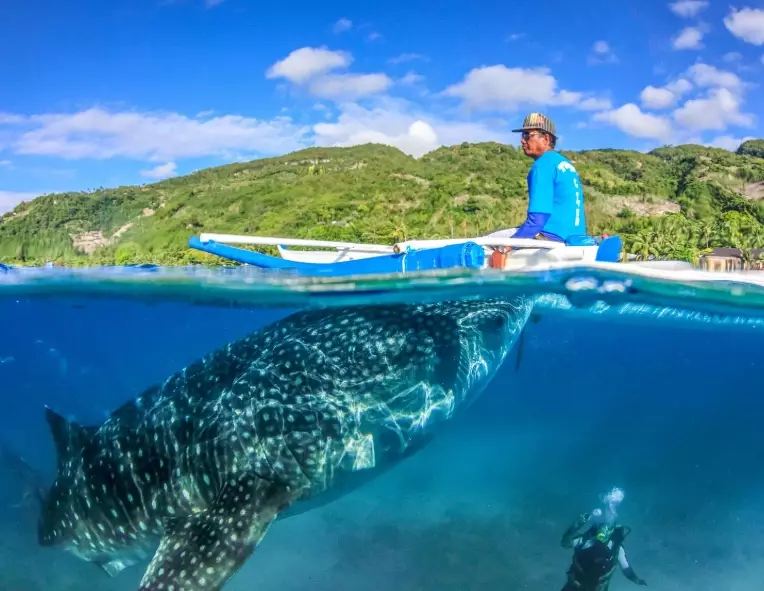
What to Pack & How to Prepare
You're not going to the beach. You're going on a marine safari.
- Reef-Safe Sunscreen: This is non-negotiable. Chemicals like oxybenzone bleach coral and harm marine life. Pack a zinc-based or mineral sunscreen. Many operators will check and refuse you if you have the wrong kind.
- Your Own Mask & Snorkel: If you're a serious snorkeler, a good-fitting mask makes all the difference. Rental masks are often foggy and leak. A dry snorkel is also nice to have.
- Anti-Nausea Meds: You'll be on a small boat, bobbing in swells, for hours. Even if you don't usually get seasick, take some. Trust me.
- Wetsuit or Rash Guard: For sun protection and warmth. A 1-2mm shorty or a full rash guard is perfect.
- Waterproof Camera/Gopro: With a floaty handle strap! Dropping a camera 10 meters down is a bad end to the day.
- Patience and Realistic Expectations: Repeat after me: This is not SeaWorld.
The Day Of: What Actually Happens
Let's walk through a typical day, so there are no surprises.
Morning Briefing: You'll get a talk. Listen to it. They'll cover the rules (distance, no touching, no blocking the shark's path), safety, and the plan. Ask questions if you're unsure.
The Boat Ride: This can be 30 minutes to over an hour. Sometimes it's a smooth cruise, sometimes it's a bumpy, wet ride. Hold on.
The Search: Captains and spotters (sometimes in a lookout tower) will scan the water for dark shapes or flocks of feeding birds (a good indicator). This can take minutes or hours.
Then, the shout goes up.
Getting Ready: Everyone scrambles to get fins, masks, and cameras ready. The boat will maneuver into position. You'll be given instructions: usually, you'll enter the water quickly but calmly, off the side, and then follow your guide's hand signals.
The Moment: You're in the water. You put your face under. And there it is. It's bigger, slower, and more graceful than any video can convey. The spots are like a fingerprint. It might glance at you with a small, dark eye. You swim, kicking hard to keep up, but it's effortless for them. Your guide will signal when to stop and let the shark pass, or when to get back to the boat so the next group can have a turn.
The Cycle: You might do this 5-10 times over a few hours with different sharks. It's exhilarating and exhausting.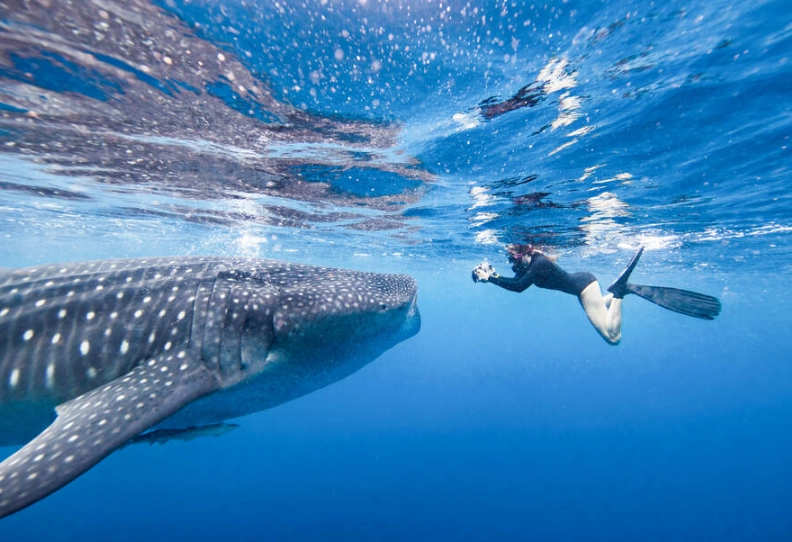
Safety & Respect: For You and For Them
This isn't a pool. You're interacting with the largest fish in the ocean.
- Don't Touch: Not the shark, not its tail. Your touch can damage their protective mucous layer, leaving them vulnerable to infection.
- Don't Block Their Path: Swim to the side, not directly in front. They won't stop for you.
- Mind the Tail: That powerful caudal fin can give you an unintentional but serious whack if you get too close from behind.
- Listen to Your Guide: They're there for everyone's safety.
- Be Honest About Your Swimming: You need to be a confident snorkeler and a strong enough swimmer to maneuver in open water with current.
Beyond the Swim: Contributing to Conservation
The best way to ensure future generations can ask "where in the world can you swim with whale sharks" is to be a responsible tourist now.
Choose operators who partner with or contribute to research. Many use platforms like Wildbook for Whale Sharks, where you can upload your photos of the shark's spot pattern. Each pattern is unique, like a fingerprint, and scientists use these citizen-science photos to track individuals, their migration, growth, and population health. It's a fantastic way to give back. The one I swam with in Mexico was ID'd as "RXA-007" in the database. Knowing I helped add a data point to its life story made the experience even cooler.
You can also support broader marine conservation NGOs. The work of organizations like the Marine Megafauna Foundation, which conducts critical research on whale sharks and manta rays globally, is vital for their protection.
Frequently Asked Questions (The Real Ones)
Let's tackle the questions that keep popping up in forums and Facebook groups.
Is it safe to swim with whale sharks?
Yes, absolutely. They are filter feeders, meaning they eat only tiny plankton, small fish, and eggs. They have no interest in eating you. The main risks are related to boating accidents, sun exposure, or exhaustion from swimming—not the shark itself.
What is the best time of year to go?
It varies dramatically by location, as shown in the table. There is no global "best time." You must align your trip with the peak season of your chosen destination. For a global view of movements, resources like the IUCN's species page are helpful.
Can I scuba dive with them, or is it only snorkeling?
Most encounters are snorkeling-based because the sharks often feed near the surface. However, in some locations like the Maldives, Seychelles, or on specific liveaboards in Indonesia, you can encounter them while scuba diving, which is a different, more serene experience as you watch them pass by in the blue.
Are there age or fitness restrictions?
Most operators require participants to be confident swimmers. There's often a minimum age (usually 8-12 years), but it depends on the company and the sea conditions that day. Always disclose any health or mobility issues when booking.
What about Oslob? Is it really that bad?
It's the industry's ethical dilemma. The science suggests provisioning changes their behavior. The pro argument is that it provides vital income to a poor community and fosters local protection. The con argument is that it's not ecotourism, it's exploitation. You have to read the research and decide for yourself. I choose not to support it, but I understand why some do.
How much does it cost?
Anywhere from $80-$120 USD for a half-day group tour in Mexico or the Philippines, to $400-$600+ AUD for the highly regulated experience in Australia. Luxury liveaboard packages in the Maldives can run into the thousands.
Final Thoughts: Making Your Dream a Reality
Figuring out where in the world you can swim with whale sharks is the easy part. The real work is in choosing a place and an operator that aligns with your values and expectations. Do you want the near-certainty of a sighting, even if the ethics are gray? Or are you willing to chase the magic of a natural encounter, with all its uncertainty?
For me, the magic has always been in the chase, in the respect, in knowing I'm a guest in their world. That moment of eye contact—when this ancient, massive creature seems to acknowledge your presence for a split second—that's what stays with you. It's not just a tick on a bucket list; it's a profound connection to the ocean's scale and mystery.
Do your homework, pack your reef-safe sunscreen, and get ready for one of the most awe-inspiring experiences our planet has to offer. The ocean's gentle giants are waiting.
Your comment