Quick Guide
- What Really Causes a Cave Diving Accident?
- The Non-Negotiables: Safety Protocols That Save Lives
- Gear Talk: It's Not About Having the Shiniest Stuff
- The Mind Game: Psychology and the Cave Diver
- Learning from History: Case Studies That Shaped Safety
- Your Cave Diving Accident FAQ
- Wrapping It Up: The Respect it Demands
Let's talk about something serious for a minute. Cave diving. It's not your average weekend scuba trip. You're leaving the open water, the sunlight, the easy way up, and you're committing to a labyrinth of rock, silt, and absolute darkness. It's breathtaking, it's otherworldly, and frankly, it can be deadly. When a cave diving accident happens, it's rarely a simple slip-up. It's usually a chain of events, a series of small decisions that pile up into one catastrophic moment. I've been around divers long enough to hear the stories, the near-misses that get whispered over post-dive beers, and the tragic ones that leave the whole community quiet.
This isn't meant to scare you off. Far from it. Knowledge is the best defense against fear, and in this case, against a cave diving accident. If you're curious about cave diving, or even if you're an experienced open-water diver wondering what the big deal is, understanding the "why" behind these incidents is the first step towards never becoming a statistic yourself. So, what goes wrong down there?
What Really Causes a Cave Diving Accident?
If you ask ten different instructors, you might get ten slightly different lists. But after sifting through reports from organizations like the Divers Alert Network (DAN) and reading countless incident analyses, a few culprits keep showing up, front and center. It's rarely just one thing. Think of it like a Swiss cheese model—the holes in the safety layers have to align perfectly for disaster to strike.
The big one? Running out of breathing gas. It sounds almost too basic, too amateurish. But in an overhead environment, gas management isn't a suggestion; it's an immutable law. You have to plan for your dive in, your dive out, and have enough left to deal with a serious problem. The rule of thirds (one-third in, one-third out, one-third reserve) is the bare minimum, and many cave divers use more conservative rules like quarters or sixths for complex dives. A miscalculation here, a delayed turnaround, or an unnoticed leak can set the stage for a desperate situation.
Then there's getting lost. Silting out is the classic way this happens. You kick up the fine, flour-like sediment from the cave floor, and in seconds your visibility drops to zero. If you're not physically connected to a guideline—a continuous line running from open water to your destination and back—you are now in a world of trouble. Disorientation in total darkness is absolute. Panic sets in quickly, and panic consumes gas at an alarming rate.
Equipment failure is another critical link in the chain. In open water, you can usually make a controlled emergency ascent. In a cave, a freeflowing regulator or a blown O-ring doesn't just mean an aborted dive; it can mean you're trapped. This is why redundancy is non-negotiable. Two independent regulators, two lights (plus a backup), and sometimes even dual independent cylinders. Your gear isn't just gear; it's your life support system, and it needs to be maintained and configured with that mindset.
Let's break down the primary causes and their contributing factors. It helps to see how they interconnect.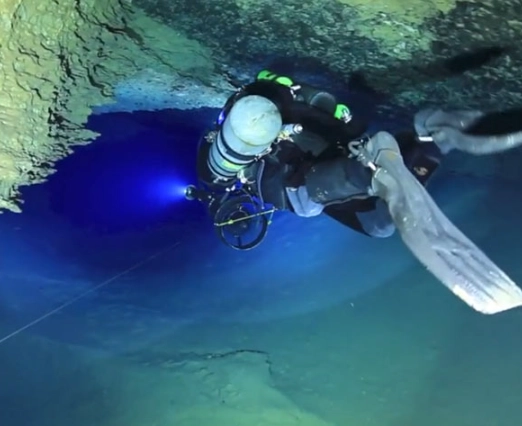
| Primary Cause | Most Common Contributing Factors | Typial Outcome Without Intervention |
|---|---|---|
| Insufficient Gas | Poor planning, delayed turnaround, gear failure (leak), over-exertion, panic breathing. | Drowning, Asphyxiation. |
| Getting Lost / Disoriented | Failure to use a continuous guideline, silting out, loss of visibility, confusing tunnel networks. | Running out of gas while searching for exit, panic-induced errors. |
| Entrapment / Entanglement | Snagging on lines, getting stuck in narrow restrictions, cave collapse (rare). | Inability to exit, leading to gas exhaustion. |
| Equipment Failure | Lack of redundancy, poor maintenance, improper configuration, flooding a light. | Direct cause of one of the above problems (e.g., light failure leads to disorientation). |
| Procedural & Judgment Errors | Diving beyond training/experience, ignoring rules, poor buoyancy, diving alone without proper protocols. | Creates the pre-conditions for any of the above accidents to occur. |
See how it all ties together? A procedural error (diving without a reel) leads to disorientation when you silt out. Disorientation leads to panic, which skyrockets your breathing rate, burning through your gas faster than planned. Suddenly, that insufficient gas margin you calculated is gone. It's a domino effect.
The Non-Negotiables: Safety Protocols That Save Lives
Okay, so the dangers are clear. What's the antidote? It's a culture of strict protocols, born from hard lessons learned from past cave diving accidents. These aren't just good ideas; for cave divers, they are commandments.
First, training. Real, formal, from-a-recognized-agency cave diving training is not an optional first step. It is the first step. Organizations like the National Speleological Society Cave Diving Section (NSS-CDS), GUE, and IANTD offer structured courses that start with cavern diving (staying within the light zone) and progress to full cave diving. They drill the procedures into you until they become muscle memory. Trying to learn from a buddy or from YouTube is a one-way ticket to becoming a case study.
Let's list out the absolute, non-negotiable rules. Every certified cave diver knows these by heart:
- The Guideline is Sacred: You must run a continuous, unbroken line from open water to your turn point and back. You must be physically connected to it at all times, usually with a finger loop or a clip. No exceptions.
- Rule of Thirds for Gas (Minimum): Use one-third of your gas supply for the inward journey, one-third for the return, and keep one-third in reserve for emergencies. Many divers use more conservative rules.
- The Power of Redundancy: Two independent lights (primary and backup, plus a smaller backup-backup). Two cutting devices. For regulators, the configuration depends on your system, but the ability to access air from a separate source is critical.
- Depth and Time Limits: Your dive plan must respect your gas, no-decompression limits (with a conservative buffer), and your training level. Pushing deeper or longer on a whim is a recipe for disaster.
- Never Dive Alone (Without a System): While "true" solo cave diving is practiced by a tiny minority of ultra-experienced divers with specific protocols, the standard is to dive with a buddy. And not just any buddy—a properly trained cave diving buddy who understands the plan and the communication signals.
Communication is another huge one. In the dark, you talk with your hands and your light. A standardized set of light signals (circle for "okay," side-to-side sweep for "problem/attention," up-and-down for "go up/ascend") is vital. So are touch-contact signals for zero-visibility situations. You and your buddy need to be on the same page before you even get wet.
Gear Talk: It's Not About Having the Shiniest Stuff
I get it, gear is fun. But in cave diving, it's functional. Your configuration is a life-support system, not a fashion statement. The goal is reliability, simplicity in operation, and redundancy.
Your cylinder setup is the foundation. Most cave divers use either double cylinders (twinset) with a single backplate and wing, or sidemount configuration, where two (or more) cylinders are slung along the diver's sides. Both have their advocates. Sidemount offers great flexibility and streamlining in tight spaces, while backmount doubles are a classic, robust system. The choice often comes down to personal preference and body type, but both achieve the same critical goal: redundant gas supplies.
Lighting is where you can't skimp. Your primary light needs to be powerful, with a burn time significantly longer than your planned dive. Canister lights worn on the waist are popular for their power and burn time. Your backup light must be just as reliable and easily accessible—not buried in a pocket. And then you carry a third, smaller backup. Because when it's dark, I mean pitch black, your light is your primary sense. Losing it is like going blind.
Then there's the harness and rigging. It needs to be clean, with minimal dangling bits ("danglies") that can snag on lines or rocks. Your reels and spools for laying and jumping guidelines are precision tools, not toys. A good cave diver maintains their reels religiously.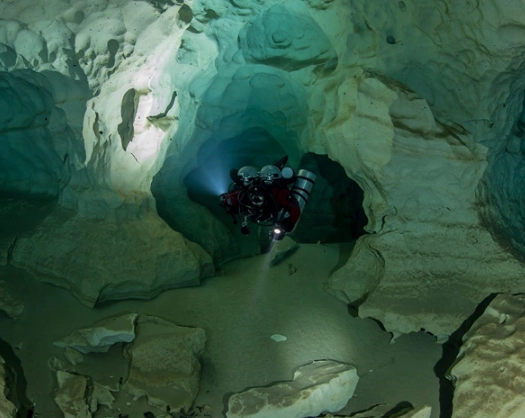
The Mind Game: Psychology and the Cave Diver
This might be the most overlooked aspect. You can have all the right gear and know all the procedures, but if your head isn't in the right place, you're vulnerable. Cave diving is a mental sport as much as a physical one.
Stress management is huge. How do you react when your mask floods at 30 meters, 500 feet into a cave? If your instinct is to bolt for the surface (which doesn't exist), you're in trouble. Training builds the correct response through repetition: stop, breathe, think, act. But it also requires a certain temperament. You need to be able to acknowledge fear without letting it control you.
Overconfidence is a silent killer. It's the diver who thinks, "I've done this tunnel five times, I don't need to run a line this time." Or the one who pushes just a little further past their planned turn pressure because "the passage looked amazing." Every major cave diving accident analysis I've read features a moment where someone decided a rule was for other people. Humility is a safety device.
Then there's team dynamics. You need to trust your buddy implicitly, but you also need to be willing to call a dive if something feels off. There's a concept of "voting with your thumb." If any diver on the team signals to end the dive, for any reason, the dive ends. No questions, no debate. That requires mutual respect and checking your ego at the water's edge.
Learning from History: Case Studies That Shaped Safety
It feels a bit grim to dwell on past tragedies, but ignoring them is worse. Modern cave diving safety protocols are written in the memories of those who didn't come back. By examining what went wrong, we reinforce what we must do right.
Take the case of the Eagle's Nest sinkhole in Florida, which has seen multiple fatalities. This site is a classic example of an "easy" entrance that leads to a massively complex and deep system. Divers, often with insufficient training for the depth and complexity, get lured in by the clear water at the entrance. They descend the "chimney" and find themselves in a staggering labyrinth. Disorientation, narcosis at depth, and gas management failures have all played a role here. These incidents hammer home the point: the environment dictates the required skill level, not the other way around.
Another sobering set of lessons comes from incidents involving line entanglement and separation. In one well-documented accident, a diver's guideline became tangled with another team's line. In the confusion and low visibility, divers were cut off from their exit. The reports often highlight small errors: not using a primary reel properly, not carrying adequate line-cutting tools in an accessible location, or poor communication between teams sharing a cave. It shows that safety extends beyond your own team—you have to be aware of others in the system.
What's the common thread in these analyses? It's almost never a single, bizarre, unforeseeable event. It's a recognizable pattern of skipped steps, ignored rules, and underestimated risks. Reading these reports on sites like the DAN Incident Reporting page is a powerful, if somber, educational tool.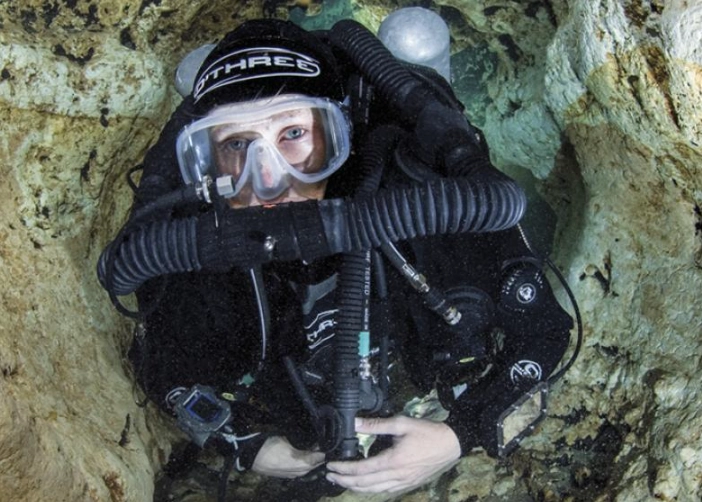
Your Cave Diving Accident FAQ
Is cave diving more dangerous than open water diving?
Yes, categorically. The risk profile is higher because the consequences of a problem are magnified by the overhead environment. You cannot make a direct, emergency ascent to the surface. Any issue must be solved at depth, within the confines of the cave, and with the gas you have. However—and this is a huge however—when performed by trained, disciplined divers following strict protocols, the activity can be managed to a high degree of safety. The danger lies in the margin for error, which is razor-thin.
What's the number one thing I can do to avoid a cave diving accident?
Get formal, professional training from a recognized agency. Full stop. There is no substitute. Before that training, do not enter an overhead environment. After training, never stop practicing the skills—gas sharing drills, zero-visibility line following, reel work—in a controlled setting.
How do divers rescue someone from deep inside a cave?
This is extremely difficult and dangerous. Most cave rescues are actually recoveries. The logistics are staggering: getting a rescue team with all their equipment to the diver, managing gas for both victim and rescuers, navigating a possibly silted-out passage. This is why the community mantra is "Any cave dive is a self-rescue dive." You must be prepared to solve your own problems. The National Park Service, which manages cave diving sites like at Florida's springs, emphasizes pre-dive planning and self-reliance for this very reason.
I'm a certified open water diver. Can I just follow a cave diver in to look?
No. A thousand times no. This is how a lot of fatal cave diving accidents start. The untrained diver has no understanding of gas planning for the overhead, no guideline skills, no training for buoyancy in a fragile environment (to avoid silting), and no redundancy. They are a liability to themselves and a potential fatality waiting to happen. The cave diving community is very firm on this: no training, no overhead.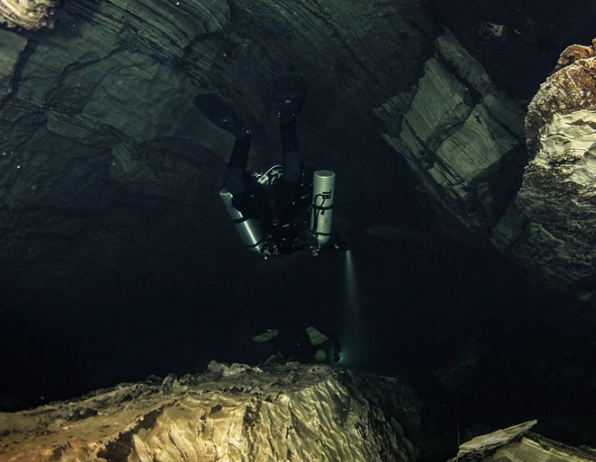
Has technology made cave diving safer?
In some ways, yes. Better, more reliable lights and regulators. Computers that help with complex gas and decompression planning. But technology can also create a false sense of security. A computer can fail. A powerful light can still flood. The fundamental safety principles—the guideline, gas management, redundancy, training—haven't changed because they are based on human physiology and physics. Technology is a great tool, but it doesn't replace sound judgment and disciplined procedure.
Wrapping It Up: The Respect it Demands
Look, writing this has made me think about my own dives, the times I've gotten complacent. It's a good reminder. Cave diving isn't a hobby you pick up to get cool Instagram photos. It's a serious pursuit that demands serious commitment. The beauty and silence of the underground world are incredible rewards, but they are earned through meticulous preparation and unwavering respect for the environment.
The goal of all this talk about cave diving accidents isn't to create paranoia. It's to foster a culture of competence. When you understand the mechanisms of failure, you can build robust defenses against them. You learn the rules not as arbitrary restrictions, but as the distilled wisdom of decades of exploration, sometimes written in tragedy.
So if you're drawn to it, start the right way. Find a good instructor. Be a sponge. Practice until the skills are automatic. Dive within your limits, and slowly, patiently, expand those limits with more training and experience. The cave isn't going anywhere. It will be there, waiting, long after we're gone. The trick is to make sure you come back out to tell the tale.
Your comment