Your Dive Safety Compass
Let's be honest for a second. When you're planning a dive trip, what's on your mind? The crystal clear visibility, the incredible marine life, that perfect feeling of weightlessness. Diving first aid? Probably not. It sits there on the checklist, something you know you should think about, but it's not exactly fun to dwell on. I get it. I've been there, packing my bag and giving my first aid kit a cursory glance, hoping I'll never need it.
But here's the thing I learned the hard way, after a buddy had a nasty brush with fire coral and we were scrambling: thinking about diving first aid after something goes wrong is way too late. The ocean doesn't care about our plans. A solid understanding of diving first aid isn't about being paranoid; it's about being prepared so you can fully enjoy the dive, knowing you can handle a curveball. It transforms you from a passive participant into a competent, confident diver who can look out for yourself and your team.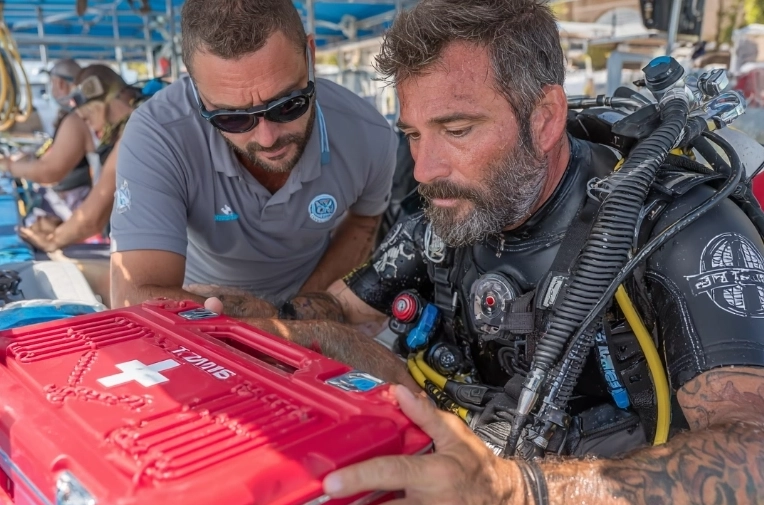
This guide isn't a dry medical manual. It's the stuff we talk about on the boat after a dive, the shared knowledge that gets passed around in dive communities. We're going to break down the real-world scenarios, from the annoying little cuts to the serious "get-out-of-the-water-now" situations. And we'll do it without the jargon, just plain talk about what works.
The Core Mindset: Diving first aid starts long before an incident. It begins with a thorough pre-dive check of your gear and your buddy's, a clear understanding of the dive plan and emergency signals, and an honest assessment of how you're feeling that day. A headache or slight sniffle topside can become a major issue at depth.
The Absolute Fundamentals: Your First Response Pyramid
Panic is the enemy. In any diving emergency, your brain is your first piece of equipment. The sequence you follow is everything. Forget complicated acronyms for a moment; just remember this hierarchy of action. It applies to almost every single underwater problem.
First, Stop and Breathe. Seriously. This isn't just a platitude. Your training kicks in when you consciously control your breathing. A few slow, deep breaths from your regulator can halt the spiral of panic. Signal to your buddy immediately. A wide-eyed look and a flat hand patting the top of your head gets the message across: I have a problem.
Second, Diagnose and Stabilize. Are you out of air? Is there a free-flow? Are you entangled? Is there pain? Identify the specific issue. Can you fix it yourself right now (like switching to an alternate air source), or do you need your buddy's immediate help? The goal here is to stop the situation from getting worse. For a free-flow, this might mean closing your tank valve. For a leg cramp, it might mean stopping all finning and gently stretching.
Third, Execute the Planned Response. This is where your pre-dive briefing pays off. You and your buddy should have already discussed "what-ifs." Now you do it. A controlled emergency swimming ascent (CESA) for an out-of-air situation with no buddy nearby. A buoyant ascent for a complete BCD failure. You follow the drilled procedure.
Finally, Surface and Switch to Surface First Aid. You're back on the surface. The immediate diving emergency is over. Now, diving first aid protocols take over completely. This is where assessing for more insidious injuries like decompression sickness (DCS) or arterial gas embolism (AGE) becomes critical.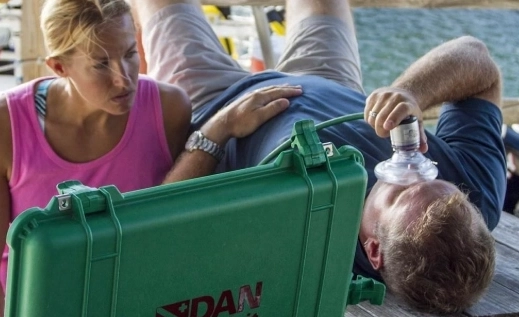
A common mistake I see? Divers rush through the first step. They try to fix a gear issue while holding their breath or ascending uncontrollably. Your lungs and your buoyancy are priority one. Everything else is secondary. If you can't breathe or you're shooting to the surface, nothing else matters.
Handling Specific Diving First Aid Scenarios
Okay, let's get into the nitty-gritty. What does diving first aid look like for the problems you're most likely to encounter? We'll go from the common to the critical.
Marine Life Injuries: Stings, Scrapes, and Bites
This is probably the most frequent need for first aid in diving. Most are just painful nuisances, but some can be serious.
- Jellyfish Stings: The old advice about urine? Mostly useless and can make things worse for some types. The current best practice, recommended by authorities like the American Red Cross, is to rinse with vinegar (acetic acid) to deactivate unfired nematocysts (the stinging cells). Seawater is a good alternative if vinegar isn't available—just don't use fresh water, as the osmotic change can trigger more stings. Carefully remove any tentacles with tweezers or the edge of a credit card. After deactivation, a hot water soak (as hot as the patient can tolerate, 104-113°F / 40-45°C) for 20-45 minutes can significantly reduce pain by denaturing the toxins.
- Coral Cuts and Scrapes: These are not simple cuts. Coral is living animal tissue and can leave tiny fragments and bacteria in the wound. They get infected incredibly easily and heal slowly. First aid involves a vigorous scrub with soap and fresh water to remove all debris. Apply an antiseptic like povidone-iodine. Keep it clean, dry, and covered. Watch closely for signs of infection: increasing redness, swelling, pus, or red streaks leading from the wound. I've had a coral scrape on my knee that took over a month to heal properly—they're no joke.
- Sea Urchin Spines: Painful, brittle, and often break off in the skin. Don't try to dig them out. The spines are usually composed of calcium carbonate and will often dissolve on their own in a few days. Soak the area in hot water (same temp as for jellyfish) to help manage pain and potentially speed dissolution. If spines are in a joint or are deeply embedded, seek medical help for removal.
The Big Two: Decompression Sickness (DCS) and Arterial Gas Embolism (AGE)
This is the heart of serious diving first aid. While they have different causes (DCS from bubbles forming in tissues/blood from inert gas coming out of solution, AGE from lung over-expansion forcing air into the bloodstream), the initial first aid response is largely the same. You are not diagnosing in the field. Your job is to recognize the possibility and act accordingly.
RED FLAG Symptoms (The "Must Suspect" List): Any of these after a dive require you to assume a diving-related illness until proven otherwise:
- Unusual fatigue that's way out of proportion to the dive effort.
- Itchy skin, mottled rashes, or marbling of the skin (cutaneous DCS).
- Joint or limb pain (the "bends").
- Dizziness, vertigo, ringing in the ears.
- Muscle weakness, difficulty walking, numbness, tingling, or paralysis.
- Coughing, chest pain, shortness of breath ("the chokes").
- Confusion, personality changes, vision problems, slurred speech, or loss of consciousness (very serious).
If you or your buddy exhibit any of these symptoms, the diving first aid protocol is clear and non-negotiable.
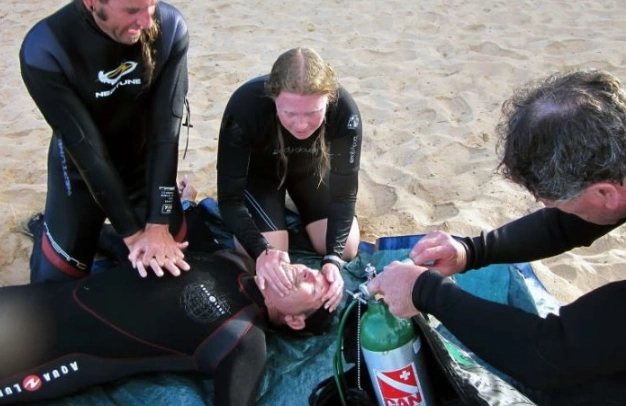
- Administer 100% Oxygen. This is the single most important first aid action. Breathing high-concentration oxygen helps eliminate inert gas from the body faster, reduces the size of existing bubbles, and improves oxygen delivery to compromised tissues. Use a demand valve or continuous-flow mask designed for this purpose. The Divers Alert Network (DAN) has extensive resources on oxygen unit operation. Keep the patient on oxygen until handed over to emergency medical services.
- Keep the Patient Lying Flat and Still. Preferably on their left side (recovery position) if conscious, to manage potential vomiting. Avoid sitting them up. Movement can exacerbate bubble formation and migration.
- Contact Emergency Medical Services (EMS) Immediately. Clearly state it is a possible diving accident. This triggers a specific response protocol. Have the dive profiles and information ready.
- Rehydrate with Water. If the patient is conscious and able to swallow without choking, give them plain water to drink. Avoid alcohol and caffeine. Dehydration thickens the blood and can worsen DCS.
- Monitor and Prepare for Evacuation. Keep the patient calm, warm, and continue oxygen. Be prepared to provide CPR if needed. The definitive treatment is recompression in a hyperbaric chamber.
Let me stress this: having oxygen on the boat or at the dive site isn't an "advanced" thing anymore. It's a fundamental piece of safety equipment. If your dive operator doesn't have it, ask why. For me, it's a deal-breaker.
Building Your Diving First Aid Kit: Beyond Band-Aids
A standard first aid kit from the drugstore won't cut it. You need a kit tailored for the unique problems divers face. Here’s what should be in yours.
| Item | Primary Use | Notes / Why It's Specific to Diving |
|---|---|---|
| Vinegar (Small Bottle) | Jellyfish & other stingray stings | The standard first-response for many marine stings. Pack a 50-100ml plastic bottle. |
| Hot Pack / Instant Heat Packs | Pain relief for stings, DCS pain management | Can provide the recommended heat for jellyfish stings and offer comfort for joint pains while waiting for EMS. |
| Tweezers & Fine-Point Scissors | Removing debris, tentacles, cutting tape/dressings | Stainless steel, pointed tweezers are best for removing tiny coral fragments or spines. |
| Irrigation Syringe (e.g., 60ml) | Cleaning wounds under pressure | Far more effective than just pouring water on a dirty coral cut. Flushes out embedded sand and debris. |
| Povidone-Iodine Solution/Swabs | Antiseptic for wounds | Superior for the types of bacteria found in marine environments. Betadine is a common brand. |
| Hydrocortisone 1% Cream | Itchy rashes, skin irritation | For allergic reactions to suits, mild sting reactions, or cutaneous DCS itching. |
| Waterproof Tape & Non-Stick Pads | Wound dressing | Needs to stick to wet or damp skin. Hypafix or Tegaderm are excellent choices. |
| Antihistamines (e.g., Cetirizine) | Allergic reactions | Non-drowsy formula is best. For reactions to marine life, medications, or other allergens. |
| Oral Rehydration Salts | Rehydration after diving | More effective than water alone if someone is dehydrated, which is a risk factor for DCS. |
| Notepad & Pen | Recording incident details | Vital for noting time of incident, symptoms, dive profiles, oxygen start time, and vital signs for EMS. |
My kit lives in a bright yellow dry bag. It's obvious what it is, and it's always in my gear bag. I check it before every trip, replacing expired items (especially the heat packs). It cost about $80 to assemble, which is less than a single dive in some places. Best insurance I ever bought.
Answering Your Diving First Aid Questions
Here are the questions I hear most often, the ones that keep divers up at night or cause arguments on the dive deck.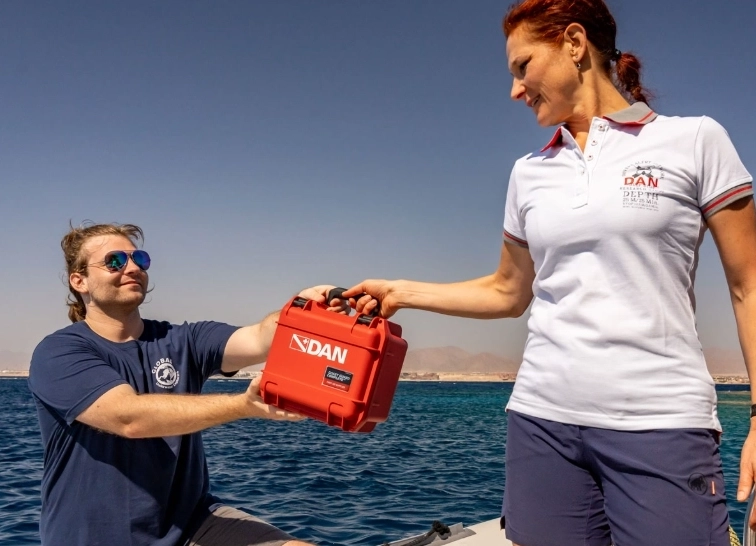
"What's the one piece of diving first aid advice you'd give to a new diver?"
Answer: Get trained in Emergency First Response (EFR) or a similar course that includes CPR and oxygen administration. It's not just about the skills; it's about building the confidence to act when it matters. A standard first aid course is good, but one designed for divers is better.
Q: Should I take aspirin or other painkillers if I have joint pain after a dive?
A: This is a tricky one. No, not initially. If you have joint pain after a dive, you must first suspect DCS. Masking the pain with ibuprofen or aspirin could lead you to delay seeking critical treatment. Furthermore, some painkillers can affect blood clotting. The correct first aid is 100% oxygen, fluids, and immediate medical evaluation. Let the doctors in the emergency room decide on pain management after assessment.
Q: How do I manage a panicked diver on the surface?
A: This is more psychology than medicine initially. Your own safety is paramount—a panicked diver can drown you both. From a safe distance, get their attention. Use short, loud, clear commands: "STOP!" "LOOK AT ME!" "INFLATE YOUR BCD!" Often, they are exhausted and just need to become buoyant. If you can safely approach from behind, help them inflate their BCD orally or with your own inflator. Sometimes, you may need to temporarily disconnect their low-pressure inflator if they are frantically dumping air. The goal is to get them floating and breathing. Once calm, then assess for physical injury.
Q: Is it safe to fly after diving? What's the real rule?
A> The guidelines from PADI, DAN, and other agencies are conservative for a reason. For a single no-decompression dive, a minimum pre-flight surface interval of 12 hours is recommended. For multiple dives per day or multiple days of diving, 18 hours is strongly advised. For any dives requiring decompression stops, more than 18 hours is better. These are minimums. I personally aim for 24 hours whenever my schedule allows. The risk isn't worth missing a flight over. This is a key part of pre-trip diving first aid planning.
Q: My buddy is unconscious in the water. What's my first move?
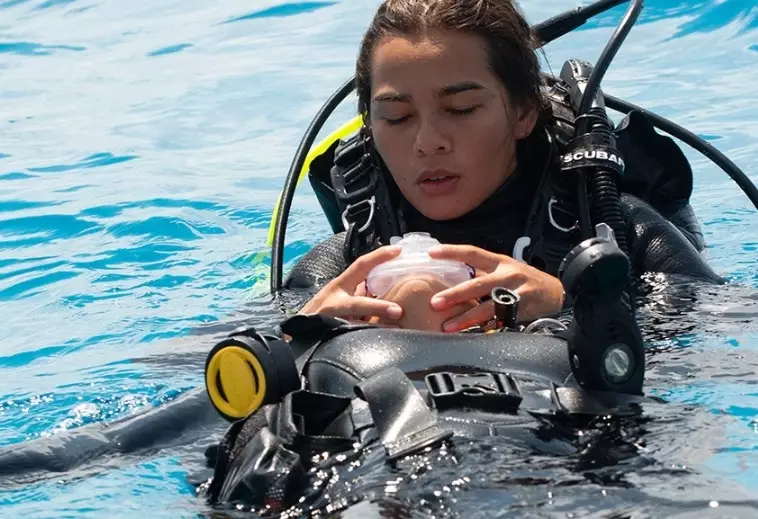
A> This is a worst-case scenario your rescue course should have drilled. 1) Get to them quickly. 2) Establish positive buoyancy for BOTH of you—inflate their BCD, yours, or ditch their weight belt. 3) Check for breathing by looking, listening, and feeling while supporting their head. 4) If not breathing, begin rescue breaths immediately—one breath every five seconds—while towing them to the boat/shore. 5) Signal for HELP. Once out of the water, begin full CPR (30 chest compressions to 2 breaths) and get someone to fetch oxygen and call EMS. It's a brutal, physical, and stressful procedure, which is why practice is everything.
Putting It All Together: The Diver's Safety Checklist
Knowledge is useless if it's not applied. Let's boil this down to actionable habits.
- Pre-Dive: Brief with your buddy. Review hand signals, especially emergency and "something's wrong" signals. Point out each other's alternate air sources and weight release mechanisms. Discuss the dive plan, including what to do if separated. Check the local emergency number and the location of the nearest recompression chamber (your dive operator should know this).
- During the Dive: Check in with your buddy frequently. A thumbs-up, an okay signal. Monitor your air, your depth, your NDL time. The best diving first aid is avoiding the need for it through conservative diving.
- Post-Dive: Debrief. Talk about the dive. "How are you feeling?" is a serious question. Hydrate. Log your dive. Pay attention to your body for the next 24 hours. Have your first aid kit and oxygen accessible on the boat for the ride back.
Diving first aid isn't a dark cloud over the sport. For me, learning it deepened my appreciation for diving. It made me more observant, more connected to my buddy, and more respectful of the environment. It shifted my focus from just seeing things to being a competent part of the underwater world.
The ocean is an amazing place, but it's not a swimming pool. Things can happen. Being prepared with solid diving first aid knowledge means that when something does happen—and statistically, over a long diving career, something minor probably will—you don't fall apart. You handle it. And then you get back in the water, smarter and more confident than before.
Your comment