Quick Navigation
Let's get straight to it. You're probably here because you love diving, but you've heard the stories, seen the reports, or maybe felt that tiny spike of anxiety on a deeper descent. You want to know, in plain English, how can divers avoid most accidents? Not with a list of vague rules, but with actionable, down-to-earth advice that sticks with you when you're 20 meters down.
I've been there. I remember my first real scare—a sudden, unexpected current combined with a nagging feeling my air was dropping faster than my buddy's. Nothing happened, thankfully, but it was a wake-up call. Since then, through hundreds of dives and conversations with instructors and safety officers, I've learned that avoiding accidents isn't about luck. It's a system. A mindset. And it's surprisingly straightforward once you break it down.
Most diving incidents boil down to a chain of small errors, not one giant mistake. A missed gear check here, a rushed descent there, a bit of pride that stops you from calling a dive. Break the chain early, and you've answered the core question of how can divers avoid most accidents.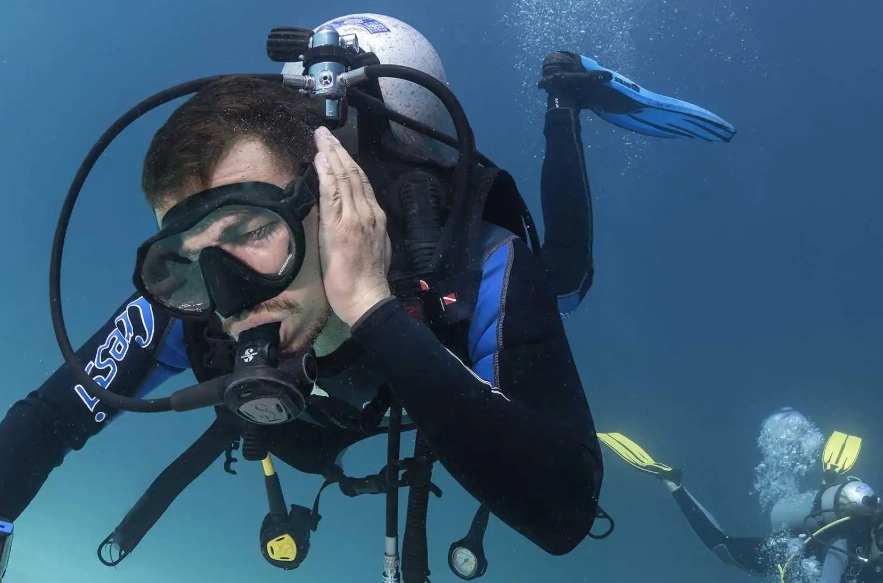
The Foundation: What Happens Before You Get Wet
People obsess over what to do during an emergency underwater. That's important. But the real secret? Most emergencies are created on dry land. The first and most critical step in understanding how divers can avoid most accidents is to focus on the pre-dive phase.
Gear Check: Your Ritual of Safety
This isn't a casual glance. It's a methodical, touch-every-piece ritual. I do mine the same way every time, and I make my buddy do theirs independently before we compare notes. It's boring until it's not.
- BCD/Inflation: Inflate fully. Listen for leaks. Check all dump valves. Deflate completely. Does it feel sticky? That's a problem for later.
- Regulators: Taste the air (sweet, not metallic or oily). Breathe from both primary and secondary. Check the pressure in your alternate air source. Purge both. A weak purge can signal trouble.
- Tanks & Valves: Is the tank secured? Is the O-ring present and intact? Open the valve ALL the way, then back a quarter turn. I've seen more than one diver forget to open it fully, leading to a confusing and rapid air depletion at depth.
- Weights: Can you release them with one hand? Is the mechanism corroded? Test it.
- Exposure Suits: Any tears? Zippers functional? A small leak becomes a big chill, and cold is a direct path to poor decisions.
I once dove with a guy who had a fancy, expensive computer but his fin strap was held together by a zip tie. His priorities were wrong. Your gear is a system; the weakest link fails first.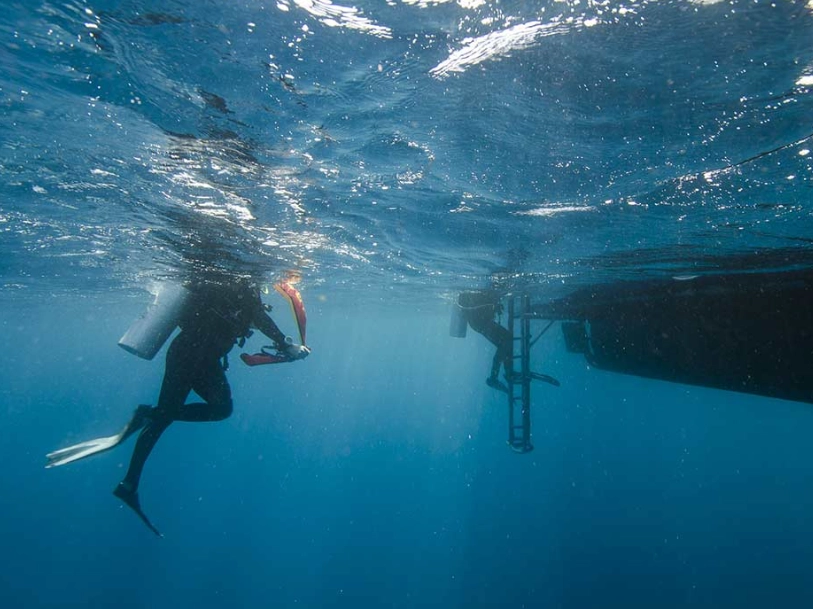
The Dive Plan: More Than Depth and Time
"We'll go down, look around, and come up with 50 bar." That's not a plan. That's a hope. A real plan is a conversation.
Your plan must cover: Maximum depth. Planned bottom time. The route (entry, general direction, exit point). Who leads and who follows? What are the turn-around pressures? (Not just "50 bar," but "at 100 bar we check in, at 70 bar we start heading back, safety stop at 50 bar"). What's the agreed-upon signal to abort the dive? What do we do if we get separated? Where do we meet? The Professional Association of Diving Instructors (PADI) provides excellent dive planning resources and tables that should be the basis of any formal plan.
And for heaven's sake, discuss the conditions. Is there a current? What's the surf like? This is where knowing how can divers avoid most accidents starts—with a shared mental model of the dive before a single fin hits the water.
Honest Health & Fitness Check
This is the hardest part for many. Did you sleep three hours after a party? Are you dehydrated? Stressed about work? Congested? Diving sick or exhausted is asking for trouble. Dehydration alone thickens your blood and is a suspected contributor to decompression sickness. The Divers Alert Network (DAN), a key resource for dive safety, constantly emphasizes fitness-to-dive. Their health and diving section is full of crucial advice on this.
Be honest with yourself and your buddy. Calling a dive is hard. It feels like you're letting people down. But I promise you, every experienced diver has called a dive for a good reason. And they're still diving. The ones who didn't... sometimes they're not.
The Dive Itself: Discipline When It Counts
Okay, you're geared up, planned out, and feeling good. Now you're in the water. This is where the rubber meets the road—or rather, where the fin meets the water. How can divers avoid most accidents once the dive has started? Through relentless focus on a few core practices.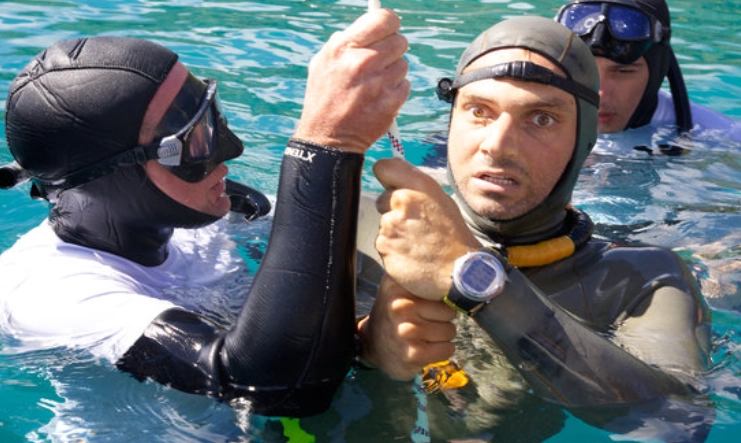
The Buddy System: It's Not Just a Rule, It's a Lifeline
But it only works if you work it. Staying close means staying in visual contact, not "somewhere in that general direction." Check on each other constantly. A quick okay signal, a glance at their pressure gauge, monitoring their breathing rate. Is your buddy breathing rapidly? Are they lagging behind or swimming erratically? These are early warning signs.
The worst buddy system failure I've witnessed? Two divers who spent the entire dive 10 meters apart, separately photographing the same reef. They were buddies in name only. If one had an out-of-air emergency, the other would have been useless. Stay close. Communicate. That's the non-negotiable answer to how divers can avoid most accidents related to isolation.
Depth, Time, and Air Management: The Holy Trinity
These three are intertwined. Your computer is a guide, not a god. You need to have your own mental model.
| Management Area | The Common Mistake | The Safe Practice |
|---|---|---|
| Depth | Chasing a turtle or ray deeper than planned, "just for a minute." | Know your planned max depth before descent. Monitor your computer continuously. The deeper you go, the faster you consume air and absorb nitrogen. There are no shortcuts. |
| Time | Ignoring no-decompression limits (NDLs) or extending the dive because "I feel fine." | Plan your dive time conservatively. Use your computer's warnings. Save a buffer. The most common form of decompression sickness (DCS) occurs in divers who stayed within NDLs but pushed the limits. Be conservative. |
| Air | Only checking air when you think of it, or assuming your buddy's consumption is the same. | Check your pressure gauge frequently (every 5 minutes, or after any strenuous activity). Know your turn pressure and stick to it. The rule of thirds (1/3 out, 1/3 back, 1/3 reserve) is great for diving in overhead environments, but for open water, a simple, pre-agreed turn pressure (like 100-120 bar) and a mandatory safety stop pressure (50 bar) is vital. |
Air management is probably the single biggest practical answer to how can divers avoid most accidents. Running low or out of air forces a panicked, uncontrolled ascent, which can lead to lung over-expansion injuries, arterial gas embolism, or drowning.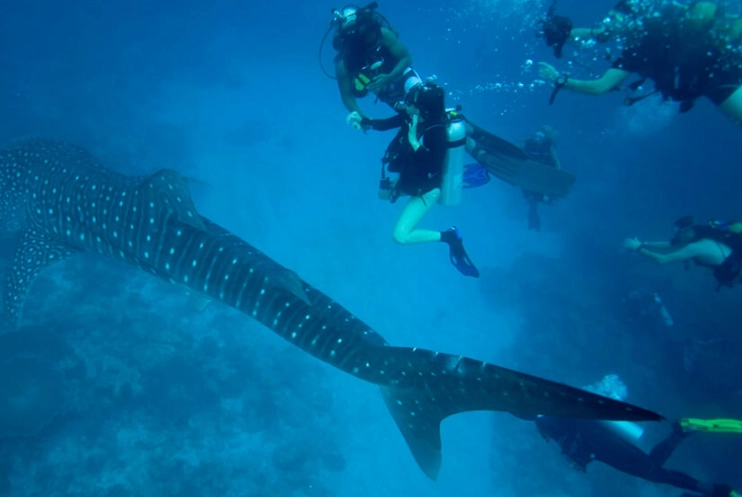
Buoyancy Control: The Mark of a Pro
Poor buoyancy isn't just about crashing into coral (though that's bad enough). It's about wasting energy, breathing heavily, burning through air, and losing control. Good buoyancy is calm, efficient, and safe.
Practice it in a pool or shallow, sandy area. Get neutrally buoyant and hover without moving your fins. Can you do it? If not, that's your homework. Good buoyancy reduces fatigue, conserves air, and keeps you away from hazards. It's a fundamental skill that directly impacts how divers can avoid most accidents involving entanglement, exhaustion, or rapid air depletion.
Communication: When Words Don't Work
Hand signals need to be clear, simple, and agreed upon. What's your signal for "something's wrong" versus "I have a problem, assist me now"? A slashing motion across the throat is almost universally "out of air." Know it. Practice sharing air with your buddy on the surface. It feels awkward, but doing it once in a controlled environment could save your life when it's not controlled.
Specific Scenarios: How to Handle the “Oh Crap” Moments
Let's get specific. Theory is fine, but what about when things actually start to go wrong? Here’s a breakdown of common accident precursors and how to stop them in their tracks.
Preventing Decompression Sickness (The Bends)
DCS is a physiological reality, not a myth. To understand how can divers avoid most accidents related to DCS, you need to respect the science.
- Ascend Slowly: Your computer says 9 meters per minute. Make it 6-7. Slower is always better. Never, ever exceed your computer's ascent rate warning.
- Safety Stops are Mandatory, Not Optional: A 3-minute stop at 5 meters is the bare minimum. On deeper or longer dives, make it 5 minutes. On repetitive dives, make it longer. This is where you off-gas a huge amount of nitrogen. Just do it.
- Hydrate: Drink water before and after diving. Avoid alcohol before diving (it dehydrates you and impairs judgment).
- Listen to Your Body: Unusual fatigue, joint pain, skin itch, or any neurological symptom (tingling, dizziness, confusion) after a dive is a medical emergency. Call DAN or local emergency services immediately. DAN's medical information line and resources are the global standard for dive injury advice.
Managing Gas Supply and Out-of-Air Emergencies
This shouldn't happen. But if your gauge suddenly reads zero or your regulator free-flows massively, what do you do? Panic is the real killer.
- Signal Immediately: Don't wait. The universal "out of air" signal (slashing throat) to your buddy.
- Go to Your Buddy: Swim directly to them. Make eye contact.
- Secure an Alternate Air Source: Either take their primary regulator (if they are trained in donating it) or use their secondary (octopus). The donor should establish positive buoyancy for both of you.
- Make a Controlled Ascent: Maintain contact, exhale continuously, and ascend at a safe rate together. Perform a safety stop if possible, but if gas is critically low, the ascent is the priority.
The best way to handle this? Never let it happen. Monitor your gas. This is the cornerstone of how divers can avoid most accidents of this terrifying kind.
Entanglement and Entrapment
Fishing line, old nets, wreck interiors, caves. The key is prevention: good buoyancy (so you don't crash into things), good trim (so your gear doesn't snag), and situational awareness.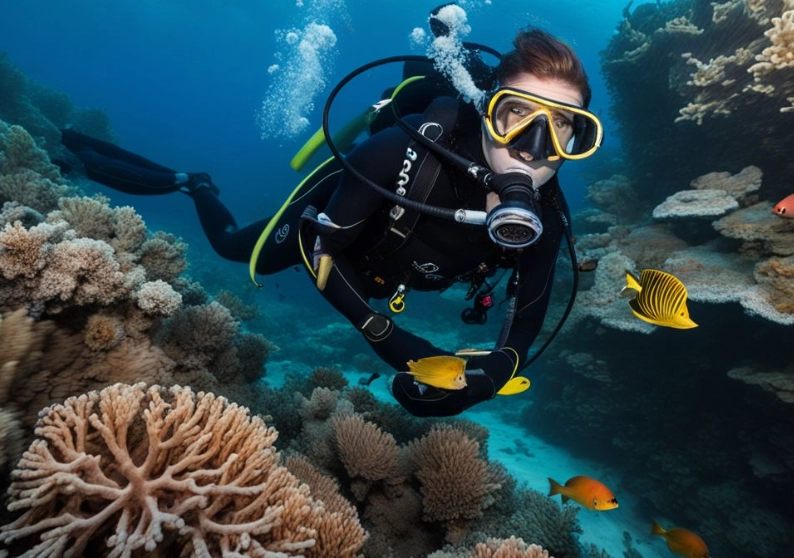
If you get snagged:
- Stop. Don't thrash. Thrashing tightens knots and stirs up silt, reducing visibility.
- Breathe. Assess calmly. Trace the line or netting to find the single point of entanglement.
- Signal your buddy. They can help from a better angle.
- Cut carefully. Cut away from your body and your gear. One clean cut is better than hacking.
Marine Life Interactions
Most marine life accidents are defensive. You startled something, you got too close, or you touched it.
The rule is simple: Look, don't touch. Maintain neutral buoyancy to avoid contact with the reef or bottom where creatures like stonefish, scorpionfish, or sea urchins live. Give animals space, especially larger ones. A territorial triggerfish or a surprised moray eel can cause injury. Understand that how can divers avoid most accidents with marine life is by being a passive observer, not an active participant.
Equipment Failure Underwater
Regulator free-flow is common. If it happens, don't panic. You can still breathe from a free-flowing regulator, though it will exhaust your tank quickly. Signal your buddy, switch to your alternate air source (or your buddy's), and begin a controlled ascent. A BCD failure? Ditch weights if needed for positive buoyancy, but remember you can also swim up. Oral inflate your BCD if the power inflator fails. These are basic skills you learned in your Open Water course. Revisit them.
The Human Factor: Your Mind is Your Most Important Piece of Gear
We've talked gear and procedures. But the biggest variable is you. Psychology plays a massive role in how can divers avoid most accidents.
Fighting Panic
Panic underwater is a killer. It makes you forget training, burn air at an insane rate, and bolt for the surface. The antidote is training and drills.
Practice skills until they're muscle memory. Do a mask flood and clear on every dive. Practice sharing air. The more you drill, the more your brain has an automatic pathway to follow when stress hits. When you feel that initial flutter of anxiety, stop. Hold onto something stable if you can. Focus on your breathing. Make it slow and deep. Look at your buddy. Then address the problem one small step at a time.
Ego and Peer Pressure
This is a silent killer. Diving with a more experienced group and not wanting to seem weak. Pushing your limits to get a photo. Ignoring discomfort because you paid for the trip. This is how otherwise sensible divers get into trouble.
Have the courage to be the boring one. Call the dive if your gut says no. Your gut is usually right. The ocean doesn't care about your ego.
Common Questions Divers Ask (And The Real Answers)
I stay within my computer's limits. Isn't that enough to avoid decompression sickness?
Usually, yes. But computers are conservative, not clairvoyant. Factors like cold, dehydration, fatigue, and individual physiology mean DCS can still occur within limits. Your computer is a fantastic tool, but combining it with conservative personal practices (slower ascents, longer safety stops) is the real answer to how divers can avoid most accidents related to DCS.
What's the single most important thing I can do to prevent an accident?
Honestly? Breathe normally and continuously. Never hold your breath. This prevents lung overexpansion injuries during ascent, which can be immediately fatal. Everything else builds from there.
How do I deal with a strong current suddenly picking up?
Don't fight it. You'll lose. Signal your buddy, stay together. If you can, fin gently across the current to reach the edge of it or find shelter behind a reef or wreck. If you can't, establish neutral buoyancy, relax, and let it carry you while monitoring your air. Deploy a surface marker buoy (SMB) when you ascend so the boat can find you. This is why carrying an SMB and a whistle/audible surface signal is critical.
Is night diving inherently more dangerous?
It introduces different risks—disorientation, limited visibility, different animal behavior. You mitigate it with extra preparation: a primary and backup light each, specific light signals, staying even closer to your buddy, and diving a familiar site during the day first. The principles of how divers can avoid most accidents remain the same; the application just requires more focus.
Continuous Learning: The Dive Never Really Ends
Your Open Water certification is a license to learn, not a diploma of mastery. The journey of understanding how can divers avoid most accidents is ongoing.
- Take Advanced Courses: The Advanced Open Water course isn't for "advanced" divers; it's to make you a more competent and confident diver. The Rescue Diver course is, in my opinion, the most important course after Open Water. It changes your mindset from self-preservation to situational awareness and assisting others.
- Practice Self-Rescue Skills: On easy dives, practice ditching and donning your weights, removing and replacing your mask, managing a free-flow regulator in shallow water. Make it fun, but make it regular.
- Stay Current: If you haven't dived in six months or a year, take a refresher. There's no shame in it. It's smart.
- Read Incident Reports: Organizations like DAN publish non-sensationalized incident reports. Reading them isn't morbid; it's educational. You see the chains of error and think, "How could that have been broken at step one?"
So, how can divers avoid most accidents?
It's not a secret technique. It's a commitment to the boring stuff. The meticulous gear check. The conservative dive plan. The relentless monitoring of air, time, and depth. The honest communication with your buddy and yourself. It's respecting the environment and your own limits. It's treating every dive, no matter how simple, with the attention it deserves.
The goal isn't to be fearless. A little healthy respect for the underwater world is a good thing. The goal is to be prepared, so that when you descend, your mind is clear to enjoy the incredible experience you worked so hard to get to. Because a safe dive is always a good dive.
Your comment