In This Dive: Key Sections
- Why Bother? The Real Reasons Behind the 1/3 Rule
- How to Actually Apply the 1/3 Rule: It's Not One-Size-Fits-All
- Common Questions (And Some Honest Opinions)
- When the Rule Isn't Enough: Advanced Considerations
- Putting It All Together: A Sample Dive Walkthrough
- The Bottom Line: It's About Mindset, Not Just Math
Let's be real. When you're first learning to scuba dive, you get hit with a ton of rules, acronyms, and procedures. It can feel overwhelming. The buddy system, ascent rates, no-deco limits... and then your instructor throws this one at you: the 1/3 rule. You nod along, maybe write it in your logbook, but do you really get it? I remember thinking it was just another box to tick. It wasn't until a dive where visibility dropped to nothing and I felt that first twinge of "where's my buddy?" that the penny dropped. This rule isn't homework. It's your backup plan when the dive doesn't go to plan.
So, let's cut through the jargon. What is the 1/3 rule in diving? In its simplest form, it's a gas management strategy. You use one-third of your starting air supply for the journey out (your descent and swim to the farthest point). You keep one-third for the return journey back to your exit point. And you sacredly reserve the final third as a safety buffer for you, your buddy, or any unexpected situation. That's the core of it. But if we stop there, we're missing the whole point. This rule is about psychology as much as physics. It's about building a habit of conservative diving before you even need it.
Why Bother? The Real Reasons Behind the 1/3 Rule
You might be wondering, "My dive computer tells me my air time, why do I need this old-school rule?" I get it. Tech is great. But tech can fail. Computers can flood. Your SPG (Submersible Pressure Gauge) can stick. More commonly, your brain can fail under stress. Having a simple, memorized rule cuts through the panic.
The primary reason is redundancy for problems. Let's list what that last third covers:
- Buddy assistance: Your buddy signals they're low on air or has an out-of-air emergency (OOA). Sharing air doubles your consumption rate on the way up.
- Getting lost: You take a wrong turn in a wreck or a kelp forest. That extra gas gives you time to sort it out calmly.
- Strong currents: The mild current you swam with on the way out is now a wall of water against you on the way back. Your air consumption skyrockets.
- Decompression obligations: Even on a no-deco dive, a slower-than-planned ascent or a safety stop in a current eats gas.
- Your own stress: When you're anxious, you breathe more. A lot more. That reserve accounts for that.
It's not paranoia. It's preparedness.
I learned this the hard way on a drift dive in Cozumel. The plan was simple. Jump in, drift with the current, boat picks us up. Easy. But halfway through, my buddy's fin strap snapped. Not a huge deal, but fiddling with it in a 2-knot current burned time and air. Then, we had to slow our ascent to stay with a slower diver in our group. By the time we were on the surface, my gauge was deeper into that "reserve third" than I was comfortable with. No drama, but a solid lesson. The rule had given us the margin to handle two small hiccups without them becoming a big problem. That's its true power.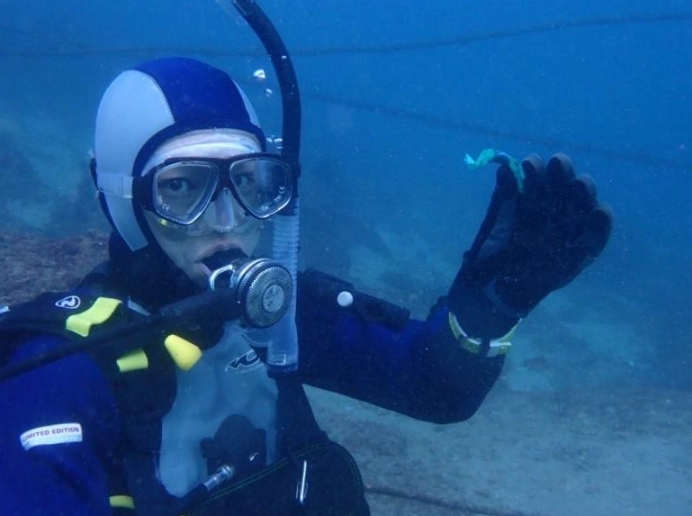
How to Actually Apply the 1/3 Rule: It's Not One-Size-Fits-All
Okay, so you're sold on the idea. Now, how do you make it work in real water? It starts before you even get wet.
Step 1: The Pre-Dive Planning "Gas Talk"
This is non-negotiable with a good buddy. You don't just say "stick together." You have a specific conversation. "I'm starting with 200 bar. My turn pressure, following the 1/3 rule, will be 130 bar. What's yours?" You agree on a shared turn pressure, usually the one from the diver with the smaller tank or higher breathing rate. This is a fundamental part of dive planning that agencies like PADI emphasize in their training. It aligns expectations.
Step 2: Mental Math Made Simple
Nobody wants to do complex division at 30 meters. Here's the cheat sheet. For common tank sizes and starting pressures:
| Starting Pressure | 1/3 Used (Turn Pressure) | Reserve Third Starts At |
|---|---|---|
| 200 bar / 3000 psi | ~130 bar / 2000 psi | ~70 bar / 1000 psi |
| 210 bar / 3100 psi | ~140 bar / 2070 psi | ~70 bar / 1030 psi |
| 180 bar / 2640 psi | ~120 bar / 1760 psi | ~60 bar / 880 psi |
See? It's about easy-to-remember benchmarks. For a standard aluminum 80 (starting around 200 bar), 130 bar is your mental trigger to start heading back.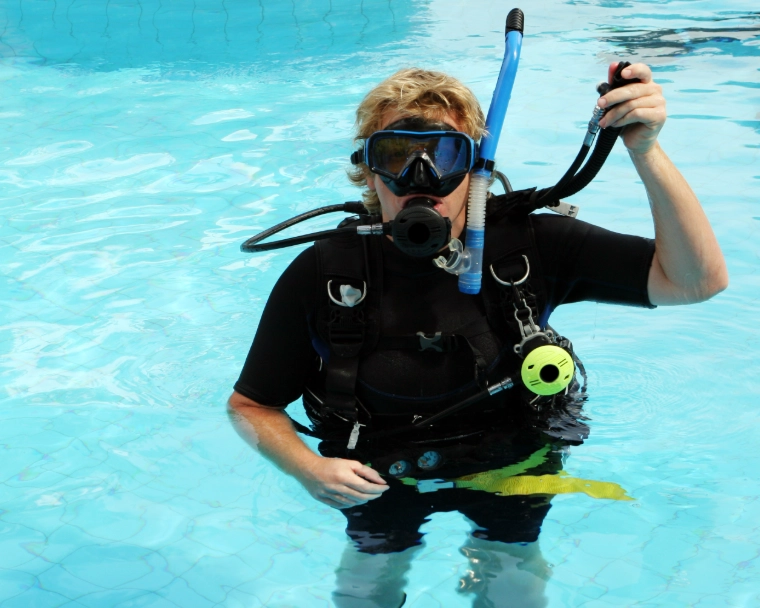
Step 3: Adapting to Different Dive Types
The rigid 1/3 rule bends a little depending on what you're doing.
For recreational reef/wall dives: This is its sweet spot. The rule works perfectly for an out-and-back profile.
For drift dives: The concept shifts. You're not swimming back. Here, the rule becomes about having one-third of your gas left when you expect to see the pickup boat, or by a pre-agreed time. Your "return journey" gas is for waiting or swimming to the boat if needed.
For wreck or cave penetration (technical diving): The rule gets stricter and is often called the "Rule of Thirds." One third in, one third out, one third for emergencies. This is absolute law in overhead environments where a direct ascent is impossible. Technical diving agencies like SDI/TDI build entire training modules around this rigorous gas management.
For multi-level dives: This is where divers get confused. You don't reset the rule at each depth. You plan your turn pressure based on the entire dive profile. If you go deep first, then shallow, you'll use more gas at the start. Your turn point might need to be more conservative.
The Golden Question: Does the 1/3 Rule Replace My Dive Computer?
Absolutely not. They are a team. Your computer is your guide for no-deco time, depth, and ascent rate. The 1/3 rule is your guide for gas. You must monitor both independently. A computer can't plan for your buddy's emergency. The rule can. Use them together for a complete safety picture.
Common Questions (And Some Honest Opinions)

When the Rule Isn't Enough: Advanced Considerations
The basic 1/3 rule is a foundational tool. But thinking divers layer on more.
Rock Bottom Gas / Minimum Gas: This is the next level. It's the absolute minimum gas you need to get two divers from the deepest point of the dive to the surface, including a safety stop, while sharing air. You calculate this based on depth and ascent rate. This number tells you the point of no return. If your gas falls below this "rock bottom," you must begin your ascent immediately, regardless of where you are in the "thirds." It's a fantastic mental exercise. Resources from DAN (Divers Alert Network) often discuss these advanced gas planning concepts in the context of accident analysis.
Stress and SAC Rate: Your Surface Air Consumption (SAC) rate is your breathing rate at the surface. It goes up with depth, cold, exertion, and stress. A scary moment can double or triple it instantly. That reserve third is your cushion for when your calm, planned SAC rate goes out the window.
Putting It All Together: A Sample Dive Walkthrough
Let's follow a fictional diver, Alex, on a typical reef dive to see the rule in action.
Pre-dive: Alex and buddy Sam do a buddy check. Alex has a 12L tank filled to 200 bar. Sam has 190 bar. They agree: "Turn at 130 bar, ascend with 70 bar remaining." They note the entry/exit point.
Descent & Swim Out (The First Third): They descend to 18 meters and swim along the reef. Alex is watching life, but also glancing at the SPG. At 150 bar, they're about halfway through the outbound leg. The dive is going perfectly.
The Turn (The Second Third Begins): Alex's SPG hits 130 bar. They catch Sam's eye, point to their gauge, and give the "turn around" signal. Sam acknowledges, gives a thumbs-up, and they begin their leisurely return swim, following the reef back the way they came.
The Reserve (The Final Third): The SPG needle passes 70 bar. Alex mentally notes, "In the reserve now." They are shallower, maybe at 10 meters, on their way to the safety stop. This gas is for the 3-minute safety stop at 5 meters and any minor positioning to avoid the boat ladder.
Surface: Alex surfaces with 50 bar in the tank. The dive was safe, relaxed, and there was always gas in hand for a problem. That's a successful application of understanding what is the 1/3 rule in diving.
It feels seamless when it works.
The Bottom Line: It's About Mindset, Not Just Math
So, after all this, what is the 1/3 rule in diving really? It's more than arithmetic. It's the embodiment of a conservative diving mindset. It forces you to plan, to communicate, and to always save something for the unexpected.
Is it the only rule? No. You must monitor your no-deco time, your depth, your buddy. But for managing the one resource you absolutely cannot do without—breathing gas—it is arguably the most important simple rule you'll learn.
Some find it annoying. Some think it's for beginners. I think those people are missing the point. It's a discipline. And in diving, discipline is what keeps small annoyances from becoming major incidents. Start using it on every dive. Make it a habit. Talk about it with your buddy. Because when you truly understand what is the 1/3 rule in diving, you stop seeing it as a limit and start seeing it as the key to longer, safer, and more relaxed diving for years to come.
And honestly? That's worth a little mental math.
Your comment