You've got fifty, maybe a hundred dives under your belt. The coral reefs are beautiful, but you find yourself staring into the blue, wondering what's beyond that 30-meter mark. You hear stories of divers exploring deep wrecks, gliding through vast underwater caves, or spending an hour on a bottom that used to be a 40-minute dash. That itch means you're ready to talk about advanced diving techniques.
This isn't about collecting another plastic certification card. It's a fundamental shift in mindset, from recreational diving where the goal is to return to the surface, to technical diving where you must manage a plan to return to the surface. The margin for error shrinks. The consequences of mistakes expand. But so does the scope of exploration.
I remember my first planned decompression dive on a remote Pacific wreck. My recreational brain was screaming. My new, slowly-trained technical brain was checking gas, time, and depth, running through the drill we'd practiced a hundred times in shallow water. That moment of focused calm is what this journey is about.
What's Inside This Guide
What Exactly is Technical Diving?
Let's clear this up first. "Advanced" diving often gets lumped with "technical" diving. They're related, but different. An advanced open water course introduces new skills. Technical diving refers to dives that exceed the no-decompression limits, involve penetrating overhead environments (like caves or wrecks where you can't swim vertically to the surface), use multiple gas mixes, or dive beyond 40 meters.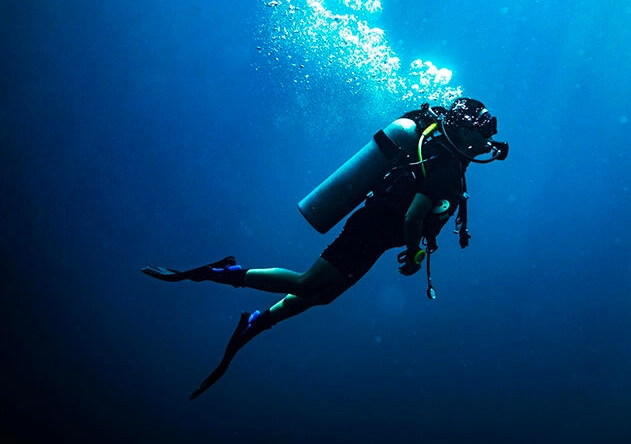
The key differentiator? Redundancy and planning. In recreational diving, you have a primary regulator and an alternate air source. In technical diving, you have completely redundant life-support systems: two independent regulators, two cylinders (or a manifolded double tank), two dive computers, often two masks. If any one piece fails, you have an identical backup to complete the dive and your mandatory decompression safely.
But what really sets it apart? The mindset. A tech diver plans the dive, then dives the plan. Deviations are calculated, not impulsive.
Deep Diving: Procedures and Pitfalls
Diving below 30 meters isn't just about going deeper. The physics change. Narcosis becomes a tangible, silent partner. Gas consumption rates skyrocket. Your margin on a mistake vanishes.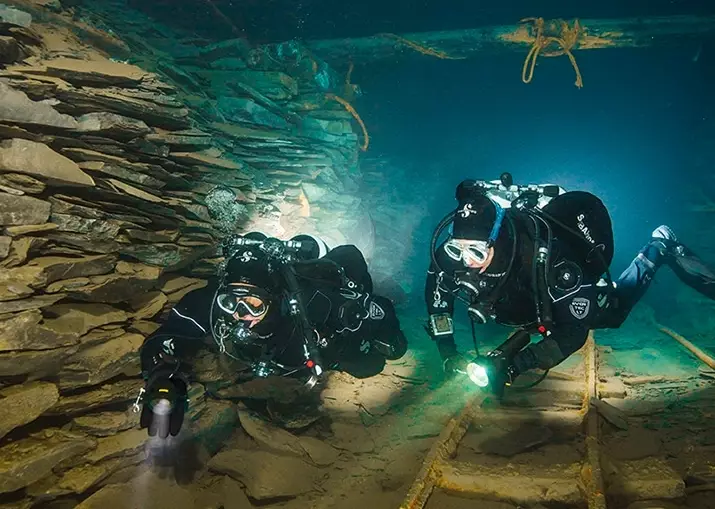
Here’s what a proper deep dive procedure looks like, stripped of the glamour:
The Pre-Dive Check (The "S" Drill)
This isn't a quick BCD inflate. You and your buddy physically check each other's gear: Gas (both turned on, pressures checked), Releases (all buckles and clips functional), BC (inflator/deflator working), and Systems (computer on, lights working). You say it out loud. Every time.
The Descent and Bottom Phase
You descend along a reference line if possible. Equalize early and often. Upon reaching the target depth, you immediately perform a gas switch check (if using multiple mixes) and communicate your status. Bottom time is governed by your plan, not curiosity. You monitor your narcosis level honestly—if things get fuzzy, you signal to ascend a few meters.
The Importance of Redundancy
At 50 meters, a free-flowing regulator can empty a tank in minutes. With a redundant system, you simply switch to your backup regulator and isolate the tank if needed. This is why proper technical diving training spends immense time on valve drills and gas failure scenarios.
The pitfall? Divers confuse deep air diving with technical diving. Diving to 50 meters on air is brutally narcotic and risky. This is where advanced diving techniques must incorporate advanced gases.
Decompression Diving: The Art of the Ascent
This is the core of many advanced diving techniques. When your planned dive exceeds the no-decompression limit (NDL), you must make staged stops on ascent to allow inert gas (like nitrogen or helium) to safely leave your tissues.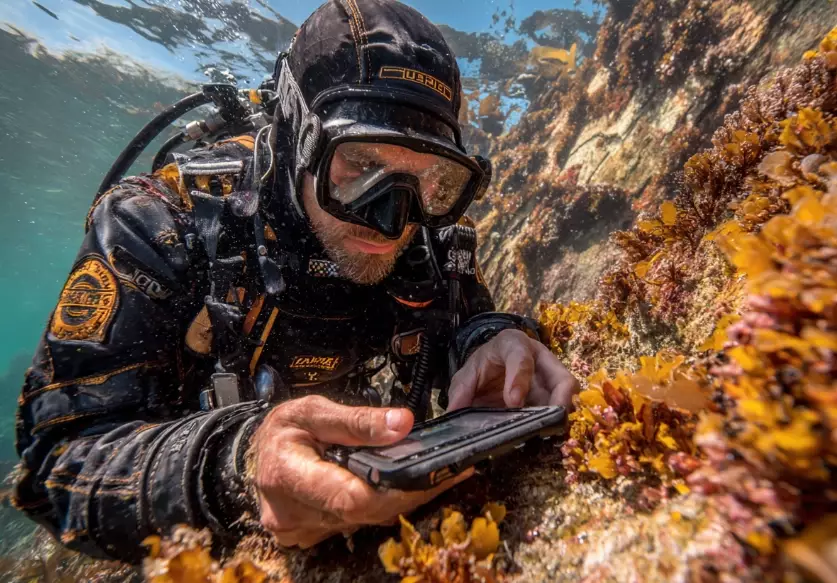
Think of it like this: recreational diving is a free dive back to the surface. Decompression (deco) diving has a required "ladder" you must climb, pausing on specific rungs (depths) for specific times.
You don't just "hang there." You manage gas from multiple cylinders, monitor time meticulously, and maintain perfect buoyancy and trim to minimize exertion. A slight ascent during a deco stop can render it ineffective. A descent can add required time.
Beyond Air: Nitrox and Trimix
Using enriched air Nitrox (like EAN32 or EAN36) is often the first step. It's not really an "advanced" gas, but it teaches you gas management. The benefit: longer no-decompression times at mid-depths. The critical skill: tracking your oxygen exposure to avoid toxicity.
Trimix is where it gets serious. By adding helium to replace some nitrogen, you drastically reduce nitrogen narcosis and breathing density at depth. A dive to 60 meters on air is a gamble with sanity. On Trimix (e.g., 18/40 – 18% O2, 40% He), it's manageable. But it introduces complexity: you must track two inert gases (He and N2) during decompression, and helium conducts heat, so you get cold faster.
Sidemount vs. Back-Mounted Doubles
This is a major gear decision. Both provide redundancy.
Back-mounted doubles are two cylinders manifolded together, giving you one large gas supply with a backup regulator. It's streamlined, but heavy on the surface and limits flexibility.
Sidemount configures two (or more) independent cylinders along your sides. It started in cave diving for tight passages. Benefits: easier cylinder handling (you can clip them on in the water), better trim and streamlining in the water, and independent gas supplies. The downside? More hose management and a steeper learning curve for proper configuration.
My take? Sidemount isn't inherently "better." For open water wreck diving, I prefer doubles. For caves or tight wrecks, sidemount is superior. Choose based on your primary environment, not the cool factor.
Your Training Path: Choosing a Course
You cannot self-teach this. The path is structured and cumulative. Here’s a typical progression from major agencies like TDI, IANTD, or GUE:
| Course | Focus | Typical Depth Limit | Key Skills Learned |
|---|---|---|---|
| Advanced Nitrox & Decompression Procedures | First deco dives, using Nitrox and/or a single deco gas. | 45 meters | Deco planning, gas switching, accelerated deco with O2. |
| Extended Range / Trimix Diver | Diving beyond 50m, introducing Trimix. | 60-70 meters | Helium-based planning, managing multiple deco gases, deep gas failure scenarios. |
| Advanced Wreck / Cave Diver | Penetration of overhead environments. | As per gas limits | Line laying/reeling, zero-visibility navigation, complex failure management in confinement. |
Choosing an instructor is more important than choosing an agency. Look for someone with thousands of tech dives, a reputation for rigor (not for passing everyone), and a teaching style that focuses on fundamentals. Ask to audit a pool session. If the students' trim is sloppy, look elsewhere.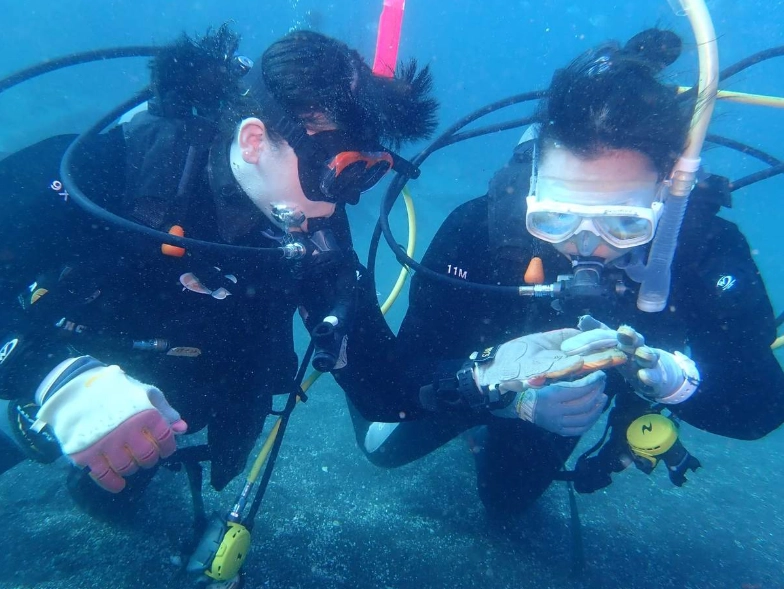
Gear for Advanced Techniques
Your recreational gear won't cut it. Here’s the non-negotiable list:
- Primary and Backup Regulators: Both must be high-performance, environmentally sealed for cold water, and with a long hose (5-7ft) on the primary for gas sharing.
- Technical BCD/Wing: A backplate and wing system. It's modular, durable, and places buoyancy behind you for perfect horizontal trim. The recreational jacket-style BCD is a liability for tech diving.
- Two Dive Computers: Preferably ones that allow you to set and switch between multiple gas mixes. They should have a clear, readable display. One is primary, one is backup—and you should know how to use tables as a third backup.
- Exposure Suit: Drysuits are almost mandatory for serious tech diving due to long, cold deco stops.
- Reels and Spools: For running guidelines in wrecks or caves, or for deploying a delayed surface marker buoy (DSMB) from depth.
Don't buy it all at once. Your instructor will guide you. A common mistake is buying a $2000 regulator before you can hold a stable stop. Get the training first, then the gear that fits the diving you're actually doing.
Your comment