Jump to Sections
- What Exactly Do We Mean by "Diving in Air"?
- The Foundational Types of Diving in Air: From First-Jump Nerves to Solo Freedom
- The Specialized Disciplines: Finding Your Tribe in the Sky
- The Extreme Edge: BASE Jumping
- The Accessible Alternative: Indoor Skydiving (Wind Tunnel Flying)
- How to Choose Your Path: A Realistic Comparison
- Safety: The Non-Negotiable Foundation of All Types of Diving in Air
- Answering Your Burning Questions (FAQ)
- Final Thoughts: Your Sky Awaits
Let's get one thing straight from the jump—pun intended. When most folks hear "diving," they think of water. Masks, fins, coral reefs. But there's a whole other world of diving that happens way, way above sea level. We're talking about diving in air. Skydiving. The pure, unadulterated thrill of stepping out into the sky.
I remember my first time. The roar of the engine, the cold metal of the plane's interior, and that gut-churning moment when the door slides open. The wind hits you like a wall. It's not like anything else. That experience opened my eyes to a massive community and a sport with more variety than I ever imagined. It's not just one thing. It's a spectrum, from the gentle introduction of a tandem jump to the mind-bending precision of competitive formation flying.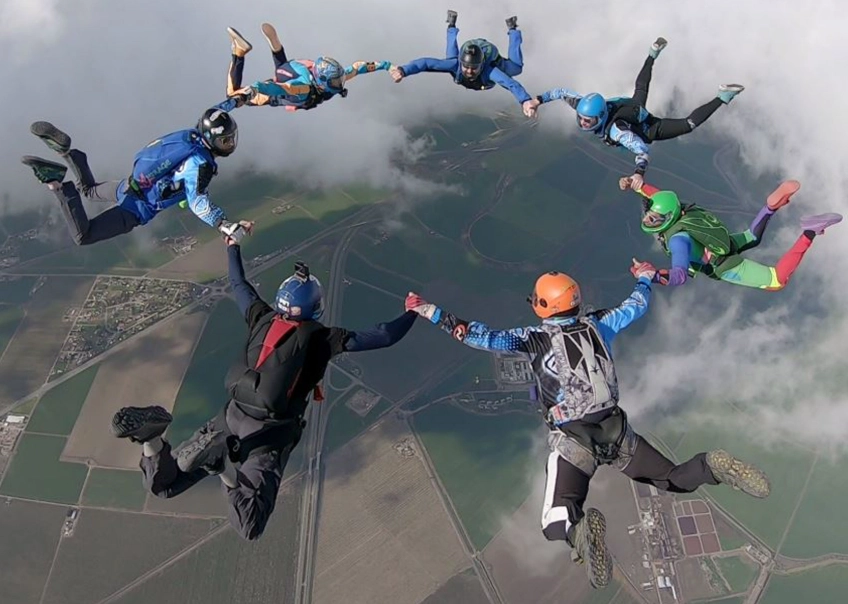
This guide is for anyone who's ever looked up at a plane and wondered, or for those who've done a jump and want to know what's next. We're going to break down every major type of diving in air, cut through the marketing jargon, and give you the real picture—the good, the challenging, and the utterly breathtaking.
What Exactly Do We Mean by "Diving in Air"?
It sounds almost poetic, doesn't it? Diving in air. In practice, it's the act of intentionally exiting an aircraft or a fixed object at height and experiencing a period of freefall before deploying a parachute to land safely. The "diving" part refers to that initial freefall, where your body becomes its own vessel, slicing through the atmosphere.
The key difference from, say, simply falling, is control. A rock falls. A skydiver flies. They use their body—arms, legs, torso—to maneuver, rotate, and move horizontally. That's the magic. You're not a passenger to gravity; you're a pilot in a fluid sky.
And the types of diving in air? They're defined by what you do during that freefall, how you get there, who you're with, and what you're trying to achieve.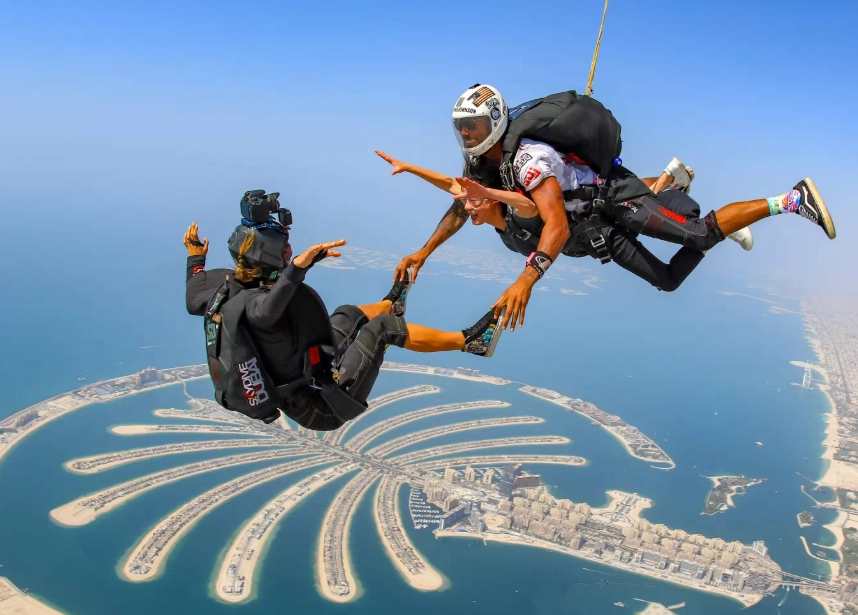
The Foundational Types of Diving in Air: From First-Jump Nerves to Solo Freedom
These are the core styles that form the backbone of the sport. They're the pathways most people follow.
Tandem Skydiving: The Gateway Drug
This is where probably 80% of people start their journey into types of diving in air. You're harnessed to a certified tandem instructor. They wear the parachute (a big, robust tandem rig), handle all the technical stuff, and you get to experience the sensory overload without the responsibility.
The good? It's incredibly safe, accessible, and requires no training. You show up, get a 30-minute briefing, and go. The view is unbeatable, and the feeling of freefall is 100% real. It's the perfect "try before you buy" for the sport.
The not-so-good? Some purists knock it as a "theme park ride." You have zero control. You're along for the ride. For some, that's perfect. For others, it feels a bit passive once the initial shock wears off. I tell people it's the best first date with the sky you could ask for, but it's not a relationship.
Who it's for: Absolute beginners, bucket-listers, gift experience seekers, anyone wanting to conquer a fear in the safest possible environment.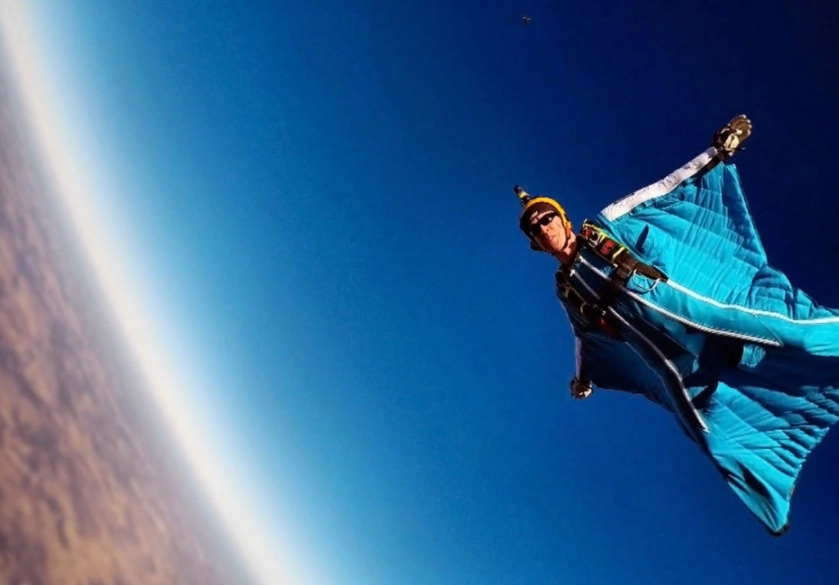
Accelerated Freefall (AFF): The Real School
This is your driver's ed for the sky. If tandem is being a passenger, AFF is getting behind the wheel. It's a structured training program, now often called a "First Jump Course" or something similar, designed to get you jumping solo—safely and quickly.
You go through a full day of ground school, learning body position, parachute operation, emergency procedures. Then, for your first few jumps, you don't go alone. Two instructors jump with you, holding onto you, guiding your body position in freefall via hand signals. It's intense. You have a job to do (practice arching, checking altitude, pulling the ripcord) while your brain is screaming. It's the most effective way to learn.
This is where you truly start learning the mechanics of diving in air. It's the foundational skill set for almost every other discipline.
Solo/Fun Jumps: The Playground
Once you have your AFF progression done and your solo license (like the USPA's "A" license), you graduate to fun jumps. This is the bread and butter for most recreational skydivers. You jump with friends, practice maneuvers, work on your track (diving forward aggressively), or just enjoy the view.
The beauty here is freedom. You decide when to exit, what to do in freefall, when to pull. You can be social or solitary. It's the pure, uncomplicated joy of flight. Many people spend their entire skydiving lives here, and there's absolutely nothing wrong with that. It's a fantastic category within the types of diving in air.
The Specialized Disciplines: Finding Your Tribe in the Sky
This is where the sport splinters into amazing, technical, and sometimes downright artistic directions. These are the types of diving in air that people dedicate years to mastering.
Formation Skydiving (FS) – The Team Sport
Think of it as synchronized swimming, but at 120 mph. Jumpers exit together and fly relative to each other to build geometric formations—stars, diamonds, blocks. It starts simple (4-way) and goes up to massive world-record attempts with hundreds of people.
It's about precision, communication (via hand signals and pre-planned "dirt drills"), and trust. You have to fly your body with millimeter accuracy to slot into a grip without crashing into your teammates. It's incredibly rewarding. The community is tight-knit, and the competition scene is fierce.
The downside? It can be expensive and logistically complex. Getting a consistent team together for practice takes commitment.
Freeflying (FF) – The Dynamic Art
If FS is flying belly-to-earth, freeflying is everything else. Head-up, head-down, sitting, standing. Freeflyers use different body orientations to create dynamic, fluid moves. It looks incredibly cool—think of those viral videos of people sitting in the sky as if on an invisible couch.
It requires a different set of skills. Flying head-down (going headfirst towards the earth) is much faster and requires more core tension and control. It's seen as the "cool kid" discipline, but don't be fooled—it takes serious practice. A bad head-down flyer is a danger to everyone in the sky. Good freeflyers are artists.
Canopy Piloting (Swooping) – The High-Speed Finale
For some, the freefall is just the commute to the real event: flying the parachute. Canopy pilots use small, high-performance, elliptical parachutes. They dive them (hence another form of "diving in air") to build immense speed—sometimes over 80 mph—and then execute precise, low-turn maneuvers over a pond or a field before landing.
It's arguably the most dangerous common discipline in skydiving. The margins for error are tiny, the speeds are high, and the consequences of a mistake can be severe. The community is split on it; some see it as the pinnacle of skill, others as an unnecessary risk. The competitions are thrilling to watch. It's not for the faint of heart, and it requires hundreds, if not thousands, of jumps before you should even think about it.
Wingsuit Flying – The Human Bird
The poster child for extreme diving in air. Jumpers wear a suit with fabric between the arms and legs, creating wings that generate forward lift. Instead of falling mostly vertically at ~120 mph, a wingsuiter can have a forward speed matching their downward speed, achieving a glide. They look like flying squirrels or, at their best, human missiles.
The sensation is the closest thing to bird-like flight humans have achieved without an engine. It's serene and powerful. But the requirements are steep: typically a minimum of 200 jumps, and many recommend many more. The suits are expensive, and the planning is critical because you travel miles away from the dropzone.
The elephant in the room: Wingsuits have a reputation because of BASE jumping (we'll get to that). In a skydiving context, with a parachute and ample altitude, they are a manageable risk for experienced jumpers. The danger skyrockets when combined with low-altitude, terrain-flying BASE jumps.
The Extreme Edge: BASE Jumping
BASE stands for Building, Antenna, Span (bridge), and Earth (cliff). This is diving in air from fixed objects, not airplanes. No plane, no margin for error. You have one parachute, and often only seconds to deploy it. The altitudes can be terrifyingly low—a few hundred feet.
I'm not a BASE jumper. I don't have the temperament for it. The few people I know who do it seriously are some of the most meticulous, calculated, and risk-aware individuals I've ever met. It's not about being crazy; it's about managing an extreme risk with flawless procedure. The consequence of a small mistake—a pilot chute hesitation, a body position error on exit—is often fatal.
It exists in a different universe from recreational skydiving. The gear is different (single-canopy rigs, often no reserve), the community is even more insular, and the legalities are fuzzy (many jumps are trespassing). It is the ultimate, purest, and most dangerous form of diving in air. It's not a discipline you "progress into" from skydiving; it's a separate, life-consuming commitment.
The Accessible Alternative: Indoor Skydiving (Wind Tunnel Flying)
No plane? No problem. This is diving in air, but the air comes to you. Vertical wind tunnels generate a column of air strong enough to support a human body. You get the sensation of freefall without ever leaving the ground.
Don't dismiss it as a simulator. For skill development, it's unparalleled. A 10-minute "flight" in a tunnel is like 10 skydives worth of repetition for practicing body flight. Competitive tunnel teams are incredible athletes. It's how modern freeflyers and formation skydivers hone their skills.
It's also fantastic for kids, people with physical limitations that prevent skydiving, or anyone who wants the feeling in a climate-controlled, highly safe environment. The cost per minute of flight time is high, but the learning efficiency is even higher. It's revolutionized training for the types of diving in air that require precise body flight.
My personal take? The tunnel is brilliant for training, but it lacks the visceral, full-sensory blast of the real thing—the cold, the roar, the vastness. It feels more like a gym session. A very, very cool gym session.
How to Choose Your Path: A Realistic Comparison
Let's put some of these head-to-head to help you think it through.
| Type of Diving in Air | Best For... | Typical Cost (1st Experience) | Training Time Required | The "Vibe" |
|---|---|---|---|---|
| Tandem Skydive | First-timers, thrill-seekers, gift givers. | $250 - $350 | 30 min briefing | Theme park thrill, guided tour. |
| AFF Course | People serious about learning to skydive solo. | $1,500 - $3,000 (for license) | Full day + multiple jumps | Boot camp, driver's ed. Intense & rewarding. |
| Indoor Skydiving | Skill practice, families, all-weather activity. | $70 - $100 (for 2 flights) | Briefing per session | High-tech gym, skill lab. Accessible. |
| Formation Skydiving (4-way) | Team-oriented, competitive, detail-loving people. | $$$ (gear, jump tickets, team fees) | 100+ jumps + team practice | Chess match in the sky. Collaborative. |
| Wingsuit Flying | Experienced jumpers seeking a new dimension of flight. | $$$$ (suit + 200+ jump experience) | 200+ minimum jumps + coaching | Meditative, powerful, transcendent. |
Safety: The Non-Negotiable Foundation of All Types of Diving in Air
You can't talk about this without talking about safety. It's what allows the sport to exist. The safety culture in a modern, reputable dropzone is everything.
- Gear: Parachutes are incredibly reliable. They have a main and a reserve, with an automatic activation device (AAD) that fires the reserve if it detects a skydiver in freefall at a low altitude. Riggers inspect and repack parachutes regularly.
- Training: Programs like AFF are standardized for a reason. The United States Parachute Association (USPA) sets the basic safety standards for most US dropzones. Their website is a treasure trove of legitimate info.
- Culture: Good dropzones have a strict "no pressure" culture. If the weather isn't right, you don't jump. If you don't feel right, you don't jump. Seasoned jumpers will call out unsafe behavior. It's a self-policing community because everyone's life depends on it.
The statistics, when you look at tandem skydiving and licensed skydiver activity at well-regulated dropzones, are very good—often compared favorably to driving or marathon running. The risks spike dramatically when people deviate from training, use inappropriate gear, or push into disciplines like high-performance canopy piloting or BASE jumping without the immense required experience.
Answering Your Burning Questions (FAQ)
Let's tackle the stuff you're probably Googling at 2 a.m.
What's the best type of diving in air for a complete beginner?
Hands down, a tandem skydive. It's designed for you. It's safe, it's thrilling, and it requires zero commitment. It's the perfect litmus test. If you get off the ground and think, "I need to learn how to do that MYSELF," then you start looking at AFF.
I'm terrified of heights. Can I still do this?
This is the biggest surprise for most people. A lot of skydivers are afraid of heights! I get vertigo on a ladder. But in an airplane at 13,000 feet, the ground doesn't look "real" in the same way. The fear you feel is more about the unknown, the door opening, the step into nothing. It's a different kind of anxiety. A good tandem instructor knows how to talk you through it. The fear doesn't necessarily go away, but you learn to act in spite of it, and that's an incredible feeling.
How much does it cost to get into skydiving seriously?
It's not cheap. Think of it like taking up flying planes or sailing. Your AFF course to get a license might run $2,500-$3,000. Then you need your own gear (a full rig can be $5,000-$10,000 used, more new). Each jump ticket after that is $25-$30. It's a hobby that demands financial commitment. Most people buy used gear initially and spread out the costs.
Is indoor skydiving a good way to train for the real thing?
Absolutely. It's phenomenal for learning body control. In fact, many AFF programs now incorporate tunnel time because it accelerates learning so much. You can practice arching, turns, and even basic freeflying moves in complete safety. It won't teach you anything about parachutes, emergency procedures, or exiting a plane, but for the freefall portion, it's gold.
What's the hardest type of diving in air to master?
This is subjective. Physically, high-level freeflying and wingsuiting are incredibly demanding. Mentally, the pressure of 4-way competition is intense. In terms of pure consequence management and risk, canopy piloting (swooping) and BASE jumping are in a league of their own. Each discipline has its own Everest.
Final Thoughts: Your Sky Awaits
The world of diving in air is vast. It can be a one-day adventure or a lifelong passion. It can be a social hobby or a solitary meditation. The different types of diving in air mean there's almost certainly a corner of the sport that will resonate with you.
Start simple. If you're curious, book a tandem jump at a USPA-member dropzone. Talk to the instructors, the packers, the other students. Soak in the culture. See if it calls to you.
Remember, every expert in every crazy video you've seen started exactly where you are right now: on the ground, looking up, wondering what it's like to dive into the air.
The only way to find out is to go.
Your comment