Jump Right In: Your Quick Guide
- Breaking Down the Basic Standing Jackknife: Your Foundation
- The Running Jackknife: Adding Power and Style
- Competitive and Formal Types of Jackknife Dives
- Drills and Exercises to Nail Your Jackknife
- Common Mistakes and How to Fix Them (The Ugly Truth)
- Answering Your Jackknife Dive Questions
- Wrapping It All Up: Your Path to a Clean Jackknife
Let's be honest. For most of us, our first encounter with a jackknife dive wasn't at an Olympic trial. It was at the local pool, watching some confident kid launch off the side, fold in half like a pocket knife, and slice into the water with a satisfying *shoosh* instead of the painful slap we were accustomed to. That's the magic of it. It looks cool, it feels smooth, and it's the gateway to feeling like you actually know what you're doing in the water. But here's the thing most people don't realize: there isn't just one way to do a jackknife. The term covers a whole family of dives, from the basic poolside trick to formal competitive variations. Understanding the different types of dives jackknife style is the key to moving from awkward flailing to controlled, intentional movement.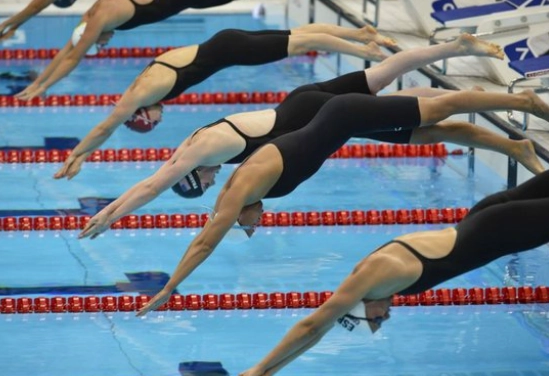
I remember trying to copy that kid for what felt like hours. My early attempts were less "jackknife" and more "flailing hinge." Too much knee bend, not enough core tightness, and an entry that would make a cannonball proud. It was frustrating. The problem wasn't a lack of effort; it was a lack of understanding. I didn't know what the component parts were supposed to be. I was just mimicking the shape without knowing the mechanics. That's why we're going deep on this. Not just a surface-level description, but a breakdown of why each type exists, how to do it, and most importantly, how to not hurt yourself in the process.
Core Concept: At its heart, every jackknife dive is defined by one movement: a sharp flexion at the hips during the flight, bringing the torso and legs close together before straightening for entry. The body literally folds and unfolds, resembling the action of a jackknife. The variations come from the starting position (standing, running) and the specific form of that tuck (pike, which is straight legs, is technically different but often grouped in).
Breaking Down the Basic Standing Jackknife: Your Foundation
This is where everyone should start. Forget the running start, forget trying to look fancy. The standing jackknife is your bread and butter. It teaches you balance, timing, and that crucial hip-hinge motion in a controlled environment.
The setup is simple but critical. Stand at the pool's edge, toes curled over (if allowed and safe). Your arms should be straight up by your ears, biceps framing your head. This streamlined position is non-negotiable. I see so many people start with their arms down by their sides, and it immediately throws off their balance and rotation.
Now, the launch. You don't just fall forward. You push from the balls of your feet, aiming your fingertips at a spot in the water about 4-6 feet out. The common mistake here is jumping *up*. You want to jump *out*. As your feet leave the edge, that's when you initiate the jackknife action. Don't rush it. Let your body gain a bit of height and extension first.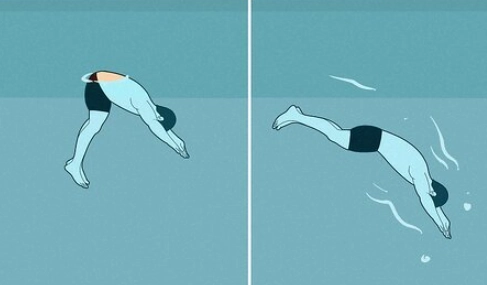
Here's the moment of truth: the fold. In a basic standing jackknife, you sharply bend at the hips, bringing your straight legs up towards your outstretched hands. It's not a crunch. It's a hinge. Your back should stay relatively straight, and your legs should be together and straight. Your hands touch your shins or ankles—that's the "knife" closing. Hold it for a split second.
Then, you unfold. Just as sharply, you extend your body back into a straight line, pointing your toes towards the water. This extension is what ensures a clean, vertical entry. The whole sequence—push, extend, fold, unfold, entry—should feel crisp. If it feels mushy, you're likely bending your knees or folding too early.
Pro Tip from Painful Experience: A huge fear for beginners is going in flat. To avoid this, your eyes are your guide. When you unfold, you should be looking at your toes. If you can see your toes pointing down at the water, your body will follow. If you lift your head to see where you're going, your hips drop, and you'll belly flop every single time. Trust the process.
Mastering this basic standing version is the prerequisite for all other types of jackknife dives. It builds the muscle memory for the fold-unfold sequence. Without it, trying a running jackknife or a competitive variation is just asking for a sloppy, potentially painful result.
The Running Jackknife: Adding Power and Style
Once the standing dive feels automatic, the running jackknife is the natural next step. This is the crowd-pleaser, the one that looks athletic and feels powerful. It's also where timing becomes ten times more important.
The approach is everything. You need a consistent, controlled run-up, usually three to five steps. The last step is a hurdle step onto the diving board or pool edge, where you spring from one foot. This hurdle generates the upward lift. The key is to convert your horizontal speed into vertical (and outward) lift. If you just run straight off, you'll have no height and no time to execute the dive properly.
The added momentum changes the timing of your fold. Because you're moving faster and higher, you have a slightly longer "flight phase." You need to wait a beat longer after takeoff before initiating the hip hinge. If you fold too early on a running jackknife, you'll spin forward and go in on your back or side—a classic and embarrassing error.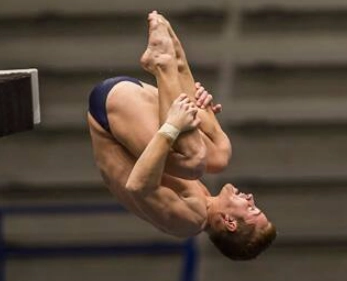
The first time I successfully landed a clean running jackknife was a revelation. The standing dive felt like a skill. The running dive felt like a *sport*. The sound of a clean entry after that little bit of flight is incredibly satisfying. But I also ate water more than a few times trying to get the hurdle step right. It's a humbling move.
Safety note: Never attempt a running dive into unknown or shallow water. The added force means you penetrate deeper. This is strictly for deep-water pools where you are confident of the depth. Organizations like the American Red Cross have clear guidelines on safe diving depths, which are crucial to follow.
Competitive and Formal Types of Jackknife Dives
This is where the terminology gets specific and the precision goes through the roof. In competitive diving, governed by bodies like FINA (World Aquatics), the "jackknife" as we casually know it is more formally categorized. Divers and coaches use a numbered dive code system. The body position we call a jackknife is usually a "tuck" (knees bent and drawn to chest) or a "pike" (legs straight at the hips). The dive we've been describing—a forward dive with a tuck—is a specific, learnable competitive dive.
Let's clarify the main formal types of dives jackknife style you might see in a competition context:
| Common Name / Description | Formal Dive Group & Number (Example) | Key Feature | Difficulty & Purpose |
|---|---|---|---|
| Forward Dive Tuck (The Classic Jackknife) | Group 1: Forward Dives, #101C | Knees bent tightly to chest, hands holding shins. | Foundation dive. Teaches rotation control in a compact position. |
| Forward Dive Pike (Often called a Jackknife) | Group 1: Forward Dives, #101B | Legs straight, body folded sharply at hips. Hands touch toes or shins. | More difficult than tuck. Requires excellent hamstring flexibility and core strength. |
| Forward 1½ Somersault Tuck (Jackknife with a spin) | Group 1: Forward Dives, #103C | Starts like a forward dive, but the tuck is used to initiate a rapid 1.5 rotations before entry. | An intermediate competitive dive. The tuck position speeds up rotation. |
| Inward Dive Tuck (Reverse Jackknife) | Group 4: Inward Dives, #401C | Diver starts facing the pool, jumps backwards, and performs a tuck towards the board before entry. | Challenging due to spatial awareness. The tuck happens while moving towards the board. |
See the difference? The casual poolside jackknife is mimicking the Forward Dive Tuck (#101C). The pike version is harder—I've tried it, and if your flexibility isn't great (mine isn't), it just looks like a panicked, bent-legged mess. The competitive versions take the basic folding mechanic and apply it to dives with somersaults or different starting directions. The tuck position is used specifically because it reduces the body's moment of inertia, allowing for faster spins. It's physics in action.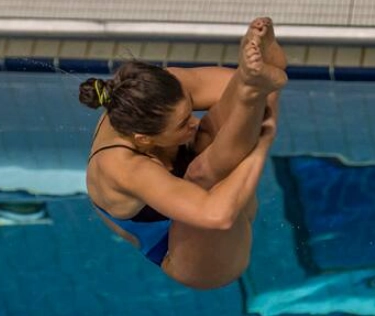
If you're learning from a certified coach, this is the language they'll use. Understanding this classification helps you read dive sheets or follow commentary. It moves the skill from a "trick" to a recognized athletic maneuver.
Drills and Exercises to Nail Your Jackknife
You can't just think your way into a better dive. You have to train the movement in parts. Here are drills that actually work, separated by skill focus.
Dryland Drills (Do these on land first)
These build the muscle memory without the water pressure.
- The Hinge Hold: Stand tall, then bend forward at the hips, keeping your back perfectly straight and legs straight, until your torso is parallel to the floor. Hold. This teaches the pure hip hinge, not a back round. Do 3 sets of 20-second holds.
- Tuck Jumps on Soft Surface: From a standing position, jump straight up, bring your knees to your chest in a tight tuck at the peak, then extend legs to land softly. Focus on the snap of the tuck and the control of the extension. This mimics the in-air action.
- Pike Ups on Parallel Bars or Mat: If you have access to parallel bars or a mat where you can hang, from a support position, lift your straight legs to a piked (L-sit) position. This brutally exposes weak core and hip flexors, which are essential for the pike variation.
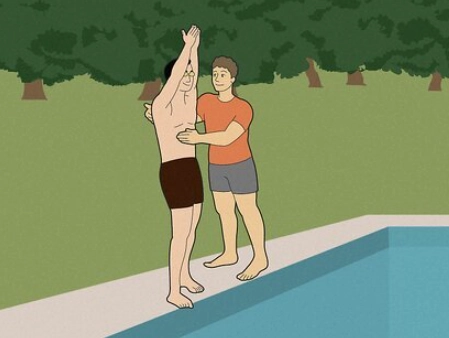
In-Water Drills (The real deal)
Start in the shallow end where you can stand.
- Kneeling Dive: Kneel at the pool edge. Push forward with your hands leading, and practice just the second half of the jackknife: a small fold at the hips, then straighten into entry. This removes the complicated takeoff.
- Seated Poolside Fold: Sit on the edge, legs in the water. Lean forward and practice the folding motion, touching your shins, then "throwing" your pointed toes down into the water. It's all about the feeling of the fold and directing your toes.
- Shallow Angle Jumps: From the pool edge, do a small, low jump outwards (no dive). Concentrate solely on a tight body line in the air and a pointed toe entry. Master the start and finish before adding the complicated middle.
I spent a whole afternoon just doing kneeling dives. It felt silly, but it programmed the hip hinge into my brain so that when I went back to a full stand, my body knew what to do. Drills work.
Common Mistakes and How to Fix Them (The Ugly Truth)
Let's diagnose the problems. I've made all of these errors, so I can describe them with painful accuracy.
Mistake 1: The "Belly Flop with a Knee Bend." You bend your knees but don't hinge at the hips. Your upper body stays vertical while your legs kick up. Result? A spectacular, stomach-first smack. Fix: Focus on bringing your chest to your thighs, not just your knees to your chest. Think "fold in half," not "lift legs."
Mistake 2: The "Over-rotating Cannonball." You tuck too hard and too early, especially on a running dive. This pulls you into a forward spin, and you land on your upper back with a huge splash. Fix: Work on your timing. The fold should happen at the peak of your jump, not on the way up. Use the standing dive to find this moment.
Mistake 3: The "Floppy Ankles." You forget to point your toes during the unfold and entry. Your feet are relaxed, breaking the clean water surface and creating drag and splash. It looks amateurish. Fix: Make "pointed toes" a mantra. From the moment you leave the edge until you're underwater, your toes should be pointed. Practice ankle flexibility on land.
Mistake 4: The "Looky-Loo." You lift your head during the entry to see where you're going. This instantly drops your hips and ruins your vertical line. Fix: As you extend, look at your toes. Enter the water looking at your own feet. Trust that the pool is still there.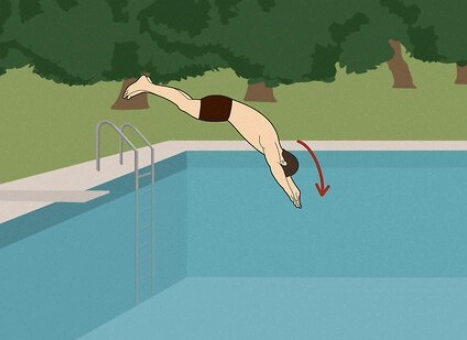
Answering Your Jackknife Dive Questions
You've got questions. I've had them too. Let's tackle some common ones head-on.
Wrapping It All Up: Your Path to a Clean Jackknife
So, we've covered a lot of ground—from the basic poolside staple to its formal competitive cousins. The journey to mastering the different types of dives jackknife offers isn't about learning one trick. It's about understanding a fundamental movement in aquatic sports: the controlled, in-air fold. It starts with the humble standing dive, building that neural pathway for the hip hinge and the tight body line.
Then you add elements—a run-up, a hurdle, maybe even a somersault—but the core mechanic remains. Whether you call it a #101C or just a cool way to jump in the pool, the goal is the same: a smooth, controlled, and splash-free entry. It's a skill that rewards patience and attention to detail. It also teaches you a lot about your own body control and spatial awareness.
Start on dry land with the hinges and jumps. Move to the pool with kneeling and seated drills. Film yourself if you can—it's painful to watch but incredibly instructive. And always, always respect the water depth. The best dive is a safe one.
Now you know more than just how to copy the kid at the pool. You know the why and the how behind several types of jackknife dives. That knowledge is what turns a lucky attempt into a repeatable skill. Go get wet, and have fun with it.

Comments