Quick Navigation
- Freestyle (Front Crawl): The Speed Demon
- Backstroke: The Upside-Down Cruiser
- Breaststroke: The Classic "Frog" Stroke
- Butterfly: The Powerhouse
- Side-by-Side: Comparing the 4 Swimming Techniques
- How to Choose Which Stroke to Focus On First
- Answers to Common Questions About Swimming Techniques
- Putting It All Together: Your Path Forward
You know, I get this question a lot, especially from friends who are just dipping their toes into the pool. "What are the 4 types of swimming techniques?" It sounds simple, right? But the answer is the foundation of everything in the water. Whether you're aiming to get fit, compete, or just not drown on your next beach vacation, understanding these four strokes is key.
Let's cut straight to it. The four core swimming techniques recognized in competitive swimming and taught worldwide are: Freestyle (or Front Crawl), Backstroke, Breaststroke, and Butterfly. That's it. Those are the big four. But here's the thing—knowing their names is just the start. The real magic (and the real challenge) is in the how. How do you move your body for each one? Which one burns the most calories? Which is the easiest to learn? Which one looks cool but might make you want to cry after 25 meters?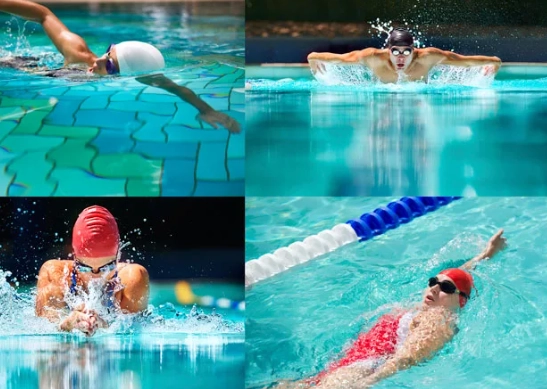
Freestyle (Front Crawl): The Speed Demon
When people ask what are the 4 types of swimming techniques, freestyle is almost always the first one that comes to mind. It's the default stroke for a reason. In a race, if the event says "freestyle," swimmers can pick any stroke they want. But 99.9% of the time, they pick the front crawl because it's the fastest. So we just call the front crawl "freestyle" now. Funny how that works.
The motion is alternating. Your arms windmill over the water, one after the other, while your legs do a steady flutter kick. Your face is in the water, and you turn your head to the side to breathe. Sounds straightforward, but the devil's in the details.
Getting Freestyle Right: The Non-Negotiables
A good freestyle isn't about brute force. It's about rhythm and efficiency. You want to feel like you're gliding, not fighting the water.
- Body Position: Stay flat and horizontal. Imagine a straight line from your head to your heels. A common mistake is lifting your head too high, which makes your hips and legs drop. More drag, more work.
- The Catch: This is the start of the underwater pull. Your hand should enter the water smoothly, fingers first, and then you "catch" the water by bending your elbow and pulling it back alongside your body. Think of pulling your body past your hand, not just moving your hand through the water.
- Breathing: The big hurdle for beginners. You breathe to the side during the arm recovery. Don't lift your head forward! Just rotate it smoothly so your mouth clears the water. Exhale steadily into the water when your face is submerged. Holding your breath is a surefire way to panic.
Why is freestyle so popular for fitness? It's a fantastic full-body cardio workout that's easy on the joints. You can go for miles once you get the rhythm down. It's my go-to for clearing my head.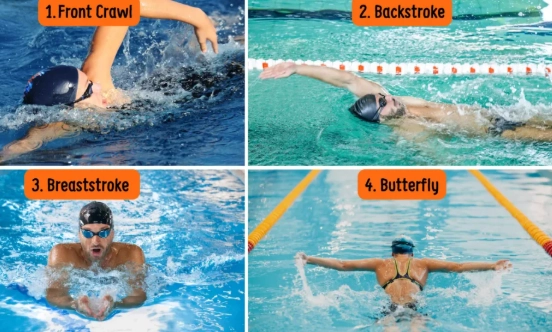
Backstroke: The Upside-Down Cruiser
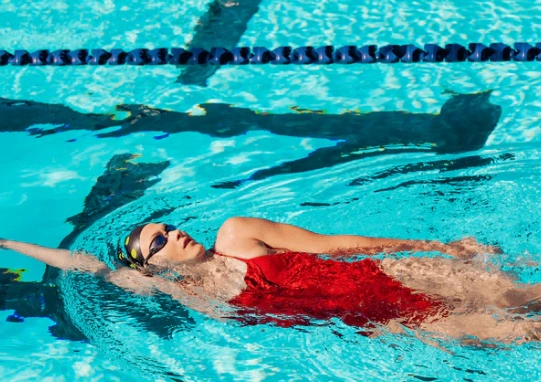
Backstroke is like freestyle's laid-back cousin. You're on your back, looking up at the sky or the ceiling, with an alternating arm motion and a flutter kick. It's the only one of the four swimming techniques where your face is out of the water the whole time, which makes breathing a non-issue. No complicated timing to learn there.
But don't be fooled. It has its own quirks. Steering is a classic problem. Without being able to see where you're going, you'll zigzag like a drunk driver without some practice. You have to use the lane ropes, the ceiling markings, or just a feel for your arm pulls to stay straight.
The Backstroke Essentials
The key is a strong, steady kick to keep your hips up and a continuous arm stroke. Your arms should enter the water pinky-first, way above your head, and pull down in an S-shaped pattern to your thighs. A straight-arm pull is inefficient and weak.
I find backstroke incredibly relaxing once you trust it. It's great for working your back, shoulder, and leg muscles in a different way. And it's a lifesaver if you ever get tired in deep water—you can just float on your back and recover.
Breaststroke: The Classic "Frog" Stroke
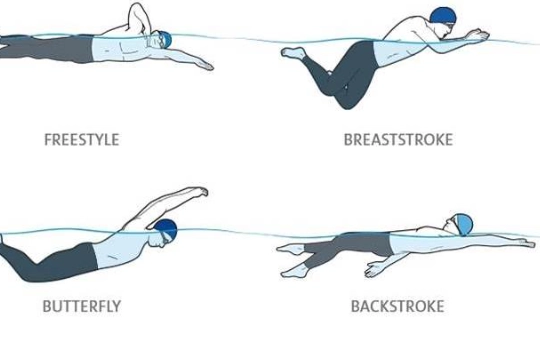
Ah, breaststroke. For many people, this is the first answer they think of when pondering what are the 4 types of swimming techniques. It's the one that looks intuitive—the arms pull in a heart shape, and the legs kick like a frog. It's slow, methodical, and lets you keep your head above water easily (though competitive swimmers submerge and rise with each stroke for speed).
Here's my honest take: breaststroke is deceptively technical. Doing it badly is easy. Doing it well and efficiently is hard. The timing is everything. It's a glide stroke: pull, breathe, kick, glide. That moment of glide is where you rest and coast.
Breaking Down the Breaststroke Cycle
- Glide: You start streamlined, face in the water, body straight.
- Pull: Sweep your hands out and around in that heart-shaped pattern. This lifts your head and shoulders for a breath.
- Kick: As you bring your hands back together under your chin, you draw your heels up toward your butt and snap your legs out and around in a circular, whip-like motion.
- Glide (Again): Shoot back into that streamlined position. Hold it for a second. This is the payoff.
Miss the glide, and you're working twice as hard for half the distance. The kick is also unique and can be tough on the knees if done incorrectly. It's not a "bicycle kick." The power comes from snapping the insides of your feet and shins against the water.
Despite its slower pace, breaststroke is a phenomenal workout. It engages your chest, inner thighs, and core intensely. It's also the quietest stroke, which is why it's used in lifeguarding and rescue scenarios.
Butterfly: The Powerhouse
The butterfly. The beast. The stroke that makes even seasoned swimmers groan during workout sets. When you list the 4 types of swimming techniques, butterfly stands alone in its demands for pure power, coordination, and endurance.
The motion is simultaneous. Both arms recover together over the water in a sweeping motion (the "butterfly" part), while the legs do a powerful dolphin kick—both legs moving together like a mermaid's tail. The body moves in a rhythmic, undulating wave.
Is it the hardest to learn? For most people, yes, by a long shot. The coordination is non-negotiable. You need to time two dolphin kicks with one arm pull: a small kick as the arms enter, and a massive, powerful kick as the arms finish their pull and begin to recover. The breathing is forward, as you lift your head during the pull, and it has to be quick.
Should You Even Bother Learning Butterfly?
If you're just swimming for casual fitness, you can probably live a happy life without it. It's extremely demanding. But if you want a supreme core and shoulder workout, or you're interested in competitive swimming, it's a must. It builds incredible strength and teaches you about body undulation, which improves your other strokes too.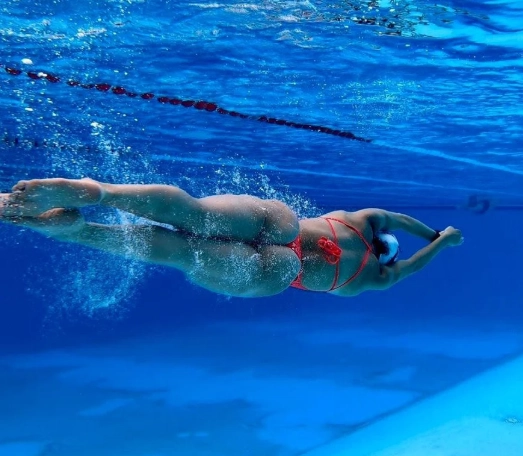
The dolphin kick alone is a valuable tool. You use it in freestyle and backstroke starts and turns. Mastering that undulation makes you a better, more fluid swimmer overall.
Side-by-Side: Comparing the 4 Swimming Techniques
Let's put them all together. This table should help you see the differences at a glance. It's one thing to talk about what are the 4 types of swimming techniques, but seeing their specs laid out is another.
| Stroke | Speed (Fastest to Slowest) | Difficulty to Learn | Primary Muscles Worked | Best For... |
|---|---|---|---|---|
| Freestyle | 1 (Fastest) | Medium | Shoulders, back, core, legs | Speed, endurance, cardio fitness |
| Backstroke | 2 | Medium | Back, shoulders, glutes, legs | Recovery, improving posture, avoiding face-in-water |
| Breaststroke | 4 (Slowest) | Medium (Hard to master) | Chest, inner thighs, calves, core | Technique focus, leisurely swims, knee-friendly* |
| Butterfly | 3 | Very Hard | Chest, shoulders, core, lower back | Power, explosive strength, core conditioning |
*Note: Breaststroke is only knee-friendly if done with proper technique. A wide, improper kick can strain the knees.
How to Choose Which Stroke to Focus On First
So you know what the 4 types of swimming techniques are. Now what? Which one should you tackle? It's not a one-size-fits-all answer.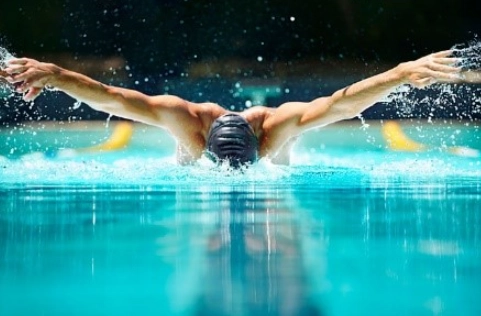
For absolute beginners, most instructors start with freestyle. Why? Because the flutter kick is a natural foundation, and learning to be comfortable with your face in the water is a fundamental skill. But some people have a real fear of putting their face in. If that's you, starting with backstroke isn't a bad idea at all. It gets you moving and builds water confidence without the breathing anxiety.
If your goal is general fitness and you can only learn one, make it freestyle. Its efficiency and full-body engagement are unmatched for logging laps and getting a great workout. You can find structured workouts and technique guides from sources like USA Swimming, the national governing body for the sport. Their resources are grounded in competitive practice but have great fundamentals for everyone.
Love the technical challenge? Dive into breaststroke. Want to test your limits? Eventually confront the butterfly.
Answers to Common Questions About Swimming Techniques
Putting It All Together: Your Path Forward
Knowing what are the 4 types of swimming techniques is your roadmap. Freestyle, backstroke, breaststroke, butterfly. Each has its personality, its challenges, and its rewards.
Start where you're comfortable. Maybe that's floating on your back and learning the backstroke kick. Maybe it's holding a kickboard and working on that freestyle flutter. Don't rush. Water rewards patience and consistency, not force.
Mix them up. A great workout session might include some freestyle for warm-up, drill sets for breaststroke to focus on technique, a few hard laps of backstroke, and then some dolphin kick practice on your back (a butterfly building block). Publications like Swimming World Magazine often publish creative workouts that blend the strokes, which can be great inspiration to avoid monotony.
So grab your goggles, find a lane, and start exploring what your body can do in the water. One stroke at a time.



Comments