Quick Dive Guide
- The Foundation: What You Absolutely Must Get Right Before the Dive
- The Core Skill: Mastering Neutral Buoyancy
- Moving With Purpose: Finning and Trim
- Essential In-Water Skills (Beyond Not Drowning)
- Putting It All Together: A Sample Dive from Entry to Exit
- Gear Choices That Support (or Hinder) Good Technique
- Answering Your Real-World Questions
- The Never-Ending Journey
So you want to know what is the proper diving technique? Honestly, that's the best question you can ask before you even get your feet wet. I remember my first ocean dive after certification. I was so focused on not dying that I forgot to breathe normally. My instructor had to give me the universal "chill out" signal about ten times. It was a mess. But you know what? That messy start taught me more than any perfect pool session ever could. It showed me that proper technique isn't about being a robot underwater. It's about building a set of safe, efficient, and almost automatic habits that let you forget about the gear and just enjoy the alien world you've paid good money to visit.
This isn't a dry manual. Think of it as a long chat with someone who's made most of the mistakes so you don't have to. We'll strip it back to basics, then build it up again. From the absolute fundamentals your instructor hammers into you, to the little nuances that separate a good dive from a great one.
The Foundation: What You Absolutely Must Get Right Before the Dive
Everyone wants to jump in. I get it. The water's calling. But the most critical part of proper diving technique happens on dry land. Screw this up, and your underwater time will be stressful at best, dangerous at worst.
Gear Assembly and the Pre-Dive Check (BWRAF)
Don't just slap your kit together. There's a rhythm to it. Tank first, then BCD, then regulator. Attach your alternate air source (your "octopus") on the right side—this is a global standard so your buddy can find it in a panic. Give your SPG (Submersible Pressure Gauge) a glance to make sure the tank is full.
Then, with your buddy, you do the check. The acronym is BWRAF (Bruce Willis Ruins All Films, or the nicer one: Buoyancy, Weights, Releases, Air, Final OK).
- B - Buoyancy: Inflate and deflate your BCD (Buoyancy Control Device) on the surface. Listen for strange hisses. Does it hold air?
- W - Weights: Confirm you both have your weight belts or integrated weights. Know how to ditch them in an emergency. This is non-negotiable.
- R - Releases: Check all the buckles and clips on your BCD and tank strap. Can you open them with one hand if you need to?
- A - Air: This is the big one. Turn your air ON. Breathe from your primary regulator. Taste the air (it should be clean and dry). Check your SPG—is it showing a full tank? Breathe from your alternate air source. Check your buddy's air and gauges too.
- F - Final OK: A final visual once-over. Are your fins, mask, and snorkel ready? Give each other the thumbs-up.
I've seen seasoned divers skip this because they're in a hurry. It's the diving equivalent of not checking your parachute because you've jumped before. Just don't.
Mental Prep and the Dive Plan
You need a plan, even for a simple reef dive. Discuss it with your buddy. Where are we going? What's our maximum depth and time? When do we turn back (usually at half your tank pressure)? What's our hand signal for "I'm low on air" or "something's wrong"? Agree on who leads and who follows.
This conversation forces you to think ahead. It makes you a team, not just two people swimming near each other. Knowing the plan reduces anxiety, and a relaxed diver is a safe diver. This mental rehearsal is a core part of the proper diving technique that nobody talks about enough.
The Core Skill: Mastering Neutral Buoyancy
If there's a holy grail, this is it. Master this, and you've mastered 80% of what is the proper diving technique. Good buoyancy protects the reef (no crashing into coral), saves your air (less effort), and makes you feel like you're flying instead of struggling.
It's a constant, tiny dance between your lungs and your BCD.
How to Find and Hold That "Sweet Spot"
First, get weighted correctly. You should float at eye level at the surface with an empty BCD and holding a normal breath. Sink when you exhale completely. Most beginners are over-weighted, which makes everything harder.
Underwater, the process goes like this:
- Descend to your desired depth.
- Stop. Don't start fiddling immediately.
- Take a normal breath in. You'll start to rise slightly.
- Take a normal breath out. You'll start to sink slightly.
- Now, use a short, sharp puff of air from your inflator to counteract the sinking at the end of your exhale. You're not filling the BCD; you're giving it a tiny nudge.
- Repeat. Breathe. Feel. Adjust with tiny puffs.
The goal is to find the point where you neither rise nor fall at the midpoint of a normal breathing cycle. You hover. It takes practice. A lot of it.
Common Buoyancy Blunders (And How to Fix Them)
| The Problem | What It Looks Like | The Likely Cause & Fix |
|---|---|---|
| The Yo-Yo Diver | Constantly going up and down like a piston. | Cause: Using only the BCD for big adjustments and breathing like you're on land. Fix: Your lungs are your primary buoyancy control. Use long, deep, controlled breaths. Make BCD adjustments smaller than you think you need. |
| The Human Pufferfish | BCD is fully inflated, diver is still heavy, fins madly churning to stay off the bottom. | Cause: Severely over-weighted. Fix: Surface (safely) and remove some weight. You should never need to fully inflate your BCD to achieve neutral buoyancy at depth. |
| The Accent Ascender | Slowly, inexorably drifting upwards during the dive without realizing it. | Cause: BCD slightly over-inflated, or wetsuit compressing less as you shallower (changing buoyancy). Fix: Get in the habit of checking your depth gauge every minute or so. Vent small amounts of air from your BCD as you ascend. |
Getting neutral buoyancy right is the single biggest answer to what is the proper diving technique that conserves air and energy. When you're not fighting to stay at a depth, your air consumption plummets.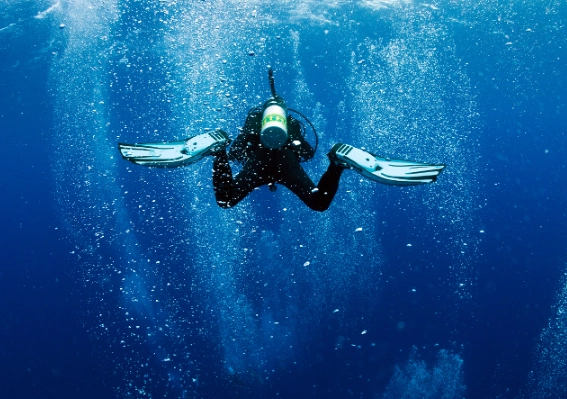
Moving With Purpose: Finning and Trim
Now you're hovering. Great. But you need to move. How you kick is huge. The wrong kick stirs up silt, destroys visibility for everyone behind you, and tires you out fast.
The Flutter Kick vs. The Frog Kick
Most beginners learn the flutter kick. It's fine for the surface or swimming in a straight line in open water. But it's terrible near the bottom—your fins point down, kicking up sand and coral.
The frog kick is the hallmark of better technique. You keep your legs more horizontal, bending at the knees and hips, sweeping your fins out and back in a frog-like motion. The power comes from the backward thrust. The upsides are massive:
- You stay horizontal (good trim).
- You don't stir up the bottom.
- It's more efficient over long distances.
It feels weird at first. You'll think you're not moving. But stick with it. Practice in a pool or over sand. Once it clicks, you'll never go back.
Body Position (Trim)
Trim is your body's angle in the water. Ideally, you're perfectly horizontal, like an airplane in level flight. This minimizes drag. Bad trim is like driving with the handbrake on.
To fix your trim, think about these points:
- Head up? You'll go up. Look ahead, not down at your gauges all the time.
- Hips sinking? You might need to move some weight higher up (e.g., from a waist belt to trim pockets on your tank).
- Feet sinking? Your knees are probably bent. Straighten your legs and kick from the hips.
Essential In-Water Skills (Beyond Not Drowning)
These are the skills your certification course taught you. They're not just for passing a test. They're for real life.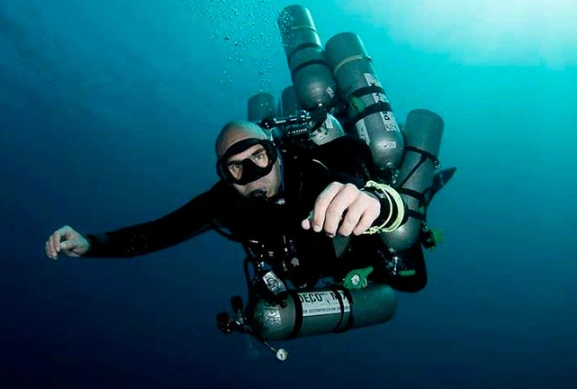
Mask Clearing – It Will Flood
Your mask will get water in it. Maybe a little from a leaky seal, maybe a lot if it gets knocked. Panicking and shooting to the surface is the worst response. The proper diving technique is simple:
- Look slightly upwards.
- Place the top of the mask frame against your forehead.
- Breathe out strongly and steadily through your NOSE.
- The air from your nose pushes the water out the bottom of the mask.
Practice this every dive. Make it a reflex. I do a full clear at the safety stop on every single dive, just to keep the skill fresh. The confidence it gives you is priceless.
Regulator Recovery
You'll drop your regulator. Maybe you turn your head too fast, maybe you're gesturing. It happens. Don't gasp or try to grab it wildly. The proper technique is one of two ways:
- The Sweep Method: Reach back with your right arm, sweep it in a wide arc down and across your body. You'll almost always hit the hose and regulator.
- The Reach Method: Simply reach down with your right hand to your right hip, follow the hose up to the regulator, and put it back in your mouth.
Once it's in your mouth, PURGE it (press the purge button) to blow out any water before you inhale. Never suck in immediately.
Sharing Air – The CESA (Controlled Emergency Swimming Ascent)
This is the big one. You or your buddy is out of air. The modern primary response is to use your buddy's alternate air source (octopus) and ascend together normally. But you need to know how to donate and receive it calmly.
The older skill, the CESA, where you swim to the surface from depth while exhaling continuously, is a last resort. It's drilled for a reason—if you're alone and out of air, it's your only option. The key is the continuous "Ahhhhhhh" sound on the way up to prevent lung over-expansion. It's a weird feeling, but knowing you can do it is a huge mental safety net.
Putting It All Together: A Sample Dive from Entry to Exit
Let's walk through a typical shore dive, applying all this theory.
The Giant Stride Entry: Mask on, regulator in, one hand holding mask and regulator, one hand securing your gear. Look straight ahead, not down. Take a big, confident step. You'll splash in and bob to the surface. Inflate your BCD slightly. Give your buddy the OK signal.
The Descent: Swim to your descent point. Signal "go down." Deflate your BCD COMPLETELY. Start exhaling. As you sink, equalize your ears early and often (every foot or so). Don't wait for pain. If you can't equalize, stop your descent, ascend a foot or two, and try again. Never force it. A ruptured eardrum ruins your dive and can cause vertigo underwater—a very dangerous situation.
The Dive: You hit the bottom (or your planned depth). Now, implement the buoyancy drill. Get neutral. Check in with your buddy. Stick to your plan. Swim using efficient kicks. Breathe slowly and deeply. Glance at your SPG and computer regularly, but don't obsess. Look around! That's why you're here.
The Ascent and Safety Stop: This is non-negotiable. At 50 bar/700 PSI or your agreed turn pressure, start heading back. At your ascent point, begin your go up. Your ascent rate should be SLOWER than your smallest bubbles—no faster than 9 meters/30 feet per minute. Most computers will scream at you if you're too fast. At 5 meters/15 feet, stop. Hold your safety stop for 3 minutes. This is where you practice hovering perfectly. Check your buoyancy. Clear your mask for fun. This stop is critical for off-gassing nitrogen.
The Surface: After your stop, surface. Inflate your BCD. Signal "OK" to your buddy and the boat/shore. Switch to your snorkel if it's a long swim back. That's it. You've executed the core of proper diving technique from start to finish.
Gear Choices That Support (or Hinder) Good Technique
Your gear can make learning these skills easier or harder.
- Fins: Stiff, long blades are for power and current, but harder on your ankles. More flexible, shorter fins are easier for frog kicking and general touring. Try different types.
- BCD vs. Wing: A traditional jacket BCD is fine for most. But many advanced divers prefer a back-inflate BCD or a wing/harness system. They tend to promote a more horizontal trim naturally because the buoyancy is behind you, not around your ribs. It's a noticeable difference.
- Computer: A must-have. It tracks your depth, time, and ascent rate, taking the guesswork out of safety. The visual and audible warnings are invaluable for learning proper ascent technique.
My two cents? Don't buy the most expensive gear first. Rent different styles. See what feels good. A fancy backplate and wing won't make you a better diver if you haven't mastered the basics in a simple jacket.
Answering Your Real-World Questions
Here’s where we tackle the stuff you actually Google after a dive or when something goes a bit wrong.
The Never-Ending Journey
Look, nobody nails all of this on dive number ten, or even fifty. I still have dives where my buoyancy feels off, or I take a clumsy kick. The goal isn't perfection. The goal is conscious competence—knowing what good technique looks like, knowing when you're deviating from it, and having the tools to correct it.
So, what is the proper diving technique? It's the sum of all these parts. It's the meticulous pre-dive ritual. It's the patient hunt for neutral buoyancy. It's the shift from a splashy flutter to a silent frog kick. It's clearing your mask without a second thought. It's the disciplined, slow ascent and that patient safety stop.
Most of all, it's the framework that turns a potentially risky activity into a safe, repeatable, and utterly magical experience. It's what lets you stop thinking about diving and start experiencing it. Get the technique right, and the ocean opens up to you. Get it wrong, and you'll be fighting it the whole time.
Start with one thing. Maybe next dive, you focus solely on your breathing. The dive after that, work on your kicks. It all adds up. Before you know it, you're not just a diver—you're a good diver. And that's when the real fun begins.
Your comment