Quick Guide to This Article
- Why Your Standard Travel Insurance Policy Is Like a Leaky Mask
- What Does Specialized Scuba Diving Travel Insurance Actually Cover?
- Choosing Your Dive Insurance: A Side-by-Side Look
- Key Questions to Ask Before You Buy ANY Policy
- Common Scenarios & Questions Divers Actually Have
- My Personal Recommendation and Final Thoughts
Let's cut right to the chase. You're planning an amazing dive trip. Maybe it's the Great Barrier Reef, or the cenotes in Mexico, or the wrecks in the Red Sea. Your mind is on sharks, buoyancy, and your camera settings. The last thing you want to think about is insurance paperwork. But here's the uncomfortable truth I learned the hard way: if you don't think about it now, you could be facing a massive bill later.
I remember chatting with a diver in Thailand a few years back. He'd taken a bad tumble on the boat after a dive, sprained his wrist pretty badly. No big deal, he thought. His standard travel insurance from a big-name provider would cover it. Turns out, the fine print had a clause excluding "claims arising from participation in sports below a certain depth." His claim was denied. The boat company's fee for the medical evacuation? The clinic bill? All on him. That was the moment the penny dropped for me.
So, do you need special travel insurance for scuba diving? The short, unequivocal answer is yes, you absolutely do. A standard holiday policy is about as useful as a snorkel at 30 meters. It might look right, but it won't work when you need it most.
Why Your Standard Travel Insurance Policy Is Like a Leaky Mask
Most people buy a generic travel insurance package online. It covers trip cancellation, lost luggage, and medical emergencies. Sounds good, right? For a beach holiday, sure. For scuba diving, it's a recipe for financial disaster. The exclusions are where they get you.
Here are the big holes in a standard policy that a single tank can fall right through:
- The Depth Limit Trap: This is the most common exclusion. Many policies have a blanket exclusion for any diving below 10 meters (33 feet). Some might stretch to 18 meters. Let's be real – what fun dive site sits above 10 meters? You'll hit this limit on your first descent at most places. If anything happens at 12 meters, you're not covered.
- The "Supervised Diver" Clause: Some policies only cover diving if it's with a certified instructor or guide. If you're on a liveaboard doing fun dives with a divemaster (not a full instructor), or diving independently with a buddy, you might already be outside the terms.
- No Coverage for Dive-Specific Gear: Your regulator fails at depth, causing a panic. The medical event is covered (maybe), but the $1000 regulator? Not a chance on a standard policy. Specialized dive insurance often includes equipment cover up to a high value.
- Hyperbaric Chamber Treatment: This is the big one. Treating decompression sickness (DCS) or an arterial gas embolism requires time in a hyperbaric chamber. This treatment is incredibly expensive, often running into tens of thousands of dollars. Standard policies frequently exclude hyperbaric treatment or cap the coverage at a laughably low amount.
- Search and Rescue/Evacuation: Need a helicopter lift from a remote dive boat to the nearest chamber? The cost can be astronomical. Specialized policies have massive evacuation coverage (think $100,000+) because they know it's a real risk.
See what I mean? Asking "do you need special travel insurance for scuba diving?" is like asking if you need a wetsuit in cold water. Technically you can go without, but you'll regret it deeply.
What Does Specialized Scuba Diving Travel Insurance Actually Cover?
Okay, so we've established the problem. What's the solution? A policy built for divers. These policies are designed by people who actually understand what we do underwater. The coverage is fundamentally different.
The core of a good policy isn't just about adding "scuba" as a tick box. It's about re-writing the rulebook to fit our activity. Here’s what you should be looking for:
Medical Coverage That Understands Pressure
This is the non-negotiable heart of it. We're talking about coverage that includes:
- Full Hyperbaric Chamber Treatment: No caps, no questions. If you get bent, the policy should pay for all necessary recompression therapy.
- Medical Evacuation/Repatriation: Coverage that can get you from a tiny island in Indonesia to a major hospital in Singapore, or even all the way home, via air ambulance if needed.
- Pre-existing Medical Conditions (with disclosure): Some dive-specific insurers are better at evaluating dive-related risks from conditions like asthma, if you're upfront about it.
Gear and Equipment Protection
Our gear is expensive and fragile. A good policy covers it for loss, theft, or damage during the trip. This includes cameras and housings, which are almost always excluded from standard policies. Check the single-item and total limits. If you're traveling with a $5000 camera setup, make sure the limit is high enough.
Trip Interruption and Cancellation for Dive Reasons
What if you get a bad ear infection the day before your expensive liveaboard departs? Or the dive operator goes bankrupt? Specialized policies often have more lenient cancellation terms for dive-related illnesses or operator failures.
Dive-Specific Liability
This is a niche one, but important. If you accidentally damage a sensitive coral reef or another diver's equipment, some policies offer third-party liability coverage. It's not common, but it's a nice bonus.
Choosing Your Dive Insurance: A Side-by-Side Look
Not all dive insurance is created equal. Some are full travel insurance policies with a diving add-on. Others are membership-based emergency medical plans specifically for divers. Knowing the difference is key.
Here’s a breakdown of the main types. I've thrown in my personal take on each, because let's be honest, marketing blurbs don't tell the whole story.
| Type of Coverage | What It Is | Best For | My Honest Take |
|---|---|---|---|
| Divers Alert Network (DAN) Membership & Insurance | A non-profit medical and research organization. Their insurance is primarily for dive accident coverage, often sold alongside membership. You can add trip insurance separately. | Frequent divers who want gold-standard medical evacuation and treatment coverage. Their 24/7 emergency hotline is legendary. | This is the industry benchmark for a reason. Their focus is purely on diver safety, not profit. Their resources, like the DAN website, are invaluable. But it's not a full "travel" policy unless you buy the add-ons. |
| Specialist Dive Travel Insurers (e.g., DiveAssure) | Companies that only insure divers. They offer comprehensive packages that bundle dive accident, medical, trip, and gear coverage all in one. | Divers going on a big, expensive trip who want everything in one neat package. Simplifies claims. | Convenient. You get one policy document and one point of contact. Sometimes the premiums are higher, but you're paying for the specialization and convenience. |
| Standard Insurer's "Adventure Sports" Add-on | Your regular travel insurer (like World Nomads, Allianz) offers a pack or checkbox to add "hazardous activities" like scuba. | Someone on a mixed trip (e.g., 3 days diving, 10 days hiking) who wants a single policy from a familiar brand. | Be very careful here. Read the add-on's fine print even more closely. Does it truly remove the depth limit? Does it cover chamber treatment? Often, these add-ons are an afterthought and the coverage limits for dive-specific issues are lower. |
| Liveaboard/Operator Insurance | Sometimes the liveaboard company or resort offers its own insurance package or requires you to have proof of specific coverage. | When it's mandatory for the trip, or as a secondary top-up to your primary policy. | It can be good, but don't rely on it as your only coverage. Compare the terms with a dedicated policy. It might be designed more to protect the operator than you. |
The table makes it clearer, I hope. For me, the choice often comes down to this: Am I on a pure dive trip? Then a specialist insurer or DAN makes sense. Am I backpacking through Southeast Asia with some diving sprinkled in? Maybe a standard insurer with a robust add-on works, but I'll scrutinize it like a hawk.
Key Questions to Ask Before You Buy ANY Policy
Don't just click "buy." Get on the phone or live chat and ask these questions. Write down the answers. If they can't answer clearly, walk away.
- What is the exact depth limit? Is it for the depth you are certified to? (e.g., Open Water: 18m, Advanced: 30m, Deep Diver: 40m). The best policies cover you to the limits of your certification, as recognized by agencies like PADI or SSI.
- Is hyperbaric chamber treatment fully covered? Ask for the financial limit. It should be at least $50,000, but $100,000+ is better.
- What is the medical evacuation limit? Again, $100,000 is a good minimum for remote destinations.
- Is equipment covered in-transit and underwater? What's the claim process if your bag is lost by the airline vs. your BCD fails during a dive?
- Are there any exclusions for cave diving, wreck penetration, or technical diving? If you're doing anything beyond basic recreational diving, you MUST declare it. Special tech diving requires special (and more expensive) coverage.
- What is the procedure in an emergency? Do you call their 24/7 hotline first? Do they need to authorize treatment? Knowing this saves precious minutes in a crisis.
Let's be blunt for a second. This process is boring. It's administrative. It's the opposite of the freedom you feel underwater. But doing this homework is as much a part of responsible diving as checking your air.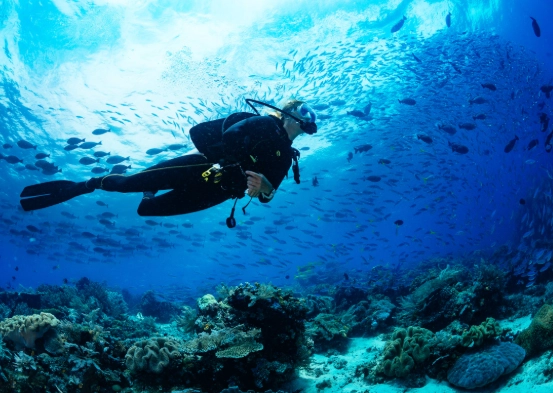
Common Scenarios & Questions Divers Actually Have
My Personal Recommendation and Final Thoughts
Look, after years of diving and seeing things go wrong (and right), my stance is unwavering. For any trip where diving is the main event, I use DAN. I'm a member, and I have their Guardian plan, which includes trip insurance. Why? Because their entire world is diving. Their emergency line is staffed by people who speak the language of partial pressures and dive tables. They've funded the research that makes diving safer for all of us. It feels less like buying insurance and more like joining a safety net community.
For a trip with a bit of diving, I might use a company like World Nomads, but I will spend an hour dissecting their adventure sports upgrade to ensure the depth and activity coverage matches my plans.
So, let's circle back to the core question one last time.
Do you need special travel insurance for scuba diving?
If you care about not being bankrupted by an accident, if you want to know that a hyperbaric chamber is a medical option and not a financial impossibility, if you value the thousands of dollars you've invested in training and gear—then there is only one sensible answer.
You're investing in incredible experiences underwater. Investing a little more in a safety net designed for that specific environment isn't an extra cost. It's part of the cost of diving. It's what lets you descend with confidence, knowing that if something goes wrong, the focus can be on getting you better, not on how you'll pay for it.
Get the right cover. Then go dive.

Comments