Quick Navigation
- The Non-Negotiables: Life Support Gear (The Big Three)
- What You Wear: Exposure Suits and Accessories
- Supporting Cast: The Rest of Your Diving Gear Checklist
- Putting It All Together: Sample Diving Equipment Lists
- Gear Maintenance: The Boring But Essential Part
- Your Questions, Answered (FAQ)
- Final Thoughts: It's About You, Not The List
Let's be honest. Looking at a diving equipment list for the first time is overwhelming. Masks, fins, regulators, BCDs, computers, snorkels... it's a lot. I remember when I first got certified, I spent hours online trying to figure out what I really needed versus what was just nice to have. I bought some stuff I later regretted (more on that later), and I wish I'd had a clearer, no-nonsense guide.
That's what this is. This isn't just a dry list of gear. It's a breakdown of every piece of equipment you'll encounter, why it matters, and how to think about putting your own kit together. Whether you're a new diver about to buy your first mask or an experienced one looking to upgrade, having a solid, personalized diving equipment list is the foundation of safe and enjoyable dives.
The Core Idea: Your perfect diving equipment list is personal. It depends on where you dive (tropical reefs vs. cold quarries), how often you dive, your budget, and your personal comfort. This guide will help you build yours.
The Non-Negotiables: Life Support Gear (The Big Three)
You can't dive without these. They keep you alive and breathing underwater. When building your core diving equipment list, this is where you should focus your research and budget first.
1. The Regulator: Your Lifeline to the Surface
This is the piece that delivers air from your tank to your mouth. It reduces the high-pressure air in the tank to ambient pressure you can breathe. A good regulator feels easy to breathe from, like a natural breath, even when you're deep or working hard.
What to look for? First, make sure it's environmentally sealed if you dive in cold or dirty water—this prevents freezing and keeps crud out. Second, consider the breathing effort. More expensive models often breathe more effortlessly. I made the mistake of buying a very basic, cheap regulator as my first. It worked, but on a deep dive with a slight current, I noticed I had to work a bit harder to inhale. I upgraded a year later and the difference was night and day.
Don't forget the octopus! That's the backup second stage (the part you put in your mouth) that you give to a buddy in an out-of-air emergency. It's a standard part of any regulator set. The Professional Association of Diving Instructors (PADI) has great resources on regulator function and maintenance that are worth a look.
2. The Buoyancy Compensator (BCD or BC)
This is your underwater elevator and jacket. It's a bladder you inflate or deflate to control your buoyancy—to go up, down, or hover perfectly neutral. It also holds your tank securely on your back.
The big choice here is jacket-style vs. back-inflate/wing-style. Jacket BCDs wrap around you like a life vest and are very common for recreational divers. They're familiar and stable on the surface. Back-inflate models have the bladder only behind you, which many (including myself) find provides better trim (horizontal posture) underwater. It feels less constricting. Try both in a pool if you can.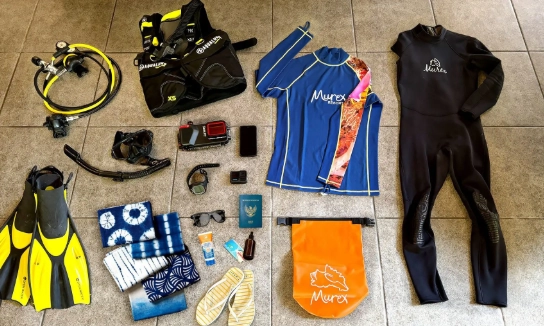
Features to consider: integrated weight pockets (so you don't need a separate weight belt), plenty of D-rings for clipping stuff on, and comfortable padding. A poorly fitting BCD can ruin a dive by chafing or riding up.
3. The Dive Computer: Your Underwater Brain
This is the one piece of modern tech I would never, ever dive without. It's not just a depth gauge and timer. It constantly calculates your nitrogen absorption based on your depth and time, telling you how long you can stay, how deep you can go, and how slowly you need to ascend to avoid decompression sickness.
Some are wrist-mounted, some console-mounted (with a pressure gauge). I'm a wrist-mount guy—it's always in view. Features are all over the map: air integration (so it shows your tank pressure), digital compass, multiple gas mixes, Bluetooth download to your phone. For most recreational divers, a simple, reliable nitrox-capable computer is perfect. Skimping here is a bad idea. Your dive computer is your primary safety device after your regulator.
A Quick Safety Note: Always have a backup plan for monitoring depth and time. This could be a backup computer, a timer and depth gauge, or a very disciplined buddy team. Computers can fail. The Divers Alert Network (DAN) consistently emphasizes redundancy in safety-critical systems.
What You Wear: Exposure Suits and Accessories
This part of your diving equipment list is all about comfort and protection. Get it wrong, and you'll be cold, sore, or struggling to see.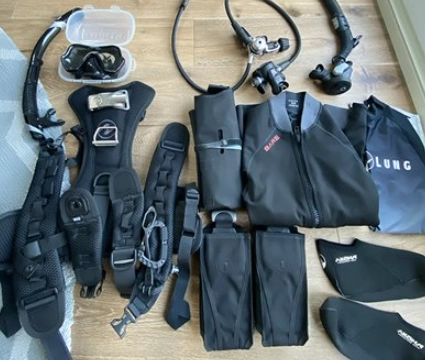
Exposure Protection: Wetsuits, Drysuits & Skins
This isn't just about warmth. It protects you from sun, scrapes on coral or rock, and stinging organisms.
- Rash Guard / Dive Skin (0.5-1mm): For very warm water. Just for protection, not warmth.
- Shorty Wetsuit (2-3mm): Covers torso and thighs. Great for tropical vacations.
- Full Wetsuit (3mm-7mm): The standard. Thickness depends on temperature. I use a 5mm for most California diving.
- Semi-Dry/Drysuit: For cold water. Keeps you completely dry (in a drysuit) or mostly dry. A specialty in itself.
Fit is everything. A loose wetsuit lets water flush in and out, making you cold. Too tight, and it's restrictive. Neoprene also comes in different qualities—more stretchy, more durable, etc. Try them on.
Mask, Fins, and Snorkel: The Personal Touch
These are the items most divers buy first because fit is so personal. You can rent a regulator, but a leaky mask ruins everything.
Mask: The test is simple. Place it on your face (without the strap), inhale gently through your nose, and let go. It should stay suctioned to your face. No hair in the skirt. Check your peripheral vision. Do you need prescription lenses? I do, and getting a mask with corrected lenses was a game-changer—I could finally see fish details without squinting!
Fins: Open heel (with booties) or full foot (like big snorkeling fins)? Open heel is more versatile and warmer with boots. Stiffness matters too. More power (stiff blade) for strong currents, more flexibility for easy kicking. Try them with the boots you'll actually use.
Snorkel: Honestly, a simple J-shaped snorkel is fine. The fancy dry snorkels with the float valve can sometimes be harder to clear. It's mostly for surface swims to your descent point.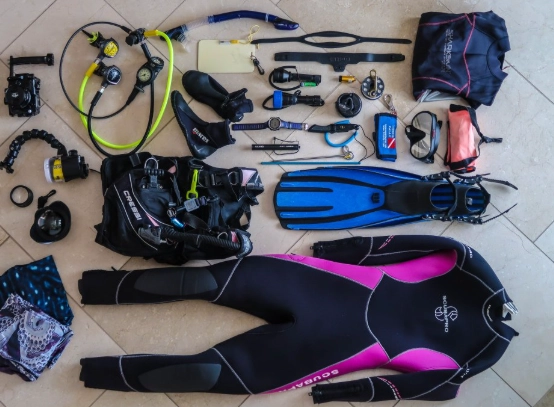
Supporting Cast: The Rest of Your Diving Gear Checklist
These items fill out your diving equipment list and turn you from someone with gear into a prepared diver.
Weights and Weight Systems
You need weight to sink because the wetsuit and you are naturally buoyant. How much? That's determined in a buoyancy check at the surface with a nearly empty tank. Most BCDs now have integrated weight pockets—so much better than a clunky weight belt that can slip. Quick-release mechanisms are critical for ditching weight in an emergency at the surface.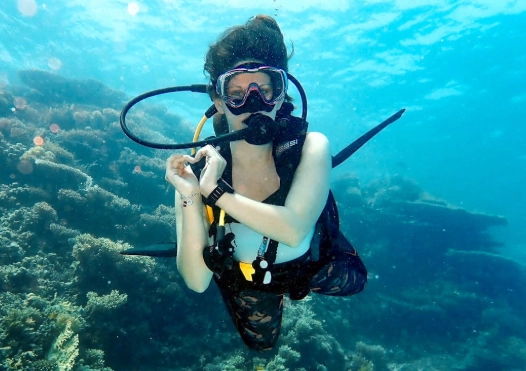
Tank, SPG, and Accessories
The tank is usually rented. Aluminum 80 cubic feet is the North American standard. The Submersible Pressure Gauge (SPG) tells you how much air you have left. It's connected to your regulator first stage. A console often houses the SPG, a compass, and sometimes a backup computer.
Surface Marker Buoy (SMB) and Reel/Spool
This is a brightly colored inflatable tube you deploy at the end of a dive to signal your position to the boat. It's a critical safety tool, especially for shore diving or in areas with boat traffic. In many parts of the world, carrying an SMB is considered standard practice. I didn't carry one for my first year—a mistake. Now I never dive without it.
Putting It All Together: Sample Diving Equipment Lists
Let's get practical. Here’s what a typical gear setup looks like for different scenarios. This is where your personal diving equipment list starts to take shape.
| Gear Category | Beginner/Tropical Vacation Diver | Advanced/Cold Water Diver | My Personal "Must-Haves" |
|---|---|---|---|
| Core Life Support | Rent Regulator/BCD. Buy a reliable Nitrox computer. | Own environmentally sealed reg, back-inflate BCD, primary & backup computer. | My own regulator (sealed), wing-style BCD, wrist computer with air integration. |
| Exposure Suit | 3mm full wetsuit or shorty. Rash guard. | 7mm wetsuit or drysuit with appropriate undergarments. | 5mm wetsuit for local dives, 3mm for trips. |
| Personal Gear | Own mask, fins, snorkel, boots. Fit is key. | Own mask, fins (open-heel with stiff blades), snorkel, thick boots. | Prescription mask, open-heel fins, 5mm boots. |
| Safety & Accessories | Dive light (even for day dives), mesh gear bag. | SMB & reel, backup light, cutting tool, slate, DSMB. | SMB/reel, cutting tool (shears), primary and backup lights, Nautilus Lifeline. |
| Mindset | Rent to learn preferences. Prioritize fit and computer. | Redundancy and reliability for tougher conditions. | Comfort enables longer, safer, more fun dives. |
See the progression? Your diving equipment list evolves with your experience.
Gear Maintenance: The Boring But Essential Part
A perfect diving equipment list is useless if the gear is broken. Regulators need annual servicing by a professional. Rinse EVERYTHING with fresh water after every saltwater dive, especially inside the BCD bladder. Store masks out of sunlight to keep the silicone from degrading. Hang wetsuits inside out on a wide, padded hanger.
I learned the BCD lesson the hard way. I didn't rinse the inside well after a trip. A few months later, it smelled like a swamp and had mold spots. A full, professional clean cost almost as much as a service. Now, I religiously flush it with fresh water and use a special BCD conditioner a few times a year.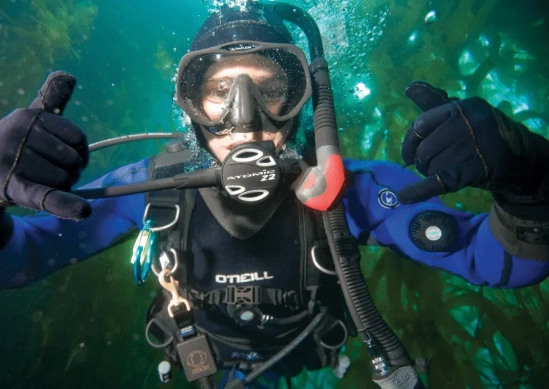
Your Questions, Answered (FAQ)
Let's tackle some common questions that pop up when people are building their first real diving equipment list.
Final Thoughts: It's About You, Not The List
Look, at the end of the day, a diving equipment list is just a template. The goal isn't to check every box. The goal is to assemble a kit that makes you feel confident, comfortable, and safe in the water. That's different for everyone.
Start with the essentials that need a perfect fit. Add pieces as you dive more and discover your preferences. Don't get sucked into every gadget. Think about function: "Will this make me safer or more comfortable?"
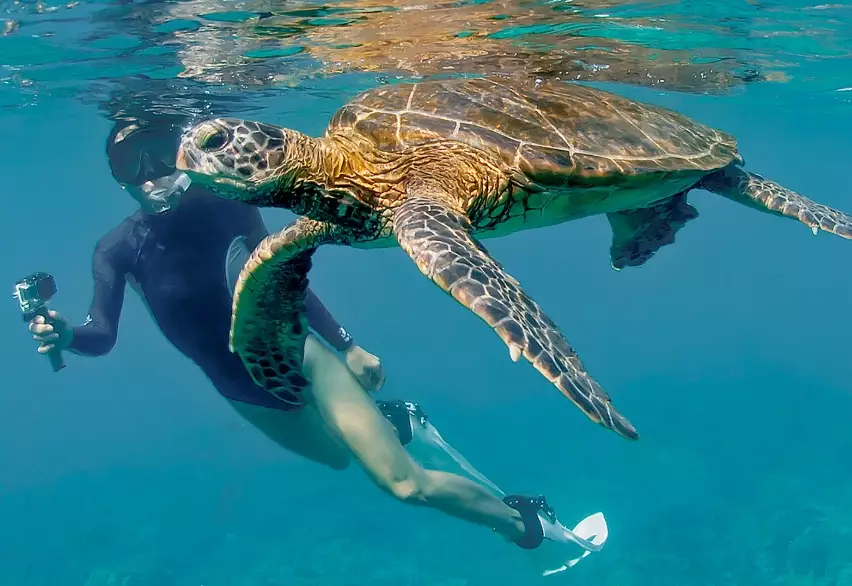
That end is exploring a silent, weightless world full of life most people never see. A well-considered, personalized diving equipment list removes barriers and lets you focus on the experience—the slow dance of a ray, the curious glance of a turtle, the sheer wonder of being somewhere humans weren't meant to be.
So take this guide, use it to ask the right questions, try things on, and build your own path into the water. See you down there.

Comments