Dive Guide Highlights
- The World's Top Destinations to Scuba Dive with Sea Turtles
- Beyond the "Where": How to Have an Amazing Turtle Dive
- When is the Best Time to Scuba Dive with Sea Turtles?
- Choosing a Dive Operator: Ask the Right Questions
- What to Pack: The Turtle Diver's Kit List
- Frequently Asked Questions (The Stuff You're Actually Wondering)
- The Bigger Picture: Why This All Matters
So you're dreaming of gliding through blue water and locking eyes with a sea turtle. I get it. That moment—when a turtle, ancient and graceful, decides to check you out or just lets you hover nearby—it sticks with you. It's not just a tick on a bucket list; it feels like a connection to the ocean itself. But the big question everyone starts with is: where can I scuba dive with sea turtles?
The good news is, you have options. Lots of them. From famous, turtle-packed reefs to quieter, secret spots where encounters feel more personal. The trick is matching the right place with what you're looking for. Are you after guaranteed sightings on every dive? A specific species, like the critically endangered hawksbill? Or maybe you want the whole package: stunning reefs, warm water, and a good chance of multiple turtles?
This isn't just a list. We're going to dig into the details that actually matter when you're planning a trip. Water temperature, visibility, the best time of year, what kind of diving to expect (easy reefs, dramatic walls, drifts). I'll also share some things I've learned the hard way—like that one time I got so excited I kicked up a sandstorm and scared the turtle away. Oops.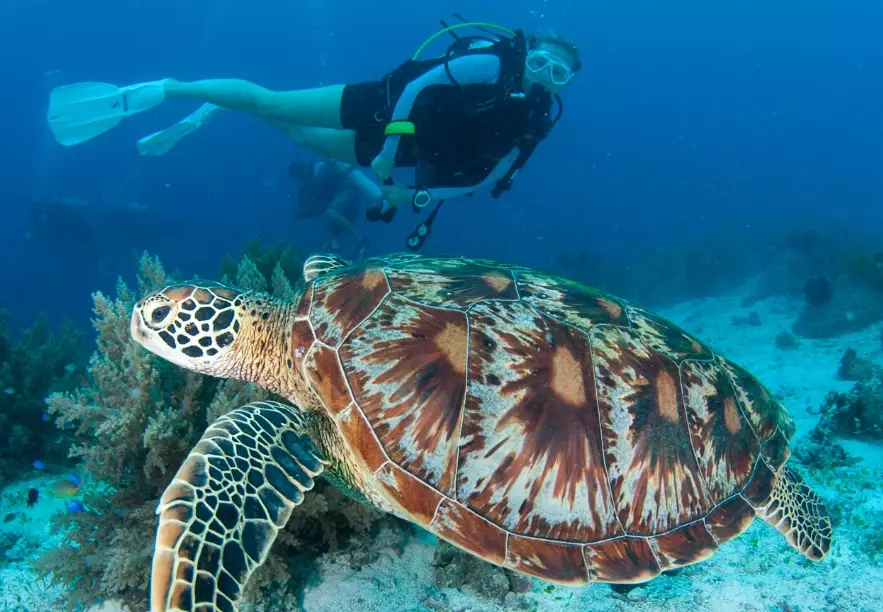
Quick Reality Check: Seeing a sea turtle is never 100% guaranteed. They're wild animals. But go to the right places at the right time, and your odds are incredibly high. Some sites are so reliably populated by resident turtles that a sighting is almost expected, which is a pretty amazing thought.
The World's Top Destinations to Scuba Dive with Sea Turtles
Let's break down the globe's hotspots. I've grouped them not just by location, but by the vibe and what makes each one special for turtle lovers.
The Caribbean & Atlantic Powerhouses
For many divers, especially those in the Americas, this is the go-to region. The water is warm, the travel is (often) easy, and green and hawksbill turtles are common residents.
Saba and St. Eustatius (Statia), Dutch Caribbean: These are my personal favorites for a less crowded experience. Saba's pinnacles and Statia's marine park are havens. The turtles here seem less habituated to divers than in some hyper-popular spots, which makes an encounter feel more special. The conservation work on Statia, in particular, is fantastic. You're diving in a protected park, and it shows.
Bonaire: Shore diving heaven. The beauty of Bonaire is you can literally decide on a whim to go look for turtles. Sites like 1000 Steps, Cliff, and Bari Reef are famous for their resident greens and hawksbills. I've spent entire dives at Bari Reef with the same curious hawksbill circling back to us. It's relaxed, easy diving, perfect for building confidence.
Roatan & Utila, Bay Islands, Honduras: The Mesoamerican Reef system here is teeming with life. West End Wall in Roatan is a turtle highway. Utila is famous for its whale sharks, but don't overlook the turtle action, especially on the north side. The vibe here is laid-back and budget-friendly.
Grand Cayman, Cayman Islands: Stingray City gets the headlines, but sites like Eden Rock and Devil's Grotto in George Town harbor are turtle nurseries. You'll often see smaller juveniles in the shallows. For bigger animals, the walls off Grand Cayman are stunning. It's a more polished, resort-style dive destination.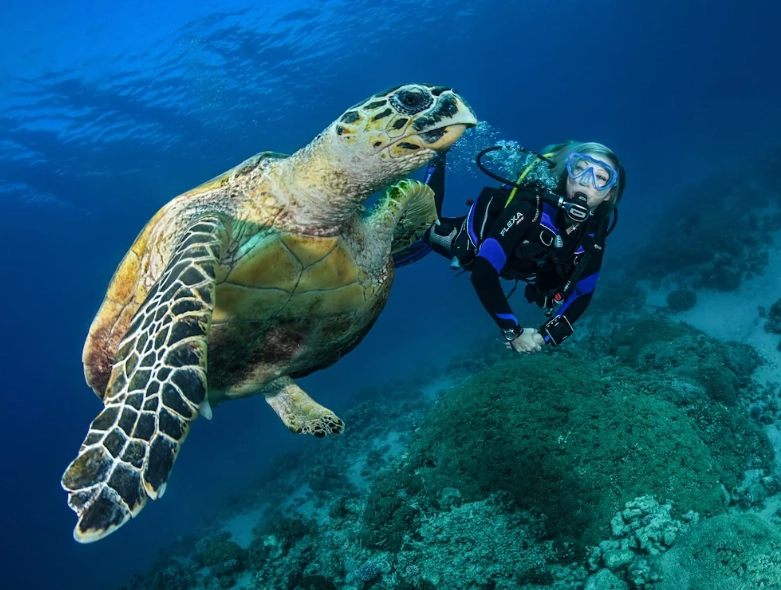
A memory from Bonaire: Floating at 15 meters, watching a huge green turtle methodically munch on a sponge. It was so focused it let us get within a few meters. You could hear the crunch! Then it gave us a sideways glance as if to say, "You're blocking the light," and paddled off. It felt like interrupting someone's very important lunch.
The Indo-Pacific Paradise
This is where biodiversity explodes. The Coral Triangle is the epicenter of marine life, and the turtle diving is, frankly, spectacular.
The Great Barrier Reef, Australia: It's iconic for a reason. From the outer reefs accessed from Cairns or Port Douglas to the remote Ribbon Reefs, turtles are a constant presence. You're likely to see greens and hawksbills here. The scale is immense, so choosing your liveaboard or day trip route is key. Research which reefs are known for turtle populations.
Indonesia: An absolute treasure trove. For concentrated turtle action, the Gili Islands (especially Gili Meno) are famous. The "Turtle Heaven" statue is an artificial reef absolutely covered in turtles. It can get busy. For a more adventurous trip, Komodo or Raja Ampat offer mind-blowing diving where turtles are part of a much larger, wilder tapestry. In Komodo, I've seen turtles riding the currents alongside sharks and giant trevallies. It's next-level.
The Philippines: Apo Island is legendary. Its marine sanctuary is a masterclass in how protection leads to abundance. You'll see dozens of turtles on a single dive, grazing peacefully on the seagrass beds. It's shallow, calm, and perfect for photographers and beginners. Another great spot is Malapascua, famous for thresher sharks, but the house reef at Evolution Resort has a family of resident turtles that are wonderfully predictable.
The Middle Eastern & African Gems
Some of the world's most pristine and unique turtle experiences are found here.
The Red Sea, Egypt: Don't just think of sharks. The reefs of the Northern Red Sea, like those around Sharm El-Sheikh, are home to healthy populations of green and hawksbill turtles. Sites like Ras Mohammed National Park and the Straits of Tiran offer drift dives where you can spot them cruising the reef walls. The water clarity is insane, making for breathtaking sightings.
Maldives: Turtles are part of the daily scene. On almost every atoll, you'll encounter hawksbills and greens cleaning at stations, sleeping under overhangs, or swimming in the channel currents. The beauty of a Maldives liveaboard is covering ground—you'll hit multiple atolls, each with its own character. Seeing a turtle against a backdrop of a sheer drop-off into the deep blue is a classic Maldivian image.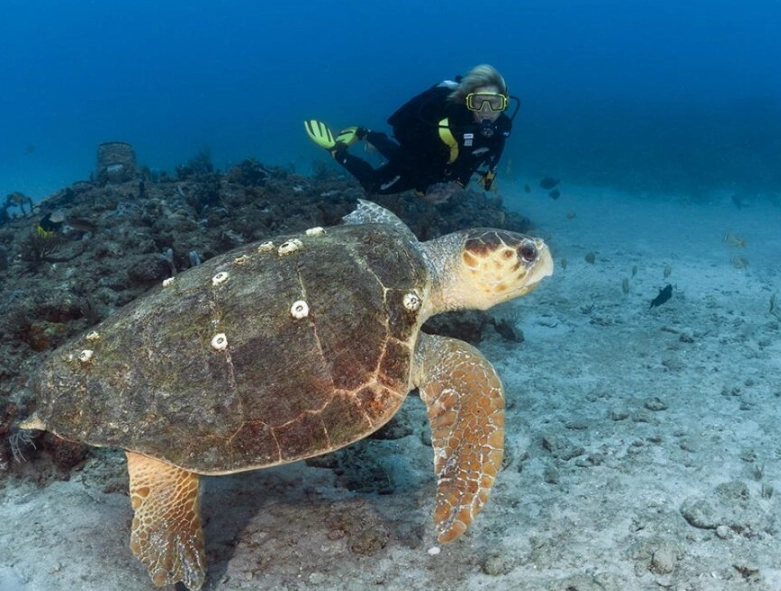
| Destination | Most Common Turtle(s) | Best Time to Visit | Diving Style / Vibe | Good for Beginners? |
|---|---|---|---|---|
| Bonaire | Green, Hawksbill | Year-round (peak Dec-Apr) | Easy shore diving, relaxed | Excellent |
| Apo Island, Philippines | Green, Hawksbill | Mar-June (calmest seas) | Shallow, protected sanctuary diving | Excellent |
| Saba/Statia | Green, Hawksbill | Apr-Aug (calmest) | Boat diving, pinnacles/walls, uncrowded | Intermediate (some currents) |
| Great Barrier Reef, Aus | Green, Hawksbill | Jun-Nov (stinger season ends) | Liveaboard or day trips, vast reef systems | Yes (choose sheltered sites) |
| Komodo, Indonesia | Green, Hawksbill | Apr-Nov (dry season) | Strong currents, advanced, wild & dramatic | No (strong currents) |
| Maldives | Hawksbill, Green | Dec-Apr (dry NE monsoon) | Channel drifts, overnights, luxurious | Intermediate (currents common) |
Beyond the "Where": How to Have an Amazing Turtle Dive
Knowing where to go is half the battle. The other half is how you dive. This is where you move from being an observer to having a respectful, memorable encounter.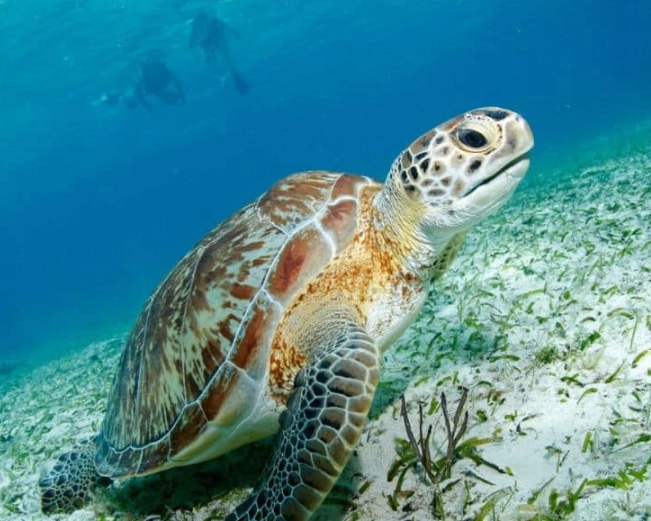
Buoyancy is Everything. I can't stress this enough. Perfect neutral buoyancy isn't just a skill; it's your ticket to not damaging the reef and not spooking wildlife. If you're kicking the coral or stirring up the bottom, turtles will leave. Practice in a pool or on a shallow, sandy site before you head to the prime turtle spots. It makes all the difference.
Approach Slowly and Calmly. No sudden movements. Imagine you're moving in slow motion. Swim parallel to the turtle, not directly at it. Let it get used to your presence. Often, if you're calm, a curious turtle will actually approach you.
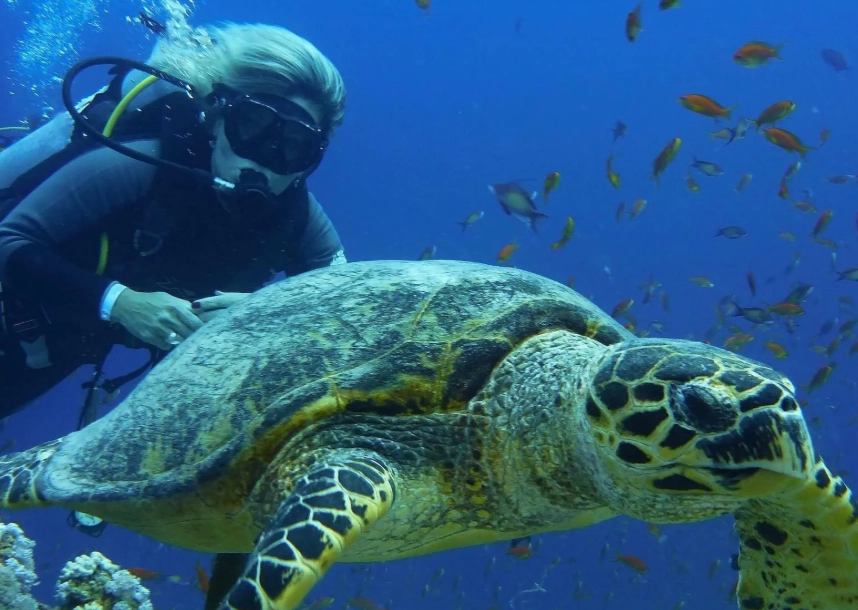
Respect the Space. Give them room. A good rule is to stay at least 2-3 meters away. Never, ever touch or chase a turtle. It stresses them out immensely. They need to surface to breathe—if you chase them, you're using up their precious oxygen. It's selfish and harmful.
Watch, Don't Interact. The goal is to observe natural behavior. Is it feeding on a sponge? Cleaning at a station? Sleeping under a ledge? Just hovering and watching this is the real magic. Resist the urge to get that perfect Instagram close-up if it means crowding the animal.
Photography Ethics: Turn off that video light or flash if you're too close. It can temporarily blind and disorient turtles. Use natural light or stay far enough back that your light isn't intrusive. Your shot is not more important than the animal's well-being. I've seen divers surround a sleeping turtle with lights—it's awful to watch. Don't be that diver.
When is the Best Time to Scuba Dive with Sea Turtles?
Timing isn't just about calm seas and good visibility (though that helps). It's about turtle life cycles.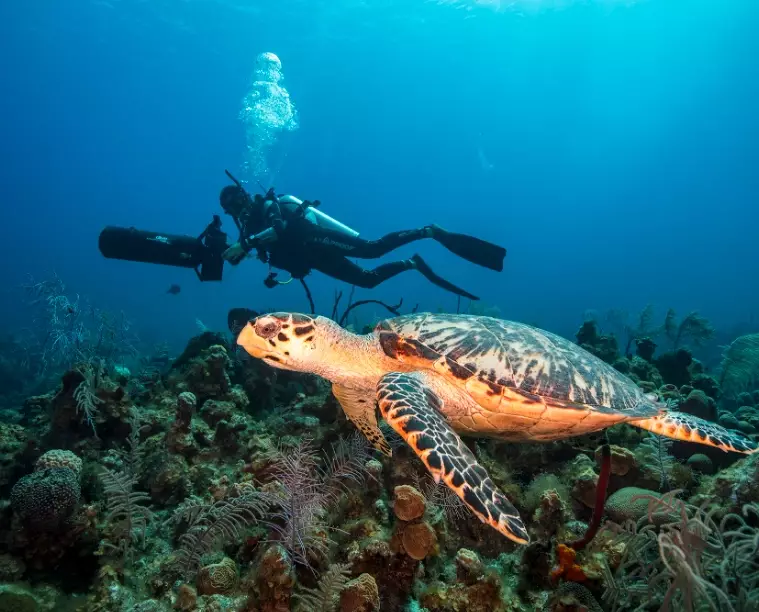
Generally, warmer months often see more turtle activity as water temperatures rise. However, in tropical destinations, diving is year-round. The more critical factor is nesting season.
During nesting season (which varies hugely by location), you may see fewer large females on the reef as they are busy laying eggs on beaches at night. But! You might also have the incredible chance to witness a nesting or hatching event (from a respectful distance on a sanctioned tour, never interfering). Conversely, outside of nesting season, the reefs can feel more populated with adults.
For example, in the Caribbean, green turtle nesting often peaks in summer. So in Bonaire, you might see fewer big greens on the reef in July, but you could book a guided tour to see them on the beach at night. It's a trade-off. Your best bet is to research your specific destination. A great resource for global sea turtle information is the IUCN Marine Turtle Specialist Group. For regional nesting data, local marine park websites are invaluable.
Choosing a Dive Operator: Ask the Right Questions
Not all dive shops are created equal when it comes to wildlife encounters. You want an operator that respects the rules and the animals.
When you're emailing or calling to book, ask them:
- "What is your protocol for diving with turtles and other marine life?" (Listen for keywords like "respectful distance," "no touching," "buoyancy control").
- "Are your guides trained in responsible wildlife encounters?"
- "Which sites do you recommend for turtle sightings, and why?" (A good guide will know resident turtles and their habits).
- "Do you support any local conservation projects?" This last one is a huge green flag.
An operator that sighs or says "Yeah, yeah, we see turtles all the time" without detailing how they protect them might not be the best choice. You want enthusiasm for conservation, not just for business.
What to Pack: The Turtle Diver's Kit List
Beyond your standard gear, a few items will elevate your experience.
- A Good Mask that Fits. Seriously. Nothing ruins a turtle encounter faster than a leaking mask. Test it in a pool beforehand.
- Surface Marker Buoy (SMB). Essential for safety, especially if you're drifting. Shows boats where you are.
- Reef Hook. For advanced sites with current (like Komodo or Maldives channels). Lets you hold position without grabbing the reef. Learn to use it properly first.
- Camera or GoPro with a Tray/Stick. Helps stabilize your shots. Remember the ethics!
- Biodegradable Stream2Sea Sunscreen. Regular sunscreen washes off and harms coral reefs, which are the turtles' home. Protecting their home is part of the deal. I switched a few years ago and won't go back.
- A Sense of Patience. Not a physical item, but the most important one. Wildlife doesn't run on a schedule.
Frequently Asked Questions (The Stuff You're Actually Wondering)
Is it safe to scuba dive near sea turtles?
Absolutely. Sea turtles are gentle and non-aggressive. They have no interest in harming you. The only risk is to the turtle if a diver acts irresponsibly. Keep your distance, be calm, and it's perfectly safe for both of you.
What's the difference between seeing a turtle snorkeling vs. scuba diving?
Snorkeling is great for seeing turtles in very shallow areas, like seagrass beds or coral bommies near the surface. But scuba diving opens up their whole world. You can observe them at their cleaning stations, watch them nap under ledges at 20 meters, or see them flying over deep walls. The encounters are often longer and more intimate underwater because you're in their three-dimensional space, not just looking down from the top.
I'm a new diver. Where is the best place for me to scuba dive with sea turtles?
Stick to places with calm, protected conditions and easy shore or boat access. Bonaire and Apo Island, Philippines are top of this list. The diving is shallow, currents are minimal, and the turtles are plentiful. It builds confidence. Avoid places known for strong currents (like Komodo or some Maldives channels) until you have more experience.
Are there any destinations where sightings are guaranteed?
No ethical operator will guarantee wildlife. They're wild. But some places have such high resident populations that it would be very unusual not to see one. Apo Island's sanctuary, Bari Reef in Bonaire, and "Turtle Heaven" in the Gili Islands come as close to a guarantee as you can get in nature.
How can I make sure my dive trip supports turtle conservation?
This is a great question. First, choose operators that actively talk about conservation, maybe even run their own projects. Second, look for destinations with strong marine protected areas (MPAs) where your park fee directly funds protection. Third, consider donating to or volunteering with organizations like the State of the World's Sea Turtles (SWOT) or SEE Turtles, which run conservation tourism programs. Your tourism dollars have power—spend them with businesses that do good.
The Bigger Picture: Why This All Matters
It's easy to get caught up in the excitement of the dive. But every sea turtle you see is a survivor. They face threats from plastic pollution, habitat loss, climate change affecting their nesting beaches, and illegal trade. According to the NOAA Fisheries, almost all species of sea turtle are classified as endangered or threatened.
When you choose to scuba dive with sea turtles responsibly, you're doing a few powerful things. You're supporting local economies that now see a live turtle as more valuable than a dead one. You're funding marine parks through your fees. And you're becoming an ambassador. That moment of connection? It changes people. You go home more likely to refuse a plastic straw, to support conservation charities, to vote for policies that protect the ocean.
So, where can you scuba dive with sea turtles? From the well-trodden paths of the Caribbean to the remote corners of the Coral Triangle, the options are as vast as the ocean itself. The real journey begins when you step off the boat, descend, and wait. With good buoyancy, a respectful attitude, and a bit of luck, you'll get your answer not from a list, but from the turtle that decides to share a moment of its ancient, slow-paced life with you.
That's the dive you'll remember forever.
Your comment