Key Sections at a Glance
- The Heart of the Matter: Where to Find Sea Turtles in Greece
- How to Ethically Swim with Sea Turtles: The Non-Negotiable Rules
- The Practical Guide: When, How, and What to Expect
- Beyond Swimming: Other Ways to Experience Greece's Turtles
- Your Burning Questions, Answered (FAQ)
- The Final Word: Making Your Decision
Let's cut right to the chase, because I know that's why you're here. Yes, you absolutely can swim with sea turtles in Greece. It's not some made-up travel blogger fantasy. I've done it myself, bobbing in the Ionian Sea as a loggerhead turtle glided past, close enough to see the intricate patterns on its shell. But—and this is a massive "but"—the how, where, and when of it all is what separates a magical, respectful encounter from a problematic one that harms the very creatures you want to admire.
The short answer to "Can you swim with sea turtles in Greece?" is a resounding yes, but it comes with a hefty dose of responsibility. Greece is home primarily to the loggerhead sea turtle (Caretta caretta), and several of its islands host important nesting beaches and feeding grounds. This isn't like swimming with dolphins in a controlled facility; these are wild animals in their natural habitat. The experience hinges on chance, season, location, and most importantly, your behavior.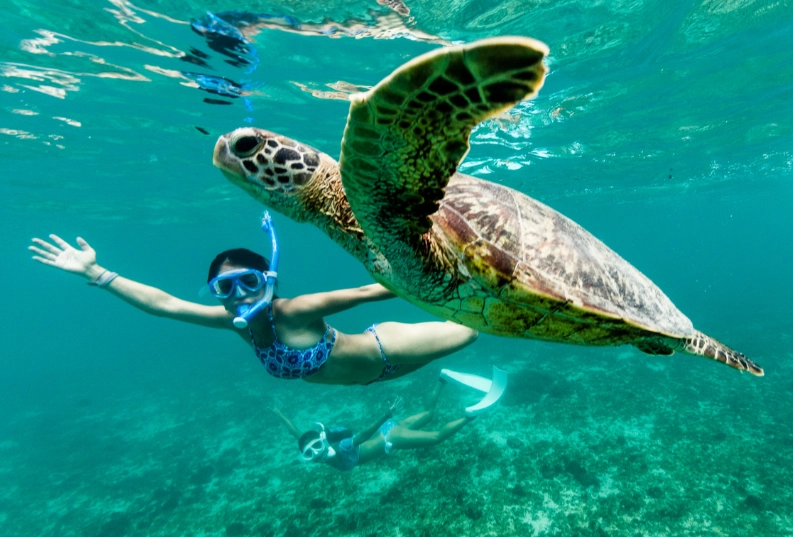
Quick Reality Check: Anyone who promises you a 100% guaranteed turtle encounter is selling you a dream. They're wild creatures. I've been on trips where we saw a dozen, and others where we saw none. That's the nature of wildlife tourism. The key is choosing locations and tours that maximize your chances while prioritizing the turtles' well-being.
The Heart of the Matter: Where to Find Sea Turtles in Greece
You can't just jump off any Greek beach and expect a turtle buddy. They congregate in specific areas, mainly for two reasons: nesting and feeding. The two big hotspots are Zakynthos (Zante) and Crete, with a few other spots worth mentioning.
Zakynthos (Zante): The Famous Turtle Island
Zakynthos is arguably the most famous spot in Greece, maybe even the Mediterranean, for turtle encounters. Laganas Bay is a critical nesting ground. This fame is a double-edged sword.
On one hand, it means there's a well-established framework for responsible viewing. The sea around Marathonisi island (also called "Turtle Island") and the waters of Laganas Bay are where you're most likely to answer "yes" to "Can you swim with sea turtles in Greece?". Boat tours from Laganas and Agios Sostis are plentiful.
On the other hand, the popularity has led to past issues with overcrowding and disturbance. Thankfully, strict regulations are now enforced by the ARCHELON Sea Turtle Protection Society and local authorities. Speed limits, no-go zones around nesting beaches, and rules for swim-with encounters are in place. It's crucial to pick a tour operator that respects these rules.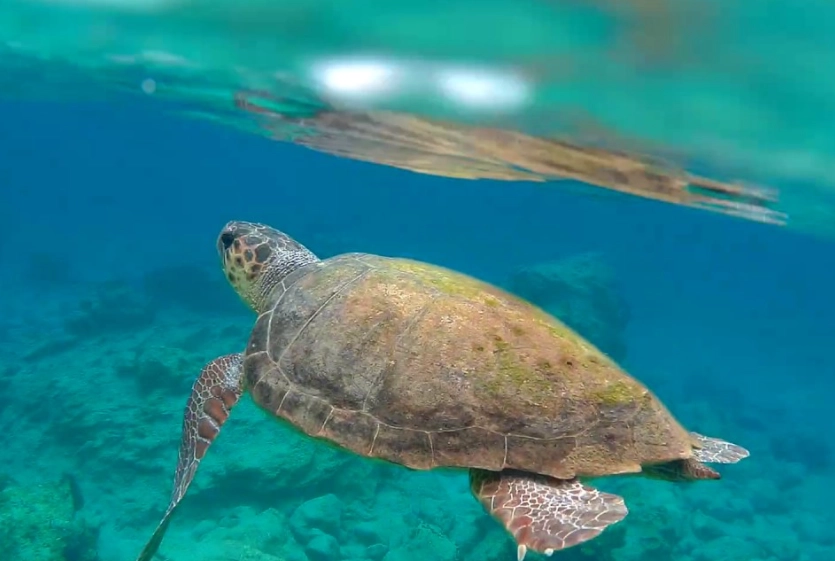
My experience in Zakynthos was mixed. The turtle sighting itself was breathtaking. But the sheer number of boats circling the same area felt a bit overwhelming, even if most kept a respectful distance. It didn't feel like a secret discovery; it felt like a well-managed wildlife attraction. That's not necessarily bad, but it's good to know what to expect.
Crete: A More Scattered but Rewarding Hunt
Crete offers a different vibe. There's no single super-famous bay. Instead, turtles are spotted along the south and north coasts. Areas like Rethymno, Chania, and the bay of Messara have reported sightings. The waters around the small island of Elafonisi are also known for turtles.
Because it's less of a singular "turtle hotspot," encounters in Crete can feel more serendipitous. You might be snorkeling over a seagrass meadow (their favorite cafeteria) and suddenly one appears. Tours are available from major ports, but they might also combine turtle spotting with general snorkeling or coastal exploration.
Other Possible Locations
Keep your eyes open in the Peloponnese (particularly around Kyparissia Bay, another major nesting site), Kefalonia, and even Rhodes. Sightings are less predictable but still possible. The Greek National Tourism Organisation often highlights areas of natural beauty and protected species, which is a good starting point for research.
| Island / Region | Key Spot | Best For | Likelihood of Encounter |
|---|---|---|---|
| Zakynthos | Laganas Bay, Marathonisi Islet | Guided boat tours, highest chance | High (in season) |
| Crete | Rethymno, Messara Bay, Elafonisi | Combined snorkeling trips, less crowded encounters | Medium to High |
| Peloponnese | Kyparissia Bay | Wild, less touristic settings | Medium (mainly nesting beaches) |
| Kefalonia | Argostoli Harbour (sometimes!) | Unexpected sightings | Low to Medium |
So, when someone asks, "Can you swim with sea turtles in Greece?", you can tell them Zakynthos is the most reliable bet, but Crete offers a more adventurous search.
How to Ethically Swim with Sea Turtles: The Non-Negotiable Rules
This is the most important section in this entire guide. Getting the chance to swim with a sea turtle is a privilege, not a right. Their survival comes first. Loggerheads are classified as "Vulnerable" by the IUCN. Here’s how to not be part of the problem.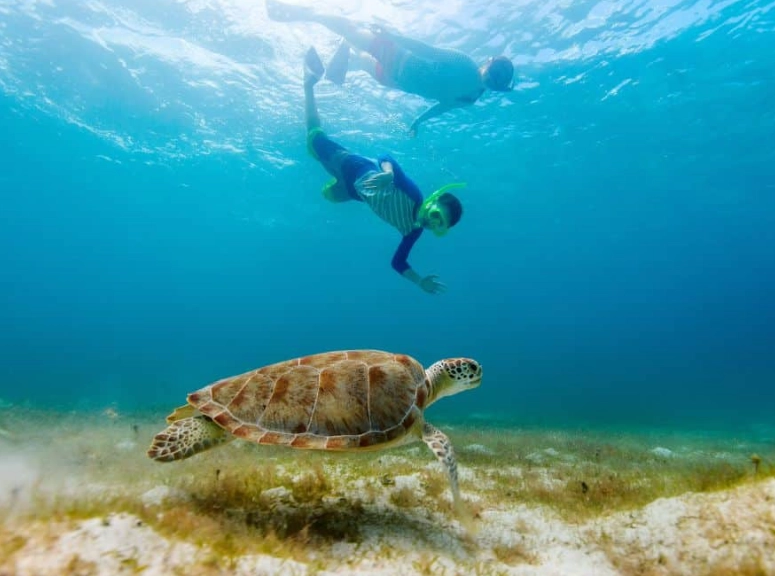
⚠️ The Golden Rule: You are a visitor in their home. The turtle's behavior dictates everything. If it swims away, you've failed. The goal is passive observation.
The Responsible Swimmer's Checklist
- No Touching. Ever. I don't care how gentle you think you're being. Touching can remove their protective biofilm, spread disease, and cause immense stress. It's also illegal.
- Maintain a Distance. At least 2-3 meters (6-10 feet). Use your zoom lens, not your proximity. A good guide will remind you of this constantly.
- No Chasing or Cornering. Swim parallel to the turtle or let it approach you. Never swim directly at it or try to get in front of it. Blocking its path to the surface for air is dangerous.
- Minimize Your Splashing. Calm, slow movements. They spook easily.
- Absolutely No Feeding. This alters their natural behavior and diet. It's harmful and, again, illegal.
- Sunscreen Matters. Before you get in the water, apply a reef-safe, mineral-based sunscreen (zinc oxide/titanium dioxide). Chemicals in regular sunscreen harm marine life, including turtles. Do this at least 20 minutes before swimming.
Choosing the Right Tour Operator
Your choice of tour is arguably your biggest ethical decision. A bad operator will chase turtles, drop swimmers on top of them, and ignore guidelines.
Red Flags: Operators who guarantee sightings, have overcrowded boats with poor briefing, or who boast about "close-up selfies."
Green Flags: Operators who give a thorough ecological briefing, emphasize rules, limit group size, have a spotter who guides the boat (not chasing), use smaller, quieter electric motors if possible, and collaborate with or donate to conservation groups like ARCHELON. Look for operators certified by local ecotourism bodies.
When researching, ask them directly: "What are your rules for swimming near the turtles?" A good answer is specific and strict.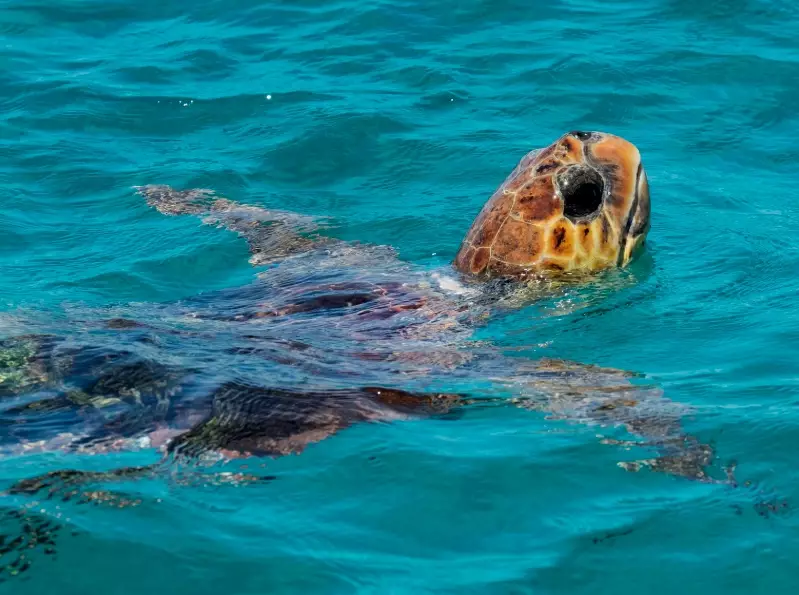
The Practical Guide: When, How, and What to Expect
Best Time to Go
The season is everything. You can technically swim with sea turtles in Greece from late May to early October, but the sweet spot is June to August.
- June-July: Peak activity. Mating occurs, and females come ashore to nest at night. Water is warm, visibility is good.
- August: Still excellent for swimming sightings. Beaches may have nesting zones cordoned off—respect them!
- September: A quieter month. Fewer tourists, still warm water. Chances are still good, especially early in the month.
Outside these months, turtles migrate to warmer waters or are less active near shore. So, if you're asking "Can you swim with sea turtles in Greece?" in April or November, the answer is almost certainly no.
What Does a Typical Tour Look Like?
Most tours last 3-4 hours. You'll board a medium-sized boat (sometimes a glass-bottom boat) from a main port. The captain or guide will take you to known turtle feeding grounds. A spotter will look for them (often by spotting their heads popping up for air). Once one is sighted, the boat will stop at a safe distance.
The guide will give a final briefing, and you'll enter the water calmly. You'll snorkel, following the guide's lead, keeping the distance. The turtle might be munching on seagrass, swimming, or just resting. After a few minutes, the guide will usually signal to get back to the boat to avoid overstressing the animal, then you might move to another spot or a nice cove for general swimming.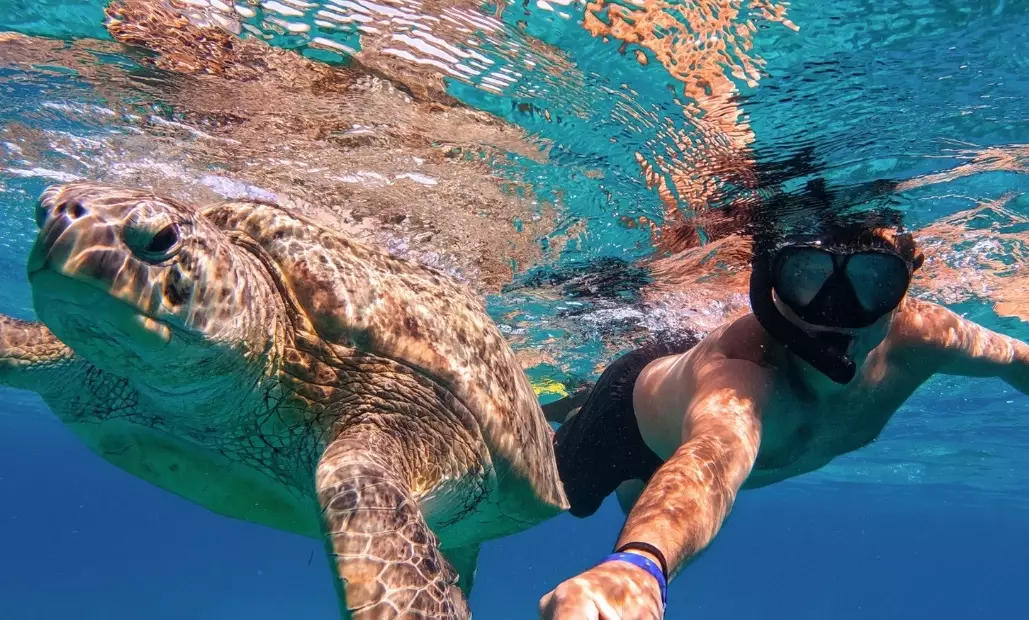
What You'll Love & What Might Bug You
The Good: The sheer magic of sharing the water with such an ancient, graceful creature. Seeing them in the wild is infinitely better than any aquarium. The Greek sun and sea are a perfect backdrop.
The Not-So-Good: It can be competitive. On a busy day, multiple boats may be watching the same turtle. You're not alone. You have to be patient and may only get a few minutes in the water per sighting. Seas can be choppy sometimes.
Beyond Swimming: Other Ways to Experience Greece's Turtles
Maybe you're not a strong swimmer, or you want to contribute more. Here are other incredible ways to connect with loggerheads.
- Volunteering: Organizations like ARCHELON run volunteer programs on Zakynthos, Crete, and the Peloponnese. You can help with beach patrols, nest protection, and public awareness. It's hard work but deeply rewarding.
- Nighttime Nesting Tours (Ethical Ones): On Zakynthos, some licensed guides run small, controlled tours to view nesting from a vast distance with red lights (which don't disturb turtles). Do your research to find an ethical one.
- Visit a Rescue Centre: The ARCHELON Sea Turtle Rescue Centre in Glyfada, Athens, cares for injured turtles. It's educational and supports their work.
So, can you swim with sea turtles in Greece? Yes. But you can also help ensure they're still there for future generations to wonder at.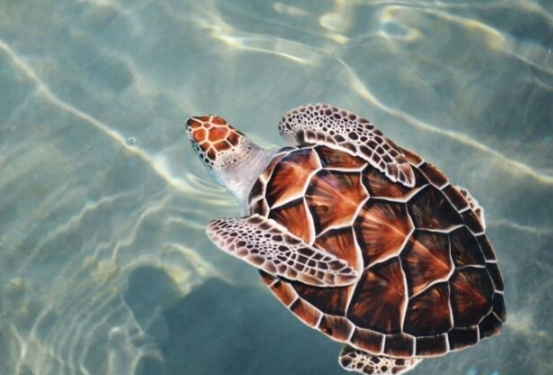
Your Burning Questions, Answered (FAQ)
The Final Word: Making Your Decision
Look, if you go in with the right mindset, swimming with sea turtles in Greece can be a highlight of your life. It's a powerful connection to the natural world. But it's not a theme park ride.
Do your homework. Pick a responsible operator. Manage your expectations—you might see one turtle or ten. Follow the rules religiously. And remember that the goal isn't the perfect Instagram shot; it's the memory of watching a perfect creature in its own world, undisturbed because of your care.
So, can you swim with sea turtles in Greece? You can. And I hope, if you do, you do it right. The turtles are counting on it.
Your comment