Your Reading Companion
- Why Clearwater is a Prime Spot for Sea Turtle Encounters
- Picking Your Adventure: Types of Tours & What to Really Expect
- When to Go: Timing is (Almost) Everything
- The Non-Negotiable Rules: How to Be a Responsible Guest
- What to Bring & How to Prepare (The Practical Stuff)
- Answering Your Burning Questions (FAQ)
- Making Your Choice and Having Realistic Expectations
Let's be honest. You've probably seen those picture-perfect shots online—someone floating peacefully next to a giant, graceful sea turtle in crystal clear water. And you thought, "I need to do that." If Clearwater, Florida, is on your radar for making that dream happen, you're in the right spot. But here's the thing: it's not as simple as just jumping off a beach and finding one. I learned that the hard way.
This isn't a fluffy promotional piece. I'm going to walk you through the actual, sometimes messy, details of how to have a legitimate shot at a sea turtle encounter around Clearwater. We'll talk about the tours that are worth your money, the ones that might disappoint, the best time of year to even try, and the crucial rules you absolutely must follow to avoid being "that tourist" who stresses out a 100-year-old creature. Because honestly, if you're going to swim with sea turtles in Clearwater Florida, you should do it right—for you and for them.
The Core Truth: Clearwater itself is a bustling mainland beach. The truly consistent, pristine snorkeling with abundant sea turtles happens a little offshore, on the barrier island sandbars and reefs, particularly around places like Clearwater Pass or on dedicated trips to larger reef systems. Knowing this geography is your first step to success.
Why Clearwater is a Prime Spot for Sea Turtle Encounters
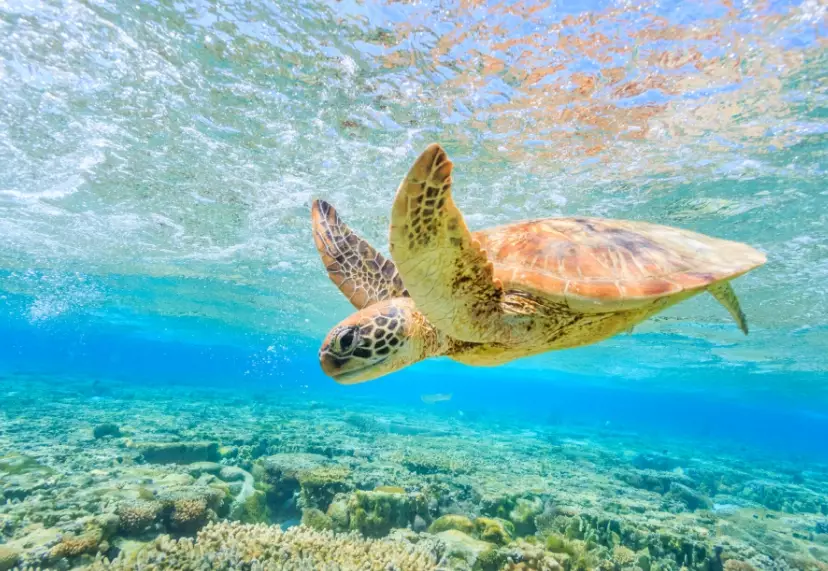
It's not an accident. The entire Gulf Coast of Florida is a highway and home for several species of sea turtles, primarily loggerheads, greens, and the occasional hawksbill. The waters here have healthy seagrass beds (the salad bar for green turtles) and are part of their migratory routes. The Florida Fish and Wildlife Conservation Commission (FWC) has extensive data showing the importance of this region, which you can explore on their sea turtle research page.
But Clearwater offers a specific advantage: accessibility. The continental shelf is wide and relatively shallow here, meaning those rich foraging grounds aren't a multi-day boat ride away. They're often within a 30-minute to 1-hour boat trip. This makes a Clearwater sea turtle snorkeling adventure a feasible half-day or full-day activity, not a major expedition.
That said, water clarity can be a fickle friend. After heavy rains or with certain winds, the water near shore can get churned up. The best tour operators know the spots—often a few miles out—where the water stays clearer more consistently, increasing your chances of a good view.
Picking Your Adventure: Types of Tours & What to Really Expect
This is where most people get confused. Not all "sea turtle" tours are created equal. Some are fantastic, educational ecotours. Others are basically crowded party boats that happen to stop near a reef. You need to know what you're signing up for.
The Dedicated Eco-Snorkel Tour
This is your best bet for a serious, high-probability encounter. These tours are run by captains and guides who are often marine biologists or deeply passionate naturalists. The focus is on education and respectful wildlife viewing. The groups are smaller (maybe 10-15 people max), and they go to specific, known turtle hotspots. They'll give you a thorough briefing on turtle behavior and rules before you even get in the water.
What you get: Higher chance of sightings, educational value, respectful approach, better gear (quality masks/snorkels).
The potential downside: Higher price point. They might sell out well in advance, especially in peak season.
The Dolphin & Sightseeing Combo Tour
These are more common. The main draw is often dolphins, shelling on a sandbar, and general sightseeing. "Possible sea turtle sighting" is listed as a bonus. Manage your expectations here. The captain will keep an eye out, and if they spot a turtle surfacing, they might let you snorkel in that area. But it's not a guaranteed, targeted search.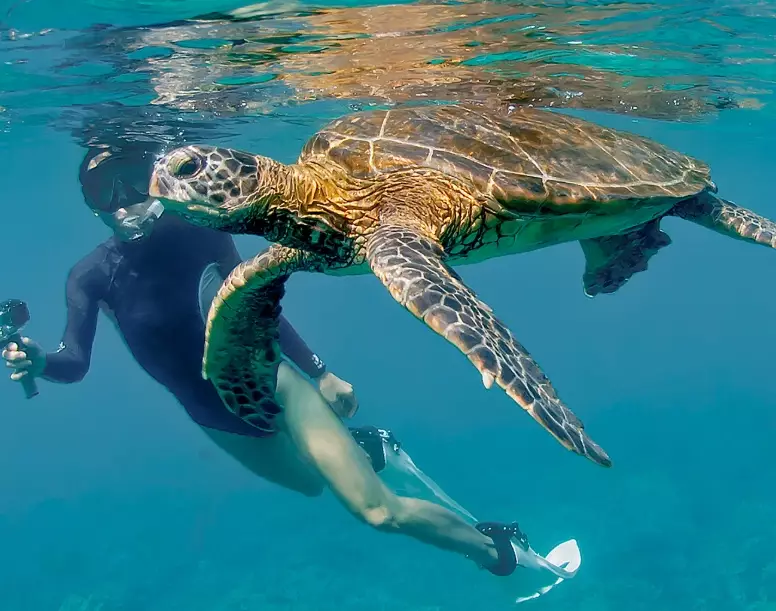
What you get: A broader experience, often lower cost, good for families who want variety.
The potential downside: Lower probability of a turtle encounter. Snorkeling time might be limited. Can be crowded.
The Self-Guided Option: Is It Possible?
Can you just snorkel from a Clearwater beach and see a turtle? It's possible, but I'd call it a lucky bonus rather than a plan. Beach snorkeling in Clearwater is limited by visibility and depth. Your odds increase dramatically if you have access to a private boat and can get to the nearby reefs or grass flats, like those around the Clearwater Pass jetties or out to the Intracoastal sandbars. But for most visitors, a guided tour is the only practical way to access the prime habitats.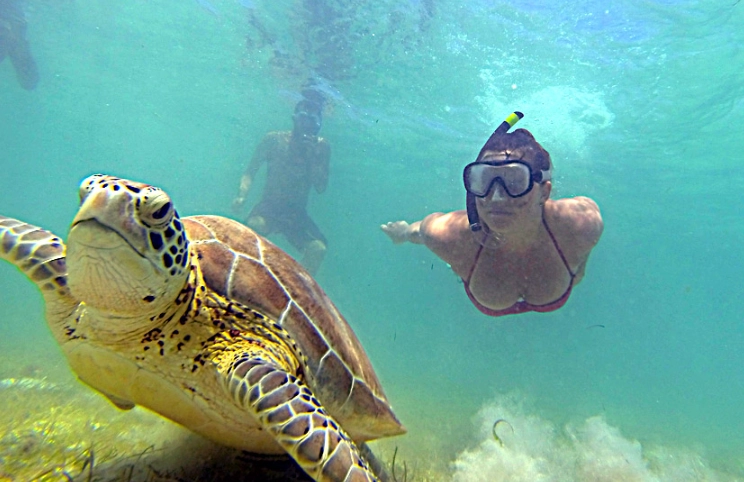
Here’s a quick comparison to help you visualize the choices:
| Tour Type | Best For | Turtle Focus | Group Size | Price Range |
|---|---|---|---|---|
| Dedicated Eco-Snorkel | Serious wildlife enthusiasts, photographers, learners | Primary goal | Small (6-15) | $$$ ($100-$180+ pp) |
| Dolphin & Sightseeing Combo | Families, first-timers, those wanting a varied day | Secondary possibility | Medium to Large (20-40+) | $$ ($60-$100 pp) |
| Private Charter | Groups, special occasions, flexible itineraries | Can be primary goal | Your group only | $$$$ ($500-$1000+ total) |
When to Go: Timing is (Almost) Everything
You can't just show up in December and expect the same experience as in July. The season dictates everything—water temperature, turtle activity, and even tour availability.
Prime Season (Late Spring through Early Fall): This is your golden window. Specifically, May through September. The water is warm (80s F), calm, and clear. Sea turtles are most active and frequently seen foraging. This is also nesting season on the beaches, which is a whole other amazing spectacle you can witness on guided night walks (run by entities like the Clearwater Marine Aquarium).
Shoulder Seasons (April & October): Still very good. Water is warming up or cooling down but often still pleasant. Fewer tourists can mean a more relaxed tour. Sightings are still common.
Off-Season (November - March): This is tricky. Many turtles migrate to warmer waters, though some hardy individuals stick around. The bigger issue is that most dedicated snorkel tours simply don't run. The water can be chilly (60s-70s F), requiring a wetsuit, and the weather/water conditions are less predictable. If your heart is set on swimming with them, I'd avoid planning your trip for winter.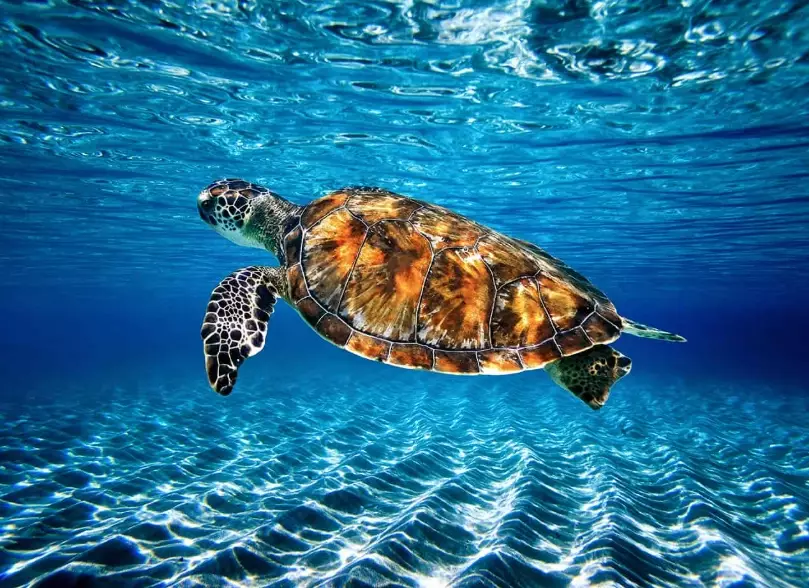
Seriously. Seas are usually calmer, winds lighter, and the sun isn't directly overhead yet, which can actually make for better underwater visibility and less glare. Afternoon thunderstorms are also a common summer occurrence in Florida, which can lead to cancellations.
The Non-Negotiable Rules: How to Be a Responsible Guest
This is the most important section. Sea turtles are protected under the U.S. Endangered Species Act and Florida state law. Harassing them isn't just rude; it's illegal. Fines can be massive. More importantly, our actions stress them, waste their precious energy, and can disrupt feeding or mating.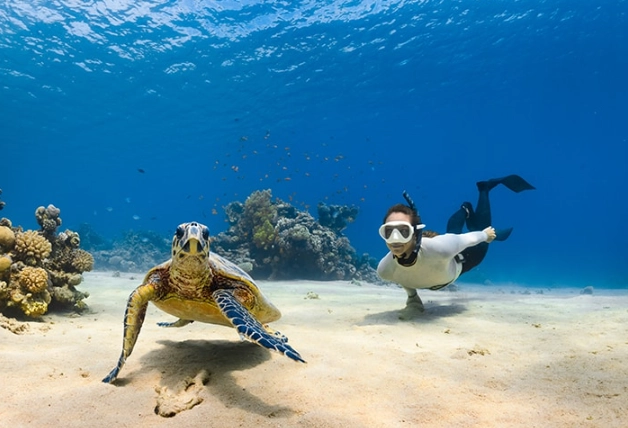
The Golden Rules of Turtle Snorkeling:
- DO NOT TOUCH. I don't care how tempted you are. Your hands have oils and microbes that can damage their shells and skin. Just don't.
- Maintain a Safe Distance. Give them space. A good rule is 6-10 feet minimum. If the turtle starts swimming away from you, you're too close. Let it go about its business.
- Never Chase or Corner. You are a visitor in their home. Observe calmly. The best encounters happen when the turtle is curious and approaches you (which happens often if you're still).
- Minimize Your Splashing. Sudden, loud movements can startle them. Enter the water gently from the boat.
- Look, Don't Feed. Feeding wildlife alters their natural behavior and is harmful. They have a perfect diet already.
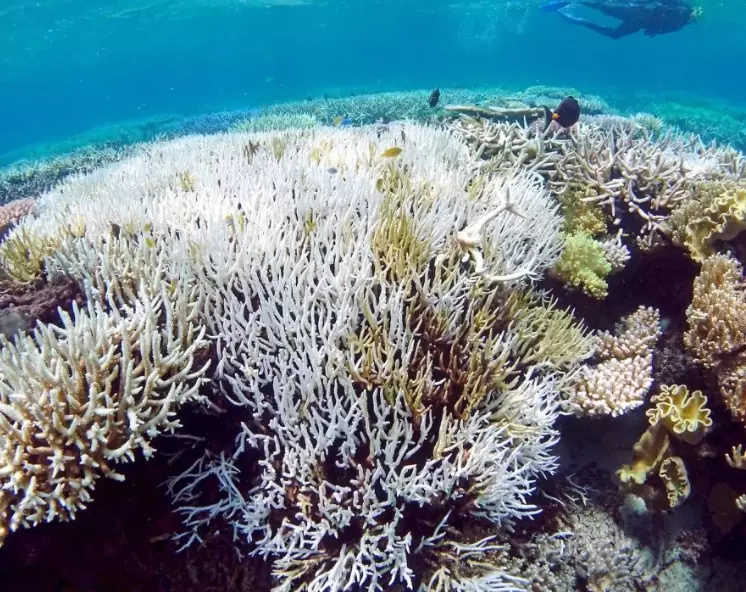
- Reef-Safe Sunscreen Only. Before you even get on the boat, ensure your sunscreen is mineral-based (zinc oxide/titanium dioxide) and labeled "Reef Safe." Chemicals like oxybenzone bleach and kill coral, destroying turtle habitat. This is a big deal in Florida.
A good guide will enforce these rules. If you're on a tour where the guide ignores people crowding a turtle, that's a red flag about the company's ethics.
What to Bring & How to Prepare (The Practical Stuff)
Beyond the right mindset, you need the right gear. Most tours provide mask, snorkel, fins, and a flotation vest (which you should use). But here's what you should personally bring to be comfortable:
- Your own mask (if you have one): A perfect fit makes all the difference. A leaking, foggy mask can ruin the experience. If you're serious about snorkeling, investing in your own is worth it.
- Reef-safe sunscreen & a rash guard/long-sleeve shirt: The sun is intense on the water. A UV-protective shirt is the best defense—it means less sunscreen needed and no worry about it washing off.
- Waterproof camera or GoPro: For memories. Remember, no flash photography underwater.
- Sea-sickness remedy (if prone): Even on calm days, the boat drift can get to you. Take non-drowsy medication *before* you feel sick, as directed.
- Hydration & a snack: Snorkeling is exercise. Most tours provide water, but bring your own too. A small snack for after is a good idea.
- A towel and dry clothes for the ride back.
Answering Your Burning Questions (FAQ)
Absolutely. Sea turtles are not aggressive. They have no interest in harming you. The main safety concerns are related to your own swimming ability, boat safety, and marine life like jellyfish (which are seasonal). Always listen to your guide's safety briefing. The risk from the turtles themselves is virtually zero.
Most commonly, the Loggerhead (big head, powerful jaws) and the Green turtle (smoother, oval shell). Rarely, you might spot a Kemp's Ridley (the smallest and most endangered) or a Hawksbill. For detailed species info, the MOTE Marine Laboratory's sea turtle program is an excellent resource.
Yes, but check with the tour operator for age and swimming ability requirements. Some eco-tours have a minimum age (often 6-8). Combo tours are usually more family-flexible. A child who is a confident swimmer and comfortable in the ocean will have a blast. A nervous, non-swimmer will not.
You must disclose this to the tour operator when booking. They will provide a flotation vest (often required for everyone anyway) and sometimes a foam "noodle." On many tours, you can float on the surface and just look down—you don't need to be a deep diver. But you do need to be comfortable in open water.
Reputable companies will cancel for unsafe conditions (high winds, lightning, rough seas) and offer a reschedule or full refund. Don't pressure a captain to go out in bad weather—it's for your safety and a miserable experience.
Making Your Choice and Having Realistic Expectations
So, you're ready to book your chance to swim with sea turtles Clearwater Florida style. Let's summarize the decision path.
If a guaranteed, educational, close encounter is your top priority: Research and book a dedicated eco-snorkel tour well in advance. Be prepared to pay a premium. Read recent reviews focusing on guide knowledge and turtle sightings.
If you're with family, on a budget, or want a sampler-platter of Gulf life: A dolphin and shelling combo tour is a great choice. Hope for a turtle, but be thrilled with dolphins and starfish. You'll still have a fantastic day on the water.
Manage your expectations. You are entering the wild. No ethical company can "guarantee" a sighting. They are wild animals. But by going with a knowledgeable guide in the right season to the right places, you are stacking the odds massively in your favor.
The magic of swimming with sea turtles isn't in a checked box. It's in the quiet moment when you're floating, hearing your own breath, and this ancient, serene creature glides below you, completely indifferent to your presence yet allowing you a glimpse into its world. It’s humbling. That's what you're really going for. And Clearwater, with its access to the gentle Gulf waters, is one of the best places in the continental U.S. to find that magic.
Do your homework, pick a responsible operator, respect the rules, and get ready for an experience that will stick with you long after the salt has washed out of your hair.
Comments