So you're sitting there in Colorado, maybe after watching a stunning nature documentary, and you type into Google: "is it okay to swim with sea turtles? near colorado." It's a fantastic question that mixes a dreamy wildlife encounter with a very practical geographical puzzle. I've been there. The idea is magical – gliding silently next to a creature that's been navigating our oceans since the dinosaurs.
But let's cut to the chase with the Colorado-specific part, because it's the elephant in the room (or should I say, the missing sea turtle in the mountain stream?).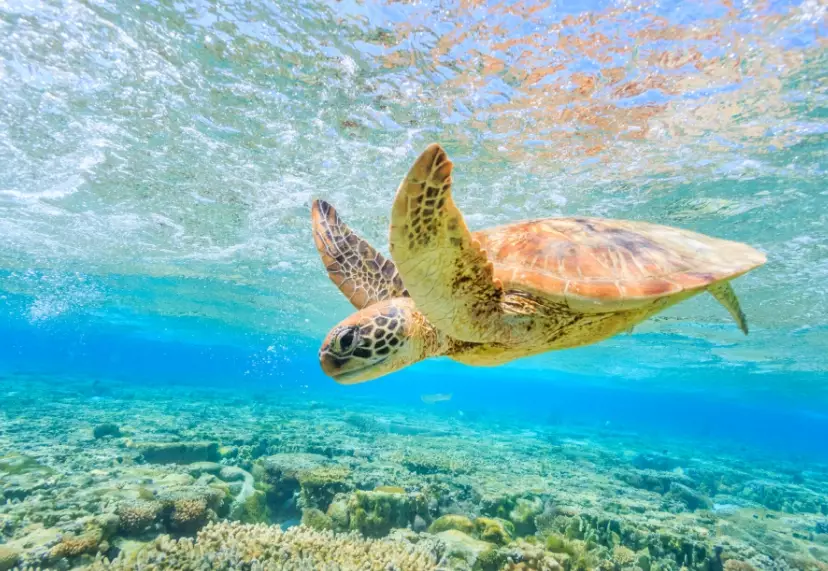
The short, direct answer is no, you cannot swim with sea turtles in the wild in or immediately near Colorado. Colorado is a landlocked state, over a thousand miles from the nearest ocean coastline where sea turtles live and nest. There are no natural sea turtle habitats in its rivers, lakes, or reservoirs.
Your Quick Guide
Why "Is It Okay?" is The Most Important Question You Can Ask
Before we talk about planes and passports, let's settle the core ethical question. Is it okay to swim with sea turtles? The answer is a firm, but conditional, yes.
It's okay if – and this is a massive IF – you do it on their terms, in a way that prioritizes their well-being over your photo op. This isn't just my opinion; it's the stance of marine biologists and conservation groups worldwide. Sea turtles aren't pets or performers; they're wild, often endangered, animals engaged in critical behaviors like feeding, resting, or breeding.
I remember my first time snorkeling near a green turtle in Hawaii. I was so excited I kicked furiously to get closer. It looked at me, gave a slow, powerful flap of its flippers, and was gone in a heartbeat. I learned my lesson fast: my enthusiasm was a disturbance. The best encounters happen when you practice passive observation.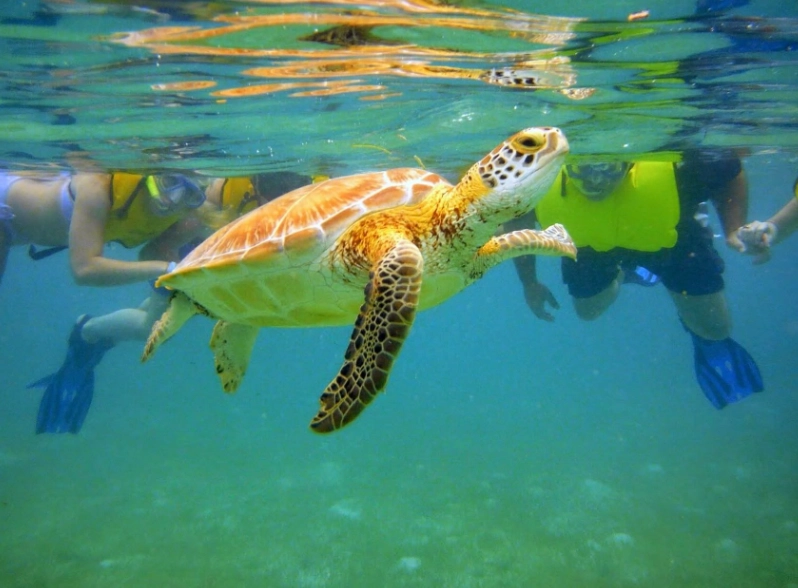
The Golden Rules: Your Non-Negotiables for a Turtle Encounter
If you remember nothing else, remember these three things. Break these, and you're part of the problem.
- Do NOT touch them. Seriously, don't. Your hands have oils, sunscreen, and microbes that can damage their shells and skin. It's also incredibly stressful for them.
- Do NOT chase or corner them. You are a visitor in their home. Let them control the distance and the interaction. If they swim away, let them go.
- Give them space. Aim to stay at least 10 feet away. More is better. Use your zoom lens, not your fins, to get "closer."
It sounds simple, but you'd be shocked how many people forget this the moment they see a turtle. The desire to touch is strong, but resisting it is what defines a responsible traveler.
Bridging the Gap: From Colorado Mountains to Ocean Waters
Okay, so Colorado itself is out. Where does that leave you? In a fantastic position to plan an unforgettable trip, actually. The "near" in your search has to be interpreted from a traveler's perspective. For a Coloradan, "near" might mean a direct flight to a coastal paradise. Let's look at your most viable options, ranked by travel feasibility.
The closest ocean coastlines to Colorado are in California, Texas, and Mexico. However, not all coasts are equal for reliable, ethical sea turtle encounters. You're looking for clear, calm snorkeling waters and established conservation practices.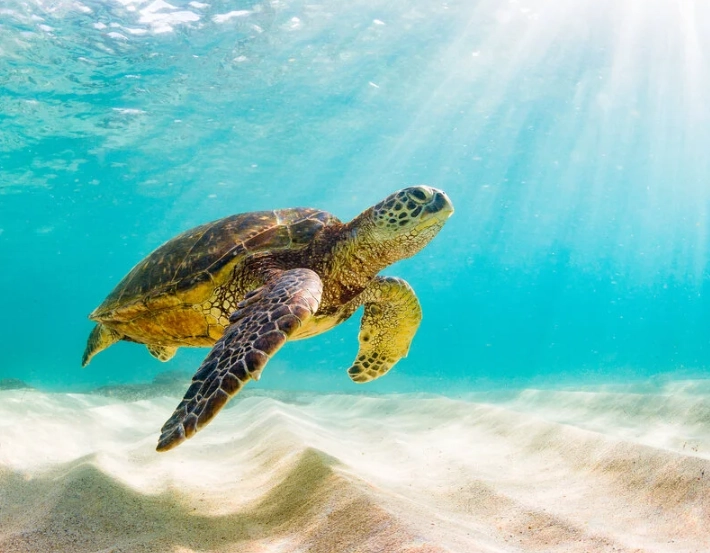
| Destination Region | Approx. Flight Time from Denver (DIA) | Best For | Turtle Species You Might See | Notes & Realistic Outlook |
|---|---|---|---|---|
| Hawaiian Islands | 7-8 hours | Guaranteed, easy encounters; family-friendly snorkeling | Green Sea Turtles (Honu), Hawksbill | Top Recommendation from CO. Clear waters, turtles are common and protected. Sites like Turtle Canyon (Oahu) or Laniakea Beach (North Shore) offer high chances. It's a longer flight but the most straightforward success. |
| Florida (East Coast & Keys) | 4-5 hours | Combining beach vacation with wildlife; summer nesting tours | Loggerhead, Green, Leatherback (rare) | Great option. The Florida Keys, especially, have fantastic snorkeling. You can also join authorized night walks to see nesting turtles (May-Oct). Check the Florida Fish and Wildlife Conservation Commission for guidelines. |
| Gulf Coast of Mexico (Cancun, Riviera Maya) | 4-5 hours + short transfer | All-inclusive trips with snorkeling excursions | Green, Loggerhead, Hawksbill | Akumal Bay is famously called "the place of the turtles." It can get crowded. Critical: Choose a tour operator committed to rules. Avoid places that bait or harass turtles for tourists. |
| Southern California | 2-3 hours | Cold-water diving; committed enthusiasts | Primarily Green Sea Turtles | A niche option. A small, resident population exists around San Diego Bay (e.g., near the TPC). Water is colder, murkier, and sightings are less guaranteed than in tropical locales. For most, it's not the ideal "swim with" experience. |
See? While "near colorado" in a literal sense doesn't work, your geographic starting point just defines the first leg of the journey. The real adventure begins where the ocean starts.
How to Choose an Ethical Tour Operator (Your Most Important Decision)
This is where your research matters most. A good operator educates and enforces rules. A bad one turns turtles into a circus act. Here’s what to look for when you're booking that trip from Colorado:
- Small Group Sizes: They should advertise limited spots. If the brochure shows a horde of people surrounding one turtle, run.
- Clear Pre-Snorkel Briefing: Any reputable guide will spend 10-15 minutes before you get wet going over the rules (no touch, no chase, safe distance). If they don't, it's a red flag.
- Environmental Affiliation: Look for mentions of partnerships with or donations to local marine conservation NGOs.
- Reviews Are Key: Don't just look at the star rating. Read the reviews. Do people mention the guide enforcing rules? Or do they brag about "getting to touch one"? The latter is a terrible sign.
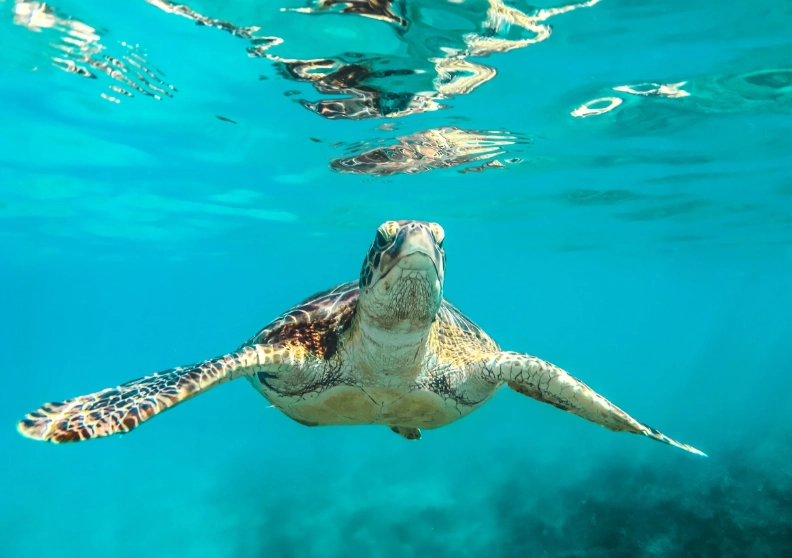
Pro Tip from a Frequent Traveler: When you email or call to inquire, ask them directly: "What are your rules for interacting with the sea turtles?" Their answer will tell you everything. A vague answer is a bad answer. A detailed, conservation-focused answer means you've found a good one.
But What About...? Your Burning Questions Answered
Let's tackle some of the other questions swirling in your head, the ones that pop up after the initial "is it okay to swim with sea turtles? near colorado" search.
Are there any sea turtles in Colorado at all?
In the wild? Absolutely not. However, you might find freshwater turtles in Colorado's ponds and rivers (like painted turtles or sliders). They're cool, but they're not the majestic sea turtles you're dreaming of. For sea turtles, you have to visit accredited aquariums. The Downtown Aquarium in Denver has sea turtles in their care (usually rescue animals that cannot be released). It's a great way to learn about them up close, though it's obviously not the same as swimming alongside one in the ocean.
What's the best time of year to go?
It depends entirely on your destination. In Hawaii and Florida, you can see turtles year-round. In Hawaii, water conditions are generally calmer in the summer months. In Florida, summer is also nesting season, which offers a completely different, land-based turtle experience on guided night walks. Always check seasonal weather and water visibility for your specific spot.
Is it safe for me? Could a turtle hurt me?
Sea turtles are not aggressive toward humans. They have no interest in you. The only real danger is if you accidentally get between a large turtle and the surface (they need to breathe) or if you were to harass one and it defensively bumps you (which would be 100% your fault). The main safety risks are typical ocean risks: currents, boat traffic, and sunburn. Listen to your guide.
What gear do I need?
A good-fitting mask and snorkel are essential. Fins help you move efficiently with minimal kicking (which stirs up sand and can stress turtles). And here's the big one: REEF-SAFE SUNSCREEN. Chemicals like oxybenzone and octinoxate in standard sunscreens bleach and kill coral reefs, which are vital to the marine ecosystem. Hawaii and many other places have banned these chemicals. Buy mineral-based sunscreen (zinc oxide/titanium dioxide) labeled "Reef Safe." It's a non-negotiable part of being a responsible snorkeler.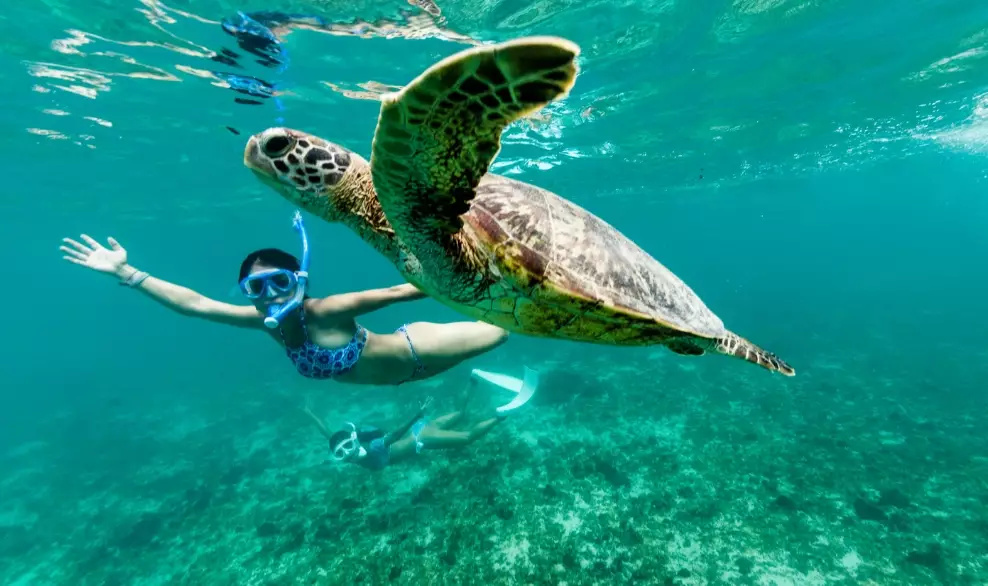
Making It Happen: Your Action Plan from Colorado
So, you're convinced it's okay if done right, and you're ready to plan. Here's a step-by-step mental checklist.
- Reframe Your Goal: Shift from "swim with" to "observe respectfully." This mindset change will guide all your other choices.
- Pick Your Destination: Based on the table above, decide what fits your budget, time, and travel style. Hawaii for ease, Florida for combination trips, etc.
- Research Operators Meticulously: Use the criteria listed earlier. This is your most critical research phase.
- Book in Advance: Good, ethical tours with small groups fill up fast, especially in peak seasons.
- Gear Up Responsibly: Get your reef-safe sunscreen now. Consider buying your own mask/snorkel for a guaranteed good fit.
- Educate Yourself Further: Visit the NOAA Fisheries website or the IUCN pages on sea turtles to understand the conservation challenges they face. It'll make your encounter infinitely more meaningful.
Ultimately, asking "is it okay to swim with sea turtles? near colorado" is the first, best step. It shows you care about the ethics. The answer leads you on a journey from the Rocky Mountains to some of the most beautiful reefs and bays on the planet. It’s a journey of respect, wonder, and realizing that some of the coolest experiences come with a responsibility to protect what we’ve come to see.
Your dream is totally valid. With the right planning and the right attitude, you can have an experience that leaves you in awe and leaves the turtles perfectly at peace. Now, start looking at those flight deals.

Comments