Quick Guide
You've seen the pictures. A serene human, floating in impossibly blue water, eye-to-eye with a majestic sea turtle. It looks magical, almost unreal. And that's exactly what plants the seed of the question in your mind: can you swim with sea turtles for real? Is it just a lucky photographer's shot, or something you can actually plan and experience?
Let me cut to the chase. Yes, absolutely. But—and this is a huge but—it's not as simple as jumping into any ocean and expecting a turtle buddy. The real question isn't just "can you," but "how can you do it right?" How can you have that experience without being "that tourist" who stresses out the wildlife everyone has come to see?
I've been lucky enough to have several of these encounters, from the crowded reefs of Hawaii to more remote spots in the Caribbean. Some moments were pure magic. Others were... frankly, a bit depressing, watching people chase and corner these ancient creatures. That's why I wanted to write this. Not just a list of places, but a real talk guide on what it takes to have a good encounter, for both you and the turtle.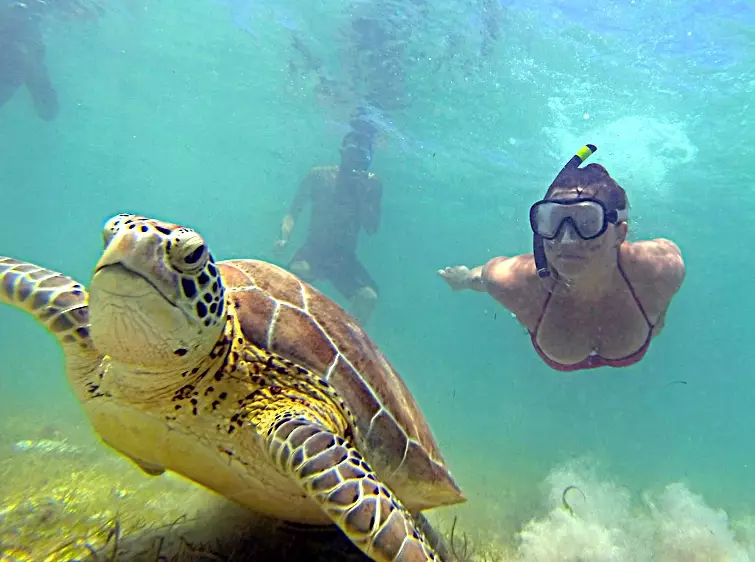
The Short Answer: Yes, you can swim with sea turtles in many parts of the world. It's a guided or independent wildlife encounter that requires respect, good timing, and an understanding of the animals' behavior to be successful and ethical.
Where in the World Can You Swim With Sea Turtles?
This is usually the first thing people want to know. Turtles are found in tropical and subtropical oceans globally, but some spots are just legendary for reliable, accessible encounters. It's not just about geography, though. It's about habitat—healthy seagrass beds for greens to munch on, coral reefs for hawksbills, and sandy beaches for nesting.
I've put together a table of the top spots based on accessibility, consistency of sightings, and the overall quality of the experience. Remember, "best" can be subjective. A busy, famous site might guarantee a sighting but feel crowded. A remote island might offer solitude but require more luck.
| Location | Turtle Species You'll Likely See | Best Time to Visit | Experience Vibe | Key Notes |
|---|---|---|---|---|
| Hawaii (Oahu & Maui) | Green Sea Turtles (Honu), Hawksbill | Year-round (calmer seas in summer) | Accessible, often near shore. Can be popular. | Turtles are revered. Strict state and federal laws protect them. Maintain a 10-foot distance. Hawaii Tourism Authority has good resources. |
| Great Barrier Reef, Australia | Green, Loggerhead, Hawksbill | June to Nov (cooler, less rain) | Dive or snorkel trips from Cairns/Port Douglas. Epic reef backdrop. | Part of a massive ecosystem. Use a Great Barrier Reef Marine Park accredited operator. |
| Akumal, Mexico | Green Sea Turtles | Year-round | Famous for turtles feeding in shallow seagrass. Now often requires a guided group. | A case study in managing tourism pressure. Rules are strict for a reason—go with a guide who enforces them. |
| Gili Islands, Indonesia | Green, Hawksbill | Apr to Nov (dry season) | Relaxed island vibe. Turtle traffic around the islands' reefs. | "Turtle Point" on Gili Trawangan is famous. Sadly, some poor practices exist—choose operators carefully. |
| Sipadan, Malaysia | Green, Hawksbill | Apr to Dec | World-class diving destination. Not for beginners. | Heavily protected. Limited permits. An unforgettable dive experience, not just a snorkel. |
| Turtle Island (Selingan), Malaysia | Green, Hawksbill | July to Oct (peak nesting) | Focused on nighttime nesting observation. | Less about swimming, more about witnessing the nesting miracle. A powerful conservation-focused trip. |
| Apo Island, Philippines | Pawikan (mainly Hawksbill & Green) | Mar to June (summer) | Community-managed marine sanctuary. Pristine. | A model for sustainable ecotourism. The turtles are very accustomed to passive observers. |
You'll notice I didn't just list places. I mentioned the vibe. Because wondering can you swim with sea turtles in Hawaii is a totally different question—and experience—than asking it about a remote atoll in the Indian Ocean.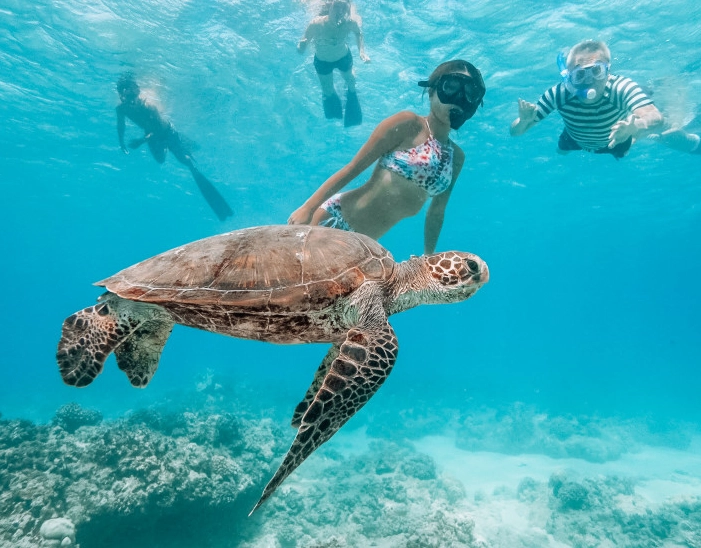
How to Actually Prepare: It's Not Just Grabbing a Mask
Okay, you've picked a place. Now what? Most people think you just need a swimsuit and a sense of adventure. Wrong. Poor preparation is what leads to bad experiences—for you and the turtles.
First, your gear matters more than you think. A leaky, foggy mask will have you fussing and flailing, scaring everything away. A snorkel that constantly lets in water is miserable. Spend time getting a mask that fits your face *before* you travel. Do the suction test—press it to your face without the strap, inhale slightly through your nose, and let go. If it stays put, it's a good fit.
Your Eco-Friendly Snorkel Kit Checklist
- Well-Fitting Mask & Snorkel: This is non-negotiable. Comfort is safety and stealth.
- Reef-Safe Sunscreen: Not a suggestion, a requirement. Chemicals like oxybenzone bleach and kill coral, destroying turtle habitat. Look for mineral-based (zinc oxide/titanium dioxide) formulas. Apply it at least 15 minutes before entering the water.
- Rash Guard or Long-Sleeved Swim Top: The best sunscreen is no sunscreen. A UPF shirt protects your skin and means less lotion washing into the reef.
- Fins: Not essential for calm, shallow areas but helpful for stronger currents. Avoid stirring up sand on seagrass beds.
- Underwater Camera (or GoPro): If you must. But please, no flashes. And think about whether you're experiencing the moment or just filming it.
Listen Up: I see so many people slathered in generic sunscreen, about to jump on a boat. That stuff is poison to the reefs you're paying to see. Buying reef-safe is the easiest, most direct conservation action you can take as a tourist. Full stop. Places like Hawaii and Key West have actually banned harmful sunscreens.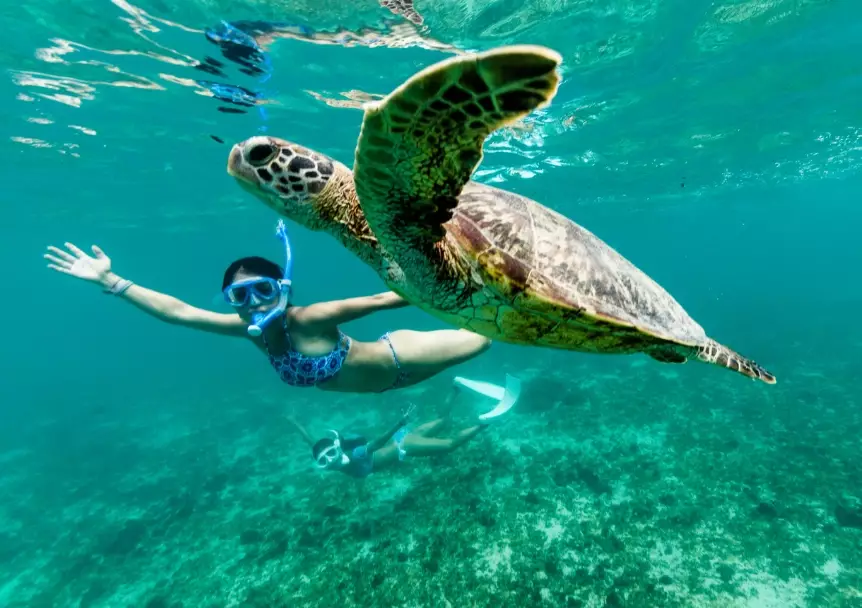
The Art of the Encounter: How to Be a Good Guest
This is the heart of it. Anyone can stumble upon a turtle. But to have a genuine, peaceful interaction where the turtle goes about its business? That's a skill. It boils down to one principle: you are a visitor in their home. Act like a polite one.
Turtles have to surface to breathe. That's often when they're most vulnerable. If you crowd them at the surface, you're blocking their airway and causing major stress. Imagine if you needed air and someone kept getting in your face.
Rules of Turtle Etiquette (The Unwritten Guide)
- Approach Slowly and Calmly: No splashing, no frantic kicking. Move like you have all the time in the world.
- Maintain a Respectful Distance: The common rule is 10 feet (3 meters), but more is better. If the turtle chooses to come closer, that's its choice. Hold your position.
- Never Touch, Chase, or Corner: This seems obvious, but you'd be shocked. Touching can remove their protective bio-film, making them susceptible to disease. Chasing exhausts them. Just don't.
- Observe, Don't Interact: Your goal is to watch natural behavior—feeding, resting, swimming. If your actions change its behavior (it starts swimming away quickly), you're too close or too intrusive.
- Watch Your Fins: Be mindful of the reef below and the turtles around you. A careless kick can damage coral or startle your subject.
I'll be honest, watching other people break these rules can ruin the whole thing. I once saw a group of snorkelers literally form a circle around a resting turtle, each trying to get a selfie. The turtle looked stressed, pumping its flippers nervously before finally pushing through the human wall. It was awful. Don't be part of that problem.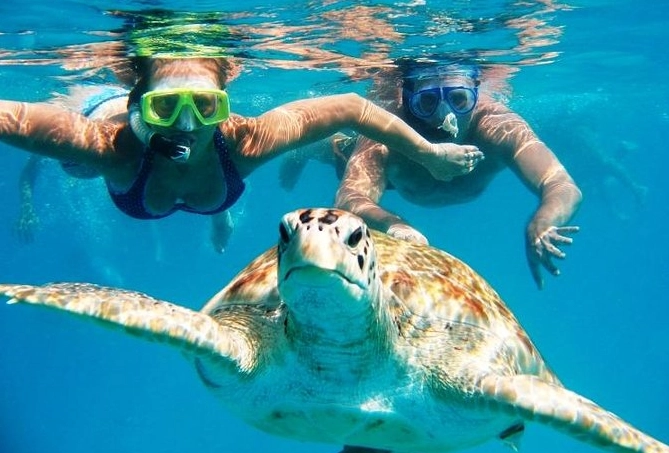
Ask yourself: am I here to check a box on a bucket list, or to witness something wild?
The Bigger Picture: Conservation and Your Role
When we ask can you swim with sea turtles, we're tapping into a tourism industry that has a direct impact—good and bad—on these endangered animals. Six out of seven sea turtle species are classified as threatened or endangered by the International Union for Conservation of Nature (IUCN). The main threats are habitat loss, pollution (especially plastic), fishing bycatch, and climate change.
So where does tourism fit in? Done poorly, it's another stressor. Done right, it can be a powerful force for protection. Tourist dollars can fund ranger patrols on nesting beaches, support rehabilitation centers, and give local communities a financial incentive to protect turtles instead of harvesting them.
How to be part of the solution?
- Choose Responsible Operators: Do they cap group sizes? Do their guides actively educate and enforce rules? Do they support local conservation projects? Ask these questions.
- Support Sanctuaries & Rescues: Visit facilities like the Maui Ocean Center's Marine Institute in Hawaii or the Turtle Foundation projects. Your entry fee helps.
- Minimize Your Plastic Use: Turtles often mistake plastic bags for jellyfish. Refuse single-use plastics on your trip.
- Report Issues: See someone harassing wildlife? Say something to your guide or a local authority. Poaching or injured turtle? Know how to report it locally.
The feeling you get from seeing a turtle in the wild is special. It creates a connection. The hope is that connection turns into a desire to protect them long after your tan fades. That's the real win.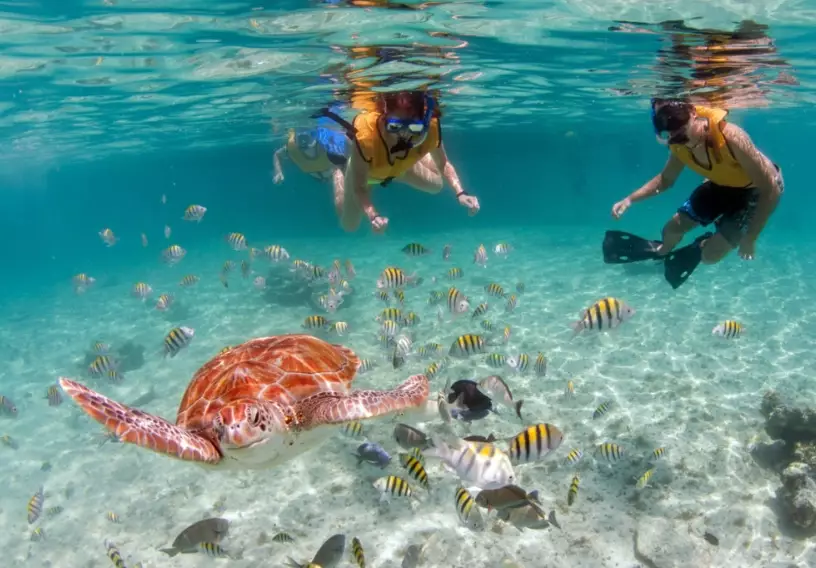
Frequently Asked Questions (The Stuff You're Really Wondering)
Is it safe to swim with sea turtles?
Generally, yes. Sea turtles are not aggressive. They don't see you as food or a threat (unless you threaten them). The main risks are related to the ocean environment itself—currents, boat traffic, sun exposure, or accidentally touching coral or other marine life. The turtle itself poses almost no danger.
What time of day is best to see them?
Early morning is often prime time. The water is calmer, the sun isn't directly overhead yet (better for seeing into the water), and there are fewer people. Turtles also tend to be more active in the mornings, feeding in seagrass beds. Late afternoon can be good too, but midday when the sun is high and tourist boats are out is often the most crowded and least serene time to try to swim with sea turtles.
Do I need to go on a tour, or can I go by myself?
It depends entirely on the location. In some places, like many spots in Hawaii, you can easily access turtle habitats from public beaches. In others, like Akumal now or specific reef sites, access is controlled and you must go with a licensed guide. Even if it's not required, a good guide on your first outing can teach you how to spot turtles and behave around them, making future solo attempts more successful.
What if I'm not a strong swimmer?
You can still have an amazing experience! Many of the best turtle spots are in relatively shallow, protected bays (like Turtle Town in Maui or parts of Akumal). Using a flotation device like a snorkel vest or even just a pool noodle can give you confidence. Always be honest with tour operators about your swimming level—they can recommend the best sites for you. Never venture out into open water or strong currents if you're not confident.
Are there places where it's unethical to swim with them?
Yes, and this is critical. Avoid any facility that:
- Handles turtles constantly for photos (like pulling them from tanks).
- Allows or encourages riding, touching, or holding turtles.
- Confines turtles in small, barren enclosures with no escape from people.
- Labels itself as a "sanctuary" but breeds turtles or has no release program.
True sanctuaries and rehab centers focus on rescue, rehabilitation, and release. Your interaction should be observational, not physical. The World Wildlife Fund (WWF) has great guidelines on responsible wildlife tourism.
Can you scuba dive with sea turtles?
Absolutely. In fact, scuba diving can sometimes lead to more relaxed encounters than snorkeling. Because you're neutrally buoyant and not constantly returning to the surface to breathe, you can observe without much movement. Turtles on reefs are often used to seeing divers and may go about their business. Many of the world's best dive sites are famous for turtle encounters. Just remember, all the same rules of respect apply—maybe even more so, as your bubbles can startle them if you get too close.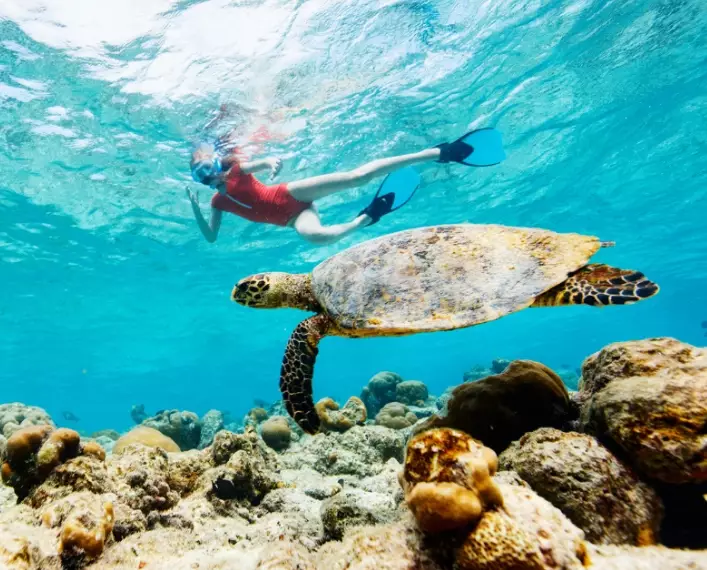
Final Thought: The question "can you swim with sea turtles" has a beautiful, multi-layered answer. Yes, you can. You can have that moment of awe. But you also have a responsibility. You have the power to make that moment a negative blip in the turtle's day or a harmless, passing shadow. Choose to be the shadow. Choose to be the quiet observer. The memory will be deeper, and the ocean will be better for it.
Look, I know this was a lot of info. But I'd rather you go in over-prepared than under-prepared. This isn't a zoo. It's the wild. And that's what makes it so incredible when it happens. When you're floating there, and this ancient, graceful creature glances at you before going back to its business... you'll forget all the planning. You'll just be in the moment. And you'll know you earned it.
Now go get fitted for a good mask.
Your comment