You’re on a Florida beach at dusk, maybe on the Space Coast or in the Keys. The sand is still warm, and the sound of the waves is the only thing breaking the silence. Then you see it—a tiny, frantic flipper breaking the surface of a nest, followed by a miniature loggerhead the size of a poker chip. Your heart melts. The instinct to help, to gently guide it toward the water, is overwhelming. So, can you touch baby sea turtles in Florida?
Let’s cut straight to it: No, you cannot. It is illegal under both federal and Florida state law, and more importantly, even a well-intentioned touch can be a death sentence for the hatchling. This isn’t about being a killjoy; it’s about survival science. I’ve spent over a decade watching these rituals on Florida beaches, and the number one mistake I see isn’t malice—it’s misplaced kindness.
What You’ll Find in This Guide
The Straight Answer: It’s Illegal and Harmful
This is non-negotiable. The Florida Marine Turtle Protection Act (Rule 68E-1) makes it illegal to “take, molest, harass, or disturb” any marine turtle, nest, or hatchling. “Harassment” is broadly defined and includes any human interaction that changes the turtle’s natural behavior. Picking one up, touching it, or even surrounding it counts.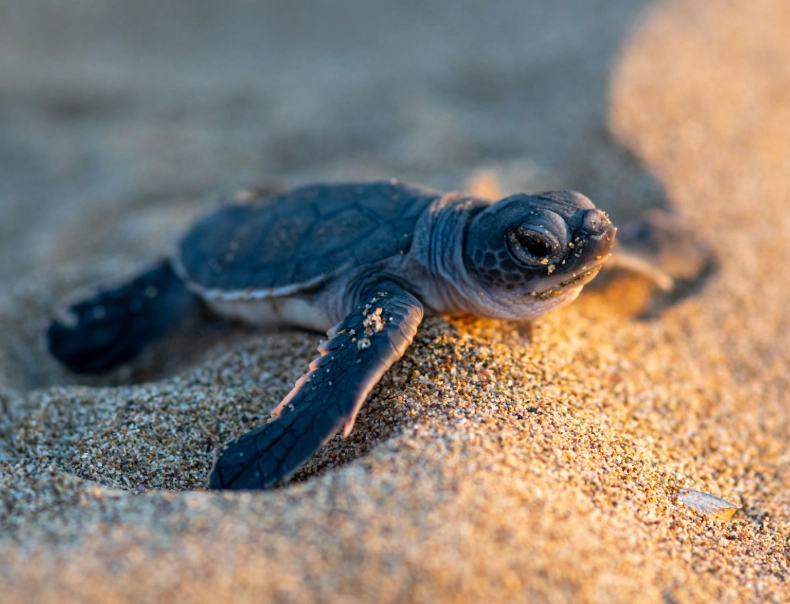
On the federal level, all sea turtles in U.S. waters are protected by the Endangered Species Act (ESA). Loggerheads and greens are listed as threatened, while leatherbacks and Kemp’s ridleys are endangered. The ESA prohibits any “take,” which includes harming or harassing.
The bottom line: There is no scenario where touching a wild baby sea turtle in Florida is permitted. Not if it looks lost. Not if it’s going the wrong way. Not for a quick photo. The law is absolute for a critical reason—their biology makes them incredibly vulnerable to our interference.
Why Touching Baby Sea Turtles is So Dangerous
This is where most articles just say “it’s bad” and move on. But understanding the why changes everything. It turns a rule into a reason. Let’s break down the two biggest, least-discussed threats.
The “Imprinting” Problem
This is the subtle killer. When a hatchling scrambles from nest to surf, it’s undergoing a process called imprinting. It’s memorizing the unique magnetic signature, scent, and possibly the sound of its natal beach. Decades later, as an adult female, she will use this imprint to return to this exact stretch of coast to lay her own eggs.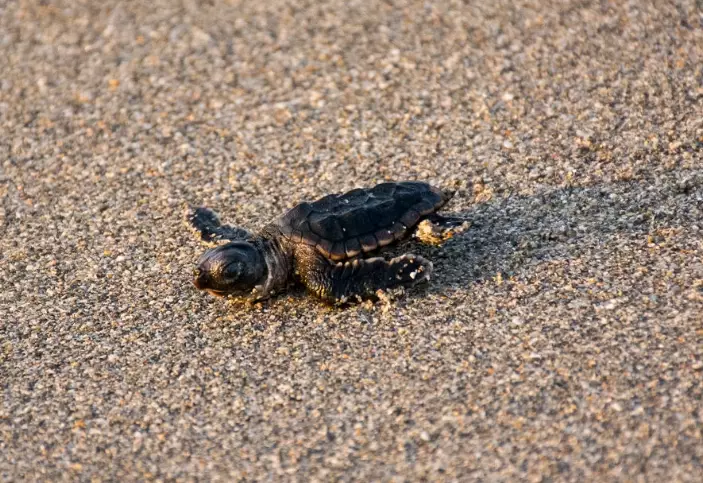
Here’s the expert insight few talk about: Human handling can disrupt this process. Our scent, the oils on our skin, even the temperature of our hands is a massive, alien data point that gets logged during this critical window. We don’t know if it scrambles the signal entirely, but why risk it? A turtle that fails to imprint correctly may never nest, effectively ending her genetic line because someone wanted to “help” her to the water.
Disorientation and Exhaustion
The crawl from nest to ocean is the hatchling’s first workout. It builds strength needed for the swim frenzy that follows, where they paddle non-stop for nearly 24 hours to reach offshore currents.
If you pick one up and place it in the water, you’ve robbed it of that crucial exercise. It may be too weak to outswim its first predator. Worse, if you handle it, you risk exhausting it through stress. A panicked, handled hatchling uses up its limited energy reserves before it even hits the waves. In the ocean, energy is survival.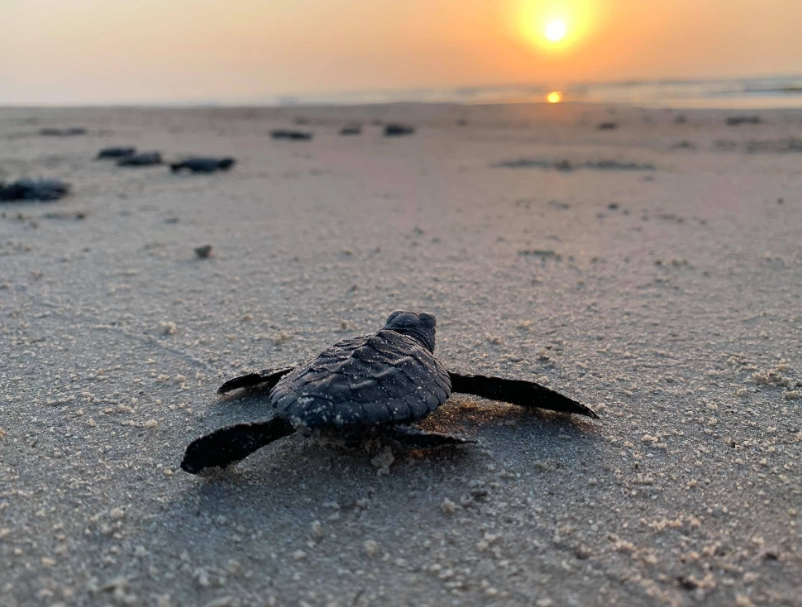
A Personal Observation: I once saw a tourist, thinking they were being heroic, “rescue” a hatchling from a small sand crab. The crab was a natural predator. That brief struggle was part of the hatchling’s natural selection process. By intervening, the tourist placed a potentially weaker turtle into the ocean, where far bigger predators awaited. Nature’s system is brutal, but it works. Our interference often just moves the problem downstream.
The Real Legal Consequences in Florida
People think, “It’s just a tiny turtle, who’s going to know?” Trust me, they know. Florida takes this seriously.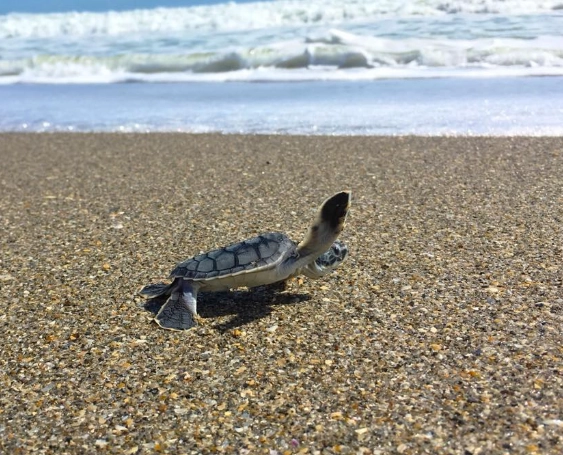
Violation of the state law is a third-degree felony. Let that sink in. Not a misdemeanor, a felony. Potential penalties include:
- Up to a $5,000 fine per violation.
- Up to five years in prison.
Local counties have their own ordinances with additional fines. Beach patrols, wildlife officers, and even trained volunteers are vigilant during nesting season (March through October). They will report you. I’ve seen it happen over what someone claimed was “just a photo.”
How to Ethically Watch a Sea Turtle Hatching
Now for the good part. You can witness this miracle ethically. It’s one of the most profound natural events you’ll ever see.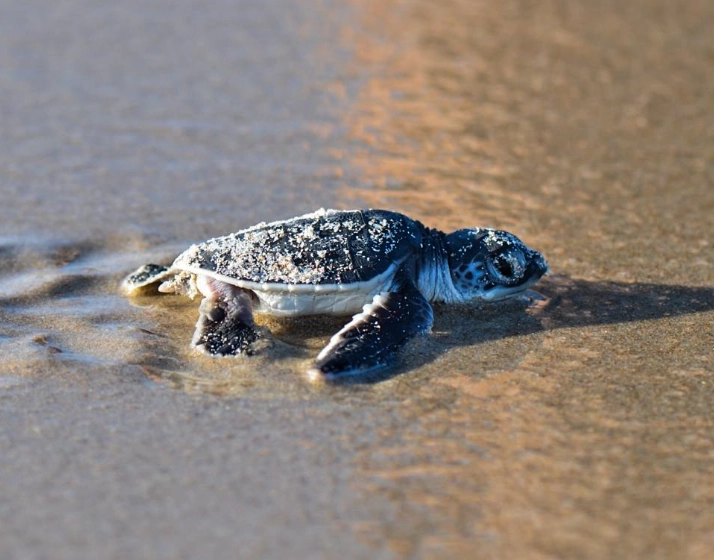
The golden rule: Your presence should be invisible. You are a ghost on the beach.
- Go with a Guide: The best way is a permitted guided tour. Organizations like the Sea Turtle Conservancy or tours at John D. MacArthur Beach State Park or the Archie Carr National Wildlife Refuge are led by experts who ensure no laws are broken and disturbance is minimal.
- Lights Out: Hatchlings use the natural glow of the horizon over the ocean to navigate. Any artificial light—flashlights, phone screens, camera flashes, beachfront porch lights—can disorient them, sending them inland to die. Use no lights. If you must, only use a true red LED flashlight (wavelength >560nm) approved for turtle watching. Your eyes will adjust to the moonlight.
- Keep Your Distance: Stay behind any marked nests. If you encounter a hatchling unexpectedly, stay still and give it a wide berth. Do not form a circle around it.
- Leave No Trace: Fill in holes, knock down sandcastles, and take all your gear. These are deadly obstacles for both hatchlings and nesting adults.
Common Mistakes Even Well-Meaning People Make
Let’s get specific. Here’s where good intentions go wrong.
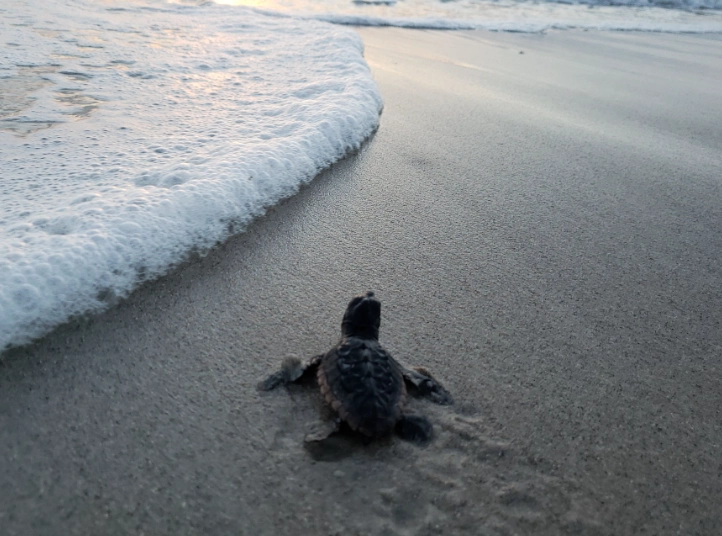
1. The “Wrong Way” Rescue: Hatchlings sometimes crawl in circles or head inland. It’s part of the process. If you manually point them toward the ocean, you’ve disrupted their imprinting and potentially their magnetic calibration. Let them self-correct.
2. The “Helping Hand” Through Debris: If a hatchling is truly stuck in plastic or a deep footprint, the correct action is not to handle it yourself. Call the Florida Fish and Wildlife Conservation Commission (FWC) hotline at 1-888-404-FWCC. They have trained responders.
3. The Flashlight “Guide”: Shining any light to “show them the way” is catastrophic. It guarantees disorientation. The only light should be the moon and stars over the ocean.
4. Keeping Them for “Just a Minute”: Some think keeping a hatchling in a bucket for a school project or to “show the kids” is harmless. This is a direct violation and causes immense stress. Every minute on land is a minute of lost energy for their ocean journey.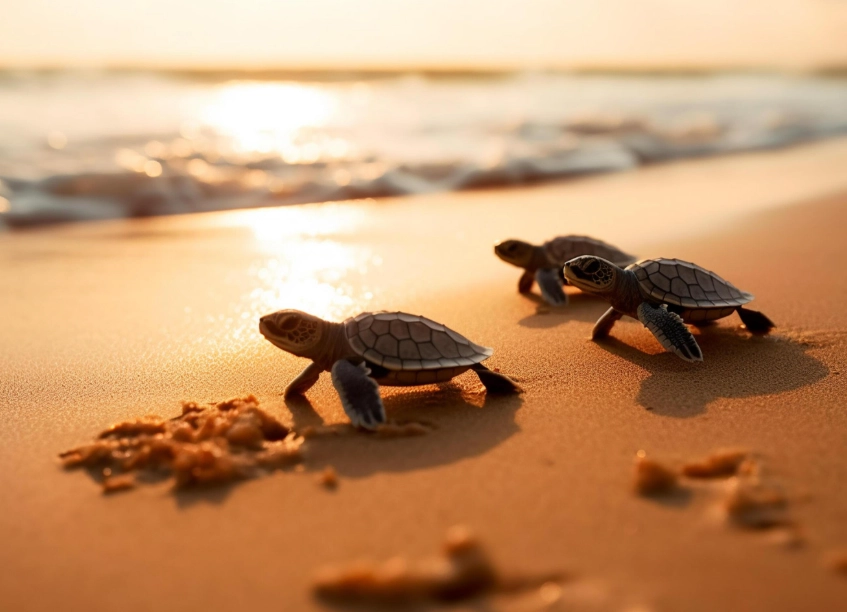
Your Questions, Answered
The question “can you touch baby sea turtles in Florida?” has a simple legal answer and a deeper ethical one. The law says no to protect them from us. The science says no to protect their ancient, fragile journey from nest to ocean. Your role isn’t to be a hands-on helper, but a silent guardian. Give them darkness, give them space, and let the magic of their first crawl happen on its own terms. That’s how you truly help.
For the most current regulations and to report issues, always refer to the official Florida Fish and Wildlife Conservation Commission (FWC) website. They are the ultimate authority.
Your comment