I remember the first time I saw a bleached coral reef. It was in Thailand, a site that a few years prior had been a kaleidoscope of color. Now, it was a ghost town. Vast stretches of bone-white skeletons, with only the occasional flicker of a fish wondering where its home went. That sinking feeling in my stomach wasn't just disappointment; it was grief. If you dive, you've probably felt it too, or you will. Coral bleaching isn't a distant news headline. It's the slow-motion collapse of the most vibrant cities in our ocean, and understanding it is the first step to fighting for them.
What's Inside: Your Quick Guide
Understanding Coral Bleaching: A Stress Response, Not Instant Death
Let's clear up the biggest misconception first. A bleached coral is not a dead coral. It's a severely stressed one on the brink.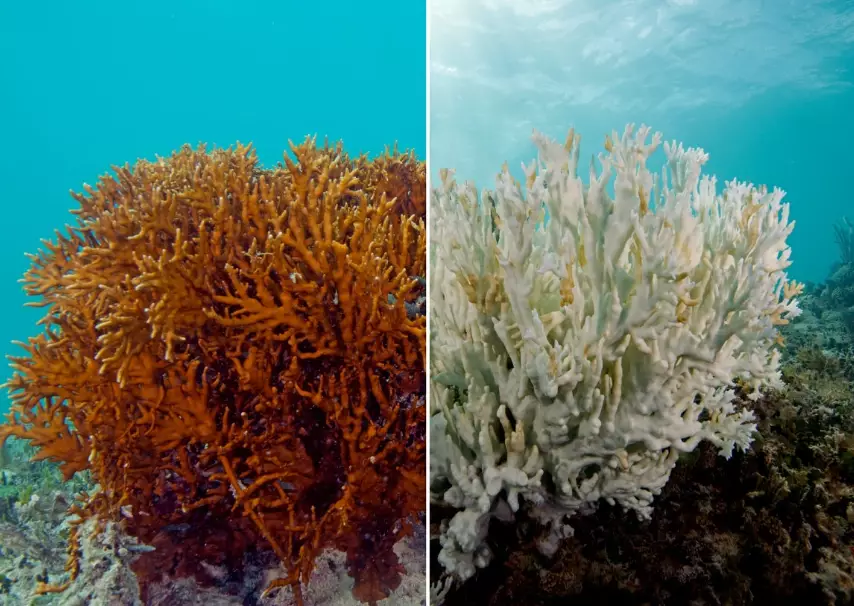
Corals are animals (polyps) that live in a symbiotic partnership with microscopic algae called zooxanthellae. These algae live inside the coral's tissues. The deal is simple: the algae get a safe home and CO2, and in return, they photosynthesize and provide up to 90% of the coral's food. They're also what gives coral its stunning color.
When the coral gets stressed—primarily by elevated water temperatures—this harmonious relationship breaks down. The coral polyp, essentially, evicts its algal tenants. Without the algae, the coral's translucent tissue reveals its white calcium carbonate skeleton underneath. Hence, "bleached."
The Critical Window
This is the crucial part. A bleached coral is still alive, but it's starving. It can survive for a few weeks in this state. If conditions improve (the water cools down), the algae can return, and the coral can recover. If the stress continues—the water stays hot, or other pressures pile on—the coral will die from disease or outright starvation. The white skeleton you see will eventually be overgrown by slimy algae, the underwater equivalent of rust and weeds taking over a abandoned building.
The Main Causes of Coral Bleaching
While the trigger is often simplified to "warm water," the reality is a combination of factors that pile on. Think of it like a person getting pneumonia. A cold virus might trigger it, but poor air quality and a weak immune system seal the deal.
Rising Sea Temperatures: The Primary Trigger
This is the big one. According to the National Oceanic and Atmospheric Administration (NOAA), when water temperatures are just 1°C (1.8°F) above the typical summer maximum for a few weeks, bleaching can start. At 2°C above, widespread bleaching and mortality occur. Climate change is making these marine heatwaves more frequent, intense, and longer-lasting. Reefs don't have time to recover between events.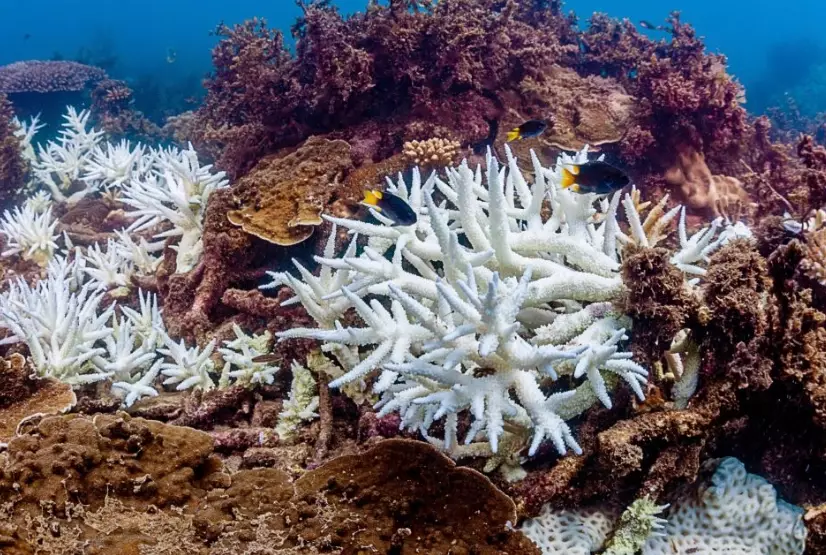
Ocean Acidification: Weakening the Foundation
Another consequence of absorbing excess atmospheric CO2. The ocean becomes more acidic, which reduces the availability of carbonate ions. Corals need these ions to build their skeletons. In more acidic water, building their structure becomes energetically costly, like trying to build a brick wall in the rain. A weakened, slowly-growing coral is far more susceptible to bleaching when a heatwave hits.
Local Stressors: The Final Blows
This is where human activity directly at the reef does massive damage. These stressors don't usually cause bleaching alone, but they make corals incredibly vulnerable.
Polluted Runoff: Fertilizers and sewage from land wash into the ocean, causing nutrient pollution. This feeds algal blooms that smother corals and block sunlight.
Physical Damage: Poorly placed anchors, careless divers touching or kicking the reef, and destructive fishing practices (like dynamite fishing) create wounds. A stressed, injured coral is far less likely to survive a thermal event.
Certain Sunscreens: Chemicals like oxybenzone and octinoxate, found in many chemical sunscreens, have been shown to harm coral larvae, increase bleaching susceptibility, and damage coral DNA. A 2015 study published in the journal Archives of Environmental Contamination and Toxicology sounded the alarm on this.
The Ripple Effect: Why a Bleached Reef is an Empty Reef
Corals are the foundation species. Lose them, and the entire architecture of life collapses.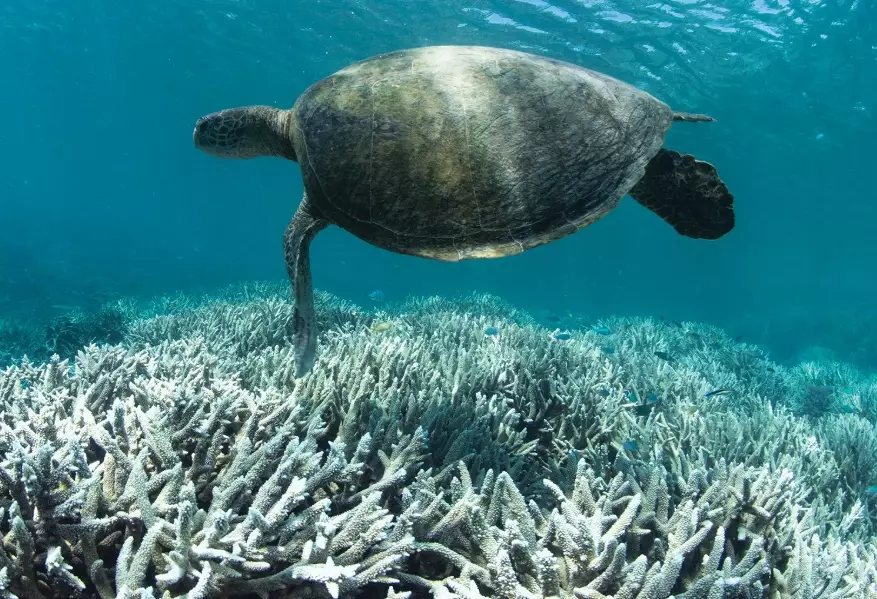
Imagine a bustling city. The coral is the apartment buildings, schools, restaurants, and shopping centers. The fish, crustaceans, and other creatures are the residents. Now, imagine that city turning to crumbling, barren concrete. The residents leave. The economy fails.
That's a bleached reef. The complex nooks and crannies that provide shelter for juvenile fish disappear. The primary food source (the algae within the coral) is gone. Species that rely on coral for food, like parrotfish and butterflyfish, starve or move on. Predators that eat those fish follow. The stunning biodiversity that defines a healthy reef—often thousands of species per square mile—plummets.
It's not just about losing pretty fish. Reefs are vital for human survival. They buffer coastlines from storms and erosion, protecting shorelines and communities. They support fisheries that feed hundreds of millions of people. Their potential for new medicines is vast. A dead reef is an ecological and economic disaster.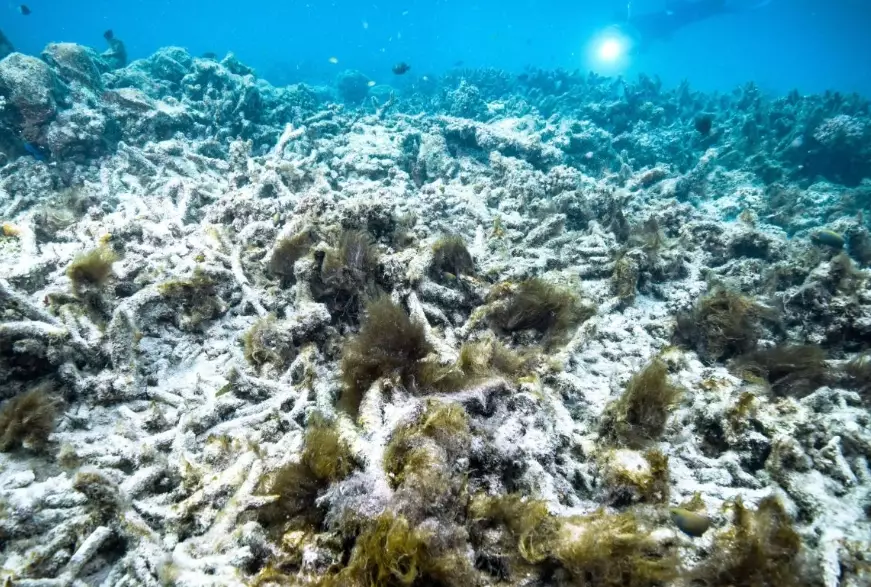
What Can Be Done? Solutions Beyond Hope
It's easy to feel helpless. But action happens on two levels: systemic global action and direct local action. We need both, and as divers, we're uniquely positioned for the latter.
Global Action: The Non-Negotiable
Ultimately, stopping climate change by drastically reducing greenhouse gas emissions is the only way to halt the frequency of mass bleaching events. This requires political and societal will. Supporting policies and organizations that fight for this is crucial.
Local Action: What You Can Do Today
This is where you have immediate power.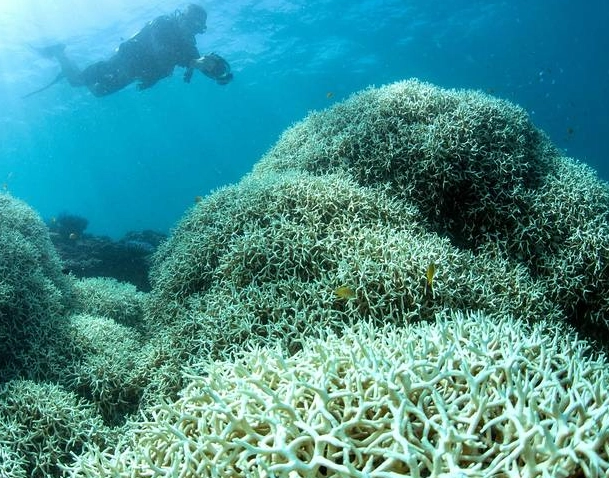
Be a Flawless Diver: Master your buoyancy. Never touch, stand on, or kick the reef. One fin swipe can destroy decades of coral growth. Secure all gauges and hoses so they don't drag.
Choose Reef-Safe Sunscreen: Use mineral-based sunscreens with non-nano zinc oxide or titanium dioxide. Better yet, wear a long-sleeved rash guard and leggings to minimize sunscreen use. Don't trust vague "reef-friendly" labels—check the active ingredients.
Support Responsible Operators: Choose dive shops and tour operators that have mooring buoys (so they don't anchor on the reef), enforce strict no-touch policies, and are involved in local conservation. Your money is a vote.
Reduce Your Carbon Footprint: It feels abstract, but it adds up. Energy-efficient choices, reducing air travel when possible, and supporting clean energy matter.
Become a Citizen Scientist: Report bleaching. Use apps like CoralWatch or report to local marine park authorities. Your eyes in the water are valuable data.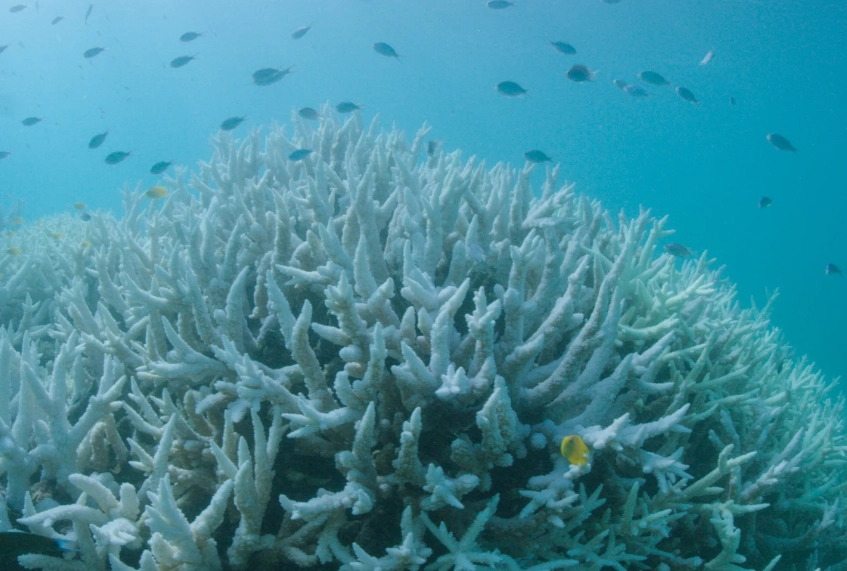
A Stark Reality: The Great Barrier Reef Case Study
The numbers tell a brutal story. The Great Barrier Reef, the world's largest coral reef system, has suffered four mass bleaching events in the last seven years: 2016, 2017, 2020, and 2022.
The 2016-2017 back-to-back events were particularly devastating. Aerial surveys by the Australian Research Council's Centre of Excellence for Coral Reef Studies showed that about 30% of the coral on the Great Barrier Reef died in 2016 alone, primarily in the northern, most pristine section. The reef's ability to recover from these repeated hammer blows is severely compromised. Scientists now observe a shift in the mix of species, favoring faster-growing but less complex corals, which in turn supports less biodiversity.
This isn't a future prediction. It's a current event log. Watching this unfold on a scale as grand as the Great Barrier Reef makes it undeniably clear: bleaching is not a minor issue. It's the central crisis facing coral reefs worldwide.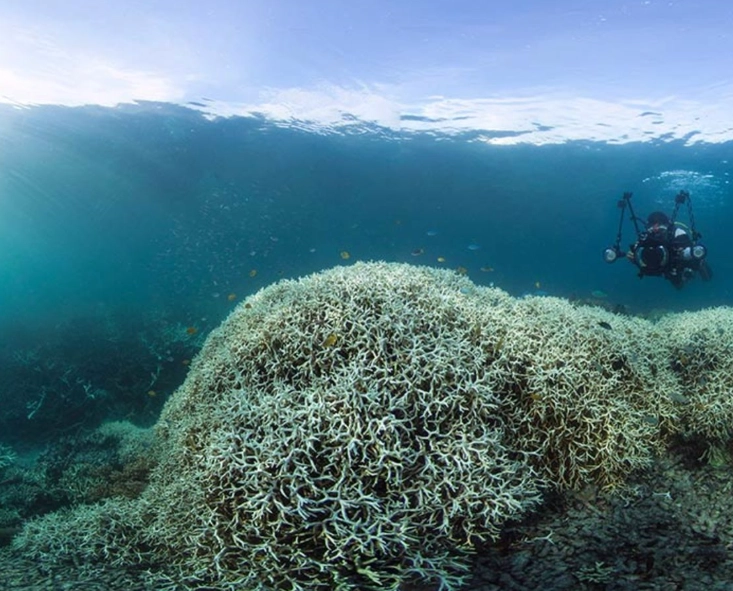
Your Coral Bleaching Questions, Answered
Can bleached coral recover, and how long does it take?
Yes, recovery is possible if the stressor is removed quickly and the coral's algal partners return. For minor, short-term stress, recovery can begin in weeks. However, for severe or prolonged bleaching, like during a mass event, full recovery of a reef complex can take a decade or more, assuming conditions remain favorable. The problem is, with warming seas, reefs often don't get that long recovery window before the next heatwave hits.
What sunscreen is actually safe for coral reefs?
Look for mineral-based sunscreens using non-nano zinc oxide or titanium dioxide as the active ingredient. Avoid any product containing oxybenzone and octinoxate, which are proven to harm coral larvae and exacerbate bleaching. Don't just trust 'reef-friendly' labels; check the ingredient list yourself. Even better, wear a long-sleeved rash guard to drastically reduce the amount of sunscreen you need.
As a diver, what's the single most important thing I can do to help?
Beyond perfect buoyancy, use your voice. Report bleaching you see to local reef authorities or citizen science apps like CoralWatch. Choose dive operators with clear conservation policies. But most importantly, talk about what you've seen. Your photos and stories from a bleached reef are more powerful than any scientific report for inspiring action in people who've never put their face underwater.
Is coral bleaching just about warmer water?
While extreme heat is the primary trigger, it's rarely the only factor. Think of it like a person getting sick. High water temperature weakens the coral's immune system. Then, secondary stressors like polluted runoff (which clouds water and introduces nutrients), physical damage from anchors or storms, or even certain chemicals in sunscreen deliver the final blow. A healthy reef in clean water can sometimes withstand a mild temperature spike that would devastate a stressed one.
Your comment