I remember the first time I saw a bleached coral reef. It was in Thailand years ago. The guide pointed to a sprawling, bone-white staghorn coral. "It's stressed," he said quietly. Back then, it was a patch here and there. Now, the news is filled with words like "global mass bleaching event" – and the patches have become continents under the sea. If you love the ocean, this isn't just an environmental headline. It's a personal one. It changes where we dive, what we see, and forces us to ask what our role is. Let's cut through the alarmism and complexity. Here’s what's actually happening, why it matters to you, and what we can realistically do about it.
What's Inside This Guide
What Exactly is Coral Bleaching?
Let's get the science straight, because most summaries oversimplify. Corals are animals (polyps) that house microscopic algae called zooxanthellae in their tissues. It's a perfect roommate agreement. The algae photosynthesize, providing up to 90% of the coral's food and giving it those incredible colors. In return, the coral gives the algae a protected home and nutrients.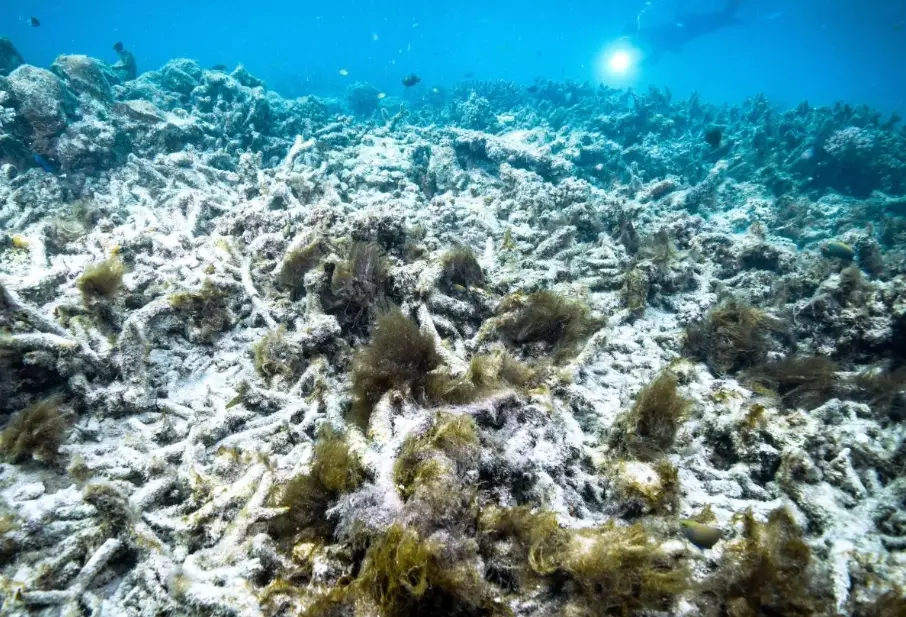
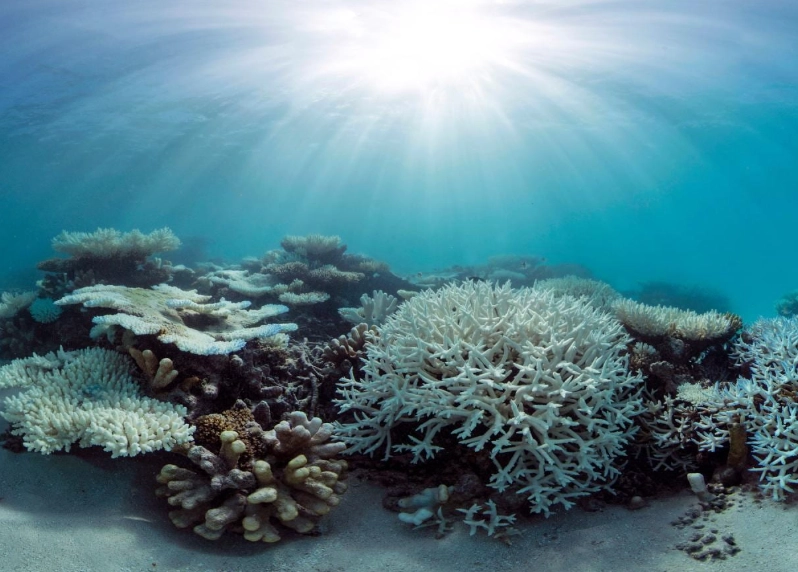
Bleaching is a stress response, not immediate death. When the coral gets too stressed – primarily from elevated water temperatures – it expels its colorful algal roommates. Without the algae, the coral's white skeleton becomes visible through its transparent tissue. Hence, it looks "bleached."
The primary driver is unequivocally climate change and the resulting marine heatwaves. But local stressors act as accomplices, weakening the reef's resilience:
- Pollution & Runoff: Fertilizers and sewage fuel algal blooms that smother corals and cloud the water.
- Overfishing: Removing herbivorous fish (like parrotfish) allows algae to overgrow corals.
- Physical Damage: From anchors, careless divers, or destructive fishing practices.
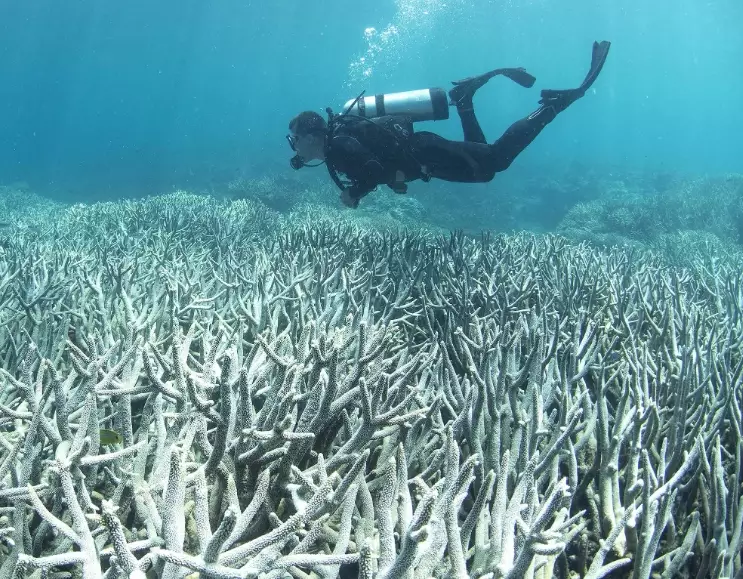
The Domino Effect: Why Bleaching Matters for Everyone
You might think, "It's just coral, I can find other pretty fish." That's a fundamental misunderstanding. Coral reefs are the foundation species of their ecosystem. Knock out the foundation, and the entire structure collapses.
Think of a bleached reef as a city losing its power grid and grocery stores. Here's the domino effect:
- Biodiversity Crash: Reefs support 25% of all marine life. No complex coral structures means no nooks for fish to hide, breed, or hunt. Species diversity plummets.
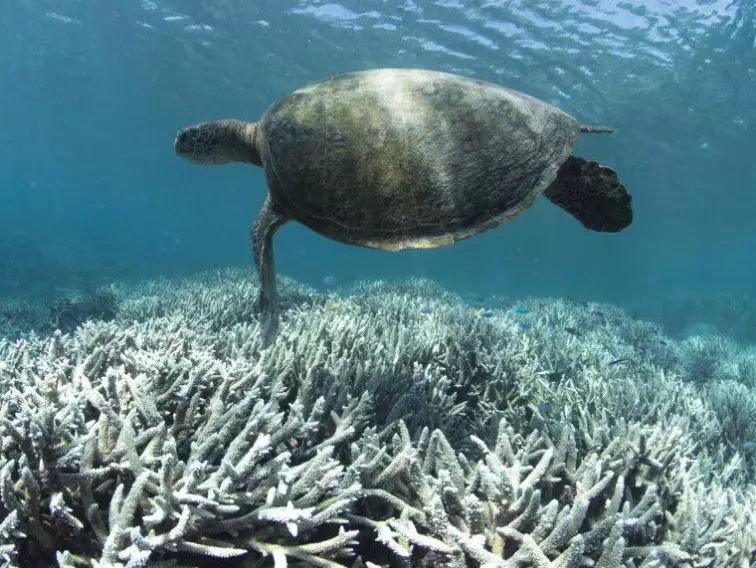
- Coastal Communities Hit: Nearly a billion people rely on reefs for food and income from fishing and tourism. A dead reef means economic ruin.
- Loss of Coastal Protection: Healthy reef structures act as natural breakwaters, absorbing up to 97% of wave energy. Eroded, dead reefs offer no protection from storms.
- The Diver's Experience Transforms: This is the personal hit. The dive shifts from a vibrant, bustling metropolis to a quiet, monochrome landscape. The big pelagics leave because the food web is broken.
Mapping the Impact: A Look at Major Bleaching Events
This isn't theoretical. We're in the midst of the fourth global mass bleaching event on record, as confirmed by the National Oceanic and Atmospheric Administration (NOAA) and the International Coral Reef Initiative. The previous three were in 1998, 2010, and 2014-2017. The current one is notable for its severity and breadth.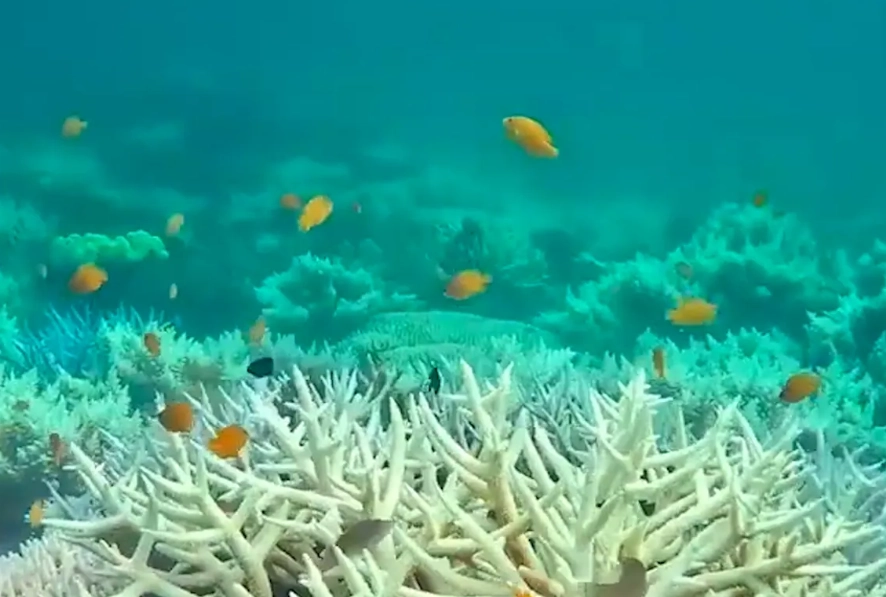
Let's look at some specific regions divers care about. This isn't about scaring you away, but about informed travel.
| Region | Recent Bleaching Severity | Impact on Key Dive Sites | Current Outlook |
|---|---|---|---|
| Great Barrier Reef, Australia | Widespread, severe mass bleaching. | Southern sections (e.g., Heron Island) now heavily affected, following earlier northern hits. Coral cover on some surveyed reefs has dropped significantly. | Mixed. Some reefs show resilience, others are severely degraded. Operators are adept at guiding to healthier sites. |
| Caribbean (e.g., Bahamas, Bonaire) | Persistent, ongoing heat stress. | Shallow reefs ( | Worrisome. Recovery from past events was slow; back-to-back stress is a major concern. |
| South-East Asia (e.g., Thailand, Philippines) | Regional hotspots, often compounded by local pollution. | Famous sites like the Similan Islands have experienced bleaching. Resilience varies greatly site-to-site. | Local conservation efforts (e.g., mooring buoys, fishing bans) are critical differentiators. |
| Red Sea (e.g., Egypt) | Surprisingly resilient, but not immune. | Some northern reefs have shown bleaching. Southern reefs around Sudan often fare better due to unique heat-tolerant algae. | Cautiously optimistic for now, but monitoring is essential. |
The takeaway? Condition is hyper-local. Always check with your chosen dive operator for a recent site report before you despair or book.
Beyond Spectating: The Diver's Role and Responsibility
We are not just tourists. We are stakeholders with a platform. Our actions in the water and our choices on land matter. Here’s a practical, non-preachy breakdown.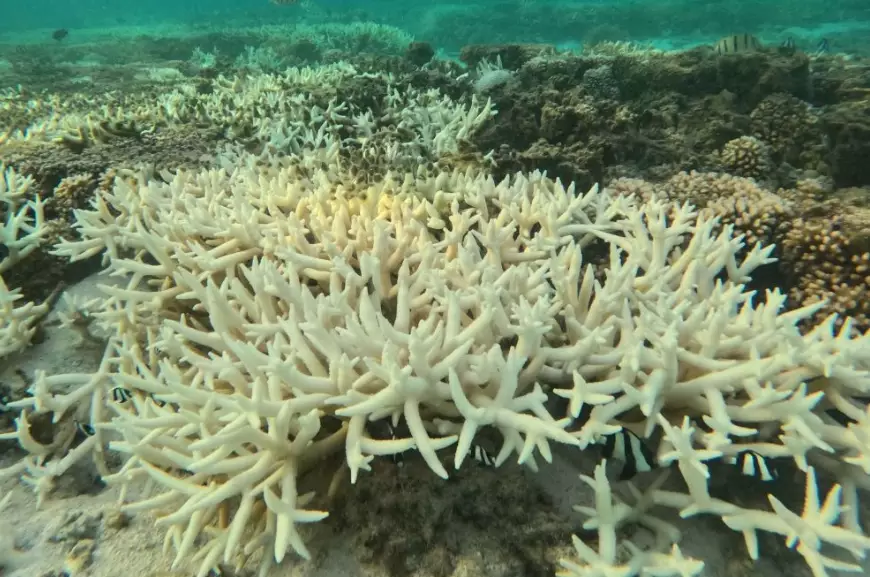
In the Water: The Advanced Buoyancy Mandate
Perfect buoyancy isn't a nice-to-have anymore; it's an ethical requirement. A single fin kick can damage stressed coral tissue that's already on the edge. This is the most direct impact you have. Practice before you go on a liveaboard to pristine sites. If you're still crashing into the reef, you're part of the local stress problem.
Choosing an Operator: Ask These Questions
Your money is a vote. Support operators who are part of the solution.
- "Do you have a reef conservation policy?" (They should.)
- "Do you use mooring buoys or drift diving techniques to avoid anchoring?"
- "Do you participate in any coral monitoring or restoration programs?" (e.g., Reef Check, local initiatives)
- "How do you brief divers for reef-sensitive diving?"
Beyond the Dive: Amplifying Your Voice
Posting pretty pictures is fine. But also share what you learned. Talk about the bleaching you witnessed (without sensationalism). Support organizations doing the hard science and policy work, like the Coral Reef Alliance or local marine parks. Divers are powerful witnesses.
The Uncomfortable Truth About the Future of Reefs
Here's the expert perspective that's often glossed over: We are not "saving the coral reefs" in their current, historic form. That ship, for many reefs, has sailed due to locked-in climate warming. The goal now is coral reef adaptation and managed transformation.
Scientists are working on identifying and breeding heat-resistant "super corals." Restoration projects are planting resilient species. The future reef will likely be less diverse, structurally different, and require active human stewardship. It's a tough pill to swallow, but it's the reality. Our job is to reduce global emissions (the ultimate fix) while buying time and supporting this transition through local action.
Giving up is not an option. A functioning, even if altered, reef is infinitely more valuable than a barren one.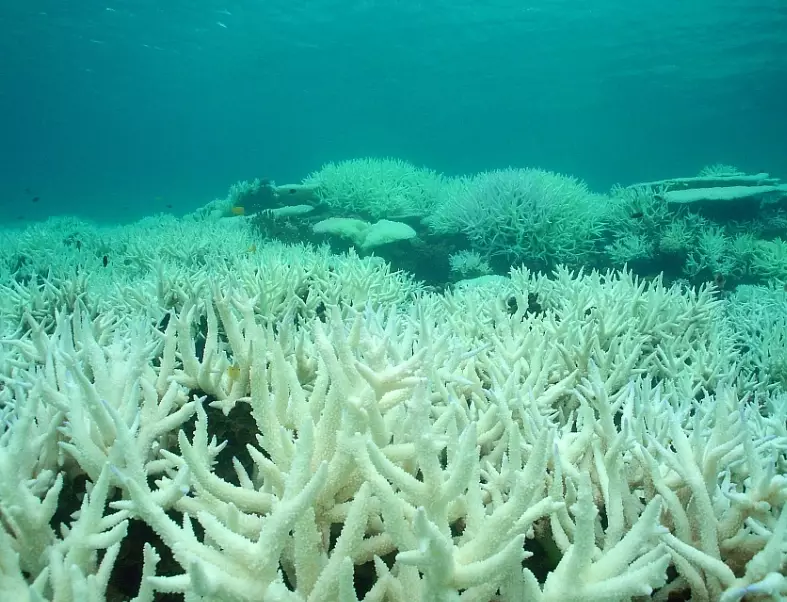
Your comment