Ask ten divers that question, and you'll get fifteen different answers. That's because "best" is personal. For some, it's a wall of swirling barracuda. For others, it's a tiny, perfectly camouflaged frogfish. My first dive was in murky, cold water, and I was hooked. After hundreds of dives across six continents, I've learned the "best" spot is the one that matches your current obsession, skill level, and sense of adventure.
This isn't just another list. We're going to break down what makes a destination legendary, look at the top contenders through different lenses, and give you the tools to pick your own personal paradise. Forget vague descriptions. We're talking specific sites, seasonal quirks, and the kind of practical details that make or break a trip.
Your Dive Adventure Awaits
What Makes a Dive Destination "The Best"?
Before we name names, let's set the criteria. A world-class destination usually hits several of these points hard.
The Big Four Factors: Marine Life (both mega and macro), Visibility & Water Conditions, Accessibility & Infrastructure, and that intangible "X-factor"—the sheer wow moment you'll talk about for years.
New divers often hyper-focus on visibility. Sure, 40-meter viz in the Red Sea is stunning. But I've had some of my most fascinating dives in the 10-meter viz of muck sites, where the critters are otherworldly. Currents are another misunderstood element. A gentle drift is a free ride. A raging downcurrent in the Galápagos is an advanced skill test.
Infrastructure matters more than you think. Can you get there without three days of travel? Are there reputable dive operators with well-maintained boats and safety protocols? The Professional Association of Diving Instructors (PADI) maintains a global directory, but local word-of-mouth is gold.
The Heavyweight Contenders for Best Scuba Diving
Here’s a breakdown of destinations that consistently top the charts. Think of this as your menu.
| Destination | Best For | Signature Experience | Best Time to Visit | Skill Level |
|---|---|---|---|---|
| The Great Barrier Reef, Australia | Vast Coral Systems, Reef Biodiversity | Swimming through the Cathedral on Cod Hole | Jun - Oct (dry season) | Beginner to Advanced (site dependent) |
| The Galápagos Islands, Ecuador | Big Animal Encounters, Pelagic Action | Drifting with schooling hammerheads at Wolf Island | Jun - Nov (cooler, richer water) | Advanced/Experienced Only |
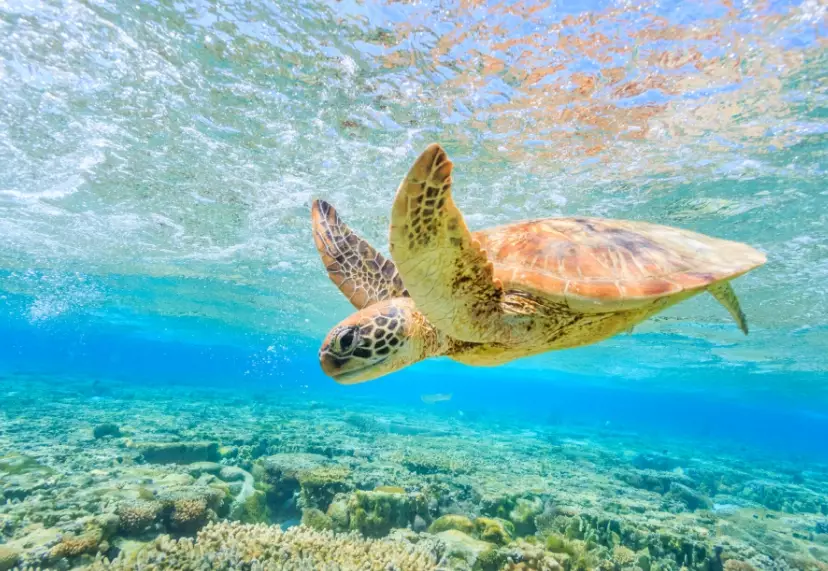
| Sipadan Island, Malaysia | Sheer Fish Density, Turtle Haunts | The Barracuda Point tornado & Turtle Tomb | Apr - Dec (avoid monsoon Jan-Mar) | Intermediate to Advanced |
| Palau | Variety (Walls, Caves, Wrecks), Sharks | Jellyfish Lake (snorkeling) & German Channel mantas | Nov - Apr (peak season) | Beginner to Advanced |
| The Red Sea, Egypt | Accessible Wrecks, Clear Warm Water | Thistlegorm wreck & Ras Mohammed reefs | Mar - May, Sep - Nov | All levels (North vs South differs) |
Diving Deeper into Two Icons
The Great Barrier Reef (GBR): It's massive. The common mistake is diving the inner, near-shore reefs from Cairns, which can be impacted. The magic is on the outer reefs, accessed via day trips on fast boats or, better yet, a 3-7 day liveaboard to the Ribbon Reefs or Coral Sea. Here, the coral health is significantly better. You'll see giant potato cod, reef sharks, and if you're lucky on the right trip, minke whales. It's not always the clearest water, but the scale is unmatched.
The Galápagos: This is the university of diving. It's cold (18-24°C), currents are strong, and it's expensive. But where else can you have sea lions, penguins, marine iguanas, and hundreds of hammerheads in one dive? You must be a confident diver with good buoyancy. Most diving is done from a liveaboard; land-based options are extremely limited. It's a commitment, but for many, it's the pinnacle.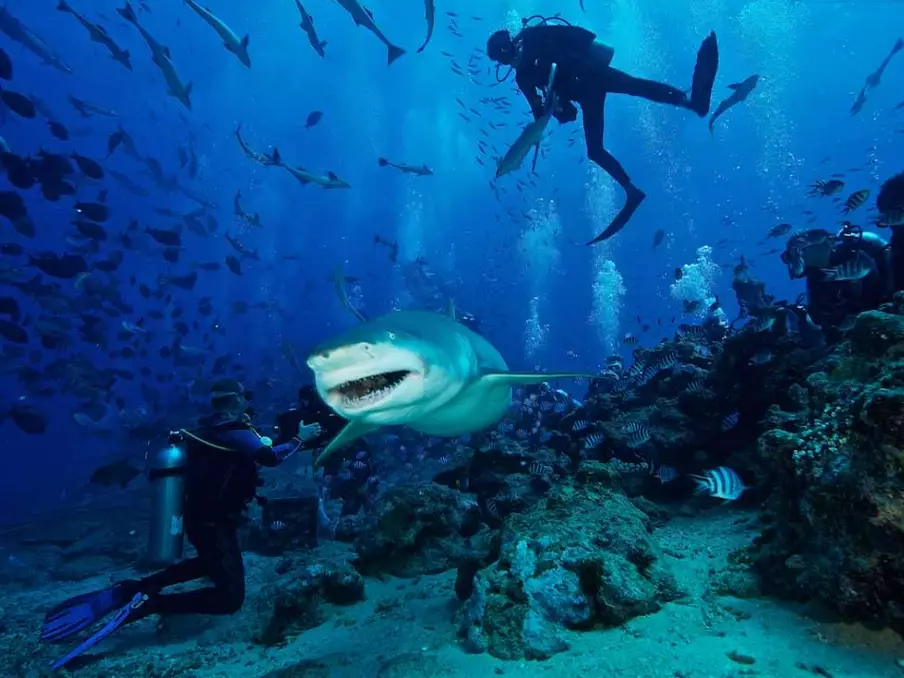
For the Obsessed: Specialty & Bucket-List Diving
If your interests are niche, these places are your holy grail.
Macro & Muck Diving Paradise: Lembeh Strait, Indonesia & Anilao, Philippines. Forget bright colors. This is about the weird and wonderful. Critters here have evolved to survive in black sand. We're talking mimic octopuses, flamboyant cuttlefish, hairy frogfish, and a dozen species of tiny shrimp you need a magnifying glass to appreciate. It's slow, deliberate diving, perfect for photographers. The water is usually calm. A week here will change how you see the ocean floor.
The Shark Diver's Dream: Cocos Island, Costa Rica & Tiger Beach, Bahamas. Cocos is another remote, liveaboard-only destination like Galápagos, famous for massive schools of scalloped hammerheads, silky sharks, and the occasional tiger shark. Tiger Beach, conversely, is shallow (6-10 meters) and all about baited encounters with large tiger sharks, lemon sharks, and great hammerheads in crystal-clear Bahamian water. The ethics of baiting are debated, but the up-close encounters are undeniable.
Wreck Diving Capital: Truk (Chuuk) Lagoon, Micronesia. A WWII battlefield frozen in time. Dozens of Japanese warships, planes, and tanks lie in shallow, warm lagoon waters. You can swim through holds full of trucks, ceramics, and, soberingly, human remains. It's history, not just diving. Visibility can be variable, and the trips are long, but it's utterly unique.
Planning Your Best Dive Trip: A Realistic Guide
Knowing the destinations is half the battle. Making it happen is the other.
Budget Honestly: A liveaboard in the Galápagos can cost $6000+ for the trip alone, not including flights to Ecuador. Southeast Asia offers far more budget-friendly options where $100 a day can cover diving and a decent room. Always add a buffer for gear rental, park fees (Sipadan permits are limited and cost extra), and tips.
Match the Destination to Your Logbook: Be realistic. If you have 20 dives in calm seas, the strong currents of Socorro or Cocos Island will be a stressful, not enjoyable, challenge. Build up experience gradually. A great intermediate step is somewhere like Fiji's Somosomo Strait, which has strong currents but exceptional guide support.
Seasonality is Everything: Monsoon seasons can shut down diving entirely or make boat rides miserable. The "best" time often avoids peak tourist season too. For example, the Red Sea in late September: the summer crowds are gone, the water is still warm, and the winds haven't picked up for winter.
Consider the Non-Diving Bits: Are you traveling with a non-diver? Then a remote liveaboard is a terrible idea. Look for destinations with good topside activities—culture, food, beaches. Mexico's Cenotes combined with Cozumel reef diving is a fantastic combo. Thailand offers world-class diving and world-class beaches and food.
Your Burning Diving Travel Questions, Answered
What is a realistic budget for a week of diving in these top destinations?
It varies wildly. Budget destinations like the Philippines or parts of Indonesia can cost $1500-$2500 for a week including mid-range accommodation, diving, and food. Premium locations like Palau or the Galápagos easily run $4000-$7000+ due to liveaboard costs, park fees, and remote logistics. Always factor in equipment rental if you don't bring your own, and travel insurance that covers diving emergencies.
I'm a new diver with less than 20 dives. Which of these destinations are suitable for me?
Avoid high-current, advanced sites initially. The Great Barrier Reef (specifically the Ribbon Reefs on a liveaboard with guided groups), the Red Sea's northern routes (like the Straits of Tiran), and many sites in Fiji or the Maldives offer stunning reefs in calmer conditions perfect for building confidence. Be brutally honest with dive operators about your experience level.
When is the absolute best time of year to plan a global diving trip to maximize conditions?
There's no single perfect month. The global sweet spot often falls in the shoulder seasons: April-May and September-October. This period avoids peak monsoon seasons in Asia, the humid summer in the Caribbean, and the cooler, rougher winter seas in many hemispheres. It offers a high chance of good conditions across multiple regions, giving you the most flexibility.
How do I choose between a liveaboard and a land-based resort for these destinations?
Choose a liveaboard for remote, pristine sites (e.g., Galápagos, Cocos Island, Palau's outer reefs) and to maximize dive time. Opt for land-based if you prefer flexibility, non-diving activities, or are traveling with non-divers. Land-based can be better for macro photography (like Lembeh) where you revisit specific sites. For new divers, a resort with easy shore diving is less intimidating.
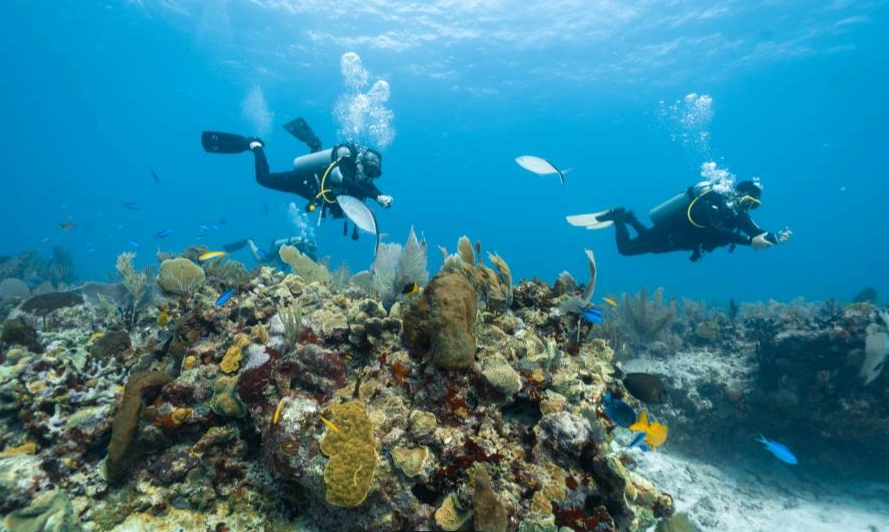 So, where is the best scuba diving in the world? It's the place that calls to you. The one that matches the image in your head, whether that's floating eye-to-eye with a whale shark or finding a seahorse the size of your thumbnail.
Start with your dream, then cross-reference it with your experience and budget. Do the research, talk to divers who've been there, and book with a reputable operator. The ocean's greatest hits are waiting, but the best dive is always the next one.

Comments