Let's cut to the chase. You're thinking about learning to scuba dive in Cancun. Smart move. The warm, clear Caribbean water here is about as forgiving and spectacular a classroom as you could ask for. But with dozens of dive shops offering courses, it's easy to feel overwhelmed. I've been diving here for over a decade, both as an instructor and a traveler, and I've seen the good, the bad, and the mediocre. This guide isn't just a list of schools; it's the blueprint I wish I'd had, packed with the specific details you need to pick the right course, avoid common pitfalls, and start your underwater journey the right way.
What’s Inside This Guide
- Why Cancun is a Prime Spot for Beginners
- Understanding Your Scuba Course Options
- How to Choose the Right Scuba Diving School in Cancun
- A Look at Top-Rated Dive Centers in Cancun & the Hotel Zone
- What to Expect: A Typical Course Breakdown
- Real Talk: Scuba Lesson Costs & What's Included
- Your Scuba Learning Questions, Answered
Why Cancun is a Prime Spot for Beginners
Forget cold, murky quarry dives. Learning in Cancun is a different game. The average water temperature hovers around 80°F (27°C) year-round. Visibility regularly exceeds 100 feet. This means you're comfortable in a light wetsuit (or even just a rash guard), and you can actually see what you're doing—and what's around you. The gentle currents along the Mesoamerican Barrier Reef, the second-largest in the world, create ideal conditions for first-time divers to practice buoyancy without fighting the ocean.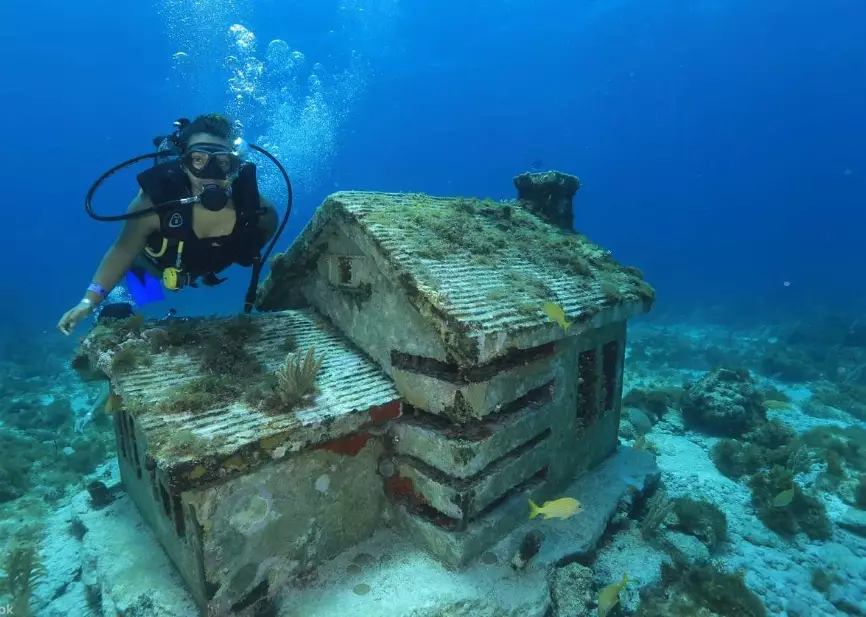
But there's a catch many blogs don't mention. The most famous dive site, the Museo Subacuático de Arte (MUSA), with its haunting underwater sculptures, is fantastic. However, for a complete beginner on their first open water dives, it can be a bit deep (around 30 feet/9 meters) and the sculptures, while cool, don't offer the same vibrant marine life as a natural reef. A better beginner site, in my opinion, is the reef line in front of the Hotel Zone, like El Jardin or La Bandera. They're shallower, packed with colorful fish, brain corals, and the occasional turtle, letting you focus on skills without distraction.
Understanding Your Scuba Course Options
Most schools in Cancun offer courses from PADI (Professional Association of Diving Instructors), the world's largest diver training organization. Here’s what you’re really choosing between:
The PADI Open Water Diver Course: Your Ticket to the Deep
This is the global standard entry-level certification. It's permanent and recognized everywhere. The course involves three parts: knowledge development (online e-learning or in a classroom), confined water dives (in a pool or shallow, calm bay), and four open water dives in the ocean. It typically takes 3-4 full days. Once certified, you can dive independently with a buddy to a maximum depth of 60 feet (18 meters).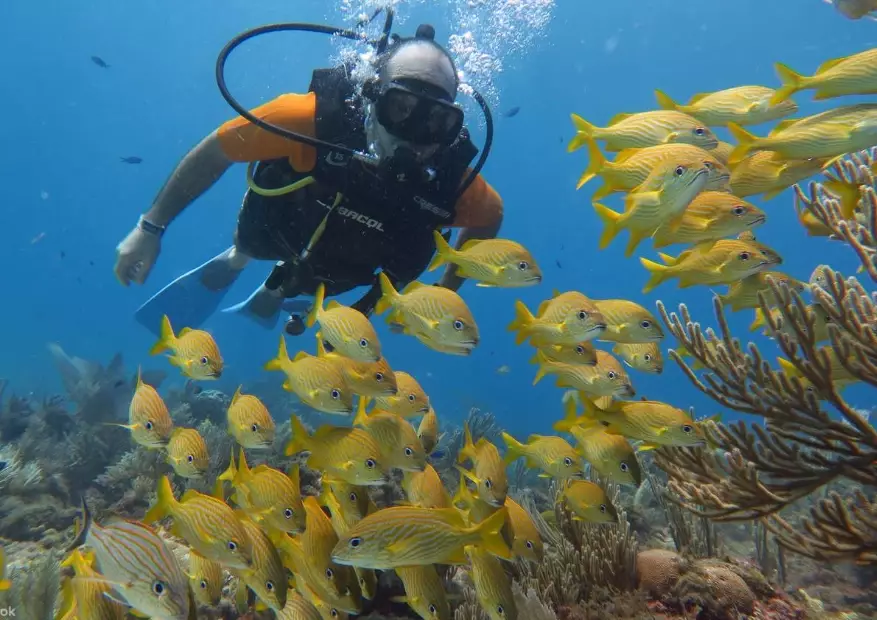
Discover Scuba Diving (DSD): The Test Drive
Not ready to commit to a full course? The DSD program is a one-day experience. You get a brief pool session followed by a single guided ocean dive with an instructor, usually to a max depth of 40 feet (12 meters). It's fun, but it's not a certification. You cannot rent gear or dive without an instructor afterward. Think of it as a spectacular sampler. If you love it (most do), the time and money spent on the DSD can often be credited toward the full Open Water course.
Referral Programs: The Flexible Hybrid
This is a secret weapon for time-pressed travelers. You complete the knowledge development and pool sessions at a dive shop near your home. They give you a referral form. Then, you travel to Cancun and complete just the four required open water dives over two days. It cuts your in-water training time in half, freeing up more vacation days for fun dives or beach time.
How to Choose the Right Scuba Diving School in Cancun
Price is a factor, but it shouldn't be the only one. A cheap course with large groups and rushed instructors is a miserable—and potentially unsafe—experience. Here’s what to scrutinize:
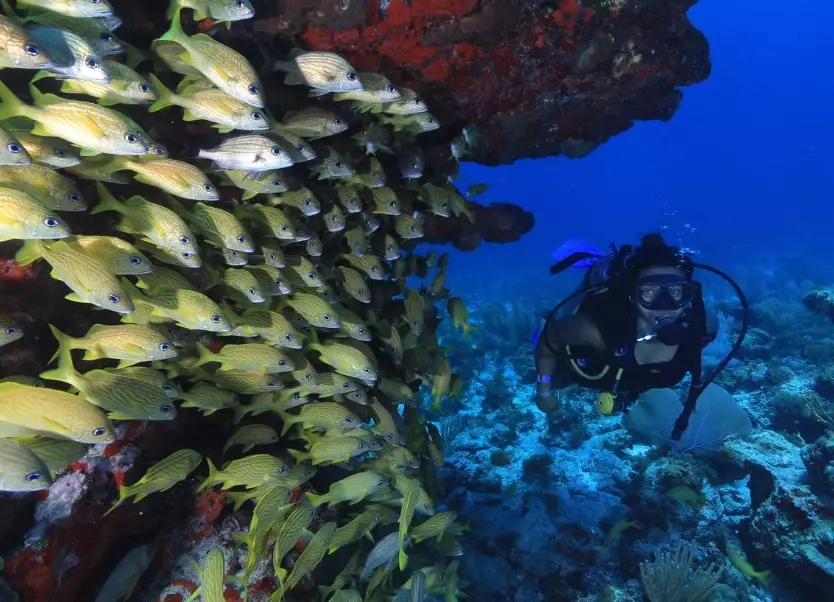
- Instructor-to-Student Ratio: The maximum allowed by PADI is 8:1 for Open Water, but a quality school will cap it at 4:1, especially in the ocean. For Discover Scuba Diving, the ratio should be even lower (4:1 is max, 2:1 is ideal). Ask directly. A school that hesitates or gives a vague answer is a red flag.
- Equipment Quality & Fit: Old, ill-fitting gear can ruin your dive. When you contact a school, ask how old their regulator sets and BCDs (buoyancy control devices) are. Do they have a range of sizes? A good shop will have you try everything on during the pool session to ensure a proper fit.
- Boat vs. Shore Dives: Many beginner dives in Cancun are accessible from the shore, which is cheaper and often calmer. Boat dives access further, sometimes better sites. Understand what your course fee includes. A slightly more expensive course that includes boat dives to reefs like Punta Nizuc might be worth it.
- The Vibe: Email them. Call them. Are they patient with your questions? Do they seem genuinely interested in teaching, or just processing another tourist? Trust your gut.
A Look at Top-Rated Dive Centers in Cancun & the Hotel Zone
Based on consistent quality, safety records, and student feedback, here are three centers that stand out. Remember, prices fluctuate with season and exchange rates.
| Dive Center | Location & Key Info | PADI Open Water Course (Approx. Price) | What Makes Them Stand Out |
|---|---|---|---|
| Scuba Cancun | Hotel Zone, Blvd. Kukulcan Km 5.2. Easy pickup from most hotels. Large operation with multiple boats. | $450 - $500 USD | Very professional and structured. Great for those who want a seamless, resort-style experience. They handle logistics well but can feel a bit "factory" at peak times. |
| Dive Mike | Downtown Cancun (Av. Bonampak). Smaller, owner-operated shop. Less touristy feel. | $420 - $470 USD | Mike and his team are known for personalized attention. Smaller groups, more flexibility. You feel like a person, not a number. The trade-off is their boats are smaller and they may not have instant Hotel Zone pickups. |
| AquaWorld | Marina in Hotel Zone, Blvd. Kukulcan Km 15.2. One of the largest marine operators in Cancun. | $460 - $520 USD | Massive fleet of boats and extensive facilities. They offer combo packages (diving + other tours). Reliability is high, but again, size can mean less personal touch. Good if your family wants to do other activities while you dive. |
I've sent nervous first-timers to Dive Mike more often than not because of the calmer, focused environment. But for someone staying in the heart of the Hotel Zone who values convenience above all, Scuba Cancun is a solid bet.
What to Expect: A Typical Course Breakdown
Let's follow a hypothetical student, Alex, through a standard 3-day PADI Open Water course in Cancun.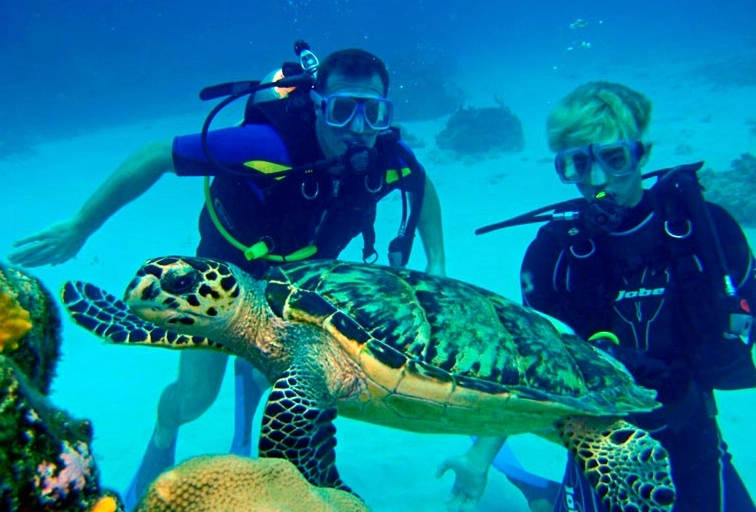
Day 1: Knowledge Review & Confined Water. Alex completed the e-learning at home. He meets his instructor at 8 AM at the dive shop for a quick review quiz and to get fitted for gear. By 10 AM, they're in the pool (or a sheltered bay area) for about 3-4 hours. Here, Alex learns to assemble his gear, clear his mask underwater, recover his regulator, and achieve neutral buoyancy. It's tiring but fun.
Day 2: Open Water Dives 1 & 2. Boat leaves at 9 AM for a nearby reef site, about a 15-minute ride. The first dive is shallow (max 40ft/12m). Alex demonstrates skills like mask clearing on the sandy bottom, then goes for a short tour. Surface interval of about an hour on the boat with water and fruit. Second dive goes a bit deeper, focusing on navigation and more buoyancy practice. Back to the dock by 2 PM.
Day 3: Open Water Dives 3 & 4. Similar schedule, but the dives are longer and the skills more advanced (like a controlled emergency swimming ascent). By the end of the fourth dive, Alex is mostly just diving, enjoying the reef, and applying his skills naturally. He logs his dives, gets his temporary certification card, and celebrates.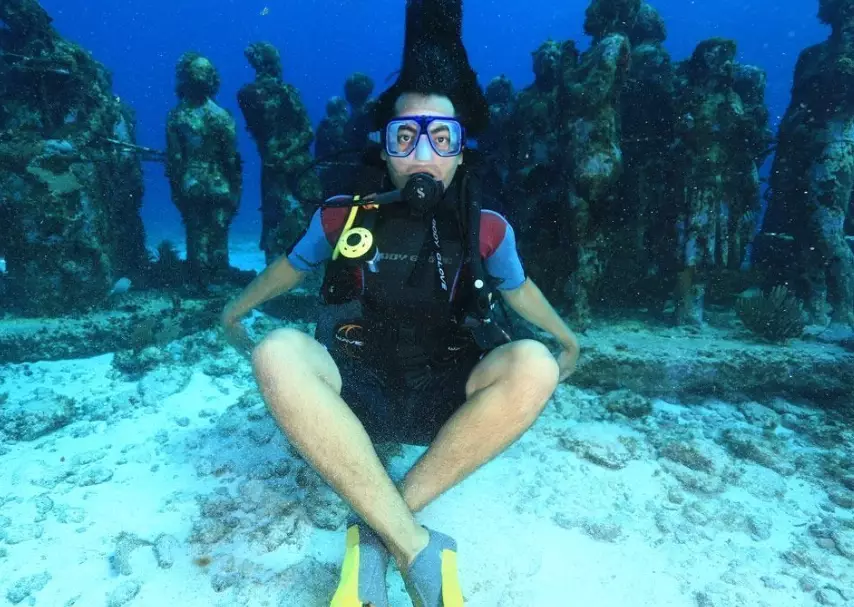
Real Talk: Scuba Lesson Costs & What's Included
Here’s a breakdown so you’re not surprised. All prices are in USD and approximate.
- PADI Open Water Diver Course: $420 - $550. This should include: all instruction, rental of full scuba gear (tank, weights, BCD, regulator, wetsuit), the PADI e-learning code or manual, logbook, certification fee, and typically 4 boat trips (or shore dives). What it usually doesn't include: Marine Park fees ($10-15 per day), a dive computer rental (highly recommended, ~$10/day), and tips for your instructor/crew (10-15% is customary if you're happy).
- Discover Scuba Diving: $90 - $140. Includes brief instruction, all gear, and one ocean dive.
The biggest hidden cost isn't money—it's time. A full certification eats 3-4 prime vacation days. Plan your trip accordingly; don't try to cram it into a long weekend with other big tours.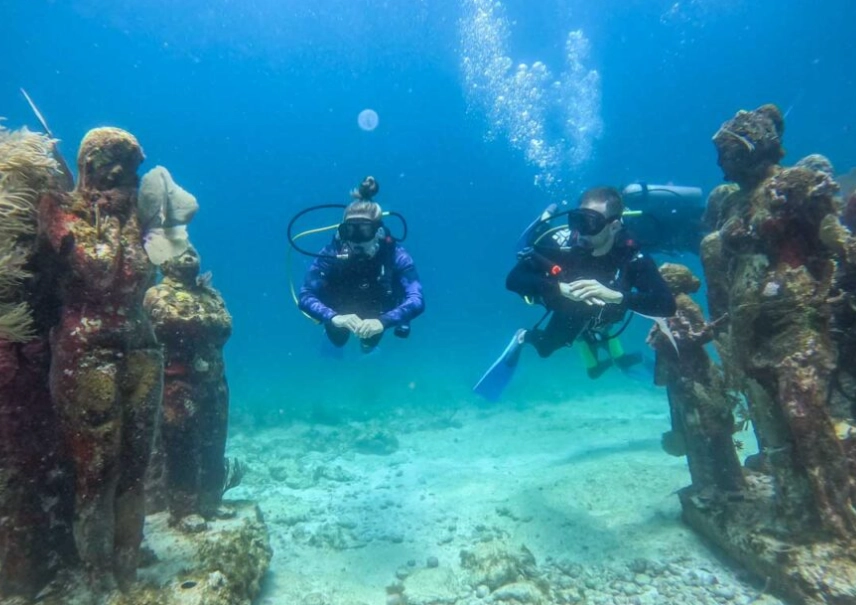
Your Scuba Learning Questions, Answered
The path to becoming a diver in Cancun is straightforward if you know what to look for. Choose a school focused on small groups and safety, not the cheapest deal. Embrace the learning process—the slight anxiety of the first descent melts away the moment you breathe underwater and a parrotfish glides by. That's the moment you get it. And in Cancun, that moment is surrounded by technicolor coral and sunlight filtering down from above. It's worth every penny and every minute. Now go get wet.
Your comment