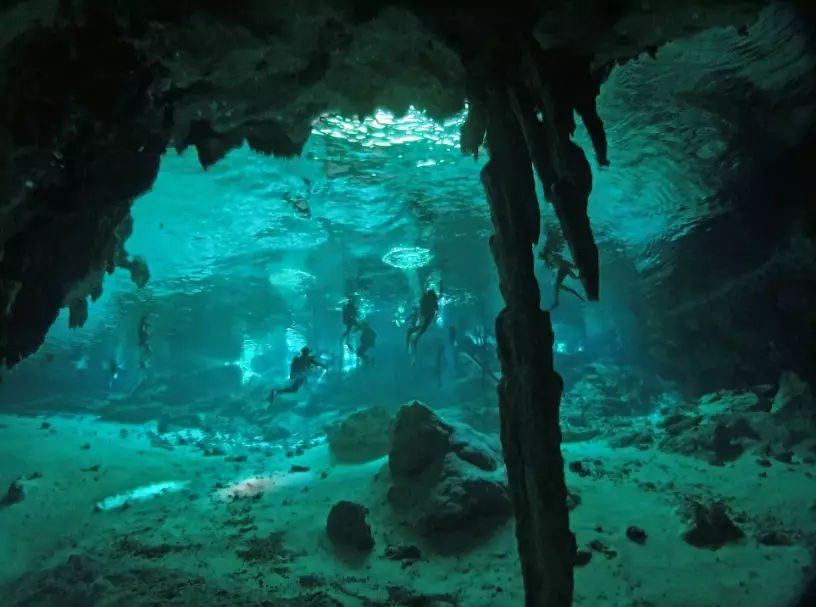
Picture this: you drop below the surface of a jungle pool, and the world above vanishes. Sunlight filters down through a hole in the ceiling, creating beams so sharp you feel you could touch them. You're floating in water clearer than air, surrounded by ancient rock formations. This isn't the ocean. This is cenote diving in Mexico, and it's one of the most unique freshwater diving experiences on the planet. Forget everything you know about reef diving. Cenote diving is a different beast—part geology lesson, part spiritual journey, and a serious test of your diving skills. Based on my own trips and countless conversations with local guides, I'll walk you through exactly what to expect, where to go, and the mistakes to avoid so your trip is nothing short of incredible.
What's Inside This Cenote Guide
What Exactly is Cenote Diving?
A cenote (pronounced seh-NO-tay) is a natural sinkhole formed when limestone bedrock collapses, revealing the groundwater underneath. The Yucatán Peninsula has over 6,000 of them, creating a vast, interconnected underground river system. Diving them means exploring these flooded caves and caverns.
Let's get the terminology right, because it matters for safety. Cavern diving is what most recreational divers do. You stay within the "zone of natural light," always in sight of an exit. It feels adventurous but is accessible with a basic Open Water certification and a specialized cenote guide. Cave diving is a serious technical discipline that takes you beyond the light zone into permanent darkness. That requires specific, extensive training (like a Full Cave certification). This guide focuses on cavern diving, the perfect introduction for most visiting divers.
The water is fresh, not salt, and it's often a constant 77°F (25°C) year-round. The visibility? Regularly 100+ meters. It's disorienting in the best way possible.
How to Prepare for Your First Cenote Dive
You can't just show up and jump in. Preparation is key to both safety and enjoyment.
Gear You'll Actually Need
Most dive shops in Playa del Carmen or Tulum provide the specific gear, but knowing what to expect helps. You'll want a full 5mm or 7mm wetsuit—the water is cool and you're not moving as much as on a reef dive. A powerful dive light is non-negotiable, even in daylight, to see the colors in the rock. They'll likely insist on a compact, streamlined configuration, often clipping your octopus to your BCD to avoid snagging. Gloves are usually prohibited to protect the delicate mineral formations.
Choosing the Right Dive Operator
This is the most critical decision you'll make. Don't just pick the cheapest. A good operator will:
- Rigorously check your logbook (20+ logged dives is a common, sensible minimum).
- Brief you extensively on hand signals, line protocols, and no-touch rules.
- Keep groups small (4 divers per guide max).
- Use guides who are certified cave divers, even for cavern tours. Their extra training is invaluable.
Top 5 Cenotes for Diving in the Yucatán
Not all cenotes are created equal. Here’s a breakdown of the standout sites, from iconic to intimate.
| Cenote Name | Location (Near) | Key Features & Depth | Best For | Approx. Cost (1-Tank Dive) |
|---|---|---|---|---|
| The Pit | Tulum | Deep (40m+) shaft with hydrogen sulfate cloud at 30m. Famous light beam. Advanced. | Experienced divers, dramatic photography. | $90 - $120 USD |
| Dos Ojos ("Two Eyes") | Tulum | Two connected cenotes. The "Barbie Line" has stunning blue water & light. Caverns, 10m max. | First-timers, unbelievable water clarity. | $80 - $110 USD |
| Calavera (Temple of Doom) | >TulumThree entry holes. Fun jumps! A halocline is present. Shallow, 5-8m. | Adventurous beginners, a playful dive. | $70 - $100 USD | |
| Angelita | >TulumUnderwater "river" of hydrogen sulfate at 30m, with trees protruding. Eerie, unique. | >Advanced divers comfortable in low viz.$90 - $120 USD | ||
| Chac Mool | >Playa del CarmenComplex system with caverns, a halocline, and air domes. Lots of variety. | >Divers with a few cenotes under their belt.$80 - $110 USD |
A personal note on Angelita: it's hyped for its surreal scenery, but the hydrogen sulfate layer can be disorienting and reduces visibility to near-zero. It feels more like a technical dive than a recreational one. If you're prone to vertigo, maybe skip it.
Planning Your Cenote Diving Trip
Logistics matter. Most diving is centered around Playa del Carmen and Tulum.
Base Yourself in Playa del Carmen. It's more central for accessing the northern cenote routes (like Chac Mool) and the southern ones (Tulum). Tulum has a more bohemian vibe and is closer to sites like The Pit, but it's pricier and logistics for dive shops can be more fragmented. Playa is the diver's hub.
A Sample 4-Day Diving Itinerary:
- Day 1: Arrival, gear check, and an afternoon dive at a gentle site like Chac Mool or the caverns of Dos Ojos to acclimate.
- Day 2: Morning dive at The Pit (conditions permitting), afternoon dive at Calavera for something completely different.
- Day 3: A two-tank dive exploring a connected system, like the Dos Ojos-Barbie-Bat Cave circuit.
- Day 4: A final, requested favorite or a rest day exploring Tulum ruins (but no flying for 24 hours after your last dive!).
Getting There & Around: Fly into Cancún International (CUN). Pre-book a private transfer or take an ADO bus to Playa. Rent a car only if you're comfortable with local driving; otherwise, dive shops provide transport. For cenotes, the shop's van is the way to go.
The Weird & Wonderful Science of Cenotes
You'll hear guides talk about two things: the halocline and the hydrogen sulfate layer.
What is the Halocline?
This is where fresh water from the rain sits on top of denser salt water that has seeped in from the ocean. When you swim through it, the mixing causes a dramatic, shimmering blur—like looking through a heat haze. It's completely harmless but trippy. The key is to keep your regulator in your mouth and breathe normally; the visibility clears instantly once you're through the layer.
That Spooky "Underwater River"
At cenotes like Angelita, you'll see what looks like a flowing river on the bottom. It's actually a cloud of hydrogen sulfate, a dense gas produced by decomposing organic matter. It hangs at a specific depth, creating an illusion of a riverbank. Diving into it is surreal—visibility drops to zero, temperature can change, and it has a slight rotten egg smell if it gets in your regulator. This is an advanced environment.
Safety, Etiquette & Conservation
Cenotes are sacred to the Maya and fragile ecosystems. Our behavior has a direct impact.
The Golden Rules:
- No Touch. Ever. The oil from your skin stops stalactite growth. A single careless fin kick can break a formation that took millennia to form.
- Zero Sunscreen or Bug Spray. Apply these at least 30 minutes before entering the water, or use only biodegradable products. Toxins from regular sunscreen accumulate in these closed systems.
- Listen to Your Guide. Their instructions on buoyancy, route, and air management are for your safety and the site's preservation.
Safety-wise, the rules are absolute. Always dive with a guide. Monitor your air and depth obsessively. Stay within the limits of your training. The beauty is mesmerizing, but it's not a place for ego or improvisation.
Comments