Let's cut to the chase: Mexico is one of the best places on the planet for your first scuba diving adventures. The water is warm, the marine life is ridiculous, and there are spots so calm and shallow you'll forget to be nervous. I've been diving here for over a decade, and I still get a kick out of introducing new divers to these waters. The secret isn't just finding a pretty reef—it's about finding the right conditions: minimal current, easy access, forgiving depth, and dive shops that genuinely know how to handle beginners. That's what this guide is for.
Your Quick Dive Guide
Understanding "Beginner-Friendly" Diving in Mexico
When we say a dive site is good for beginners, we're talking about a specific recipe. It's not just about being shallow. You want protection from the open ocean. Think bays, sheltered reefs, and inland cenotes (freshwater sinkholes). These places often have little to no current, which is the number one thing that spooks new divers. Visibility is another huge factor. Mexico's Caribbean coast, especially around the Yucatán Peninsula, offers visibility often exceeding 30 meters (100 feet). Seeing clearly reduces anxiety—you can always see your buddy, your guide, and the way back to the boat.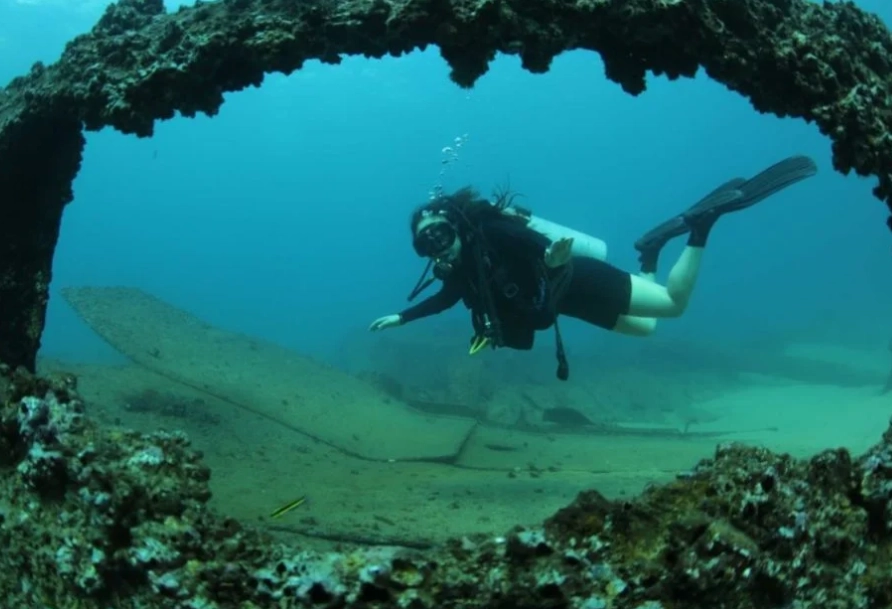
A pro tip most blogs miss: Pay more attention to the dive operator than the specific site. A great shop for beginners will have small groups (4-6 divers max per guide), brief you thoroughly in your native language, and have a guide who stays close, checks on you constantly, and maintains a slow, relaxed pace. A mediocre shop will herd 10 people onto a reef, regardless of conditions.
The marine life is part of the appeal, but for beginners, it's about predictable, non-threatening encounters. Expect to see schools of colorful parrotfish, angelfish, maybe a friendly turtle, and vast gardens of coral. You're not going on a shark dive (yet). This controlled exposure builds confidence.
Top 3 Beginner-Friendly Dive Destinations in Mexico
Based on consistent conditions, infrastructure, and my own experience taking new divers out, these three areas are in a league of their own.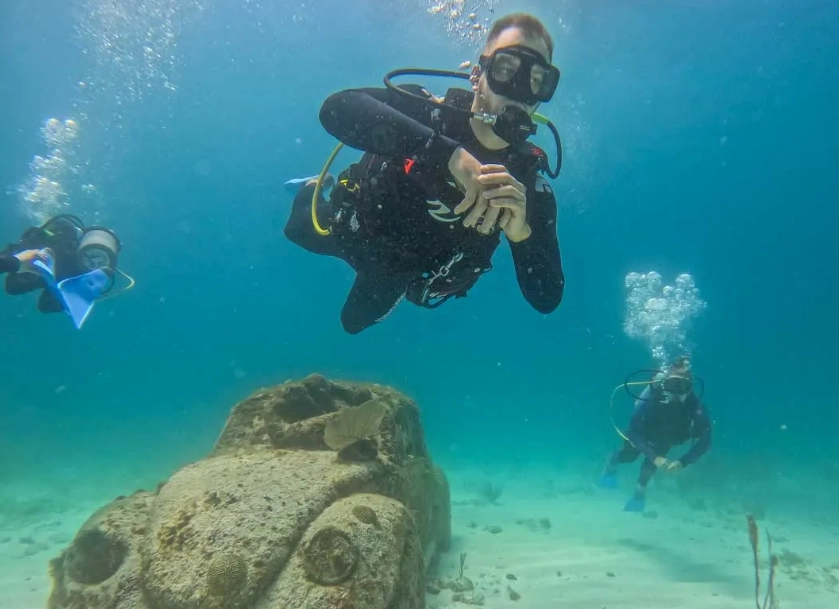
1. Cozumel: The Gentle Drift Dive Kingdom
Cozumel is legendary, and for beginners, it's all about the southern reefs. The Mesoamerican Reef system here creates a natural barrier, making the west coast remarkably calm. Dives are typically "drift dives"—the mild current carries you along so you exert minimal energy. It feels like flying.
Key Beginner Sites: Palancar Gardens: Not the deep, dramatic walls Palancar is famous for, but the shallow, garden-like sections at 10-15 meters. It's a coral playground. Paradise Reef: Right off the coast from downtown San Miguel, this is a common check-out dive site. It's shallow, packed with life, and a short boat ride. Chankanaab Reef: Another close, sheltered site perfect for first dives or refreshers.
Logistics: Fly into Cozumel International (CZM) or ferry from Playa del Carmen. The main town, San Miguel, is walkable and full of dive shops. Water temps range from 26°C (79°F) in winter to 29°C (84°F) in summer. You can literally dive in a swimsuit and a thin wetsuit.
2. Isla Mujeres & the Cancun Underwater Museum (MUSA)
If you're staying in Cancun, this is your best bet. The water north of Cancun and around Isla Mujeres is generally flatter than Cozumel. The star here is MUSA, the Underwater Museum. It's an artificial reef made of hundreds of life-sized sculptures at depths of 8-10 meters. It's fascinating, absolutely unique, and because it's designed for conservation, it attracts fish and coral growth. It's a fantastic, distraction-filled dive for beginners.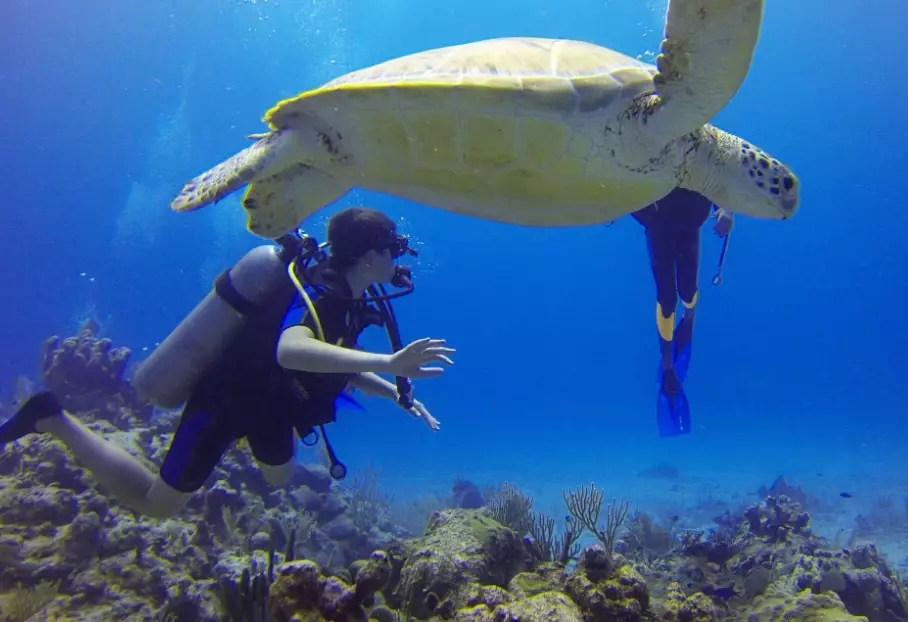
The Dive: Most operators from Cancun or Isla Mujeres will run two-tank trips: one at MUSA and one at a nearby natural reef like Manchones. The dive is straightforward, often with no current. A typical 2-tank boat trip with gear rental will cost between $100-$130 USD.
3. The Cenotes of the Riviera Maya (Tulum/Ruinas)
This is the hidden gem for brave beginners. Forget the ocean—cenote diving is in crystal-clear freshwater caverns. It sounds advanced, but specific cenotes are perfect for Open Water divers. The water is so clear it's disorienting (in a good way), there is zero current, and no waves or boats to worry about.
The Best Beginner Cenotes: Dos Ojos: "Two Eyes." The "Barbie Line" is a well-lit, open cavern route. You're never out of sight of an entrance. It's pure magic. El Pit: For your second cenote dive. It starts shallow, then opens into a vast chamber with a hydrogen sulfate layer that looks like a mystical cloud. You hover above it—no need to go deep. Chac Mool: Offers both open cavern and a bit of halocline (where salt and fresh water mix, creating a blurry effect) for a neat experience.
Critical Advice: You MUST use a specialized cenote guide. This is non-negotiable. They know the routes, manage buoyancy perfectly (to avoid stirring up silt), and use powerful torches. A good cenote dive for beginners costs about $120-$150 USD for a two-tank trip, including guide, gear, and park fees. It's worth every penny.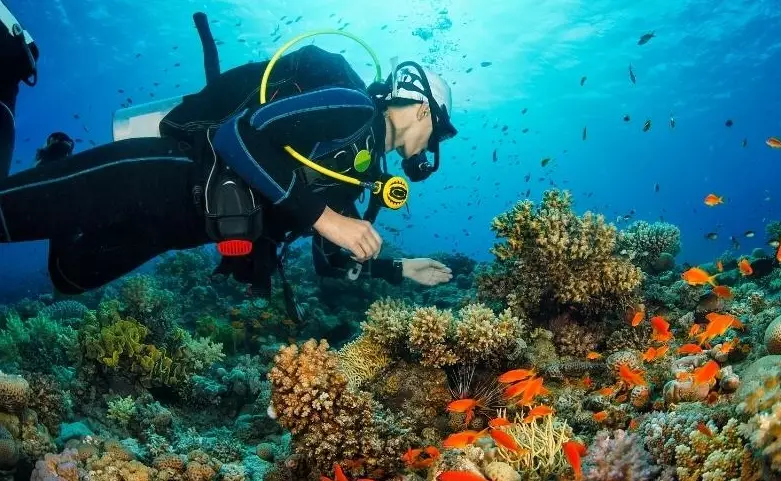
| Destination | Best For | Water Conditions | Sample 2-Tank Dive Cost | Getting There |
|---|---|---|---|---|
| Cozumel | Easy drift diving, abundant marine life, classic reef scenery. | Calm, warm (26-29°C), high visibility (30m+). | $90 - $120 USD | Direct flight to CZM or ferry from Playa del Carmen. |
| Isla Mujeres / MUSA | Unique artificial reef, calm waters, easy access from Cancun hotels. | Very calm, warm, good visibility (15-25m). | $100 - $130 USD | Taxi/ferry from Cancun (30-45 mins total). |
| Riviera Maya Cenotes | Unforgettable cavern experience, zero current, surreal clarity. | Freshwater, constant 24-25°C, stunning visibility (60m+). | $120 - $150 USD | Drive/taxi from Playa del Carmen or Tulum (20-40 mins). |
Your First Mexico Dive Trip: A Practical Planning Guide
You've picked a spot. Now, let's build the trip.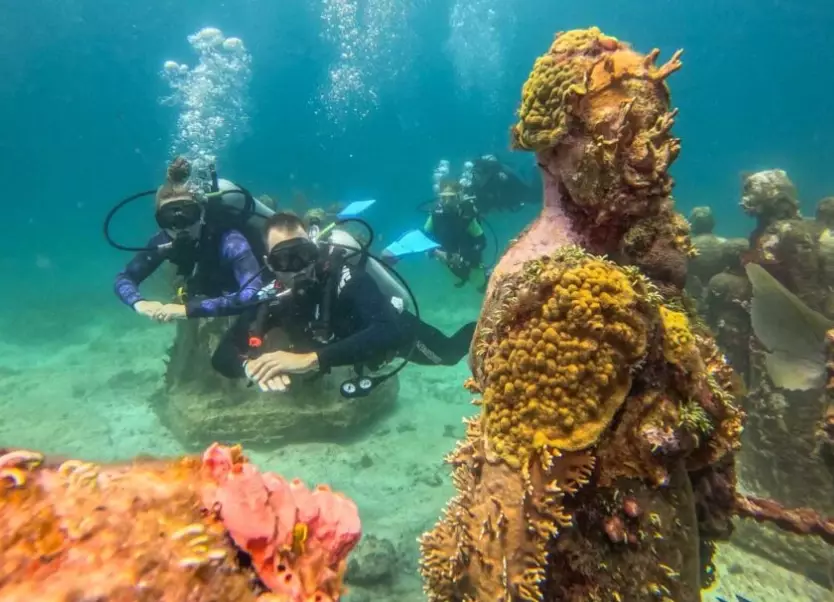
Step 1: Certification. Get your PADI Open Water Diver or equivalent before you go. Doing your pool and classroom work at home saves precious vacation time. You can then do your "open water check-out dives" in Mexico, which is infinitely more fun than a local quarry.
Step 2: Booking Dives. Don't book the cheapest boat online. Email 2-3 highly-rated shops in your chosen area. Ask them: "What is your diver-to-guide ratio for beginners?" "Do you have a dedicated guide for new divers?" "What sites do you plan based on that day's conditions?" Their answers will tell you everything.
Step 3: What to Pack. Bring your mask, snorkel, and fins if you have them (a well-fitting mask is a game-changer). Most shops include wetsuits, BCDs, and regulators. Pack a rash guard for sun/abrasion protection. Don't forget your certification card (the "C-card") and logbook.
Step 4: Timing Your Trip. The rainy/hurricane season is roughly June to November. The water is still warm, but seas can be rougher, and trips get cancelled more often. For the most guaranteed calm conditions, aim for the dry season, December to April. It's also peak tourist season, so book shops early.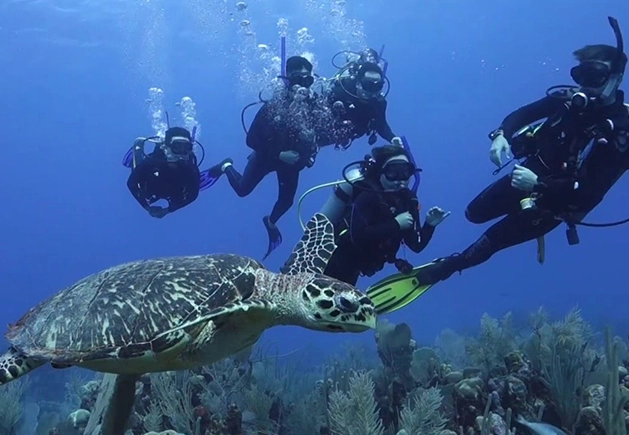
Common Beginner Mistakes (And How to Avoid Them)
I've seen these a hundred times.
Mistake 1: Trying to see everything on dive one. You'll exhaust yourself. Focus on three things: breathing slowly, staying close to your guide, and controlling your buoyancy. The fish will be there. Master the basics first.
Mistake 2: Over-gripping the inflator hose. New divers often death-grip their low-pressure inflator, accidentally adding tiny bursts of air. This causes the yo-yo effect—up and down, up and down. Relax your hand. Make small, deliberate adjustments.
Mistake 3: Skipping the refresher if it's been a while. If you haven't dived in over a year, book a half-day refresher (often called a "Scuba Review"). It's not an insult to your skills; it's muscle memory. A good shop will do this in a pool or shallow bay for about $80. It makes the first real dive 100% more enjoyable.
Mistake 4: Chasing the "advanced" sites too soon. Cozumel's famous Palancar Caves or the Devil's Throat are not for new divers, regardless of what a cowboy operator might say. Stick to the plan. There's a lifetime of diving ahead.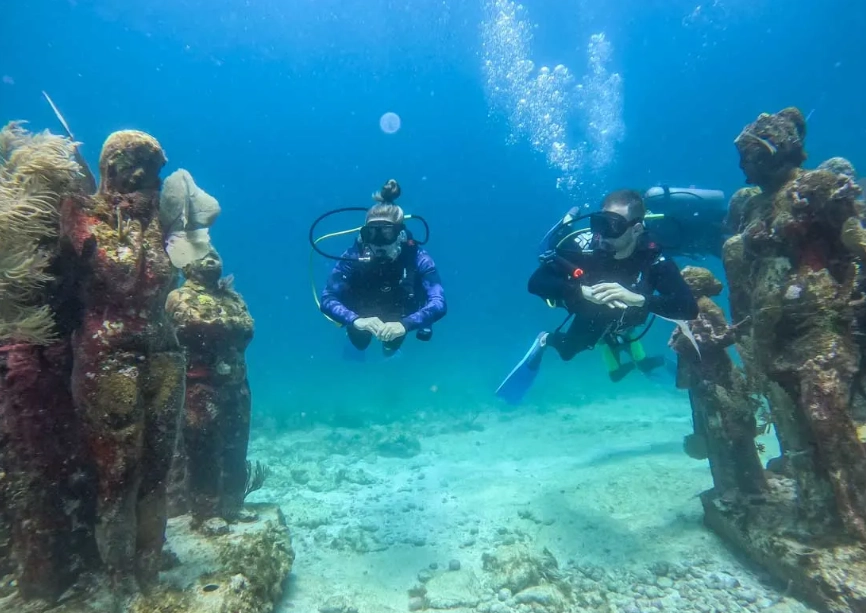
Your Questions on Beginner Diving in Mexico
It's one of the best precisely because of that nervousness. The conditions I've outlined—warm, clear, calm water—are the ideal environment to build confidence. A huge part of a dive guide's job is managing that anxiety. Tell them you're new and nervous. A good guide will give you extra attention, start in the shallowest possible area, and make sure you're comfortable before going any deeper. The first five minutes are the hardest; after that, most people are too amazed to remember they were scared.
You need basic comfort in the water, but you don't need to be an Olympic swimmer. Scuba diving is about buoyancy, not swimming strokes. The certification course has a basic swim test (treading water, swimming 200 meters/yards). If you can pass that, you have the required watermanship. In the ocean, you'll use your fins to move effortlessly. The key is being relaxed, not powerful.
Marine park fees and equipment rentals beyond the basics. Many dive shop quotes cover the boat, guide, tank, and standard gear (BCD, regulator, wetsuit). You'll almost always need to pay a separate marine park conservation fee (e.g., Cozumel Marine Park is about $10-15 USD per day). Also, if you want a dive computer (highly recommended) or a better-quality wetsuit, that's often a small extra rental fee ($5-15 per item). Factor in an extra $25-40 per diving day on top of the advertised trip price.
The short answer is no. The creatures that get attention—sharks, rays, moray eels—want nothing to do with you. The real "hazards" are passive and easy to avoid: don't touch the coral (it's sharp and fragile), and be aware of sea urchins if you're walking in shallow water. Your guide will point out anything to give space to. The overwhelming majority of your encounters will be with beautiful, harmless fish. The biggest risk is usually sunburn on the back of your legs during the surface interval.
Your comment