Quick Guide
If you've ever watched scuba divers gearing up, you might think getting into the water is the easy part. Just... jump, right? I used to think that too. My first open water dive, I was so focused on not forgetting to breathe that I nearly face-planted trying to get off the boat. It was humbling, and it taught me a crucial lesson: how you enter the water sets the tone for your entire dive. It's about safety, comfort, and conserving energy before you even see a fish.
So, let's cut through the theory and talk about the real-world ways scuba divers enter the water. This isn't just a list from a manual. We'll dig into when to use each method, the little tricks instructors don't always mention, and the common screw-ups everyone makes at least once (I know I have). Whether you're a new diver nervous about your first boat dive or a seasoned pro looking to refine your technique, there's something here.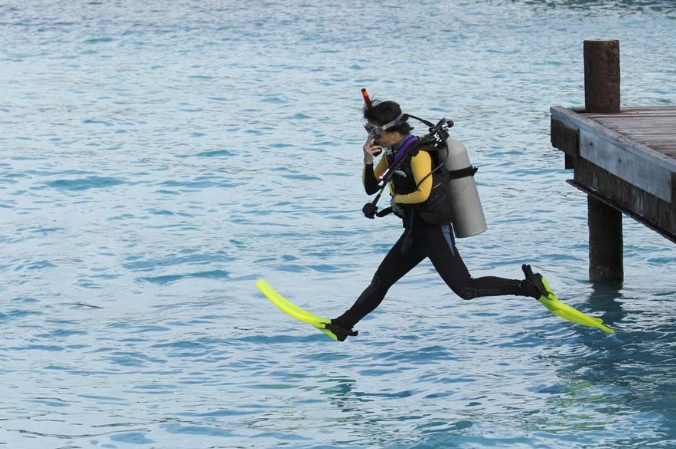
The Big Three: Main Ways Scuba Divers Get Wet
Most entries boil down to three core techniques. The one you choose depends entirely on your environment—are you on a boat, a rocky shore, or a sandy beach? Getting this choice wrong is the first mistake.
The Giant Stride Entry: The Boat Diver's Go-To
This is the classic movie shot. You stand at the edge of a platform or a boat's gunwale, look straight ahead, take a giant step forward, and plunge in. It looks simple, but there's an art to it.
Here’s the proper sequence, broken down:
- Final Gear Check: Mask on and cleared, regulator in mouth (breathing from it!), BCD about half-inflated, weight belt or integrated weights secure. No dangly bits. I've seen a fin go flying—it's not pretty.
- Positioning: Stand at the very edge. Place one hand on your mask and regulator, the other on your weight belt or BCD to keep everything in place during impact.
- The Step: Look at the horizon, not straight down at the water. Taking a look down is the fastest way to lose your balance or do an awkward belly flop. Step forward decisively with one leg, literally making a "giant stride." Don't jump up and out; step out and down.
- Post-Entry: Once you surface, give the OK signal to the boat crew or dive leader, then fully inflate your BCD. The boat will usually pick you up from a designated area.
When to use it: This is perfect for stable platforms where the water is deep and clear below you. Think dive boats, piers, or jetty ends.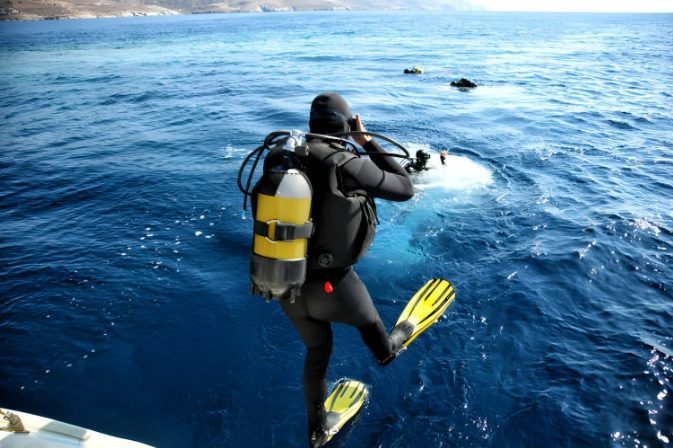
The Seated Entry: For When You're Not Feeling So Giant
This is the more controlled, less intimidating cousin of the giant stride. You sit on the edge of the entry point, swivel around, and slide in gently. It’s my personal favorite for smaller, less stable boats (like inflatable ribs) or when the water surface is a bit closer.
How do scuba divers enter the water using this method on a crowded dinghy? Very carefully, and one at a time. The process:
- Scoot to the edge and sit. Make sure your tank and BCD are clear of the boat edge.
- Turn your body to face the boat's interior, place both hands on the edge beside you for support.
- In one smooth motion, push off and lift your body, turning to face the water as you slide in. The goal is a clean, feet-first entry.
The beauty of the seated entry is its low center of gravity. It’s fantastic for beginners, choppy conditions, or when you're entering from a height that makes you think twice about striding. It's less dramatic but often smarter.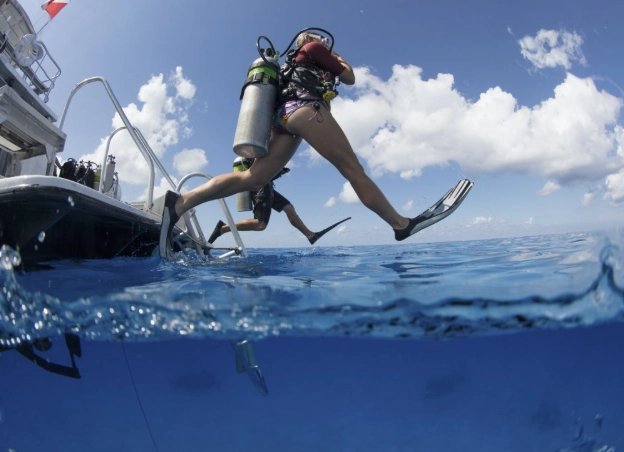
The Backward Roll Entry: The Rib Boat Special
If you've ever dived from a small inflatable boat (a RIB or zodiac), you know this one. There's no platform to stand on, just a soft tube to perch on. So, how do scuba divers enter the water from these? They roll backwards.
You sit on the side of the boat, facing inwards. On the divemaster's count, you simply lean back and roll over the side. It feels unnatural at first—trusting that you'll end up right-side up—but it's incredibly effective.
This method keeps the boat stable and gets the whole team in the water quickly, which is vital when diving in currents or specific tidal windows.
Shore Entries: A Whole Different Game
Boat entries are one thing, but shore dives require a different mindset and technique. Here, the question isn't just "how do scuba divers enter the water," but "how do they navigate the often tricky terrain to get to the water?"
The Beach Shuffle: For Sandy Slopes
Walking backwards into the surf with fins on is a comedy routine waiting to happen. The solution is the "beach shuffle."
- Put all your gear on at the water's edge (or just in shallow water). Inflate your BCD so you're positively buoyant.
- Walk backwards into the water without your fins on. Yes, you heard that. It's easier to walk in booties or bare feet.
- Once you're in deep enough water to float comfortably (about waist to chest deep), put your fins on. You can do this by floating on your back or holding onto a buddy.
- Then, and only then, start swimming out, descending when you reach the appropriate depth.
It feels a bit clumsy, but it's far safer than trying to moonwalk over rocks and shells with long fins. Trying to walk with fins in shallow water is a great way to twist an ankle or take an unexpected swim.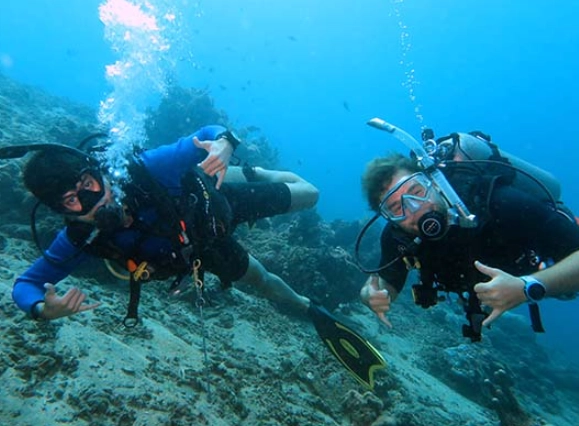
Rocky Shore Entios: Proceed with Caution
Rocky entries are where planning pays off. Slippery algae, uneven surfaces, and waves make this the most hazardous entry type.
My strategy, learned from a guide in cold British waters:
- Scout First: Without your gear, find the best path into the water. Look for a sheltered, gradually sloping area if possible.
- Gear Up Close: Suit up as close to the entry point as is safe. Minimize the distance you have to walk while heavy and vision-limited.
- Teamwork: Enter one diver at a time, with a buddy spotting. The spotter can help with balance and watch for incoming waves.
- Timing is Everything: Coordinate your entry with the wave sets. Go in during a lull, not as a wave is crashing. I've been knocked over by a sneaker wave doing this—it's not fun when you're fully geared up.
- Get deep enough to float quickly, then put your fins on.
Many coastal diving resources, like those from the National Oceanic and Atmospheric Administration (NOAA), emphasize understanding surf and tide conditions, which is absolutely critical for safe shore diving.
What About the Gear? It Makes a Difference.
Your equipment choice subtly influences how you should enter. A steel tank is heavier than aluminum, changing your buoyancy at the surface. A wing-style BCD might feel different on your back during a roll than a jacket style. And if you're wearing a drysuit, you need to account for the air trapped inside—a rapid descent from a jump can cause an uncomfortable squeeze before you equalize the suit.
The point is, practice new entries with your familiar gear first. Don't try a backward roll for the first time on a liveaboard trip with a brand-new BCD configuration. It adds unnecessary variables.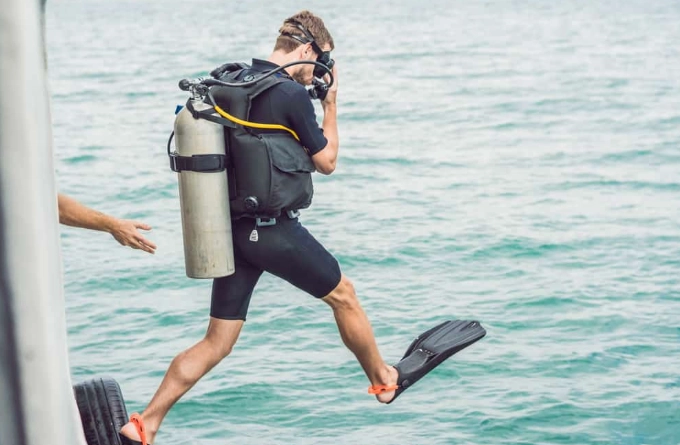
Wait, I Have More Questions...
Beyond the Basics: Special Situations
Sometimes, standard procedures need tweaking. Here are two situations that change the game.
Entering with a Camera or Other Delicate Gear
This is a headache. That expensive housing isn't designed to take a pounding. How do scuba divers enter the water when they're laden with camera gear? Almost always via a seated entry or a very careful giant stride where the camera is handed to them in the water after they enter. Some divers even enter with the camera in a padded bag, then retrieve and assemble it at the surface. The golden rule: protect the gear first. An entry that jolts your camera into the boat's hull ruins the dive before it starts.
Current Dives and Live Drifts
On current-swept dive sites, the boat doesn't anchor. You enter as a group, descend quickly, and drift with the current. Here, the entry must be swift and coordinated. Usually, it's a backward roll in quick succession. The moment you surface, you give an OK, and the boat leaves you to descend. There's no loitering at the surface. This requires good buoyancy control and listening carefully to the briefing.
For authoritative information on diving in currents and advanced boat procedures, the Professional Association of Diving Instructors (PADI) and Divers Alert Network (DAN) have extensive resources on planning and safety for these dynamic environments.
Putting It All Together: Your Pre-Entry Checklist
Before you even approach the entry point, run through this mental list. It's saved me from countless minor disasters.
- Buddy Check Done? BWRAF (Buoyancy, Weights, Releases, Air, Final OK) – do it every time.
- Dangle-Free? Loose gauges, snorkels, or SMBs can snag. Secure everything.
- Air On? Regulator Breathing? Sounds obvious, but in the rush, people forget. Take a breath from your primary and alternate.
- BCD Appropriately Inflated? A little air helps with surface buoyancy post-entry. Too much and you'll rocket back up awkwardly.
- Mask & Regulator Secure? Hand position is key for most entries.
- Communication Clear? Know the plan with your buddy and the guide. Where to meet on the surface? Which direction to swim?
- Look & Go: One final glance at the entry area, then commit decisively. Hesitation is often the root of problems.
At the end of the day, mastering how scuba divers enter the water isn't about performing a perfect athletic move. It's about applying the right tool for the conditions to start your dive calmly, safely, and with energy to spare. It's the first real skill of the dive, and getting it right makes everything that follows—the descent, the exploration, the awe—that much better.
Start simple, practice in controlled conditions, and don't be afraid to ask your guide to demo it again. We've all been there, fumbling at the edge. The important thing is getting in the water safely so you can enjoy the world beneath the surface.





Comments