Quick Navigation
Let's be real for a second. Scuba diving is incredible. It's a passport to a silent world most people only see on screens. But here's the thing nobody in the marketing brochures says loudly enough: it's also an activity where the environment is actively trying to kill you. I don't say that to scare you off. I say it because respecting that fact is what makes diving safe, fun, and sustainable. The water doesn't care about your Instagram followers. It only cares about physics and physiology.
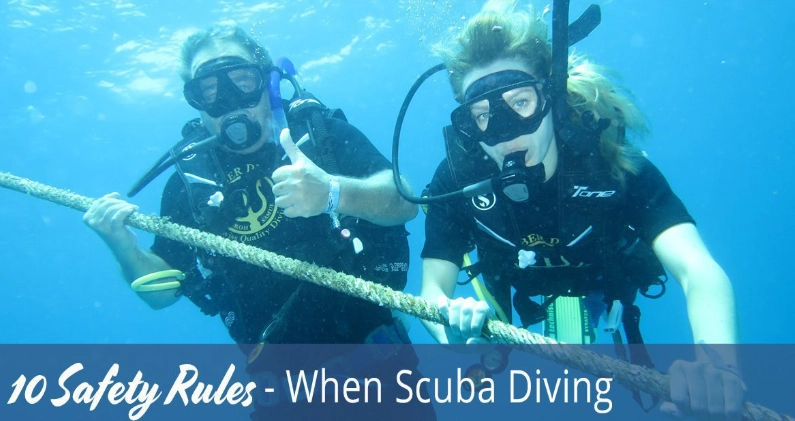
And that's where scuba diving safety rules come in. They're not arbitrary hoops to jump through dreamed up by grumpy instructors. They're the collective wisdom, written in lessons learned—sometimes the hard way—over decades. They're your cheat sheet for outsmarting the risks.
I've been diving for over fifteen years, from tropical reefs to murky quarries. I've seen divers who treat safety briefings like a boring movie preview, and I've seen the ones who listen, double-check, and ask questions. Guess who has more fun and comes back with better stories? This guide is everything I wish someone had sat me down and explained, not just as a list of rules, but as a why-behind-the-rule manual.
Why Scuba Diving Safety Rules Matter (It's Not Just About You)
People often think safety rules are for beginners. That's a dangerous and stupid mindset. I've seen advanced divers get into trouble over simple things they thought they'd "outgrown," like proper buoyancy or air monitoring. Rules are for everyone.
Think about it this way. When you're 60 feet down, you're not just responsible for yourself. You're part of a buddy team. Your mistake can become your buddy's emergency. A panicked ascent or a runaway buoyancy issue doesn't just put you in danger; it forces your buddy, and potentially a whole dive boat, into a rescue scenario. Good scuba safety procedures are the foundation of being a reliable dive buddy, not just a competent diver.
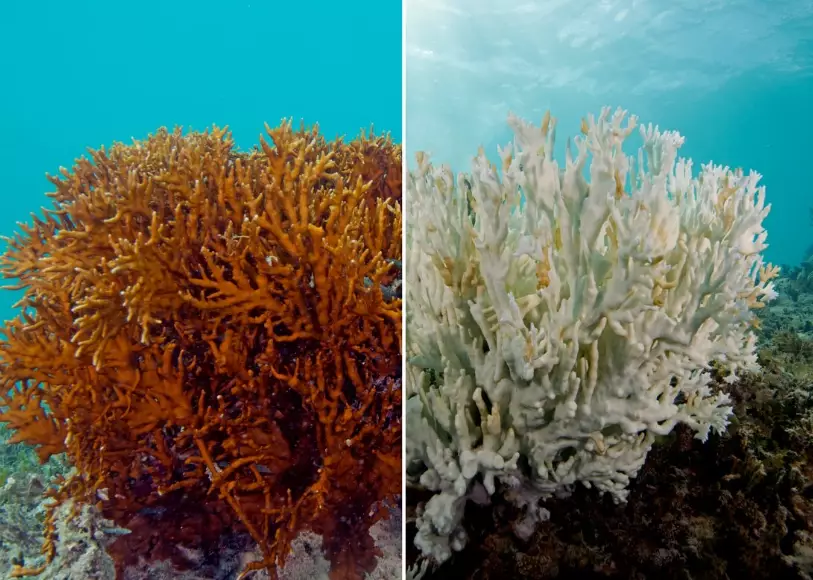
Then there's the marine environment. A diver with poor control who crashes into the reef is literally destroying decades of coral growth in seconds. Safety rules around buoyancy and finning aren't just about saving air; they're about conservation. The Divers Alert Network (DAN), a leading non-profit in dive safety, consistently publishes data showing that a huge percentage of dive incidents stem from a failure to follow basic protocols. You can check their latest safety reports on their official site—it's sobering and essential reading.
Safety is a team sport underwater.
The Essential Scuba Diving Safety Rules Checklist
Alright, let's get into the meat of it. I'm going to break these down not just as a list, but in the order you encounter them—before, during, and after the dive. This is your mental checklist.
Pre-Dive Safety: The Foundation of Everything
Most problems start on the surface. Solving them there is a thousand times easier. This phase is all about prevention.
- Get Properly Certified. No Exceptions. This seems obvious, but you'd be surprised. A certification course from a recognized agency like PADI, SSI, or NAUI isn't just a card. It's proof you've been taught the theory, practiced the skills in controlled water, and been assessed by a professional. Online "certifications" are worthless and dangerous. Your life depends on this training.
- Medical Fitness: Be Brutally Honest. You'll fill out a medical questionnaire (like the RSTC form). Read every question carefully. If you have to check "yes" on anything, see a doctor familiar with dive medicine. Hiding asthma, heart issues, or recent surgeries is playing Russian roulette. The pressure changes affect your body in profound ways. DAN's medical resources are excellent for understanding the "why" behind these questions.
- Gear Check: Your Personal Pre-Flight Routine. Do this with your buddy. It's called BWRAF (Buoyancy, Weights, Releases, Air, Final OK). Touch every item. Open your tank valve ALL the way, then back a quarter-turn (so it doesn't lock shut). Inhale from your regulator and watch the SPG—does the needle drop? That's a leak. Check your buddy's air too. I once found a buddy's O-ring was shredded during this check. Surface fix: two minutes. Underwater discovery: potential disaster.
- Plan the Dive, Dive the Plan. Before you get wet, agree with your buddy: maximum depth, turn-around pressure (usually half your air, minus a reserve), route, hand signals, what to do if separated. "We'll just follow the reef" is not a plan. What if the current picks up? Having a shared plan removes uncertainty, and uncertainty is the cousin of panic.
In-Water Safety: The Rules That Govern the Descent, Bottom Time, and Ascent
This is where the theoretical meets the practical. The physics of water pressure is now your constant companion.
- Manage Your Buoyancy. Good buoyancy is the mark of a competent diver. It saves air, protects the reef, and keeps you off the bottom (stirring up silt ruins visibility for everyone). Practice this skill relentlessly. An out-of-control diver is a hazard.
- Monitor Your Gauges (Depth, Air, Time). Check your air supply every few minutes. Don't wait until you're "getting low." Your turn pressure should be when you still have plenty of air to deal with an unexpected situation. Same for your dive computer—respect the no-decompression limits. These computers are sophisticated, but they work on algorithms. Your body might not read the same textbook. Conservative diving is smart diving.
- Stay With Your Buddy. Maintain visual or physical contact. The "one-up, one-down" rule is good: one buddy is never more than a meter above the other, preventing one from surfacing unnoticed. If you get separated, search for no more than a minute, then safely surface and reunite. Have a pre-agreed signal for "stop, look, and listen."
- Ascent Rate: Go Slow. The universal safe ascent rate is 30 feet (9 meters) per minute. That's slower than you think. Use your computer's rate indicator or a reference like a shot line. Your last safety stop at 15 feet (5 meters) for 3-5 minutes is non-negotiable, even if your computer says you don't "need" it. It's a chance for your body to off-gas excess nitrogen. Rushing to the surface is inviting decompression sickness ("the bends").
How do major training agencies compare on core safety rules? The principles are universal, but the emphasis can vary slightly.
| Safety Aspect | PADI Emphasis | SSI Emphasis | NAUI Emphasis |
|---|---|---|---|
| Minimum Safe Ascent Rate | 30 ft/min max; strong advocacy for safety stops on every dive. | 30 ft/min max; integrates computer use but stresses conservative profiles. | 30 ft/min max; traditionally emphasizes deeper safety stops (e.g., 20 ft for 1 min then 10 ft). |
| Buddy System Protocol | Standardized hand signals, pre-dive planning (BWRAF), and procedures for separation. | Similar, with strong focus on the "dive guide" system in professional settings. | Very strong emphasis on self-reliance within the buddy system; "buddy breathing" skills may be taught. |
| Air Management | Rule of Thirds (1/3 out, 1/3 back, 1/3 reserve) or similar for recreational dives. | Similar, often teaching the "rock bottom" gas calculation for more precision. | Historically teaches the "rock bottom" gas calculation from early stages. |
| Reference for Standards | PADI Standards | SSI Training Standards (proprietary) | NAUI Standards |
See? The core ideas are the same. The differences are in the flavor of teaching.
Post-Dive Safety: Don't Ruin It Now
You're back on the boat or shore. High-fives all around. But you're not done.
- Hydrate, Hydrate, Hydrate. Diving is dehydrating (you're breathing dry air, and you're often in the sun). Dehydration is a key risk factor for decompression sickness. Drink water, not beer or coffee, right away.
- No Flying After Diving. A critical rule. You need to allow time for residual nitrogen to leave your body before you go to even lower pressure in an airplane. The general guidelines:
- For a single no-decompression dive: wait at least 12 hours.
- For multiple dives per day or several days of diving: wait at least 18 hours.
- For dives requiring decompression stops: wait more than 18 hours (consult a table/computer).
- Log Your Dive & Debrief. Note your depth, time, air use, and conditions. Did anything unusual happen? How was your buoyancy? This log isn't for showing off; it's a personal record that helps you track your skills and is useful for future dive medicals. Briefly chat with your buddy—what went well? What could be better?
Common Scuba Safety Questions (And Real Answers)
Let's tackle some stuff people are too embarrassed to ask on the boat.
When Rules Aren't Enough: Handling Emergencies
Even with perfect adherence to scuba safety procedures, things can go wrong. Equipment can fail (rarely, if maintained). A diver can panic. A current can surprise you. This is where your training kicks in.
The mantra is: Stop, Breathe, Think, Act.
- Stop. Freeze your movement. Panic makes you waste air and energy.
- Breathe. Take slow, deep breaths from your regulator. This calms your heart rate and clears your head.
- Think. What is the actual problem? Is it your gear? Your buddy's? The environment?
- Act. Execute the solution you were trained for: share air, make a controlled emergency ascent, drop your weights if necessary (a true last resort for an uncontrollable ascent to the surface).
Consider taking a specialized course like the PADI Rescue Diver or equivalent. It's often called the most challenging but rewarding course because it moves the focus from yourself to others. You learn to recognize stress in other divers before it becomes panic and how to manage real emergencies. It fundamentally changes how you view every dive.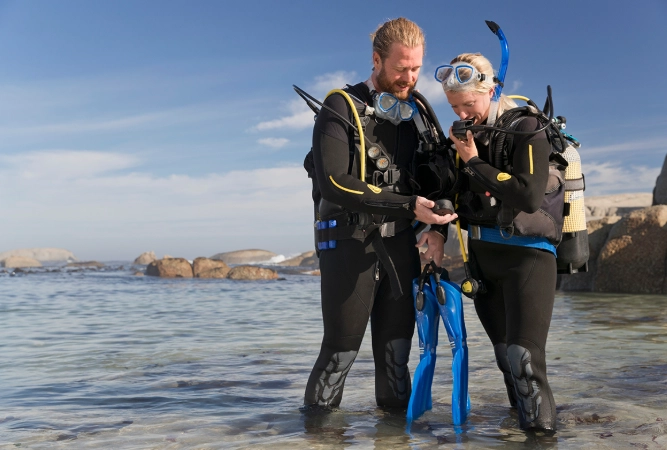
Final Thought: Making Safety Second Nature
Look, nobody becomes a diver to follow rules. We become divers for freedom, wonder, and adventure. The beautiful paradox is that by diligently following these scuba diving safety rules, you earn that freedom. You stop thinking about your buoyancy because it's automatic. You check your air without realizing it. You ascend slowly because it feels right.
The rules fade into the background, and the experience comes to the fore. That's the goal. To make safety so ingrained that it becomes the silent partner on every dive, leaving you free to fully absorb the magic of the underwater world.
Dive safe. Dive often. And for heaven's sake, remember to breathe.



Comments