Ask any seasoned dive guide or instructor to name the single most common boat entry technique in recreational scuba diving, and you'll get the same answer every time: the Giant Stride Entry. It's not a debate. From the dive boats of the Great Barrier Reef to the liveaboards in the Red Sea, this method is the default, the workhorse, the entry you'll perform dozens if not hundreds of times in your diving life. But have you ever stopped to think why it's so ubiquitous? It's more than just tradition. The giant stride dominates because it strikes a near-perfect balance of safety, efficiency, and simplicity for the majority of boat diving scenarios.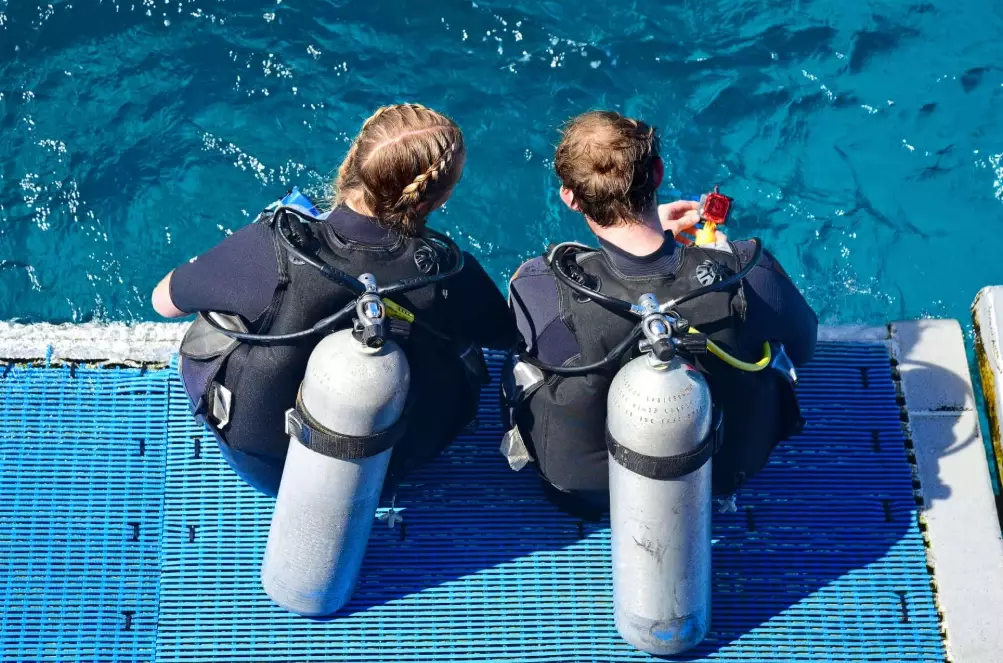
What You'll Learn in This Guide
Why the Giant Stride Entry is the Undisputed Champion
Think about the typical dive boat setup. You're geared up, standing on a platform or a gunwale, looking down at the water. The giant stride works here because it solves several problems elegantly.
It creates instant distance. A proper stride pushes you away from the boat's hull. This is non-negotiable. You do not want to be bobbing right next to the boat where a swell could slam you into it, or worse, where you might drift under the platform. That distance is your primary safety buffer.
It's stable and controlled. Unlike a jump or a hop, the motion is deliberate. You step out, not down. This allows you to maintain body position—keeping your regulator in your mouth, one hand securing your mask and regulator, the other often holding your weight belt or an inflator hose close. You enter the water in a prepared posture.
It works for almost everyone. It doesn't require the flexibility of a seated entry or the agility of a back roll. Whether you're 5'2" or 6'4", the mechanics are the same. This universality makes it the perfect choice for dive operations running trips for mixed-ability groups.
I remember my first open water dive from a boat in Thailand. The dive master simply said, "Big step, look straight ahead, go." The simplicity was reassuring. There was no complex maneuver to overthink. That's a huge part of its success—it reduces cognitive load for beginners when they're already nervous.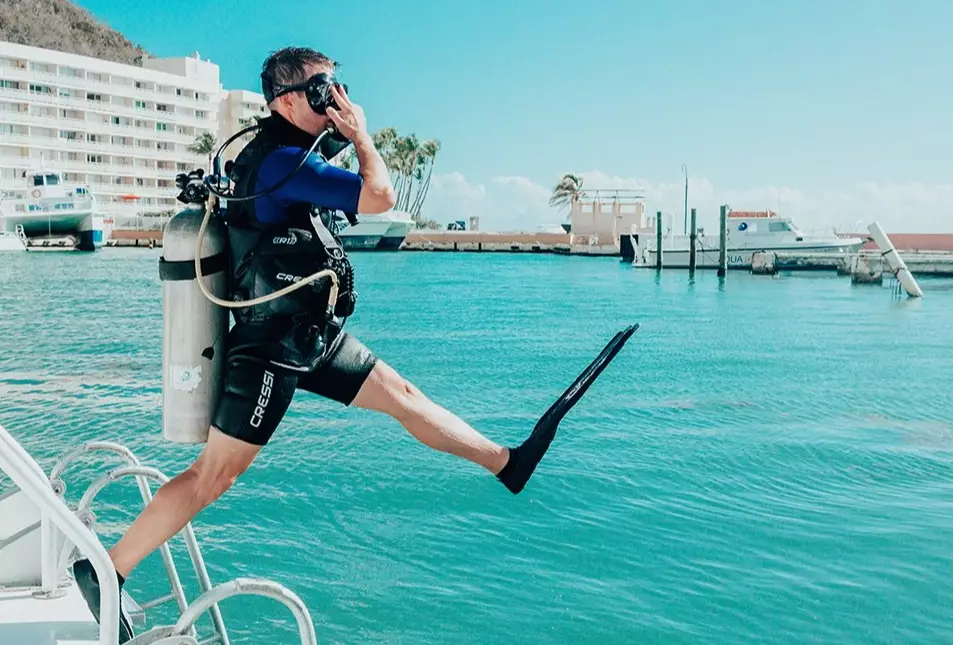
How to Perform a Perfect Giant Stride Entry
Let's break it down into actionable steps. Doing it right feels smooth and confident. Doing it wrong can range from comical to hazardous.
The 5-Step Sequence
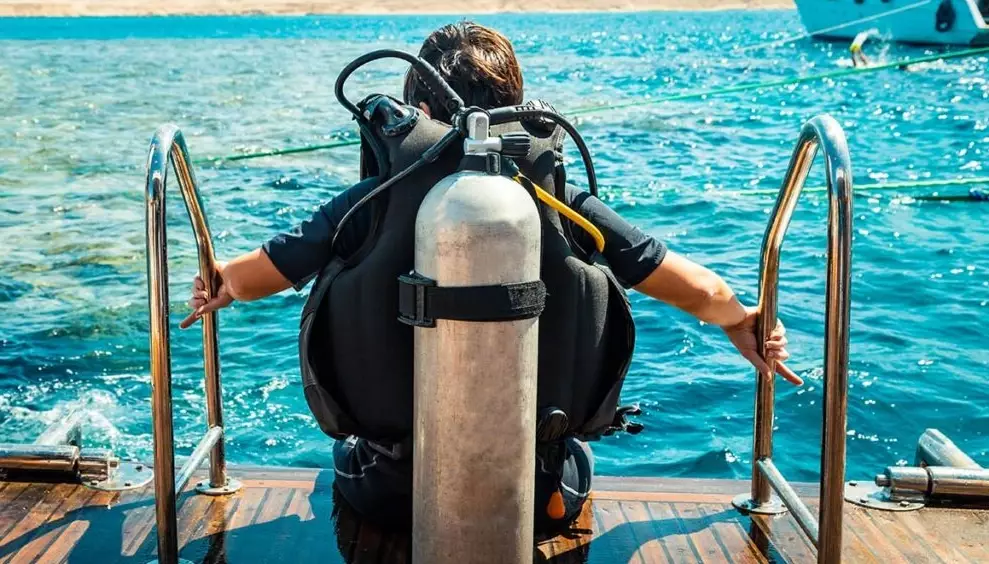
1. The Stance. Stand at the very edge of the platform or gunwale. Feet should be shoulder-width apart for stability. Look straight out at the horizon, not down at your feet or the water. Your body should be upright, not hunched over.
2. The Hand Position. This is where many new divers fumble. Your right hand (if you're right-handed) should firmly hold your mask strap and the second stage (regulator) in your mouth. Don't just press the mask to your face—grip the strap. Your left hand should hold something stable: often the inflator hose of your BCD pressed against your torso, or the bottom edge of your BCD. This arm helps keep your gear from flying up on impact.
3. The Step. Take a large, deliberate step forward with your dominant leg. I mean a big step—you're stepping out to clear the boat, not stepping down right beside it. Imagine you're stepping over a wide puddle.
4. The Follow-Through. As your stepping leg goes forward, your trailing leg naturally follows. Keep your legs relatively straight. The goal is to enter the water feet-first, legs together or slightly apart, in a vertical or near-vertical position.
5. The Surface. Once you hit the water, immediately look up, locate the boat, and give the "OK" signal to the crew. Then, inflate your BCD orally or with your power inflator to achieve positive buoyancy. Swim clear of the entry area for the next diver.
A common subtle error? People lean forward as they step, causing a belly flop or an awkward face-first entry. Keep your chest up and look forward. Your body follows your gaze.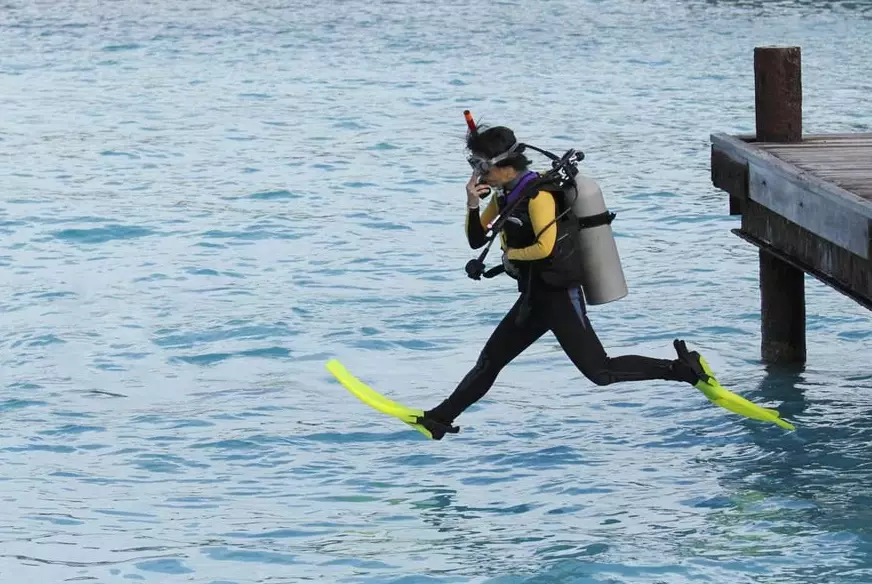
Other Boat Entry Methods & When They Shine
The giant stride is the king, but it's not the only tool in the box. A good diver knows the alternatives and when they're the better call. Here’s a quick comparison.
| Method | Best For | Key Advantage | Watch Out For |
|---|---|---|---|
| Giant Stride | Most boats with a stable platform or low gunwale, calm to moderate seas. | Creates safe distance; stable and controlled; universally applicable. | Requires a clear drop zone; not ideal for very high sides or rough seas. |
| Back Roll Entry | Smaller boats (RIB/Zodiacs), liveaboard dive decks, when the water is close to the gunwale. | Keeps the boat stable; quick and efficient for sequential entries; gear stays secure. | Can be disorienting; need to ensure area behind is clear before rolling. |
| Seated Entry | Very high-sided boats, jetty entries, or divers with limited mobility. | Minimal drop height; maximum control and stability. | Slow; puts you right next to the boat hull initially. |
| Stride off a Lowered Platform | Large liveaboards with hydraulic platforms. | Essentially a giant stride from a more stable, water-level base. | Wait for the platform to be fully stationary before stepping. |
The back roll is probably the second most common method, especially on dedicated dive boats. You sit on the edge, facing inward, roll backwards, and let the tank take the impact. It's brilliant for its simplicity but feels weird the first few times. The key is to tuck your chin and keep hold of your mask and regulator.
I've seen dive ops in places like the rough North Sea default to the seated entry from larger vessels because the ladder is right there, and the swell makes a stride too unpredictable. Context is everything.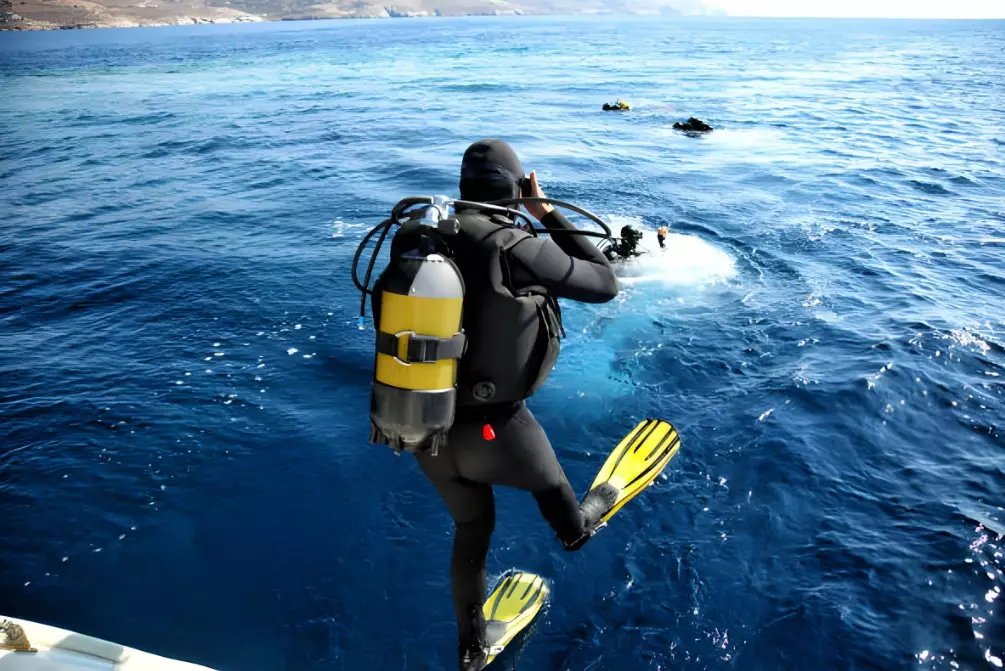
Safety Considerations & The Mistakes I See All The Time
Beyond the basic steps, here’s the real-world advice that separates a routine entry from a sketchy one.
Wind and Current: Always stride into the current or wind. Why? It pushes you away from the boat after entry. If you stride with the current/wind at your back, it will slam you right into the hull. The boat crew will tell you the direction—listen.
Surface Swim Distance: Before you even gear up, ask: "How far is the mooring line or descent point?" If it's a long surface swim in choppy water, you might want to enter with a bit more air in your BCD for buoyancy. If you're dropping right down a line next to the boat, you want to be neutrally buoyant at the surface.
The "Look Down" Mistake: I cannot stress this enough. Looking down as you step disrupts your entire body alignment. You'll lean forward, your legs won't come up, and you'll hit the water flat. Look at the horizon or a fixed point on the opposite boat rail.
Gear Flop: If you don't secure your alternate air source (octopus) and pressure gauge, they will swing down and hit you in the face or groin on impact. Tuck them into your BCD or hold them with your free hand. It's a small, painful lesson.
Finally, communication is key. Make eye contact with the crew member directing entries. Wait for their clear signal. Give your OK signal immediately upon surfacing. This isn't just politeness; it's a critical safety protocol.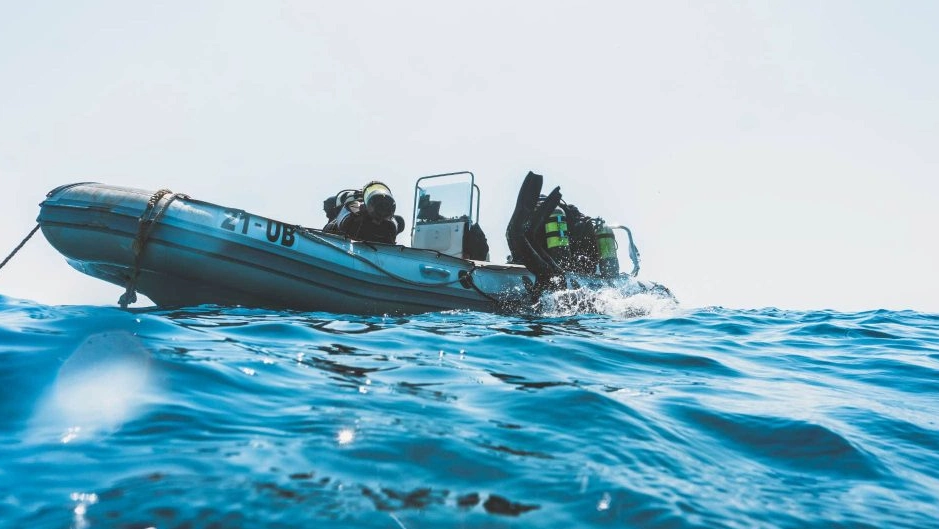
Your Giant Stride Questions Answered (FAQ)
 What's the one piece of gear most likely to fail during a giant stride, and how do I prevent it?
The giant stride entry isn't just a technique; it's a fundamental skill that embodies the practical, safety-first mindset of scuba diving. Mastering it builds confidence for every dive that follows. Pay attention to the details, practice the motion mentally before you do it physically, and always, always listen to your dive crew. Now, step to the edge, look ahead, and take that big, confident stride. The water's fine.




Comments