Ask any seasoned instructor, and they'll tell you the same thing. The magic of diving isn't found in the most expensive gear or the deepest dive. It's found in a simple, unwavering commitment to a few core principles. These are the golden rules. They're not just tips; they're the non-negotiable framework that separates a stressful, potentially dangerous outing from a lifetime of incredible underwater exploration. Forget the advanced techniques for a moment. Master these seven rules first, and you've already won 90% of the game.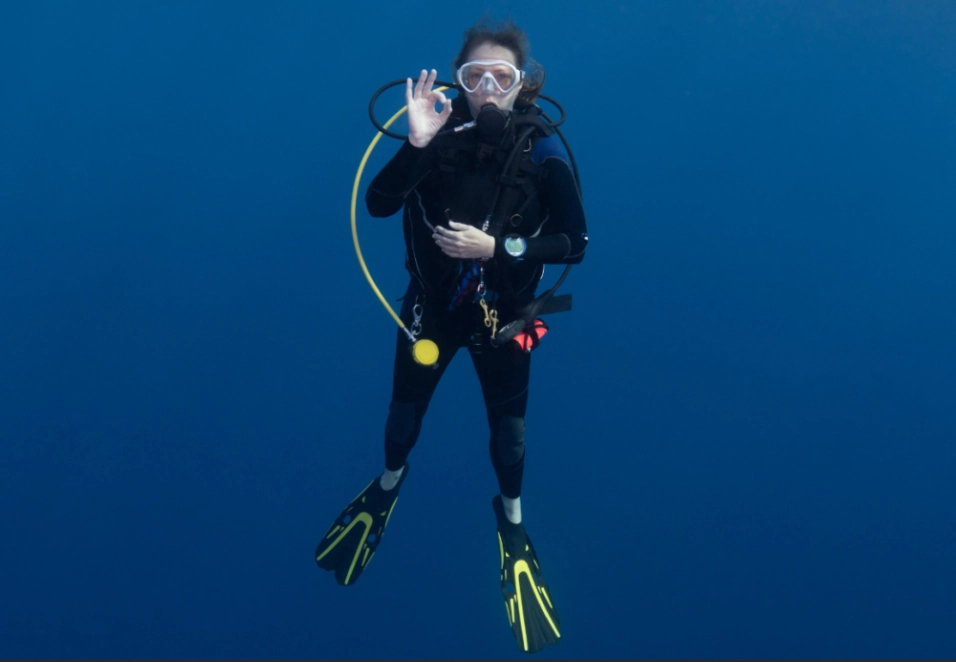
What's Inside This Guide?
- Rule #1: Plan Your Dive, Dive Your Plan
- Rule #2: Never Dive Alone (The Buddy System Is Sacred)
- Rule #3: Master Your Buoyancy (It's Everything)
- Rule #4: Monitor, Monitor, Monitor (Your Gauges and Yourself)
- Rule #5: The Slow, Safe Ascent (Your Golden Ticket Home)
- Rule #6: Know and Respect Your Limits
- Rule #7: Look, Don't Touch (Respect is Paramount)
- The Mistakes Even Experienced Divers Make
- Your Diving Rules Questions, Answered
Rule #1: Plan Your Dive, Dive Your Plan
This is the cornerstone. A dive without a plan is a recipe for confusion, wasted air, and missed opportunities. Your plan is your shared script with your buddy.
What does a real dive plan look like? It's not a vague idea. It's a concrete agreement you discuss on the surface. Max depth. Desired bottom time. The general route ("we'll follow the reef wall to the east"). Your turn-around pressure (the air pressure in your tank at which you'll begin your return). Agree on hand signals for "low on air," "something's wrong," and "let's go up." Decide who will lead and who will follow.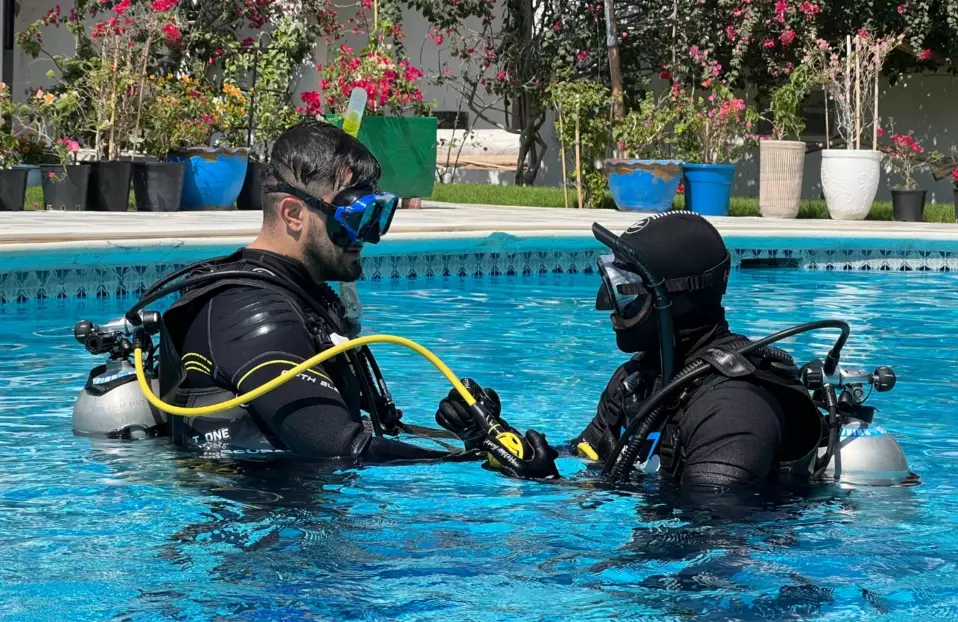
Here's the subtle mistake I see all the time: people plan the fun part and forget the boring, critical parts. They'll plan to see the shark cleaning station but not explicitly plan their safety stop. Your plan must include the ascent profile: a slow rise, a mandatory safety stop (typically 3-5 minutes at 5 meters/15 feet), and the surface swim back. Stick to the plan unless there's a clear, communicated reason to change it. If you see something amazing and want to extend, you and your buddy need to re-brief underwater, check air, and agree on a new plan.
Rule #2: Never Dive Alone (The Buddy System Is Sacred)
This isn't a suggestion. It's the most critical safety net in diving. Your buddy is your second pair of eyes, your alternate air source, and your help in an emergency. The ocean doesn't care how experienced you are.
But being buddies means more than just being in the water near someone. It means active buddying. You maintain visual or physical contact. You check on each other frequently—a thumbs-up, an eye contact check. You monitor each other's air and behavior. Are they swimming erratically? Are they lagging behind?
I learned this the hard way on a drift dive in Fiji. My buddy and I got briefly separated in a strong current near a pinnacle. We found each other within 30 seconds, but that heart-pounding feeling of isolation was a powerful teacher. We hadn't established a clear "if separated" procedure. Now, we always do: search for one minute, then slowly ascend to the surface while looking. Establish this before you get in the water.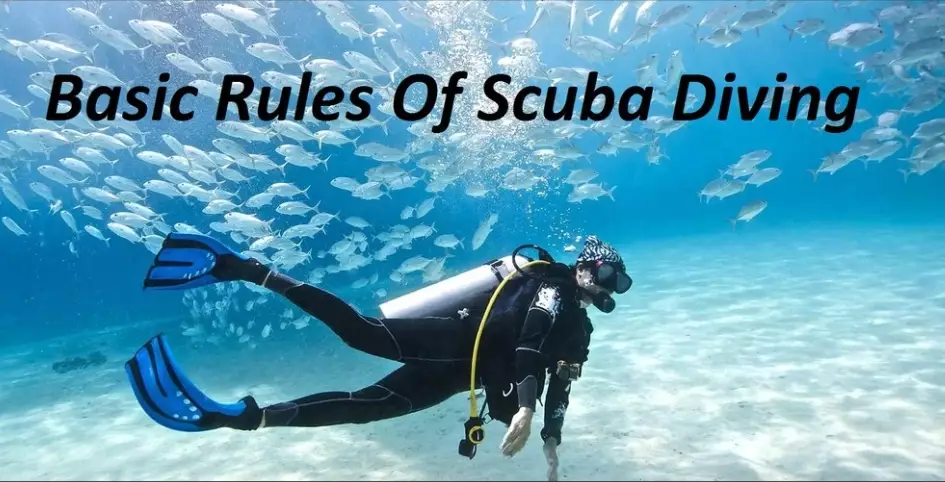
Rule #3: Master Your Buoyancy (It's Everything)
Good buoyancy isn't just about looking cool. It's the foundation of safety, air conservation, and environmental protection. Poor buoyancy means you're constantly finning, crashing into the reef, stirring up silt, and burning through your air supply.
Think of it as finding your underwater hover. You want to be neutrally buoyant—neither sinking nor rising—with minimal movement. This comes from understanding your gear: small, controlled breaths affect your buoyancy. Your BCD (Buoyancy Control Device) is for gross adjustments; your lungs are for fine-tuning.
A pro tip most courses gloss over: dial in your buoyancy at your safety stop depth first. Get perfectly neutral at 5 meters with 500 PSI/50 bar left in your tank. This accounts for the weight of the air you've used. If you're weighted correctly at the end of the dive, you were likely correct at the start. So many divers are chronically overweighted, fighting to stay off the bottom the whole dive.
Rule #4: Monitor, Monitor, Monitor (Your Gauges and Yourself)
This is about situational awareness. You have three primary gauges to watch: your depth gauge, your submersible pressure gauge (SPG, or air gauge), and your dive computer/bottom timer.
Check your air early and often. Don't wait until you're at 1000 PSI. Make it a habit: check at the surface, at your descent, every few minutes during the dive, and definitely before changing depth or direction. A common failure pattern is task fixation—you're so busy photographing a nudibranch that you forget to check your air for five minutes.
But monitoring goes beyond gear. Monitor yourself. How do you feel? Anxious? Tired? Short of breath? That's data. Monitor your buddy. Monitor your surroundings—current direction, visibility, boat traffic overhead. This holistic awareness prevents small issues from becoming big ones.
Rule #5: The Slow, Safe Ascent (Your Golden Ticket Home)
This rule is non-negotiable for preventing decompression sickness (DCS), or "the bends." As you ascend, the pressure decreases, and nitrogen that has dissolved in your tissues comes out of solution. If you ascend too fast, it forms bubbles—like shaking a soda can and opening it.
The rule: ascend slower than your smallest bubbles. Most dive computers mandate a maximum ascent rate of 9-10 meters (30-33 feet) per minute. That's painfully slow. A good visual is to follow the anchor or mooring line, or simply watch your computer.
And then you stop. The safety stop at 5 meters/15 feet for 3-5 minutes is not optional on recreational dives. It's a final buffer to off-gas nitrogen. Even if your computer says you can skip it, do it anyway. It's cheap insurance. Always, always, always have enough air reserved to make a slow ascent and complete a full safety stop with a margin to spare.
Rule #6: Know and Respect Your Limits
This is about ego management. Your limits are defined by your training, experience, fitness, and how you feel on that specific day.
Just because you're certified to 18 meters/60 feet doesn't mean you must go to 18 meters on every dive. If you're tired, congested, or just not feeling it, shallower can be better. Don't let a dive guide or a group pressure you into a dive you're uncomfortable with. "I'm not comfortable with that depth/current/overhead environment" is a complete and valid sentence.
This table breaks down how different diver profiles should approach their limits:
| Diver Type | Primary Limit to Respect | Common Pitfall |
|---|---|---|
| New Diver ( | Task loading. Focus on buoyancy and awareness, not photography. | Trying to do too much (camera, dive light, pointer) too soon. |
| Experienced Recreational Diver | Complacency. Revisiting basics on every dive. | Skipping the buddy check or safety stop because "I've done this a hundred times." |
| Returning Diver (after a long break) | Fitness and skills rust. Take a refresher course. | Assuming skills will come back instantly, leading to poor buoyancy and air consumption. |
Rule #7: Look, Don't Touch (Respect is Paramount)
You are a visitor in an alien world. Everything you touch has a consequence. Coral is a living animal. A thin layer of tissue can be killed by the oils on your skin, leading to bleaching and death. That beautiful feather star? You could break its delicate arms.
 Beyond the environmental damage, touching things can be dangerous for you. That pretty cone shell can inject a lethal toxin. That docile-looking moray eel has sharp teeth and a strong bite. That seemingly inert stonefish is the most venomous fish in the world.
I once saw a diver in Thailand trying to "ride" a sea turtle for a photo. The stress on the animal was visible, and the diver was kicking up sediment all over the reef. It was a perfect failure of this rule. Good buoyancy (Rule #3) is your best tool here—it allows you to observe without contact. Take only pictures, leave only bubbles.
Remember: These seven rules are interconnected. Good planning enables safe buddying. Good buoyancy conserves air and protects the reef. Self-monitoring ensures a safe ascent. They form a virtuous circle that makes every dive better.
The Mistakes Even Experienced Divers Make
Let's get real. After a few dozen dives, it's easy to get sloppy. Here's where I see seasoned divers trip up.
Ear Equalization: They wait until they feel pain. Wrong. Start equalizing at the surface and continue frequently during descent, well before any discomfort. If you can't clear, ascend a few feet and try again. Forcing it can rupture an eardrum.
Hydration: Diving is dehydrating. Being dehydrated thickens your blood, theoretically increasing DCS risk and definitely making you feel fatigued. Drink water the day before and the morning of your dive. Skip the heavy party the night before.
The Post-Dive Rush: You surface, excited to talk about the dive. But you skip logging it while details are fresh. Your logbook is a personal database. Note conditions, what worked, what didn't, your air consumption. It's how you track progress and identify patterns. Organizations like Divers Alert Network (DAN) emphasize the importance of a dive log for medical history if ever needed.
Your Diving Rules Questions, Answered
 How do I handle a buddy who keeps breaking the rules, like going too deep or touching things?
These rules aren't meant to scare you. They're meant to empower you. They turn the vast, unknown ocean into a manageable, enjoyable playground. Internalize them. Practice them on every single dive, from a shallow reef to a deep wreck. They are the true foundation upon which every advanced skill is built, and they are what will keep you coming back to the water, safely and joyfully, for decades to come. Now go plan your next dive.

Comments