Let's be honest. Watching someone slice into the water with a perfect dive looks effortless. Then you try it, and it's all arms, legs, and a painful belly flop that echoes across the pool. I've been there. I taught swimming for a decade, and the number one fear for new swimmers wasn't the deep end—it was getting into it from the side. This guide is the one I wish I had when I started. We're going to break down swimming diving techniques into actual, manageable steps. Forget the vague advice. We'll talk about what your toes should be doing, where your eyes need to look, and that weird feeling in your gut you need to ignore.
What's Inside This Guide
- The Non-Negotiable Safety Checklist Before You Dive
- Step 1: Master the Standing Dive (The Poolside Starter)
- Step 2: Progress to the Crouching Dive (Building Confidence)
- Step 3: The Compact Dive (The Classic You Want)
- The 3 Most Common Diving Mistakes (And How to Fix Them)
- Your Diving Questions, Answered
The Non-Negotiable Safety Checklist Before You Dive
We're not jumping off cliffs here. A safe dive starts with a safe environment. This isn't just boring advice—it's what prevents a fun learning session from turning into a visit to the emergency room.
Water Depth: This is the big one. For a head-first entry from the poolside, you need at least 9 feet (2.7 meters) of water. No guessing. If you're not sure, ask a lifeguard. Diving into shallow water is the leading cause of diving-related spinal injuries. Organizations like the U.S. Pool Safely campaign hammer this point home for a reason.
Clearance: Look straight ahead and down your entry path. Is there someone swimming underwater? A lane rope? A floating toy? Wait until your lane is completely clear. An unexpected collision underwater is disorienting and dangerous.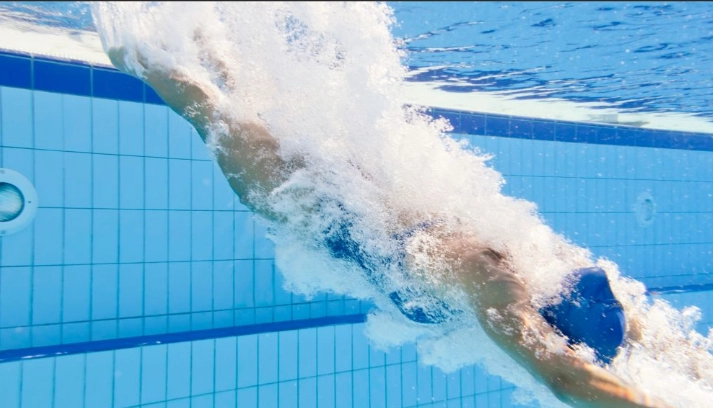
Your Readiness: Are you tired? Cold? Just ate a big meal? Any of these can affect your coordination and reaction time. Diving requires a bit of core tension and focus. If your mind or body isn't fully there, stick to wading in.
Step 1: Master the Standing Dive (The Poolside Starter)
Everyone wants to run and leap. Don't. Start stationary. This step is about understanding the shape your body needs to make in the air.
The Body Position Drill (On Dry Land First)
Stand up straight. Now, reach your arms up, locking your biceps by your ears. Your hands should be together, one palm over the back of the other, fingers pointed. This is your "arrowhead." Practice leaning forward from your ankles, keeping your body straight as a plank, until you need to take a step to catch yourself. That feeling of tipping forward with a rigid, straight body is the core sensation of a dive.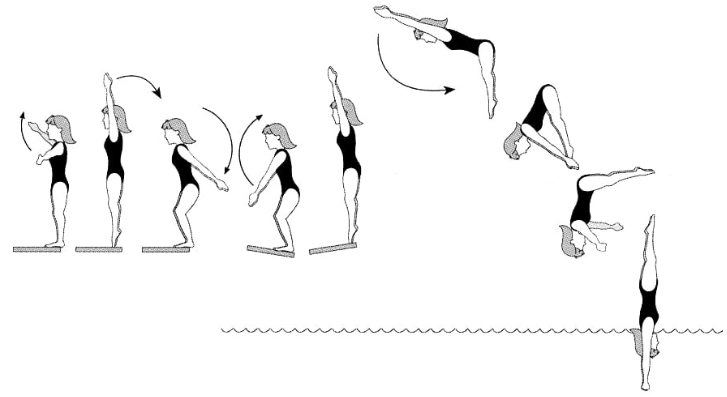
Poolside Execution
Stand at the very edge of the pool, toes curled over the lip. Get into your arrowhead position. Look at the water about 6-8 feet in front of you, not straight down.
Here's the subtle mistake most beginners make: they jump up and then try to go down. Don't. You are going to fall forward, leading with your fingertips. Let your weight tip you forward. As your hands are about to touch the water, gently push with your toes to guide your legs up and over. Your goal is to enter the water at a shallow angle, hands first, then head, then body, then feet.
Step 2: Progress to the Crouching Dive (Building Confidence)
Once the standing dive feels controlled, you add a little power and a more dynamic start. The crouch dive is the bridge between standing and the full compact dive.
- Starting Position: Crouch down at the pool's edge. One foot forward (toes gripping the edge), one foot back. Your arms are already extended in front of you in the arrowhead.
- The Movement: Rock your weight slightly back onto your rear foot, then forward. As you rock forward, push off gently with your back leg. Your forward leg will straighten to guide you. You are not jumping high; you are projecting yourself forward and out, following your hands.
- Eye Focus: Keep looking at that spot 6-8 feet out. Your head stays locked between your arms. Do not look down at the water right below you—this will cause your hips to drop and create a belly flop.
I see learners panic and try to lift their head as they enter. It's a natural instinct to see where you're going, but in diving, it guarantees a smack. Trust that the water is where you aimed.
Step 3: The Compact Dive (The Classic You Want)
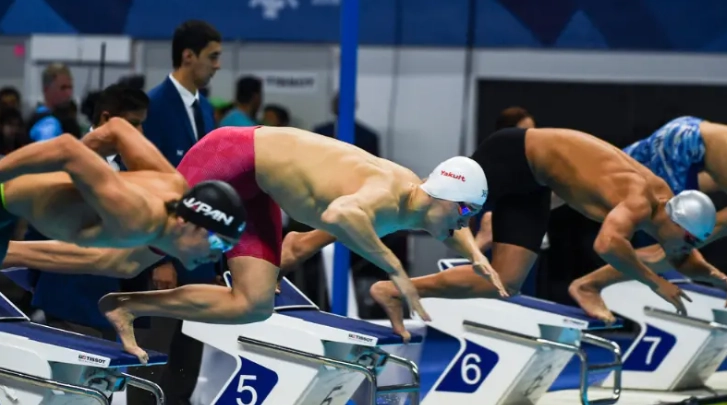
This is the standard racing start or the classic poolside dive. It uses a more powerful leg drive from a stable, balanced stance.
Stance: Stand with feet shoulder-width apart, toes curled over the edge. Bend your knees into a comfortable half-squat. Your torso should be leaning forward, back straight, arms hanging loosely behind you or at your sides.
The Sequence: 1. Swing and Lift: In one fluid motion, swing your arms forward and up into the arrowhead position. As your arms pass your ears, push explosively with your legs. Think forward and up, not just up. 2. In the Air: Your body should be fully extended, straight from fingertips to toes. You are a human spear. This is the "flight" phase. 3. Entry: As you descend, maintain that straight line. Aim to pierce the water through the same hole your hands make. To streamline underwater, bring your hands back to your sides and kick into a swim.
The power comes from the leg drive, but the direction is controlled by your upper body. If your arms swing wildly to the side, you'll twist. Keep everything moving in a straight line.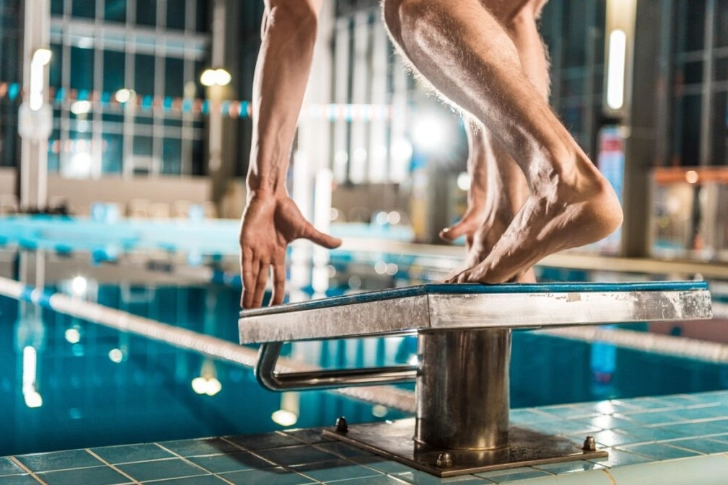
The 3 Most Common Diving Mistakes (And How to Fix Them)
After teaching hundreds of kids and adults, these are the errors I saw on repeat.
1. The Belly Flop (Entering Flat): Caused by lifting your head or chest at the last second, or by not pushing your hips up. Fix: Commit to following your hands down. Imagine a string pulling your hips up toward the ceiling as your hands go in.
2. The "Bomb" (Going Straight Down): Happens when you look straight down and jump up, not out. You enter deep but with no forward momentum. Fix: Change your eye target. Pick a point further out on the water's surface. Your body follows your eyes.
3. The Toe-Catch: A scary one few mention. If your toes are just flat on the edge or you hesitate on take-off, you can catch them on the pool lip, tripping you forward. Fix: Actively curl your toes over the edge for a solid grip. Push off with confidence, don't just fall.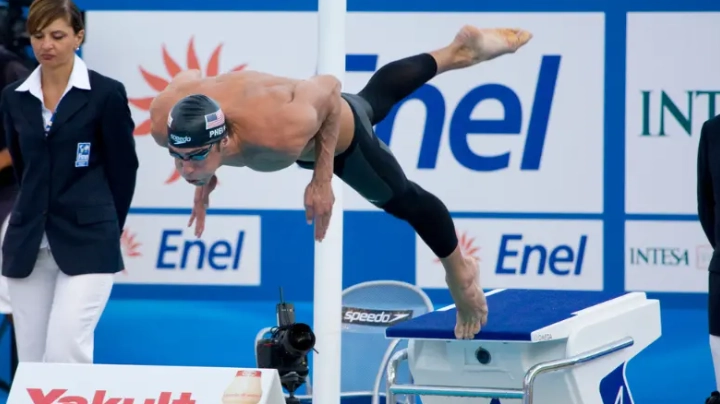
Your Diving Questions, Answered
 What's the difference between a dive for a pool race and diving into open water from a boat?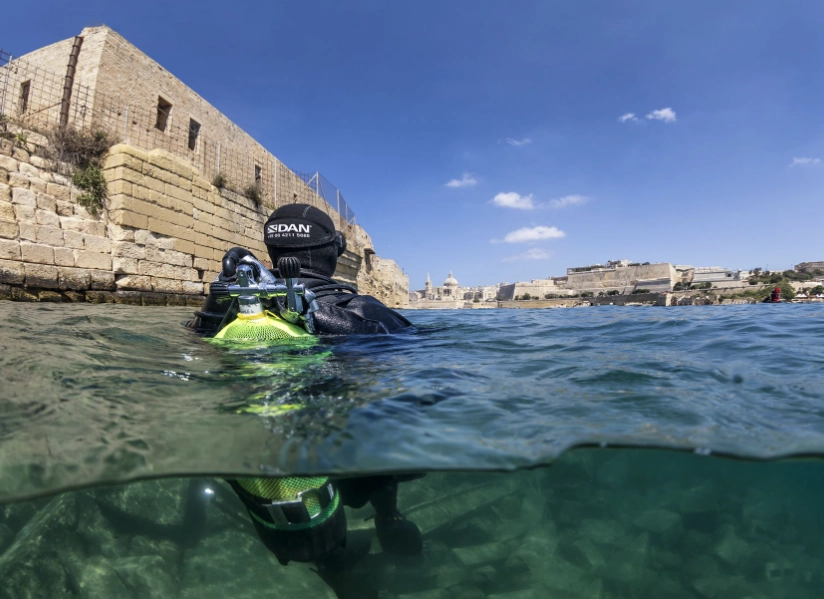




Comments