Ask any certified diver "what are the 5 steps of diving?" and they should rattle them off without thinking. It's muscle memory, drilled into us from day one. But here's the thing most beginners miss: it's not just a checklist. It's a mental and physical ritual that separates a safe, enjoyable dive from a stressful, potentially dangerous one. I've been teaching these steps for over a decade, and I still see experienced divers get lazy with step two, which is a recipe for trouble.
Let's cut through the fluff. The five steps are: Plan Your Dive, Check Your Gear, Make Your Entry, Execute the Dive, and Conduct Post-Dive Procedures. Sounds simple, right? The devil is in the details most blogs skip.
What You’ll Learn in This Guide
Step 1: Plan Your Dive, Dive Your Plan
This is where it all starts, and most new divers treat it like a casual chat. It's not. A proper dive plan is your underwater contract.
You and your buddy need to agree on specifics before you even touch your gear.
How Do You Properly Plan Your Dive?
Forget just picking a site. Let's say you're doing a shore dive at a reef. Your plan must cover:
Communication: Hand signals for "okay," "problem," "low on air," "go up," and "turn around." Agree on them. I've seen buddies use different signals for "out of air" – a terrifying confusion.
Conditions & Limits: Check the forecast, but also talk to the local dive shop. What's the current like today? Set a maximum depth and a hard turn-around pressure (like 100 bar/1500 psi). The rule is to surface with 50 bar/500 psi, not hit it at your deepest point.
The Route: Which way are you going? Follow the reef left or right? For how long? What's your planned dive time? Use a dive computer, but have a plan B if it fails.
Step 2: The BWRAF Buddy Check – It's Not a Chore
BWRAF. BCD, Weights, Releases, Air, Final Okay. You'll learn this acronym. Most divers rush it, doing a lazy point-and-nod. That's how you end up 15 meters down with a free-flowing regulator because you didn't do the breathing test.
Do it right, every time:
B - Buoyancy Compensator (BCD): Inflate and deflate it. Listen for leaks. Check that the dump valves work. Attach your low-pressure inflator hose. Is it secure? I once had a student whose hose wasn't clicked in; it detached the moment they jumped.
W - Weights: Can you release them with one hand? Is the weight belt buckle or integrated weight pocket release mechanism clear of straps? Practice the motion.
R - Releases: Check all buckles – chest, waist, shoulder. Your buddy should tug on them. Can you reach and open them underwater with thick gloves on? Try it.
A - Air: This is critical. Turn your air ON. Look at the pressure gauge. Is the tank full? Breathe from your primary regulator and your alternate (octopus). Does each breath freely? Check your buddy's air and octopus too. Finally, do a regulator breathing test – take two deep, deliberate breaths. Does it feel smooth or slightly resistive? A slight resistance can indicate a problem about to happen at depth.
F - Final Okay: Look each other in the eye. Give a thumbs-up. Are you both genuinely ready? This is the mental check.
Step 3: Making Your Entry – Confidence is Key
The entry sets the tone. A clumsy, flailing entry spikes your heart rate, wastes air, and can mess up your gear. You have options, and the environment chooses for you.
Giant Stride: Used from a boat dive platform or stable pier. Mask on, regulator in mouth, one hand securing your mask and regulator, the other holding your weight belt or BCD. Look straight ahead at the horizon, take a big, confident step forward. Don't look down. Looking down makes you lean forward and belly-flop.
Seated Roll-Back: From a low boat gunnel or dinghy. Sit on the edge, roll backwards. The key is to keep your head tucked to your chest to avoid the tank hitting the boat. It feels weird but is very secure.
Shore Entry (Wading): Often the trickiest. Put your fins on after you're waist-deep, walking backwards. Use waves to help you – time it so a wave lifts you, then kick. Don't fight the surf.
Immediately after entry, inflate your BCD slightly to establish positive buoyancy. Signal your buddy you're okay. Then, and only then, do you move to the descent point.
Step 4: Executing the Dive – The Fun Part with Rules
This is what you came for. But the "dive" step isn't just swimming around. It's active management.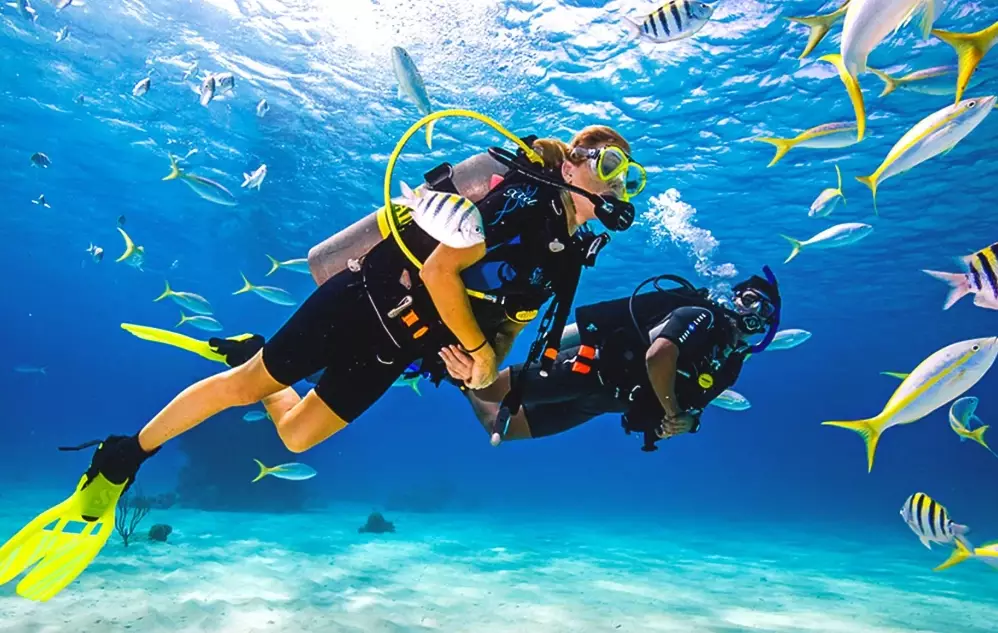
The Descent: Signal your buddy. Deflate your BCD completely. Begin equalizing your ears immediately, before you feel pressure. Every meter/foot. Use the Frenzel maneuver if you can – it's more reliable than the Valsalva. If you can't clear, ascend a bit and try again. Never force it.
During the Dive: Monitor your gauges – air, depth, time, no-deco limits. Check on your buddy constantly, not just every few minutes. Are they keeping up? Are they breathing normally? Maintain neutral buoyancy with small BCD adjustments and your breath. This saves air and protects the reef.
The Turn & Ascent: Turn the dive when you or your buddy hits the agreed turn pressure, or at the halfway point of your planned time. Start your ascent slowly, slower than your smallest bubbles. Your computer will beep if you're too fast. At 5 meters/15 feet, perform your safety stop. Hang there for 3 minutes. Use this time to watch your bubbles, relax, and do a final gear check.
Step 5: Post-Dive Procedures – You're Not Done Yet
Surfacing doesn't mean the steps are over. What you do next matters for safety and gear longevity.
Surface Protocol: Inflate your BCD. Give the "okay" signal to your buddy and the boat or shore crew. Stay together.
Exit: Get out safely. On a boat, hand up your weight belt and fins first, then climb the ladder. On shore, time your exit with the waves, deflating your BCD as you stand.
Immediate Aftercare: Rinse your gear with fresh water, especially your regulator and BCD. Salt and sand destroy them. Log your dive while details are fresh – depth, time, what you saw, how much air you started/finished with. This log is a legal and safety record.
Hydrate and Rest: Diving dehydrates you. Drink water, not alcohol. Avoid heavy exercise or flying for at least 12-24 hours to let residual nitrogen leave your body. Listen to your body. Fatigue, joint pain, or skin itching can be early signs of decompression issues. When in doubt, call DAN's emergency line.
Your Burning Diving Questions Answered
 Is the safety stop really mandatory for every single dive?




Comments