You're watching the Olympics, and the commentator rattles off something like "a reverse 2½ somersault with 1½ twists in the pike position." It sounds like a secret code. Or maybe you're standing on the pool deck for your first diving lesson, and the coach asks you to try a simple "forward dive straight." You nod, but inside you're wondering what other names of dives into the pool even exist. The terminology can feel like a barrier, whether you're a spectator or a beginner. Let's break that barrier down. This isn't just a list; it's your decoder ring for the complex and beautiful language of competitive springboard and platform diving.
What's Inside This Guide?
- How Dives Get Their Names: The Number Code
- The Six Dive Groups: Your Action Categories
- The Four Body Positions: Straight, Pike, Tuck, Free
- From Simple to Spectacular: A List of Common Dives
- How to Start Learning Dives: A Practical Path
- How to Watch Like a Pro: Knowing What to Look For
- Your Diving Questions, Answered
How Are Dives Named? Understanding the Numbering System
Forget random names. Every single competitive dive has a precise, numerical code defined by the international governing body, World Aquatics (formerly FINA). This code tells judges and coaches exactly what the diver will do. It looks like this: Group Number + Flight Number + Position Number.
Let's take the code 305B.
- 3: The first digit is the group number. '3' means it's a Reverse Dive (we'll get to groups next).
- 05: The next two digits are the flight number. This describes the somersaults and twists. Here, '05' means 2½ somersaults (the '0' indicates half-somersaults). The math is a bit quirky: for forward, back, reverse, and inward groups, the flight number's tens digit indicates full somersaults, and the units digit indicates half-somersaults. A '10' would be 1 somersault, '20' is 2 somersaults. '05' means 0 full somersaults + 5 half-somersaults = 2½.
- B: The final letter is the body position. 'B' stands for Pike. 'A' is Straight, 'C' is Tuck, 'D' is Free (used for twists).
So, 305B is a Reverse 2½ Somersaults in the Pike position. See? It's a language, not magic.
Here's a mistake I see new coaches make all the time: they focus only on the somersault count for difficulty. A 107C (Forward 3½ Somersaults Tuck) has a high degree of difficulty (DD), but if a diver's tuck is sloppy, the judges will hammer the execution scores, making a beautifully performed simpler dive score higher. The name gives you the blueprint, but execution is the art.
The Six Dive Groups: Your Action Categories
All dives belong to one of six groups, defined by the starting position and the direction of rotation. This is the foundation. Think of these as the verb in the dive's sentence.
| Group Number | Group Name | Description | Simple Example (Code & Name) |
|---|---|---|---|
| 1 | Forward Group | Diver faces the water and rotates forward. | 101A - Forward Dive Straight |
| 2 | Backward Group | Diver starts with their back to the water and rotates backward. | 201A - Back Dive Straight |
| 3 | Reverse Group | Diver faces the water but rotates backward (like a "gainers" in old pool talk). | 301A - Reverse Dive Straight |
| 4 | Inward Group | Diver starts with their back to the water and rotates forward. | 401A - Inward Dive Straight |
| 5 | Twister Group | Any dive with a twisting action. These always use the 'Free' (D) position. | 5132D - Forward 1½ Somersaults with 1 Twist |
| 6 | Armstand Group | Diver starts from a handstand on the platform (10m only). | 614A - Armstand Forward Double Somersault |
Most beginners start in Group 1 (Forward) and Group 2 (Backward). Groups 3 and 4 are mentally trickier because the take-off and rotation direction feel counter-intuitive. Group 5 is where things get really complex, adding a twist axis to the somersault axis. Group 6 is the exclusive domain of the 10m platform specialists.
The Four Body Positions: Straight, Pike, Tuck, Free
This is the adjective. How does the diver shape their body during the flight?
- Straight (A): Body fully extended, no bend at hips or knees. Toes pointed. Looks simple but requires immense core tension. A poorly held straight is worse than a tight pike.
- Pike (B): Body bent at the hips, legs straight and together. It's like touching your toes in the air. This position allows for faster rotation than straight.
- Tuck (C): Body compacted, knees pulled to chest, hands holding shins. The tightest position, enabling the fastest rotation. Used for high-somersault dives.
- Free (D): Reserved for twisting dives. The body can be in any of the above positions during different phases of the twist. You'll only ever see 'D' in the dive code for Group 5 dives.
A common misconception is that Tuck is "easier" than Pike. For rotation speed, yes. But maintaining a tight, symmetrical tuck without losing balance in the air is a specific skill. A loose, floppy tuck will destroy a dive's score.
From Simple to Spectacular: A List of Common Dives
Let's move from theory to specific names you'll hear. I'll walk you from the pool deck basics to the Olympic finals highlights.
Foundation Dives (The First Ones You'll Learn)
These are your building blocks. Every elite diver has these ingrained in muscle memory.
Forward Dive Straight (101A): The absolute beginner's dive. A simple hurdle, forward jump, and entry in a straight line. The challenge is overcoming the instinct to lean forward too early.
Back Dive Straight (201A) Standing on the end of the board, back to the water, you fall backwards and rotate. The mental hurdle here is huge—trusting your take-off and spotting the water.
Forward Dive Tuck (102C) or Pike (102B): Your first somersault. That feeling of going over is a rush. The key is a strong hurdle and driving the knees (tuck) or hips (pike) upward, not just throwing the head down.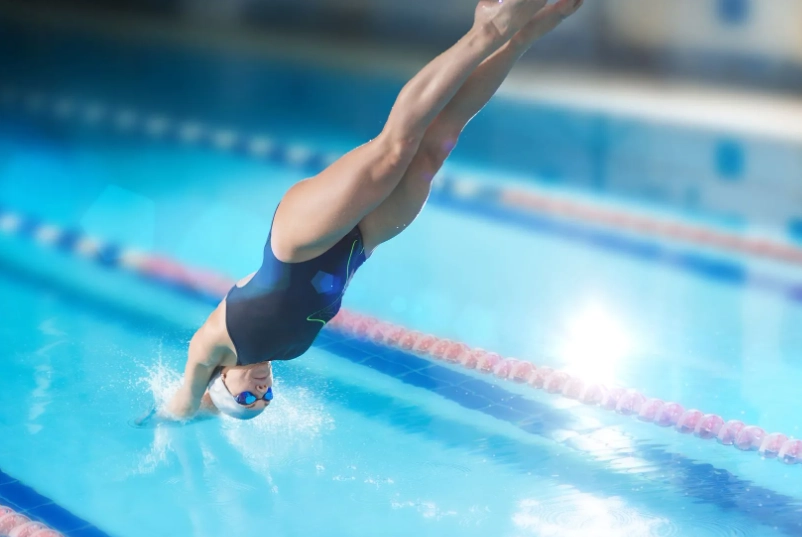
Intermediate & Crowd-Pleasing Dives
Inward Dive Pike (402B) From a back-standing start, you rotate forward into the pool. It feels like a backward salto but towards the board, which is why spotting the water early is critical to avoid... board-related incidents.
Reverse Dive Pike (302B) Facing forward, rotating backward. It looks elegant and is a gateway to more complex reverses.
Forward 1½ Somersault Pike (103B): One of the most common dives in competition. It has a clean, complete look. The diver completes the somersaults and opens up for a vertical entry.
The High-Difficulty Showstoppers
These are the dives that win medals. The degree of difficulty (DD) gets high.
Forward 2½ Somersault Pike (105B) A staple for men's 3m springboard. Two and a half tight rotations before opening up. Timing is everything.
Reverse 1½ Somersault with 3½ Twists (5337D) This is a monster. A reverse take-off, 1½ somersaults, and 3½ twists all packed into about 1.5 seconds of flight. The diver is a human corkscrew. You'll see this in men's platform finals.
Armstand Forward Triple Somersault (616C) From a handstand on the 10m, the diver launches into three forward somersaults in tuck position. The risk and visual spectacle are off the charts.
How to Start Learning Dives: A Practical Path
You can't just decide to try a 305B. The progression is strict for safety and skill development. Here’s what a typical first-year learning curve looks like at a good club:
Phase 1: Dryland & Water Confidence (Weeks 1-4) You'll spend more time on trampolines, spotting belts, and foam pits than on the board. You'll practice jumps, falls, and basic shapes (straight, tuck, pike) in the water. The goal is to eliminate fear and build air awareness.
Phase 2: The Basic Entries (Months 2-3) 101A and 201A. Mastering the straight line from take-off to fingertip entry. This is boring but non-negotiable. A bad entry habit here ruins everything later.
Phase 3: First Somersaults (Months 4-6) 102C (Forward Tuck) is usually first. Then 102B (Forward Pike). The coach will use a spotting belt or in-water assist. The focus is on a controlled, vertical take-off, not just spinning fast.
Phase 4: Expanding the Portfolio (6+ Months) Adding back dives (202C), inwards (402B), and reverses (302B). Each new group feels like learning to dive all over again because the take-off mechanics are different.
The biggest mistake eager beginners make? Rushing to add twists or more somersaults before their basic dives are rock-solid. A clean 102B will score better and build a better foundation than a messy, out-of-control 107C.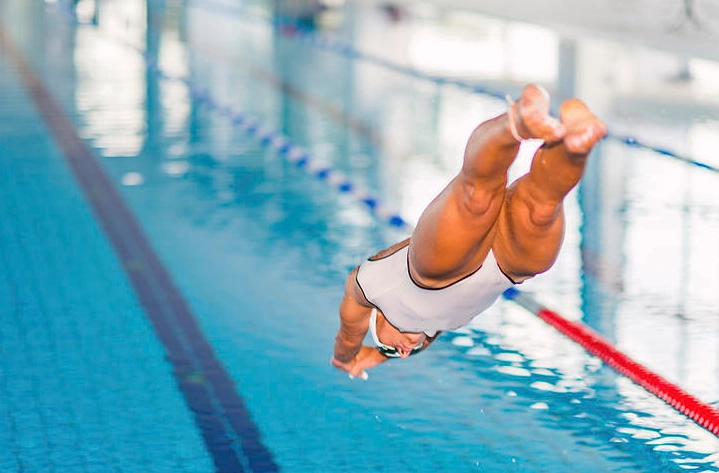
How to Watch Like a Pro: Knowing What to Look For
Next time you watch a competition, you can go beyond "that looked cool." Here’s your cheat sheet:
1. The Take-off (Approach and Hurdle) Is it balanced? Powerful? Controlled? On springboard, watch for a strong, elastic hurdle. On platform, a confident, stable step.
2. The Flight This is where the dive name comes to life. Is the body position tight and defined? For twists, is the axis straight, or is the diver drifting sideways (a "helicopter" twist is bad)?
3. The Entry The final impression. The body must be perfectly vertical, with toes pointed and arms locked overhead in line with the body. The ideal entry is splashless—a "rip" entry. A big splash usually means a poor entry angle.
Listen to the dive code announced. Now you'll know: "Ah, 407C, that's an Inward 3½ Tuck. So he's starting backwards, rotating forward with 3.5 flips. Got it." It transforms the viewing experience.


Comments