Most people think of swimming as just freestyle and breaststroke. Maybe they add backstroke. But the world of swimming strokes is way more diverse, and knowing which one to use can change your whole experience in the water. Whether you're trying not to sink, aiming for a workout, or dreaming of a competition, there's a specific stroke designed for that purpose. This guide walks you through 10 different types of swimming strokes, explaining not just the "how" but the crucial "when" and "why." I've spent years coaching and swimming, and I see the same mistakes over and over—like people trying to learn butterfly before they can float comfortably. Let's fix that.
What You'll Learn in This Guide
Why Are There So Many Swimming Strokes?
It's not random. Each stroke evolved for a reason. Some are ancient, designed for efficiency over long distances with a heavy load (think combat swimming). Others were invented to win races by shaving off milliseconds. Some exist purely to keep your head above water when you're tired or rescuing someone. Understanding this history helps you pick the right tool for the job. Trying to do a long-distance ocean swim using the explosive power of a butterfly stroke is a recipe for exhaustion. It's like using a hammer to screw in a lightbulb.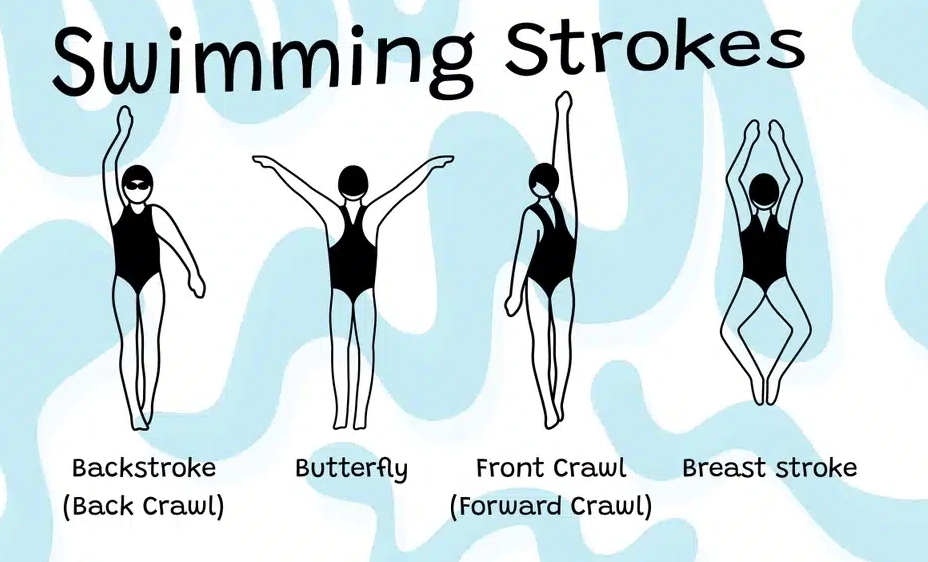
The Foundation: Survival & Basic Strokes
These are the strokes everyone should know, even before mastering the competitive ones. They're about safety and getting comfortable in the water.
1. The Dog Paddle
It's instinctive for a reason. You keep your head up, use a simple alternating arm motion under the water, and add a flutter kick. It's terribly inefficient and slow, but it works when you're panicking. I never teach it as a primary stroke, but I acknowledge its role as a natural starting point for absolute beginners to feel propulsion. The key is to move past it quickly.
2. Survival Backstroke
This is the unsung hero of water safety. You float on your back, arms doing a simultaneous, wide, sweeping motion (like a reverse breaststroke pull), paired with a gentle whip kick or flutter kick. Your face is always out of the water, so you can breathe and see. It's incredibly energy-efficient. Lifeguards are taught variations of this for towing victims. If you're ever tired in open water, flip onto your back and use this.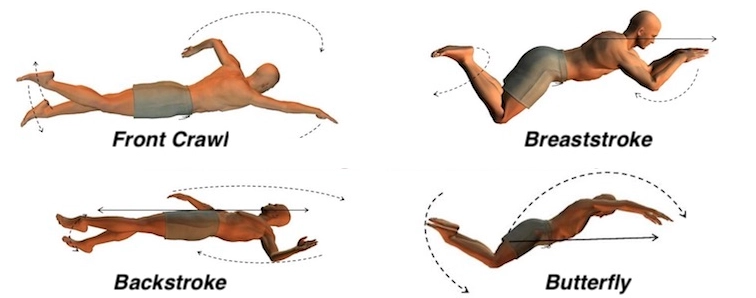
3. Elementary Backstroke
A more formal, efficient version of the survival backstroke. The sequence is specific: arms at your sides, then sweep them out to a "T" shape, then bend elbows and pull hands back to shoulders ("chicken"), then extend arms back to the start ("airplane" and "soldier"). The kick is a whip kick (like frog legs). It's all about gliding. It's the first stroke I teach to nervous adults because it builds confidence with uninterrupted breathing.
For Fitness & Recreation: The Core Four
These are the strokes you see in pools everywhere. They form the backbone of fitness swimming and are recognized in competitive swimming under FINA rules.
4. Freestyle (Front Crawl)
The fastest and most common stroke. It's characterized by an alternating over-the-arm recovery, a flutter kick, and rotating the head to the side to breathe. The biggest mistake I see? Lifting the whole head forward to breathe, which sinks the hips. You should rotate your head just enough to get your mouth clear, like you're looking at the pool's edge. It's the go-to for lap swimming because of its speed and efficiency.
5. Breaststroke
The slowest of the competitive strokes, but often the most popular for casual swimmers. The arms pull in a simultaneous heart-shaped pattern underwater, followed by a powerful whip kick. The head lifts naturally for a breath during the pull. The modern competitive form is very flat and powerful, but the recreational version is more upright. A word of caution: the whip kick can be hard on the knees if done incorrectly. Don't force a wider kick than your flexibility allows.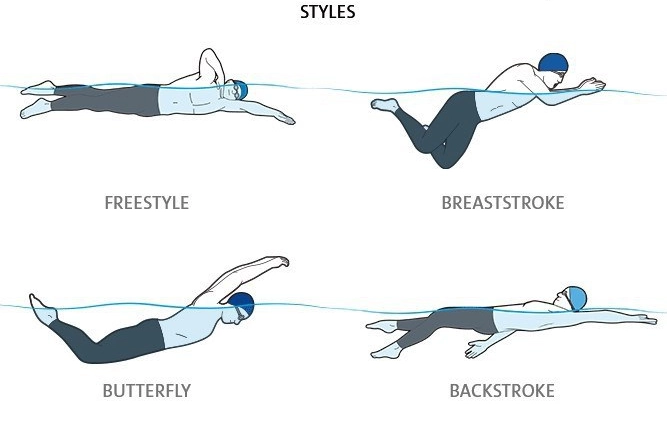
6. Backstroke
Essentially freestyle on your back. Alternating arms with a continuous flutter kick. The challenge is steering (you can't see where you're going) and maintaining a steady head position. Many swimmers let their head wobble or lift their chin, which creates drag. Imagine balancing a cup of water on your forehead. It's a fantastic stroke for working different muscle groups and giving your front a break.
7. Sidestroke
You won't see this in the Olympics, but you'll see it with lifeguards and long-distance swimmers. You lie on your side, with one arm (the bottom arm) doing an underwater pull and the other (top arm) recovering above water. The kick is a scissor kick. It's incredibly efficient and stable, perfect for towing someone or swimming long distances without getting fatigued. It's my secret weapon for open water swims when I need a break from freestyle.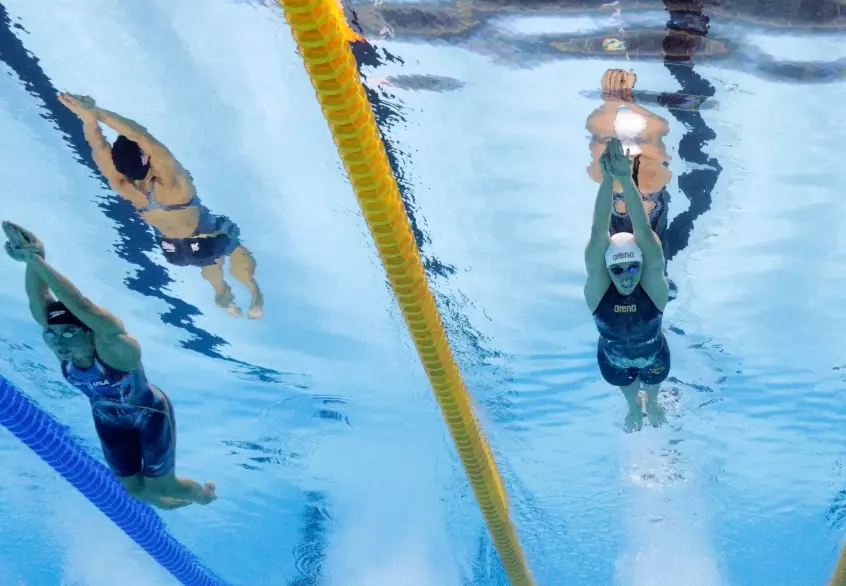
Specialized & Advanced Strokes
These require more power, coordination, and specific training.
8. Butterfly
The most physically demanding and spectacular stroke. Both arms recover simultaneously over the water in a windmill motion, coupled with a powerful dolphin kick (both legs moving together like a mermaid's tail). It requires immense core strength and timing. The most common error is trying to muscle it with the arms alone. The power should come from the undulating body motion and the kick. A well-executed fly feels like flying; a poorly executed one feels like drowning. It's the ultimate test of swimming fitness.
9. Trudgen
A historical stroke that's a hybrid. It looks like freestyle but uses a scissor kick (like sidestroke) every two arm strokes. It was popular before the front crawl became dominant. You sometimes see older swimmers or open water enthusiasts using it because the scissor kick provides a strong boost and can be easier on the lower back than a constant flutter kick. It's a fun stroke to learn to appreciate swimming's evolution.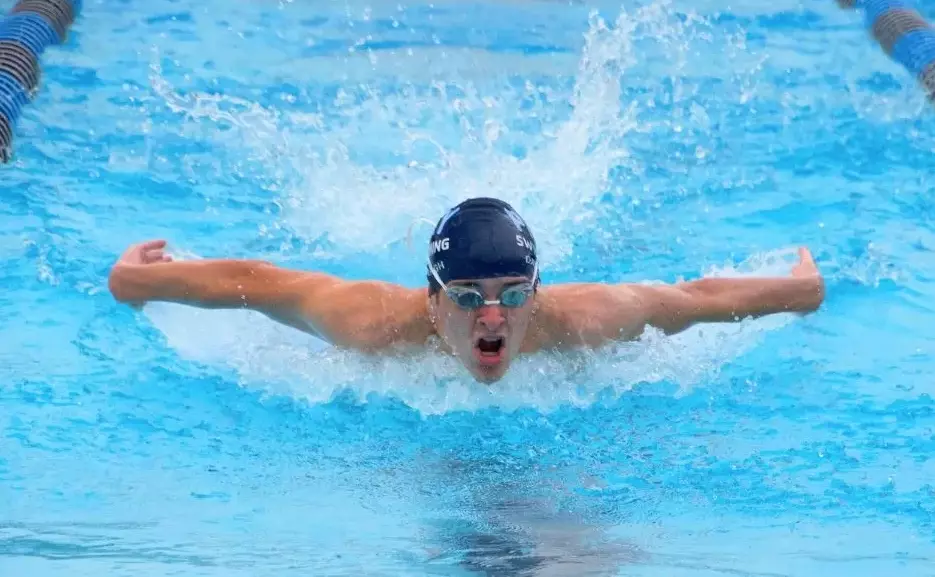
10. Combat Side Stroke (CSS)
The U.S. Navy SEALs' stroke of choice. It's a modified, hyper-efficient sidestroke designed for stealth, endurance, and equipment carriage. The head stays low in the water, the arm motions are compact and powerful, and the scissor kick is explosive but silent. The goal is to move fast with minimal surface disturbance and energy expenditure. It's not a recreational stroke, but understanding its principles—streamlining and efficiency—can benefit any swimmer.
Pro Tip You Rarely Hear: When learning a new stroke, practice the kick separately with a kickboard, but also practice it on your back or side without the board. This forces your core to engage to maintain position and builds a better feel for how the kick truly propels you, rather than just keeping you afloat.
How to Choose the Right Stroke for You
It depends entirely on your goal. Don't just default to freestyle.
| Your Goal | Best Stroke(s) to Focus On | Why It Works |
|---|---|---|
| Absolute Beginner / Water Safety | Elementary Backstroke, Survival Backstroke | Guaranteed breathing, builds confidence, low energy cost. |
| General Fitness & Calorie Burn | Freestyle, Breaststroke | Freestyle offers high-intensity cardio. Breaststroke is accessible and works different muscles. |
| Low-Impact Exercise (Bad Knees/Back) | Backstroke, Sidestroke | Backstroke is zero-impact. Sidestroke's scissor kick is gentle if done smoothly. |
| Open Water / Long Distance | Freestyle, Sidestroke, CSS | Freestyle for speed. Sidestroke/CSS for efficiency and navigation breaks. |
| Full-Body Strength & Power | Butterfly, Breaststroke | Butterfly is the ultimate core/upper body workout. Breaststroke's kick engages inner thighs and glutes powerfully. |
| Rehabilitation or Gentle Movement | Elementary Backstroke, Gentle Flutter Kick | Focus on the glide and range of motion without strain. |
Common Mistakes and How to Avoid Them
Here's where experience talks. These aren't the generic "keep your head down" tips.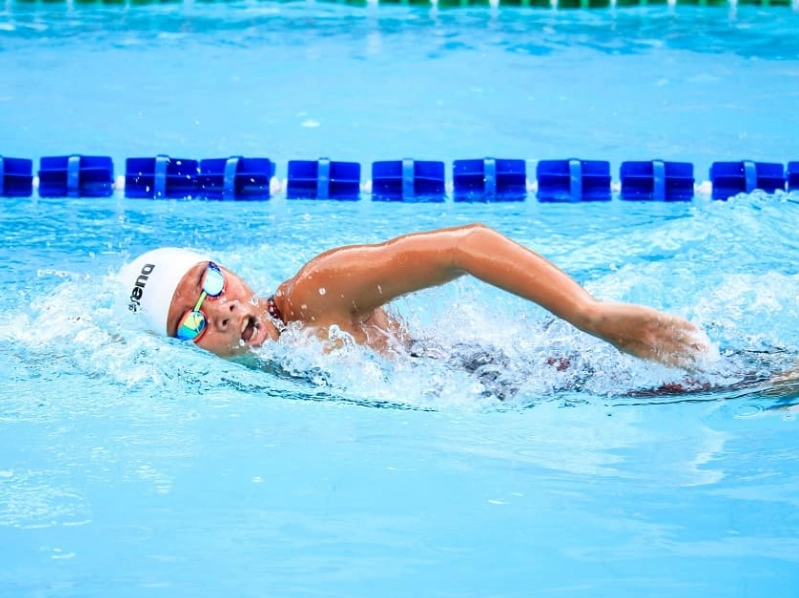
Freestyle: People think a faster arm turn means more speed. It often means less. You rush the catch and pull, losing hold on the water. Focus on a patient, early vertical forearm catch and a strong, steady pull. Let your kick set the tempo, not your arms.
Breaststroke: The biggest mistake is pausing during the glide with arms fully extended and legs fully together. This kills momentum. Your glide should be dynamic. As your legs finish the kick and come together, your hands should already be starting the next slight scull outward to initiate the next pull. The movements overlap like gears.
Butterfly: Swimmers often kick twice with equal power. The rhythm is wrong. It should be a strong, deep first kick as the hands enter (to drive the hips up), and a smaller, faster second kick as the hands finish the push (to propel the recovery). The second kick is more about timing than power.
Backstroke: A weak, bent-knee flutter kick. Your legs should be long, with kicks originating from the hips, not the knees. Point your toes inward slightly (pigeon-toed)—it creates a better propeller effect. A good backstroke kick is your engine.


Comments