Your Spearfishing Journey
- The Foundation: Mindset, Fitness, and Rules
- Gearing Up: A Beginner's Kit That Won't Break the Bank
- The Non-Negotiables: Safety Before Everything Else
- Core Spearfishing Techniques for Beginners: From Breathing to the Shot
- Common Beginner Mistakes (And How to Avoid Them)
- Answering Your Questions: Spearfishing FAQ
- From Technique to Philosophy
Let's be honest. The first time you see a video of someone gliding underwater, spear in hand, moving with a kind of quiet purpose you don't see anywhere else, it grabs you. It looks equal parts peaceful, thrilling, and impossibly cool. You think, "I want to try that." Then, almost immediately, a hundred questions flood in. Where do I even start? What gear do I need? Is it safe? How do I actually find and catch a fish?
That's where this guide comes in. We're going to cut through the noise and the overly technical jargon. This isn't about turning you into a world champion overnight. It's about giving you the foundational knowledge to get in the water safely, ethically, and with a solid chance of success. Think of this as the conversation you'd have with an experienced friend who's been there, made the mistakes, and wants to save you the headache.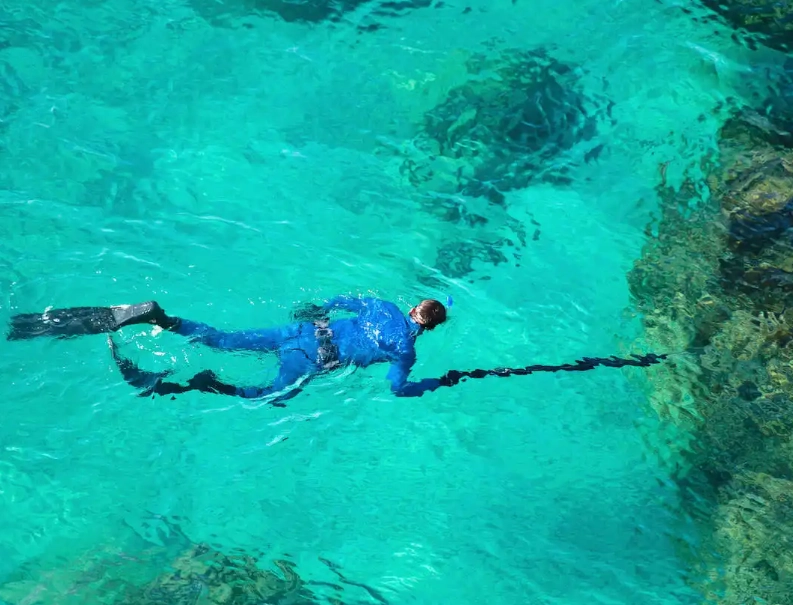
We'll walk through everything, from the mental prep you need before buying a single piece of gear, to the core spearfishing techniques for beginners that actually work. Safety is going to be our anchor—it's non-negotiable. And we'll talk about the mindset, because that's just as important as the gear.
The Foundation: Mindset, Fitness, and Rules
Before you even look at a speargun, you need to sort out the basics on dry land. Jumping straight into gear shopping is a classic beginner mistake. Get this foundation right, and everything else gets easier.
Getting Your Head in the Game
Spearfishing is a mental sport. It's about patience, observation, and calm. You're entering the fish's world, and they have the home-field advantage. If you're thrashing around, breathing heavily, or getting frustrated, you'll catch nothing but a cramp. The goal is to become a part of the environment, not an intruder. This mental shift—from hunter to observer-participant—is the first and most crucial spearfishing technique for beginners to learn. It's not aggressive; it's intentional.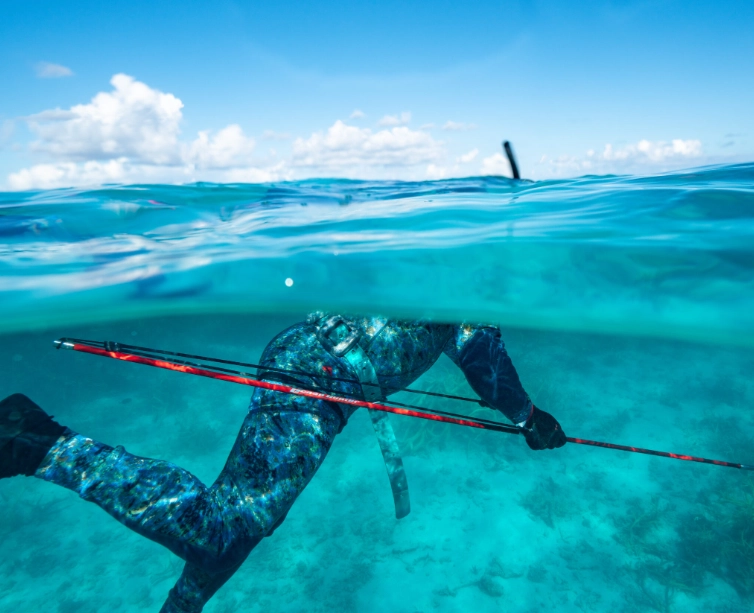
Physical Readiness (It's Not What You Think)
You don't need to be an Olympic swimmer, but you do need a baseline of fitness and comfort in the water. It's about efficiency, not brute strength.
- Swimming & Snorkeling: Can you comfortably swim 200 meters and tread water for 10 minutes? Can you clear your snorkel without panicking? If not, hit the pool first. Open water is not the place to learn these skills.
- Breath-Hold: Forget about pushing your limits. For beginners, the goal is relaxed, consistent breath-holds of 30-60 seconds on the surface. Never, ever push your limits underwater. The best way to improve your breath-hold is to practice relaxation on dry land. Apps can help, but the key is staying calm. Hyperventilating is dangerous and a hard no—it can lead to shallow water blackout.
- Ear Equalization: This is the make-or-break skill for diving down. You need to be able to gently equalize the pressure in your ears (like on a plane) constantly as you descend. The Valsalva maneuver (pinching your nose and gently blowing) works for most. Practice on land first.
The Law of the Land (and Sea)
This is boring but critical. Ignorance will get you fined and ruin the sport's reputation.
- Licenses: Almost everywhere requires a state fishing license, and often a separate saltwater stamp. Buy it online before you go.
- Species Regulations: Know the rules for where you're diving: size limits (minimum and sometimes maximum), bag limits (how many you can keep), and closed seasons. These rules exist for conservation.
- Marine Protected Areas (MPAs): Many coastal areas are no-take zones. Check maps from official sources like NOAA's Marine Protected Areas site.
- Gear Restrictions: Some areas ban certain types of spearguns (like pneumatic or powerheads) or require the use of a breakaway rig. Check local regulations.
Gearing Up: A Beginner's Kit That Won't Break the Bank
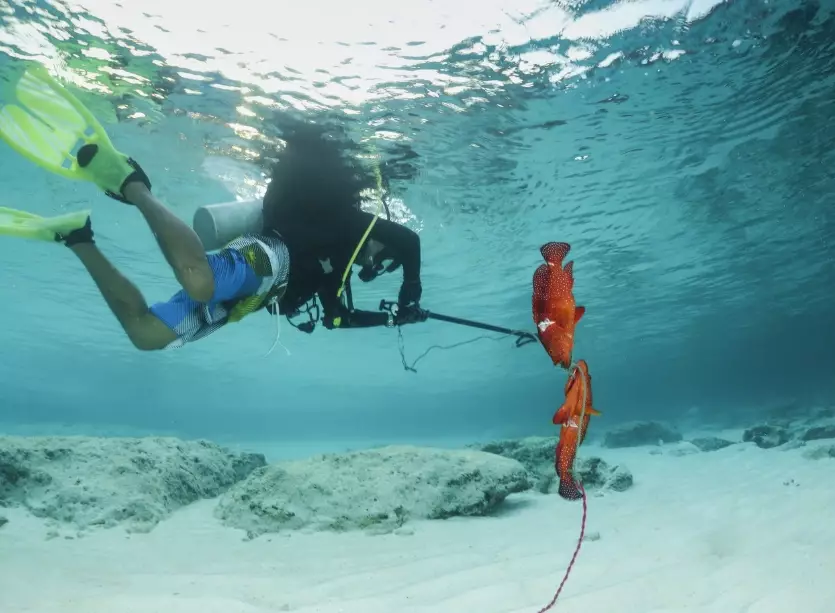
You can spend a fortune, but you don't need to. Focus on quality in the essentials and avoid gimmicks. Here’s a breakdown of what you actually need.
| Piece of Gear | Beginner Recommendation & Why | What to Avoid |
|---|---|---|
| Mask | A low-volume freediving mask. It fits close to your face, requires less air to equalize, and offers a wide field of view. Fit is everything—press it to your face without the strap; it should seal and stay on with a slight inhale. | Big, bulky SCUBA masks. They create drag and are harder to equalize. |
| Snorkel | A simple J-shaped snorkel with a soft silicone mouthpiece. Purge valves are okay but are just another thing to break. The simpler, the better. | Complex snorkels with splash guards, cameras, or fancy valves. They cause drag and can be distracting. |
| Fins | Long-bladed freediving fins (plastic or composite). The length gives you powerful, efficient kicks with less effort. Full-foot pockets (like a slipper) are great for warm water; open-heel with boots are for colder temps or rocky entries. | Short, stiff SCUBA fins. They're designed for power, not efficiency, and will tire you out fast. |
| Wetsuit | Open-cell neoprene (smooth on the outside, soft/sticky on the inside). It's warmer and more flexible. A 3mm or 5mm suit is standard for most temperate waters. Two-piece (jacket + pants) offers versatility. | Surfing wetsuits (closed-cell). They're less flexible, less warm, and buoyant, making it harder to dive down. |
| Speargun | A 75cm to 90cm wooden or composite band gun. It's simple, reliable, and perfect for beginners learning spearfishing techniques in clear, coastal water. Start with a single 16mm band. | Pneumatic (air-powered) guns or very long guns (110cm+). Pneumatics require more maintenance; long guns are cumbersome for beginners. |
| Weight Belt | Rubber freediving belt with quick-release buckle. The rubber grips your suit, preventing the belt from sliding. Start with less weight than you think—you want to be positively buoyant at the surface, neutral at around 10-15 feet. | Nylon belts with plastic buckles. They slip and the buckle can fail. |
See? It's not an endless list. Invest in a great mask, fins, and wetsuit first. These affect your comfort and performance the most. You can rent or buy a cheaper speargun to start. Speaking of the speargun, let's demystify it.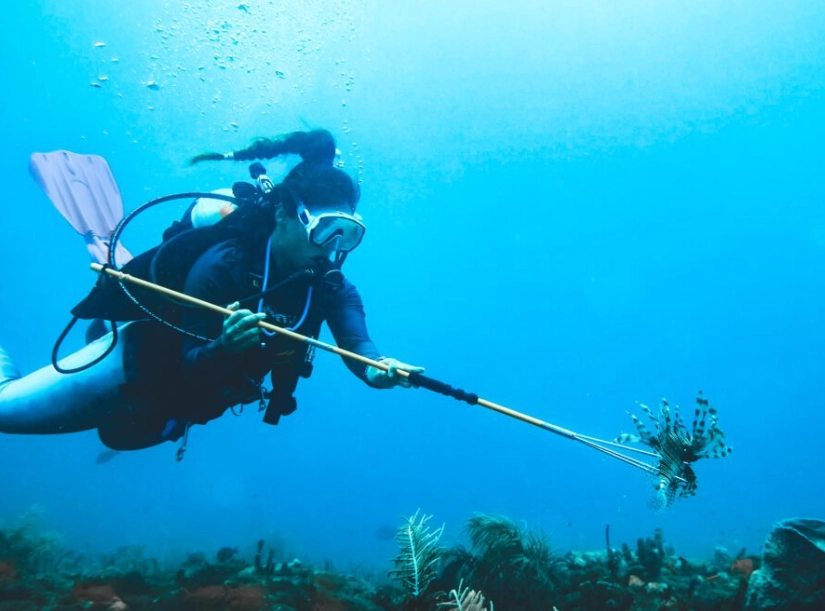
Your Speargun: Simple Mechanics
A band gun is gloriously simple. You have a barrel, a handle with a trigger mechanism, and a spear (or shaft) that sits on top. One or two rubber bands (power bands) are stretched from the notch at the back of the gun to the wishbones (metal pieces) at the back of the spear. Pulling the trigger releases the spear, and the bands propel it forward. That's it. Loading it requires strength and a specific technique to be done safely—always point it down and away from anything you don't want to spear. Many beginners find a shorter gun easier to load and handle while they're mastering basic spearfishing techniques.
The Non-Negotiables: Safety Before Everything Else
If you take only one thing from this guide, let it be this section. Spearfishing is incredibly safe if you follow the rules. The ocean, however, is unforgiving of mistakes.
The Golden Rule: Never Dive Alone
This is the absolute, number-one rule. Your dive buddy is your lifeline. You watch each other's backs, from boat traffic to potential blackouts. A good buddy stays close, makes eye contact often, and is prepared to assist at a moment's notice. If your buddy isn't reliable, don't dive that day. It's that simple.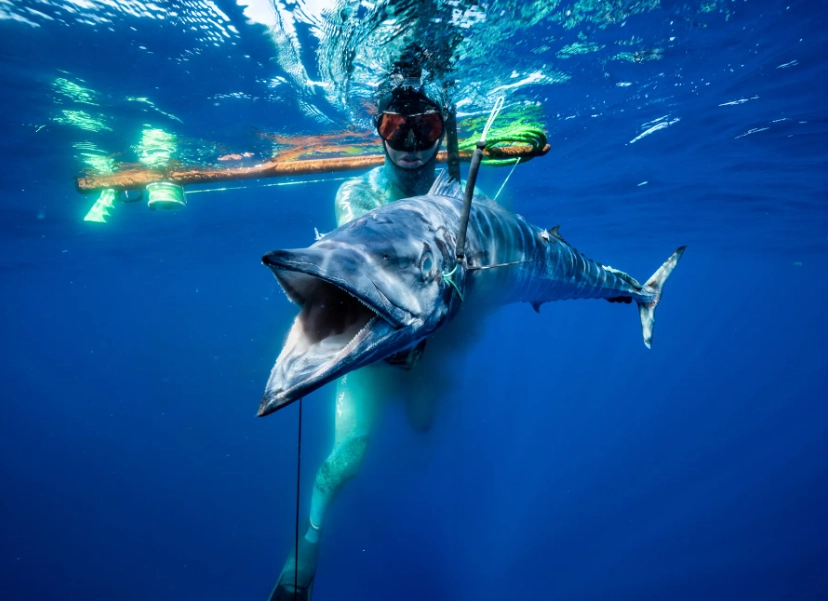
DAN & The One-Up One-Down Rule
This is a core protocol for buddy diving. When one diver is down on a dive, the other is on the surface, watching. You switch roles. This ensures there's always a set of eyes on the diver underwater. Organizations like Divers Alert Network (DAN) are fantastic resources for dive safety and insurance—worth looking into even as a freediver.
Know Your Environment
Are there strong currents? What's the visibility? Is there boat traffic? Check tide charts and marine forecasts. Tell someone on land your plan: where you're going and when you expect to be back. A little paranoia here is healthy.
Marine Life Awareness
You're a guest. Most marine animals want nothing to do with you. Learn to identify potential hazards in your area (e.g., sea urchins, fire coral, certain types of jellyfish). Give all animals, especially larger ones like sharks or rays, plenty of space. A curious shark is not typically a threat, but acting erratically can change that. Stay calm, maintain eye contact, and back away slowly if needed.
Core Spearfishing Techniques for Beginners: From Breathing to the Shot
Okay. You're mentally ready, you've got your gear, and safety is locked in. Now for the fun part—the actual hunting. Let's break down the process step-by-step. These are the fundamental spearfishing techniques every beginner needs to drill into muscle memory.
1. Surface Breathing & Preparation
It all starts here, facedown on the surface. This isn't about gulping air. It's about calming your nervous system. Take slow, deep breaths from your diaphragm for 1-2 minutes. Your final breath should be about 75% of your lung capacity—not a huge gasp that tenses your chest. Then, relax. Drop your shoulders. Look down. Begin your dive.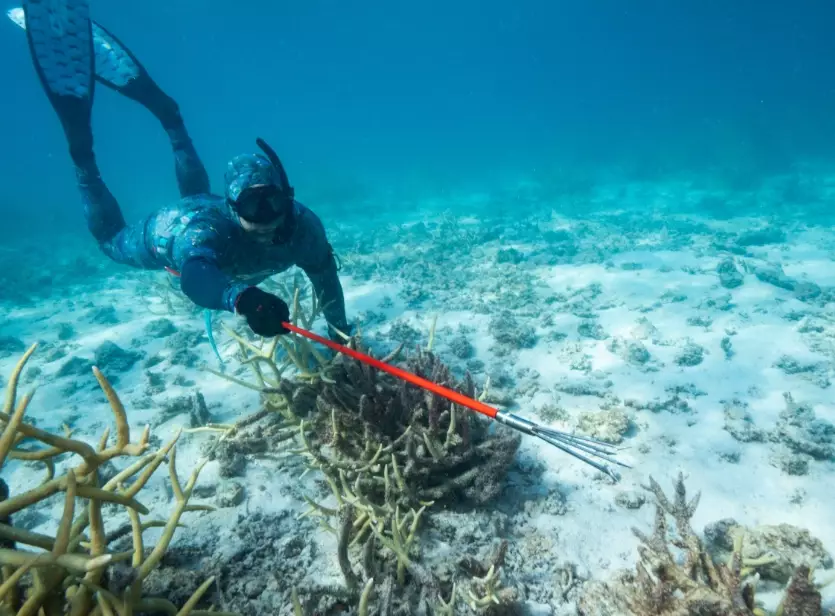
2. The Duck Dive
This is how you transition from horizontal to vertical efficiently. From the surface: 1) Bend at the waist, lifting your fins high into the air. 2) Use the weight of your fins to drive your upper body down. 3) Once your torso is pointed down, start a strong, slow flutter kick to propel yourself deeper. A good duck dive gets you 10-15 feet down with minimal effort.
3. Equalization & Finning
As soon as your head goes under, start equalizing your ears. Equalize early and often—don't wait for pain. Use a slow, steady finning rhythm. Long, full kicks from the hip, not the knee. Glide between kicks. This conserves oxygen. Your body should be streamlined: one arm holding the speargun along your side, the other perhaps ahead for balance.
4. The Approach & Positioning
This is where the hunt begins. You've spotted a fish. Don't charge at it. Fish have a wide field of view. The best approach is often from below and behind, using the water's surface as a backdrop to silhouette yourself. Move slowly and deliberately. Use rocks or the reef structure to hide your approach. Get within your effective range—for a beginner with a short gun, that's often 6-10 feet. Any farther and accuracy plummets.
5. Aiming and the Shot
You're in position. The fish is broadside (side-on to you). This is the ideal shot, offering the largest target area. Now, aim. Spearguns don't have sights for a reason—water refracts light, making things appear closer than they are. You must aim low. How low depends on distance and angle. A good rule of thumb for a close, broadside shot is to aim for the center of the fish's body. Squeeze the trigger smoothly; don't jerk it. Follow through—keep the gun pointed at the target as the spear flies.
6. The Stringer & Securing Your Catch
You got it! Now you need to secure it quickly and humanely. Have a breakaway rig setup. This means your shooting line is attached to a float line on the surface via a weak link. If you shoot a big fish, it can break away from your gun and run, fighting the float instead of dragging you down. This is a critical safety feature. Once the fish is subdued, string it onto a catch bag or a stringer that you can clip to your float. Never attach a large, live fish directly to your body.
Common Beginner Mistakes (And How to Avoid Them)
We all make them. Knowing them in advance is half the battle.
- Chasing Fish: You'll never out-swim a fish. It wastes energy and oxygen. If a fish spooks, let it go. Another will come.
- Poor Shot Selection: Taking a long, difficult shot or shooting at a fish head-on. This often results in a wounded fish that gets away. Wait for the high-percentage, broadside shot.
- Over-Weighting: Carrying too much weight makes it easy to sink but incredibly hard to get back up. It's dangerous. You should float comfortably at the surface.
- Ignoring Currents/Tides: Swimming out against a current is easy when you're fresh. Swimming back exhausted against the same current is a real danger. Always plan your dive with the current.
- Focusing Only on Hunting: Don't become so fixated on looking for fish that you forget to check your depth, your air, or your buddy's location. Scan constantly: fish, buddy, depth, surface.
Answering Your Questions: Spearfishing FAQ
From Technique to Philosophy
If you stick with it, you'll find spearfishing becomes more than a way to catch dinner. It's a form of meditation. It forces you to be present, to control your body and mind in a way few other activities do. The connection to the ocean deepens. You start noticing the smaller things—the pattern on a shell, the way light filters down, the entire ecosystem working around you.
You'll also join a community. Spearfishing techniques for beginners are passed down, often from diver to diver. There's a shared respect for the ocean and a understanding of the risks. Be humble, ask questions, and always prioritize safety and conservation. The ocean has a way of humbling those who don't.
So start slow. Master the basics on land and in the pool. Get your gear fitting right. Find a reliable buddy. Your first dozen dives might yield nothing but experience—and that's perfectly okay, it's how you learn. Celebrate the small wins: a clean duck dive, holding your calm as a fish approaches, simply enjoying the weightlessness.
The blue world is waiting. Dive in, but dive in smart.




Comments