Dive Deeper: Key Sections
You're on the boat, gearing up, and you hear it. Or maybe you're the one doing it. That low, guttural sound—a grunt—right before a diver slips beneath the surface. It's one of those spearfishing quirks that beginners notice right away and veterans do without a second thought. But it begs the question, doesn't it? Why do spearfishers grunt in the first place? Is it some weird ritual, a signal, or just a habit?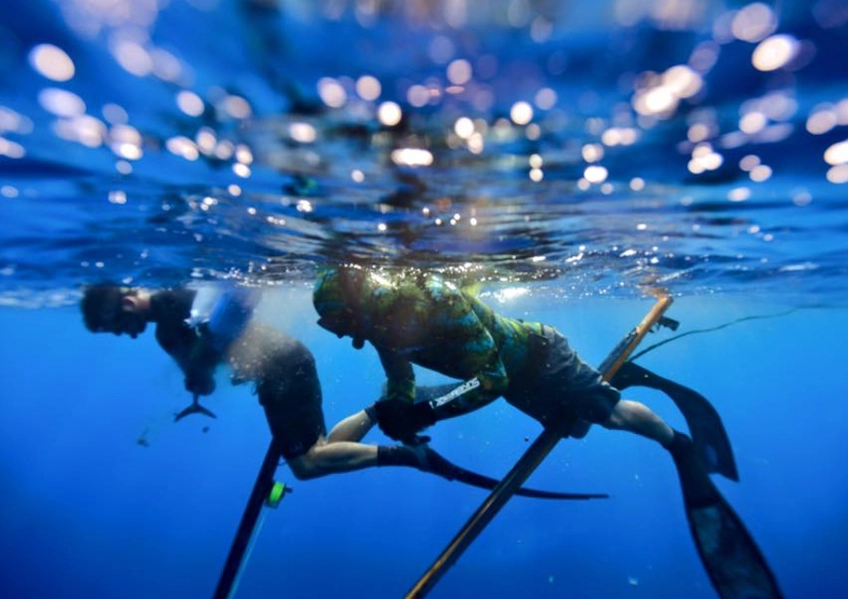
Let's get this out of the way upfront. It's not a tribal call. It's not a secret code to the fish (trust me, they don't care). The real reason is far more practical and, frankly, critical for safety. That grunt is the audible signature of a vital survival skill for any freediver: ear pressure equalization.
Think about it. You're about to descend, sometimes 10, 20, even 30 meters down. The pressure builds fast. Your ears feel it first. That squeezing, sometimes painful sensation in your eardrums. If you don't equalize that pressure, you're looking at a ruptured eardrum, vertigo, or worse. The grunt is simply the sound of air being forced from your lungs, up your throat, and into your Eustachian tubes to pop your ears and balance the pressure. It's a physical act that often comes with a sound.
It's All About Physics: Understanding Ear Pressure
To really get why that spearfishing grunt happens, you need a basic picture of what's going on in your head. Don't worry, no medical degree required.
Your middle ear is an air-filled space behind your eardrum. It's connected to the back of your throat by a tiny, floppy tube called the Eustachian tube. Normally, this tube is closed. When you swallow or yawn, muscles open it briefly, letting a little air in or out to match the air pressure outside your eardrum. On land, this happens automatically. Underwater, it's a different ball game.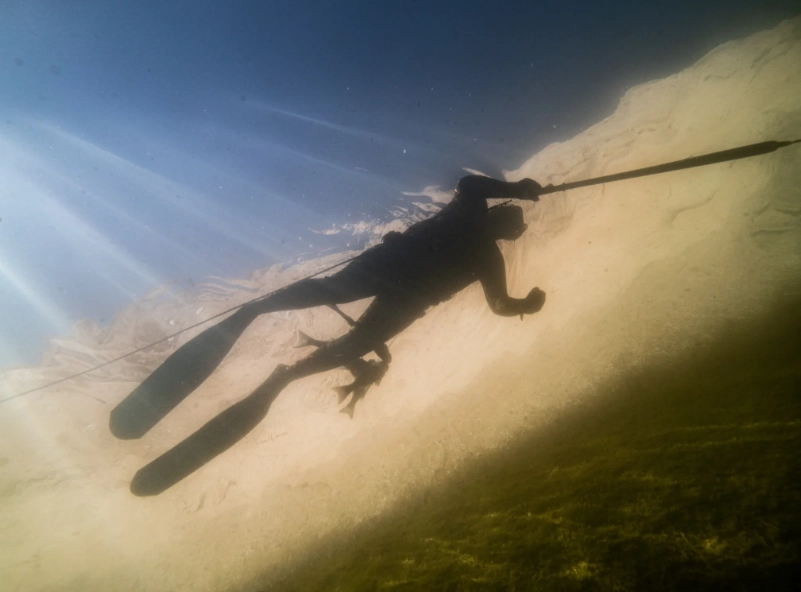
Water is much denser than air. Pressure increases by one atmosphere for every 10 meters (33 feet) you descend. That means just going down 10 meters doubles the pressure on your body. Your eardrums, delicate as they are, get pushed inward by this force. To prevent damage, you need to push air from your throat into your middle ear to increase the pressure inside it, matching the crushing water pressure outside. That's equalization.
The most common method for freedivers and spearfishers is called the Valsalva maneuver. You pinch your nose, close your mouth, and gently try to exhale. The air, with nowhere else to go, travels up the Eustachian tubes. This action engages your diaphragm and throat muscles, and that effort—that forceful exhalation against a closed airway—often produces a low, grunting noise. It's the sound of work.
So, asking "why do spearfishers grunt?" is like asking why a tennis player grunts when they serve. It's a byproduct of exertion, of using a specific set of muscles forcefully. But in spearfishing, it's a sign that a crucial safety check is happening.
Beyond the Grunt: A Look at Equalization Techniques
Now, the Valsalva maneuver (the pinch-and-blow) is the beginner method. It's effective on the surface and shallow dives. But it has a major flaw for deeper spearfishing: it requires effort from your chest and diaphragm, which uses up precious oxygen. Also, as you go deeper, it becomes harder and eventually impossible to force air against the immense pressure.
This is where advanced freedivers separate themselves. The grunt you hear might be from a beginner doing Valsalva, or it might be from an expert using a more refined method that still involves moving air and muscles. Let's break down the main techniques.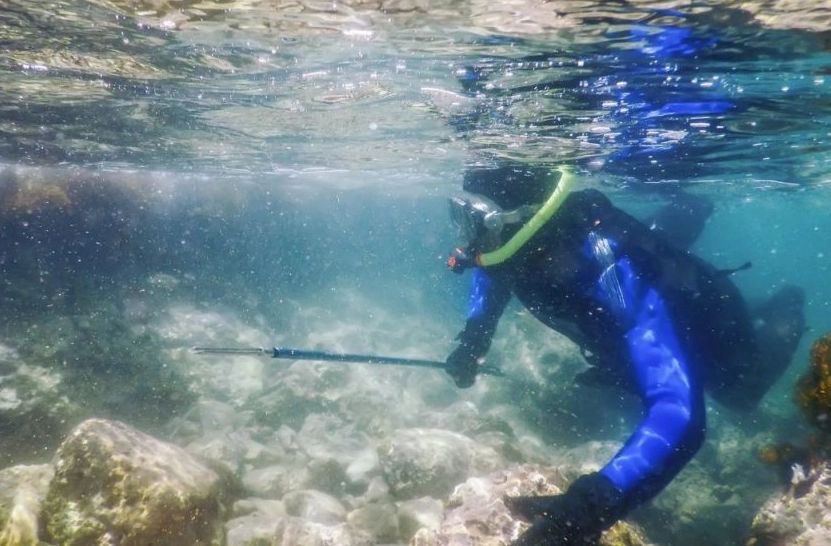
Frenzel Maneuver: The Advanced Standard
This is the gold standard for serious spearfishers and freedivers. Instead of using your diaphragm and lungs to push air, you use your tongue as a piston. You close your vocal cords, pinch your nose, and use the back of your tongue (say, making a "K" or "G" sound) to compress the air in your mouth and nasopharynx into your Eustachian tubes.
Why it's better: It uses very little oxygen, doesn't rely on lung pressure (so it works at greater depths), and is more controlled. The sound? It can be quieter, sometimes a soft click or a subtle throat noise rather than a full grunt. But some people still make a sound doing it, especially when they're exerting themselves to equalize a stubborn ear.
Hands-Free Equalization: The Holy Grail
Some elite divers can equalize without using their hands to pinch their nose at all. They use muscles in their throat and soft palate to open the Eustachian tubes voluntarily. This is often called the BTV (Beance Tubaire Volontaire) or the Toynbee maneuver (swallowing while the nose is pinched or closed).
For spearfishers, having a hand on the gun is crucial. Hands-free equalization means you can descend and equalize without ever letting go of your speargun, keeping you ready for a shot. The sound here is often minimal—maybe a swallow or a very quiet click. The classic "grunt" is usually absent.
So, the type of sound, or its absence, can actually hint at a diver's skill level. The loud, obvious grunt is often a hallmark of the Valsalva technique, common among newer divers.
The Safety Side: Why Ignoring Equalization is a Terrible Idea
This isn't just about comfort. It's about preventing serious, potentially career-ending injuries. When you ask "why do spearfishers grunt?", the underlying concern should be "what happens if they don't?"
Common injuries from poor equalization include:
- Ear Barotrauma: The most common. Blood vessels in the eardrum rupture, causing pain, muffled hearing, and sometimes bleeding. It's like a bruise inside your ear.
- Perforated Eardrum: The eardrum tissue itself tears. This is intensely painful, causes vertigo, nausea, and hearing loss. It takes weeks to heal and requires absolute avoidance of water in the ear.
- Reverse Block: This happens on ascent. As you rise, the expanding air in your middle ear needs to escape. If your Eustachian tube is blocked (by congestion, for example), the pressure builds and pushes the eardrum outward, causing pain and potential damage.
Here’s a simple table to visualize the risks versus the proper action:
| Symptom While Diving | Likely Cause | Immediate Action | Long-Term Risk |
|---|---|---|---|
| Sharp pain in one ear during descent | Failed equalization, Eustachian tube blocked | Stop descent. Ascend 1-2 meters. Try gentle equalization. If pain persists, abort the dive. | Ear barotrauma, perforated eardrum |
| Feeling of "fullness" or muffled hearing after a dive | Mild barotrauma, fluid in middle ear | Do NOT dive again. Rest. See a doctor if it doesn't clear in 24 hours. | Recurrent issues, chronic otitis media |
| Vertigo or spinning sensation underwater | Unequal pressure between ears (alternobaric vertigo) or perilymph fistula | Hold onto the anchor line. Signal your buddy. Perform a controlled, slow ascent. This is serious. | Disorientation leading to drowning, permanent inner ear damage |
| Pain on ascent | Reverse block | Slow your ascent. Try equalizing gently on the way up (swallowing, jaw movements). Descend a tiny bit if possible to relieve pressure. | Outward barotrauma, eardrum damage |
Look, I've had my share of ear squeezes. One time, I was so focused on a fish I ignored the early warning twinge. By the time I felt real pain, it was too late. I spent the next week with a constant ringing and a lesson learned the hard way. The grunt, the equalization—it's your body's first line of defense.
For authoritative information on diving-related ear injuries and their prevention, the Divers Alert Network (DAN) is an unparalleled resource. As the world's largest association of recreational divers focused on safety, their medical articles are reviewed by experts and provide life-saving advice.
Answering Your Questions: The Spearfisher's Grunt FAQ
Is the grunt necessary? Can I equalize silently?
Absolutely, you can equalize silently. The grunt is not the goal. The goal is to open your Eustachian tubes. With the Frenzel maneuver or BTV, the air movement is so small and controlled that it often makes little to no sound. The loud grunt is typically a sign of using the more forceful Valsalva technique. As you refine your skills, the noise usually decreases. So, if you're wondering why do spearfishers grunt loudly, it's often a clue about their chosen (and sometimes less efficient) method.
Does grunting scare the fish away?
This is a great question. Most fish don't have ears like we do. They sense vibrations through their lateral line system. A low-frequency grunt transmitted through your body and into the water might create some vibration. However, in the grand scheme of things—your kicking, the sound of your spear gun loading, your bubbles (if scuba diving)—the grunt is probably negligible. A spastic, panicked movement will scare fish far more than any sound you make. Good spearfishing is about stealth and slow movement, not silence in the vocal sense.
Why do some divers grunt repeatedly on the surface before a dive?
This is pre-dive equalization or "pre-pressurization." By doing a few gentle equalizations on the surface, you're ensuring your Eustachian tubes are open and working before you even start your descent. It's like clearing the path. It can make the first few meters of descent much smoother and helps identify any blockage (from a cold, allergies) before you're committed underwater. The repeated grunts are just them performing several Valsalva or Frenzel maneuvers to get everything open and ready.
I have trouble equalizing. What can I do?
You're not alone. This is the number one hurdle for new freedivers. First, see a doctor to rule out physical issues like a deviated septum or chronic sinusitis. If you're clear, then it's practice and technique.
- Practice on Land: Daily practice is key. Try equalizing while driving, watching TV, at your desk. Get the muscle memory down without the pressure of being underwater.
- Stay Hydrated: Thick mucus blocks tubes. Drink plenty of water.
- Avoid Dairy Before Diving: For some people, dairy increases mucus production.
- Use a Nasal Spray (with caution): A decongestant nasal spray like oxymetazoline can help shrink swollen nasal tissues. BUT use it sparingly and understand the rebound effect. Never rely on it for every dive. The best resource for understanding safe pharmacological practices for divers is the Undersea and Hyperbaric Medical Society (UHMS). Their publications set the standard for diving medicine.
- Descend Feet-First and Vertical: This position often makes it easier for the Eustachian tubes to open compared to a head-down, horizontal descent.
Putting It All Together: From Grunt to Groove
So, let's circle back. Why do spearfishers grunt? It's the audible manifestation of a critical, physiological process—equalizing the pressure in their ears to dive safely. It's the sound of the most common beginner technique, the Valsalva maneuver. But as a diver progresses, the question evolves from "why do they grunt?" to "how can I equalize more efficiently and safely?"
The journey in spearfishing often follows this path:
- Stage 1 (Novice): Loud, obvious grunting using Valsalva. Focus is on making the sound/pressure work, often descending awkwardly and struggling past 10 meters.
- Stage 2 (Intermediate): Quieter, more controlled sounds. Transitioning to or mixing in the Frenzel maneuver. Equalizing more frequently and with less effort, enabling deeper, more comfortable dives.
- Stage 3 (Advanced): Near-silent equalization. Using Frenzel or hands-free techniques effortlessly. Equalization becomes an automatic, rhythmic part of the descent, not a struggle. The diver is focused on the hunt, not their ears.
The goal is to make the process so seamless it becomes subconscious. You descend, you equalize in a rhythm, you hunt. The external sign—the grunt—fades away. But the internal function remains the most important thing you do besides breathing.
If you take one thing from this, let it be this: never, ever dive through ear pain. That grunt you hear, or the quiet equalization you do, is your body's maintenance routine. Respect it. Practice it on dry land. Understand the anatomy. Your time in the water, your safety, and your ability to enjoy this incredible sport depend on this fundamental skill. Now you know what that sound really means. It's not just a noise; it's the sound of someone listening to their body and diving to live another day.
For a comprehensive and safety-focused approach to learning freediving techniques, including proper equalization, the curriculum and materials from PADI Freediving or Apnea Australia provide structured, professional guidance. These organizations set the benchmark for safe freediver education worldwide.





Comments