When you watch the Olympics, diving looks like pure, graceful flight followed by a tiny splash. It seems simple. But behind those three seconds in the air is a world of technical precision, brutal training, and distinct competitive formats. If you've ever wondered why some divers bounce on a springy board and others leap from a rigid tower, or what the difference is between the events, you're in the right place. This isn't just a list; it's a breakdown of the two core Olympic diving disciplines—springboard and platform—and their synchronized variants. We'll look at the equipment, the rules, the unique skills required for each, and even some common misconceptions. By the end, you'll watch the Paris 2024 diving events with a whole new level of appreciation.
Your Quick Guide to Olympic Diving
Springboard vs. Platform: The Core Olympic Divide
At the Olympic level, diving splits into two fundamental categories based on the apparatus. This isn't a minor detail—it dictates everything from the diver's approach to the physics of the dive itself.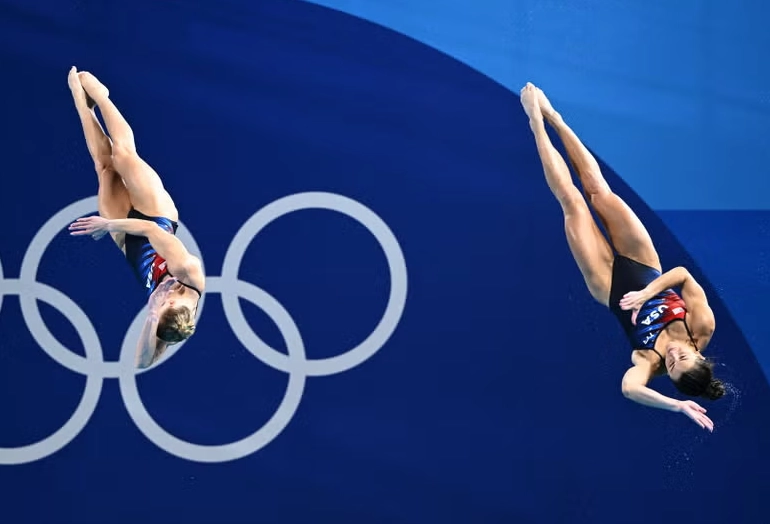
Springboard Diving (3m)
The springboard is a flexible diving board, 3 meters (about 9.8 feet) above the water. Its springiness is the key. Divers use a precise, rhythmic approach and a powerful hurdle jump to depress the board, storing energy. The recoil launches them higher, allowing more time for complex maneuvers. This "bounce" means springboard divers can perform dives with more somersaults and twists than you might expect from a 3m height. The board's movement adds a layer of timing and feel that pure platform divers don't have to master. A common mistake new viewers make is underestimating the 3m event, thinking the lower height makes it easier. In reality, the need to generate all your power from the board's flex makes the takeoff incredibly technical. One slight misstep in the hurdle, and the dive is doomed before you even leave the board.
Platform Diving (10m)
The platform is a fixed, rigid structure towering 10 meters (about 32.8 feet) above the water. No bounce, no spring—just you, the edge, and a long way down. Because the takeoff is static, platform diving emphasizes raw power, courage, and flawless technique from a standing or running start. The extra height allows for breathtakingly slow, beautiful straight dives and permits dives with a higher degree of difficulty (DD) due to the increased flight time. The impact upon entry is also significantly harder due to the greater velocity. Many elite divers specialize in one discipline, but the true legends, like China's greats, master both. From my conversations with coaches, the mental leap from the dynamic springboard to the unforgiving solidity of the 10m platform is one of the biggest hurdles in a diver's career.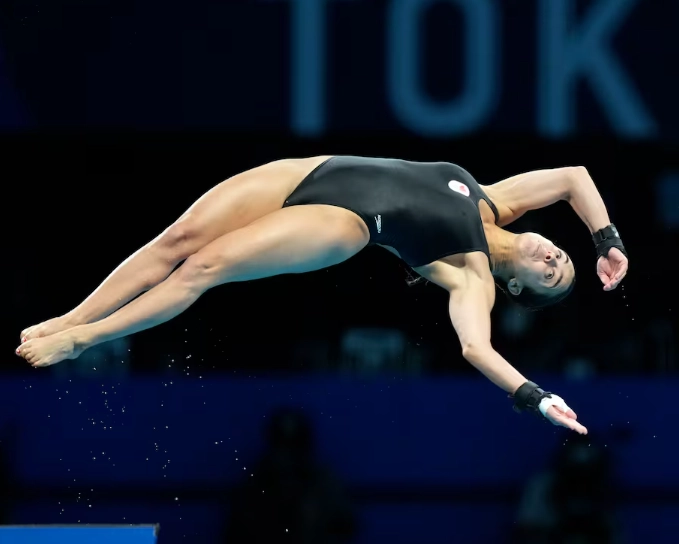
| Feature | Springboard (3m) | Platform (10m) |
|---|---|---|
| Apparatus | Flexible, fiberglass/composite board | Fixed, rigid concrete/metal structure |
| Key Skill | Timing & harnessing board recoil | Power generation from a static start & nerve control |
| Typical Dive Style | More multi-somersault dives with twists | Emphasis on armstand dives, graceful straight lines, high-DD dives |
| Impact on Entry | Significant, but board aids height | Very high due to greater fall speed |
| Common Specialist | Divers who excel in rhythm and technique | Divers with exceptional power and mental fortitude |
How Dives Are Built and Scored
Understanding the types of dives themselves is crucial. All Olympic dives are classified by a numbering system (set by the International Swimming Federation (FINA)) that describes their flight path.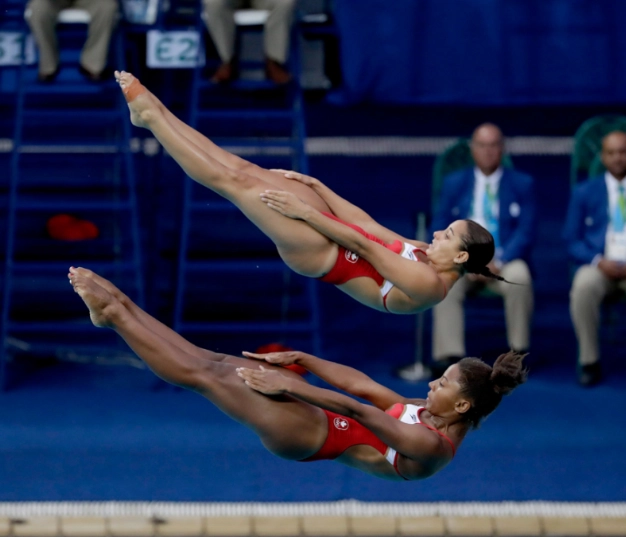
The Six Dive Groups: Forward (group 1), Backward (2), Reverse (3), Inward (4), Twisting (5), and Armstand (6, platform only). A "reverse" dive, for example, starts facing forward but rotates backward toward the board—it's visually confusing and risky. The Degree of Difficulty (DD) is a pre-set number calculated from the dive's somersaults, twists, and starting position. A simple forward 1 ½ somersault pike might have a DD of 1.6, while a forward 4 ½ somersault tuck (a legendary high-difficulty dive) can be 3.7 or higher.
Scoring is where the drama unfolds. Seven judges award scores from 0 (complete failure) to 10 (perfect) in half-point increments. The highest and lowest scores are discarded, and the remaining five are summed. This total is then multiplied by the DD. That's the key. A beautifully executed simple dive (score 8.0 x DD 2.0 = 16.0) can be beaten by a riskier, slightly flawed hard dive (score 6.5 x DD 3.5 = 22.75). This forces divers and coaches to constantly strategize: go for safe consistency or high-risk, high-reward complexity.
The Art of Synchronized Diving
Added to the Olympics in 2000, synchronized diving (3m synchro and 10m synchro) is a whole different beast. Two divers perform the same dive from the same apparatus simultaneously. It's not just about doing your own dive well; it's about mirroring another human perfectly.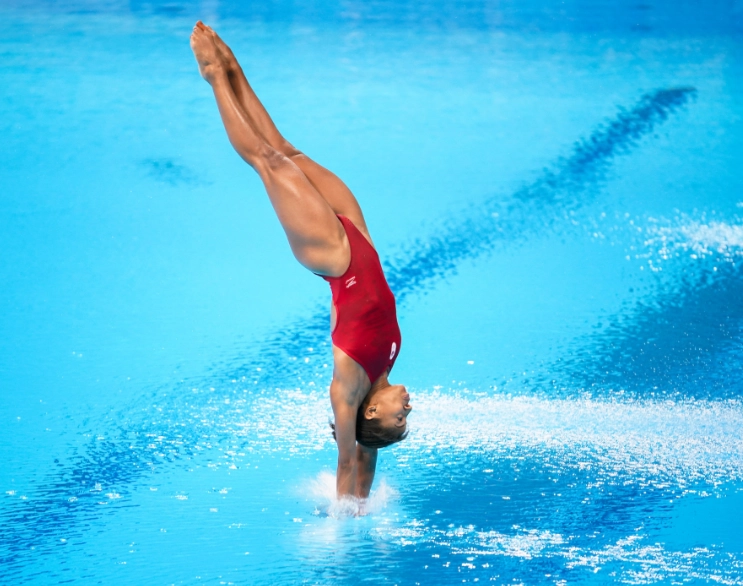
Eleven judges score: three judge diver A's execution, three judge diver B's execution, and five judge the synchronization—how matched they are in their approach, takeoff, flight, and entry. The synchronization score is arguably more important. You can both do a decent individual dive, but if one is a split-second faster in rotation or a few inches apart on entry, you'll lose huge points. The best synchro pairs, often training partners for years, move like a single organism. They even try to match their body types and timing off the board to minimize natural differences. Watching a perfectly synced rip entry (where the hands part the water without a splash) by two divers is one of the most satisfying sights in sports.
How Divers Train for Different Events
The training regimen diverges based on specialization. Springboard divers spend countless hours on dryland trampolines and spotting belts, but a huge portion of training is on the actual board, refining that hurdle and press. They develop a deep, almost intuitive feel for how much to depress the board for each dive.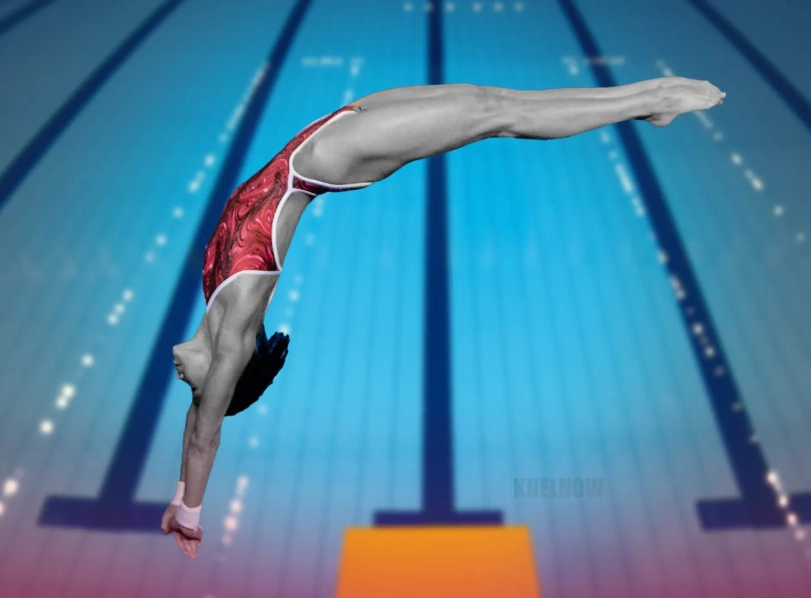
Platform divers, due to the injury risk and mental fatigue of constant 10m jumps, do a massive amount of dryland work. They'll practice dive positions and rotations into foam pits and on trampolines. When they do go up to 10m, it's often for focused, quality repetitions rather than sheer volume. Many start training on lower platforms (5m, 7.5m) to build confidence and technique before graduating to the big tower. A piece of advice I rarely see mentioned: elite platform divers often have specific weight training for their neck and shoulder stabilizers to handle the repeated high-impact entries.
Divers who do both (and most do in their early careers) face a tough balancing act. The muscle memory for a springboard takeoff can interfere with the platform takeoff, and vice versa. It's like a tennis player switching between grass and clay courts daily.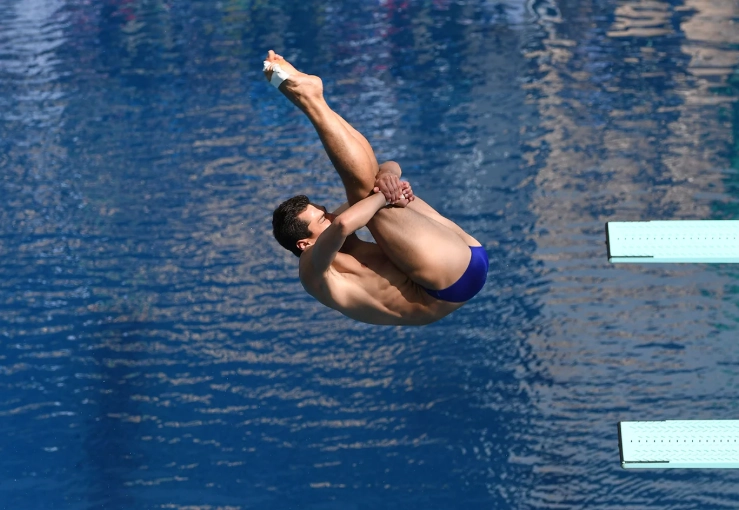
Your Olympic Diving Questions Answered
As a beginner, should I try springboard or platform diving first?
Springboard, without question. Almost every diver in the world starts on the 1m springboard, then progresses to 3m. The springboard provides a safer, more forgiving way to learn takeoffs, rotations, and entries. The platform requires a developed sense of spatial awareness and a comfort with height that takes years to build safely. Starting on platform is a fast track to developing bad habits (like flinching on takeoff) or, worse, getting injured.
Why do some divers shower on the side of the pool before diving?
It's not just to stay warm. The main reason is to keep their muscles loose and prevent cramping between dives. But there's a subtle, practical reason for platform divers: it helps their body acclimatize to the temperature of the pool water. A sudden shock of cold water upon entry from 10m can cause muscles to tense involuntarily, ruining a tight entry. It's a small ritual for maintaining consistency.
What's the hardest type of Olympic dive to perform?
Most coaches and divers point to the armstand dives on the 10m platform. Balancing upside down on your hands at the edge of a 32-foot drop requires immense core strength and nerve. Then you have to initiate a powerful dive from that inverted, static position. Any wobble in the armstand compromises the entire dive. Among non-armstand dives, any dive in the "inward" group (where you start on the edge with your back to the water and rotate forward) is notoriously difficult because you can't see the water during your takeoff or flight.
Can a diver compete in both individual and synchronized events at the same Olympics?
Absolutely, and many do. It's a brutal test of endurance and focus. At a single Games, a diver could theoretically compete in four events: Men's/Women's 3m Springboard, 10m Platform, and both synchronized events. The schedule is grueling, requiring peak physical and mental performance across multiple days. Winning multiple medals across disciplines is the mark of an all-time great, like the USA's Greg Louganis or China's dominant athletes.
How is the order of dives in a competition determined?
The dive list, or "sheet," is submitted before the competition and follows a specific formula. Divers must perform dives from different groups (e.g., a forward, a back, a reverse, etc.) to demonstrate all-around skill. In the final rounds, they often perform their dives in order of increasing Degree of Difficulty, saving the hardest, most dramatic dive for last. This builds suspense and allows for last-minute comebacks based on that final DD multiplier.


Comments