Ask any experienced diver about the most dangerous type of diving, and you'll likely get a passionate debate. Is it the pitch-black confines of a cave? The crushing depths of a technical dive? The tangled metal of a deep wreck? The truth is, danger isn't inherent to a single activity; it's a product of specific risk factors, environmental challenges, and, most critically, human decisions. After over a decade of diving in various disciplines, I've seen that the "most dangerous" label often attaches to dives where the margin for error shrinks to zero, and the environment offers no easy escape.
This article isn't about fear-mongering. It's about understanding. We'll dissect the three diving disciplines most frequently cited as the most dangerous—cave diving, technical deep diving, and wreck penetration diving—not to scare you away, but to highlight why they carry inherent risks and, more importantly, how a proper mindset and training manage those risks. Forget the Hollywood drama; we're talking about real physics, real psychology, and the very real protocols that separate a thrilling adventure from a tragedy.
What’s Inside This Deep Dive?
What Makes Cave Diving So Dangerous?
Let's get the obvious out of the way. Yes, cave diving is often statistically cited as one of the most lethal forms of diving. Organizations like the Divers Alert Network (DAN) have published analyses showing a disproportionately high fatality rate relative to the number of practitioners. But simply calling it "dangerous" misses the point. The danger is specific and compounded.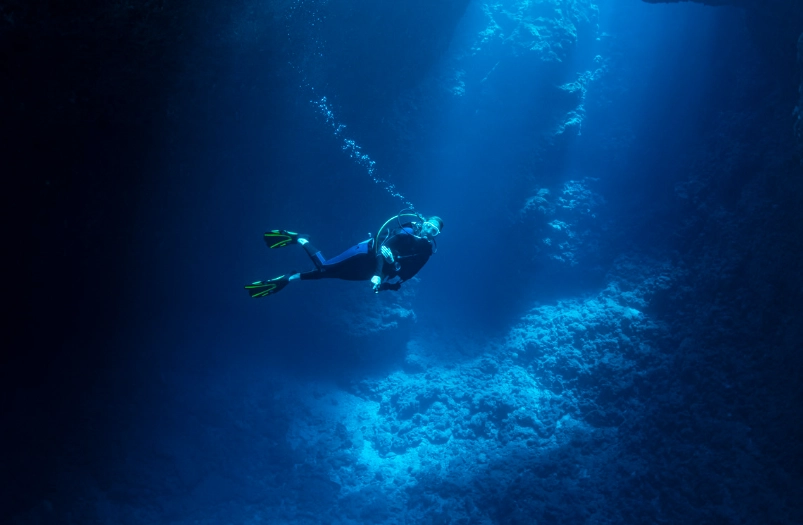
The primary, non-negotiable risk is the direct overhead environment. In open water, if you have a problem, you go up. In a cave, going "up" is solid rock. There is no free ascent to the surface. Every problem—a free-flowing regulator, a silt-out that reduces visibility to zero, a lost guideline—must be solved in place, often while managing finite gas reserves in a narrow, dark space.
I took my first formal cave diving course in North Florida, and the instructor's first lesson wasn't about gear. It was about psychology. "You have to plan every dive as if your primary light will fail, your buddy will vanish, and you'll have to find a single piece of guideline in total darkness while conserving gas," he said. It sounded extreme. Then we practiced it. That's the mindset.
The Silt-Out: A Cascade Failure
New divers often underestimate silt. In a cave, a single misplaced fin kick can cloud the water in seconds, creating a "white-out" or "brown-out" condition. This isn't just poor visibility; it's a complete loss of spatial reference. If you're not physically on the guideline, you are now lost. Panic sets in quickly. The instinct is to swim faster, which stirs up more silt, creating a vicious cycle. Proper cave training drills slow, deliberate finning (often a modified flutter or frog kick) and how to hold position and feel for the line when you can't see your hand in front of your face.
Gas Management is Religion
Recreational divers learn the "rule of thirds" for air? Cave divers live by the "rule of thirds" or even more conservative rules like "halves" or "sixths" for gas. This means using one-third of your gas to swim in, one-third to swim out, and keeping one-third in reserve for emergencies. In practice, this means turning the dive much earlier than your instincts might tell you to. Running low on air isn't an option; it's a prelude to a specific type of accident report.
Technical Deep Diving: Beyond Recreational Limits
Technical diving—venturing below 40 meters/130 feet, using mixed gases like Trimix (helium, nitrogen, oxygen) or rebreathers—trades the overhead rock of a cave for the overhead pressure of the water column. The risks here are more physiological and equipment-intensive.
The big ones are narcosis and oxygen toxicity. Below 30 meters, nitrogen narcosis ("rapture of the deep") affects everyone to varying degrees. It's like being drunk underwater: impaired judgment, slowed reaction, a false sense of euphoria or competence. At 50 meters, it's significant. At 80 meters, it can be debilitating. Adding helium to the mix (Trimix) reduces this, but it introduces new complexities of gas blending and management.
Oxygen becomes toxic under pressure. Breathing a high percentage of oxygen (like pure O2 or rich Nitrox) at depth can cause convulsions—an instant, uncontrollable event that is almost always fatal underwater. Tech divers must meticulously plan their gas mixtures for each segment of the dive to keep the oxygen partial pressure within safe limits.
The Decompression Obligation
Unlike recreational no-decompression dives, tech dives plan for mandatory decompression stops. You cannot surface directly. Missing these stops or ascending too fast drastically increases the risk of decompression sickness ("the bends"). This means carrying enough gas to spend potentially hours off-gassing at various depths on your way up. A simple gas leak or miscalculation can leave you without the gas needed to complete your deco obligation, a dire situation.
Wreck Penetration: The Alluring Trap
Wreck diving is immensely popular. Swimming around a sunken ship is spectacular. Penetrating inside it is where the risk profile merges with cave diving. You now have an overhead environment (the ship's structure) that is often unstable, tangled with fishing lines or nets, and coated in silt or rust.
The unique hazard here is entanglement and entrapment. A shipwreck is not a clean tunnel. It's a collapsed, corroded maze of metal, wires, and debris. A loose guideline can snag. A fin can catch on a rusted pipe. In poor visibility, it's easy to become wedged in a narrowing passage. The metal structure can also distort or block your compass, making navigation difficult.
Furthermore, wrecks often sit in deep, cold, dark water, adding depth-related risks (narcosis, deco) and environmental stress to the overhead confinement risk. It's a multi-layered threat.
The Real Killers: Common Failure Points Across All Dives
When you analyze accident reports from DAN or training agencies, patterns emerge. The "most dangerous type of diving" is frequently a dive where several of these common points fail simultaneously.
| Risk Factor | How it Manifests in Dangerous Dives | Human Error Component |
|---|---|---|
| Inadequate Gas Management | Running out of breathing gas before reaching an exit/surface. The "turn pressure" is ignored or miscalculated. | Overconfidence, distraction, failure to monitor gauges, poor planning. |
| Poor Buoyancy & Trim | Kicking up silt in caves/wrecks, damaging fragile ecosystems, colliding with structures, increasing air consumption. | Lack of fundamental skill practice. Rushing into advanced environments before mastering basics. |
| Equipment Failure or Misuse | A single second-stage freeflow can deplete gas rapidly. A lost fin in a current. Inadequate exposure protection leading to hypothermia. | Poor pre-dive checks, lack of redundancy for critical items, using unfamiliar or inappropriate gear. |
| Getting Lost / Navigation Failure | Losing the guideline in a cave/wreck, misjudging distance/ direction in open water, leading to swim-away errors. | Not laying or following a line properly, over-reliance on a buddy for navigation, poor situational awareness. |
| Buddy Separation | Losing contact with your dive partner in a high-stress situation, doubling the problem and eliminating mutual aid. | Poor communication, differing dive objectives, lack of a clear pre-dive separation plan. |
| Physiological Stress | Narcosis impairing judgment at depth. CO2 buildup (from skip-breathing or heavy exertion) leading to panic or toxicity. | Pushing personal limits, ignoring early signs of stress, poor fitness, improper breathing technique. |
The table shows something crucial: the environment (cave, deep, wreck) simply amplifies the consequences of these common errors. A buoyancy mistake in open water is embarrassing. The same mistake inside a wreck can cause a silt-out that kills.
Building the Safety Mindset: It's More Than a Checklist
So, is the most dangerous type of diving cave, tech, or wreck? It's arguably any dive undertaken without the corresponding safety mindset. This mindset has layers that go beyond buying more gear.
First, honest self-assessment. Are you truly proficient in buoyancy, trim, and finning before even thinking about a cavern course? I've seen divers with 100 logged dives who still struggle to hover. Logged dives measure exposure, not skill. Proficiency is measured in control.
Second, progressive, formal training. You cannot YouTube your way into a cave. Agencies like SDI/TDI, GUE, and IANTD offer structured courses that build skills incrementally. Cavern before Intro to Cave before Full Cave. Advanced Nitrox and Deco Procedures before Trimix. Each course installs mental protocols and muscle memory for managing specific failures.
Third, mentorship and community. Dive with people who are better than you. Ask questions. Dive clubs and online forums (used critically) are invaluable. A good mentor will tell you "you're not ready yet," which is the most valuable advice you can get.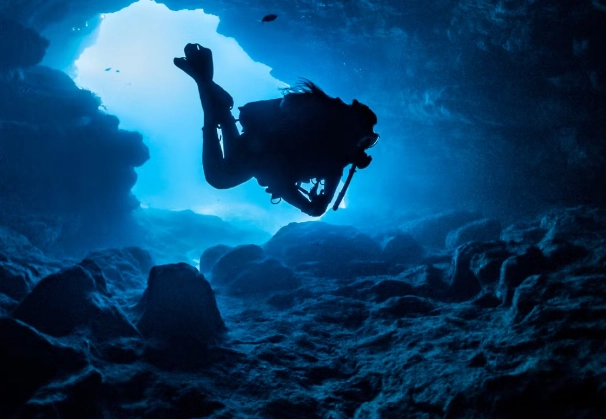
Finally, the willingness to call the dive. At any point, for any reason—a leaking O-ring, a gut feeling, a buddy who seems off—you must be willing to abort. Peer pressure, sunk cost ("we flew all the way here!"), and ego are silent killers in this sport. The mark of a truly experienced diver isn't how deep they've gone, but how many dives they've wisely called off.
Your Dangerous Diving Questions Answered
I'm a recreational diver. What's the biggest mistake I could make that would put me in a "dangerous dive" scenario?
The most common gateway error is exceeding your training and comfort zone because of external pressure. This could be following a more experienced buddy into a wreck swim-through you're not trained for, or diving deeper than 18 meters because the group is going to see a shark. Your certification defines limits for a reason. The moment you cross a personal limit—be it depth, visibility, current, or environment—you've voluntarily entered a higher-risk category without the corresponding skills. Always have a personal dive plan and the confidence to stick to it, even if it means sitting out.
If cave diving is so risky, why do people do it? Is the reward worth it?
For those who pursue it with proper training, the risk is managed down to an acceptable level—similar to how a pilot views flying. The reward is unparalleled. It's not just about seeing formations. It's about the absolute focus it demands. In a cave, the outside world vanishes. Your entire universe is the beam of your light, the sound of your breathing, and the guideline. It's a form of extreme mindfulness. The pristine, untouched beauty of underground caverns with crystal-clear water and ancient geology is something you simply cannot experience anywhere else on Earth. The reward is for those who value that unique combination of challenge, beauty, and total immersion.
What's one piece of safety gear for advanced environments that is most overlooked by divers moving beyond recreation?
A properly configured and practiced cutting tool. Not a tiny line-cutter on a computer strap, but a robust, accessible knife or shears. In overhead environments, entanglement is a primary hazard. Fishing line, old cables, or even your own guideline can snag you. Panic leads to pulling, which tightens the entanglement. A sharp, reliable tool you can deploy with one hand, without looking, is critical. Practice using it on dry land with your eyes closed, simulating zero visibility. This tool isn't for show; it's your primary escape device in a specific type of emergency.
I hear about "silt outs" in caves. How do you actually navigate if you can't see anything?
You navigate by touch and memory, which is why the guideline is sacred. The procedure is drilled relentlessly in training. If you lose visibility, you immediately stop all movement to avoid stirring more silt. You find the guideline (it should always be within arm's reach if you're following protocols). You establish positive contact with it, often by wrapping a finger and thumb around it. Then, you move hand-over-hand along the line, maintaining your orientation. You know the line has directional markers (arrows pointing to the exit) every so often, which you can feel. The key is to move slowly, methodically, and control your breathing to avoid panic. Your training turns a terrifying scenario into a manageable, procedural task.
Are rebreathers safer or more dangerous than open-circuit scuba for technical diving?
They shift the risk profile. Rebreathers are fantastic for deep/long dives because they recycle gas, use less helium, and produce no bubbles. However, they are vastly more complex. An open-circuit failure is often loud and obvious (a freeflow). A rebreather failure can be silent and insidious—a slowly rising CO2 level or a failing oxygen sensor. They require meticulous pre-dive checks, constant vigilance during the dive, and extensive, specific training. In the hands of a diligent, well-trained diver, they can enhance safety for certain profiles. In the hands of someone who cuts corners, they introduce multiple new single points of catastrophic failure. They are not a "safer" shortcut; they are a different, more demanding discipline entirely.


Comments