Mastering the four fundamental swimming strokes is the first step from just staying afloat to moving through the water with purpose and efficiency. If you're asking "What are the 4 types of swimming techniques for beginners?", the answer is freestyle, backstroke, breaststroke, and butterfly. But knowing the names is just the start. The real value lies in understanding the unique mechanics, common pitfalls, and the practical order in which you should learn them. I've spent over a decade coaching adults and kids, and I can tell you most online guides skip the subtle details that make or break your technique. Let's fix that.
What's Inside This Guide?
The 4 Fundamental Strokes: A Detailed Breakdown
Each stroke has a distinct rhythm and purpose. Think of them as tools in a toolbox. You wouldn't use a hammer to screw in a bolt. Similarly, you choose your stroke based on speed, endurance, or comfort.
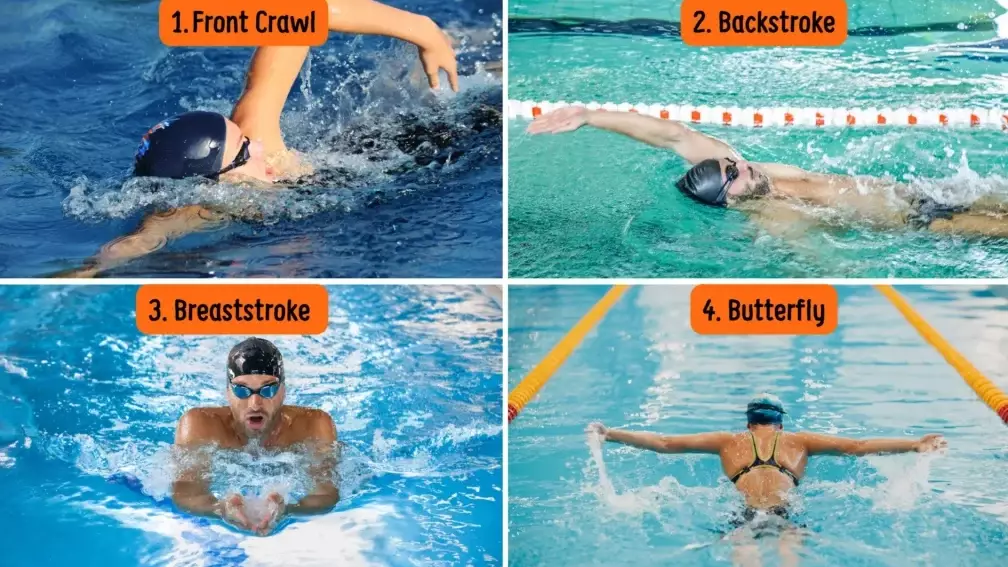
1. Freestyle (Front Crawl)
This is the workhorse. It's the fastest and most efficient stroke for covering distance. The motion is alternating: one arm pulls while the other recovers over the water, paired with a steady flutter kick. The magic, and where most beginners struggle, is in the side breathing. You don't lift your head forward; you rotate it to the side just enough for your mouth to clear the water during an arm recovery. It feels unnatural at first because we're wired to look forward. A drill I give all my students: hold onto the pool wall, practice turning your head to the side to breathe while your other ear stays in the water. Do this until it feels less weird.
2. Backstroke
Backstroke is freestyle's cousin, but on your back. The biggest advantage? Your face is out of the water the whole time, so breathing is unrestricted. The challenge is spatial awareness—you can't see where you're going. The arm motion is a continuous, alternating windmill, and the kick is the same flutter kick as freestyle. A pro tip nobody tells you: keep your head very still, almost like you're balancing a cup of water on your forehead. Bobbing your head throws off your whole body alignment and makes you swim crooked.
3. Breaststroke
This is often the first stroke people learn because the head stays above water naturally (though competitive swimmers breathe in sync with the stroke). It's the slowest of the four but can be the most relaxing. The motion is symmetrical: arms pull in a heart-shaped pattern while the legs execute a "whip" or "frog" kick. The most common technical flaw I see is the timing. Beginners often kick and pull at the same time, which creates massive drag. The correct sequence is: pull, breathe, kick, glide. That glide at the end is crucial. It's your moment of rest and propulsion.
4. Butterfly
Let's be honest: butterfly is hard. It's the most physically demanding stroke and is usually introduced last. The body moves in an undulating dolphin motion, with both arms recovering simultaneously over the water. It looks powerful and graceful when done right, and exhausting and awkward when done wrong. For beginners, I don't recommend diving into full butterfly immediately. Start by mastering the dolphin kick on your back or with a kickboard. Get that core-driven wave feeling first. The arm pull comes later.
| Stroke | Best For | Key Technical Focus | Relative Difficulty for Beginners |
|---|---|---|---|
| Freestyle | Speed, distance, fitness | Side breathing & body rotation | Medium |
| Backstroke | Easy breathing, recovery | Head position & straight-line swimming | Easy to Medium |
| Breaststroke | Comfort, visibility, endurance | Timing (pull-kick-glide) & kick technique | Medium |
| Butterfly | Power, strength, advanced skill | Core-driven undulation & simultaneous timing | Hard |
How to Get Started with Swimming as a Complete Beginner?
You don't just jump in and try butterfly. There's a logical progression that builds confidence and skill.
The Beginner's Learning Pathway
Start with water comfort. Can you put your face in the water and exhale bubbles? If not, practice that first. Next, master floating on your back and front. Once you're buoyant and comfortable, the stroke order I recommend is: Freestyle (learn the kick, then arms, then breathing) → Backstroke (great for practicing kick and body position without worrying about breath) → Breaststroke (the symmetrical motion feels intuitive after the alternating strokes) → Butterfly (tackle this only after you have strong core control and water feel).
Gear matters less than you think. A comfortable, well-fitting suit and goggles are non-negotiable. Fancy paddles or fins can come later. For absolute beginners, a simple kickboard is your best friend. It isolates your leg action so you can focus on developing a strong kick without sinking.
What Are Common Beginner Mistakes in Each Stroke?
Spotting these early saves months of frustration.
Freestyle: Lifting the head to breathe instead of rotating it. This drops your hips and turns you into an anchor. Also, "crossing over"—where your hand enters the water in front of your opposite shoulder, causing a zigzag swim path.
Backstroke: Letting the hips sink or bending the knees too much on the kick, creating a bicycle motion instead of a flutter from the hips. Also, over-rotating the head to look for the wall.
Breaststroke: The infamous "screw kick" where the knees come too far apart or the feet don't turn out properly before the whip. This provides zero propulsion. On the arms, pulling too wide or too deep, which wastes energy.
Butterfly: Kicking from the knees instead of the chest and hips. The power originates in your core, not your legs. The other big one is lifting the head too high to breathe, which kills the undulation. Your chin should just skim the surface.
From the Pool Deck: My Top Practice Tips
Quality beats quantity every time. Swimming 50 meters with focused technique is better than mindlessly ploughing through 500.
- Film Yourself. Use a waterproof phone case or ask a friend to record a lap. What you feel you're doing and what you're actually doing are often worlds apart. It's the single fastest way to improve.
- Use Drills, Not Just Distance. For freestyle breathing, do "6-kick switch": take one stroke, then hold that side-gliding position for six kicks before switching. It ingrains balance.
- Rest. Swimming uses small stabilizer muscles that tire quickly. Take 20-30 seconds rest between short laps to maintain form. Gasping for air means you're practicing survival, not technique.
- Get a Lesson. Even one or two sessions with a certified instructor (look for ASCA or equivalent credentials) can correct foundational errors you'd never see yourself. It's an investment that pays off in accelerated progress.
Your Swimming Questions Answered (FAQ)
I get anxious putting my face in the water. Can I still learn to swim?
Absolutely, and you're not alone. Start in the shallow end. Practice exhaling slowly through your nose into the water while holding the wall. Do it for just 2 seconds, then 5. Don't rush. The goal is to associate exhaling in the water with calmness, not panic. Backstroke is also a fantastic entry point because your face stays dry. The American Red Cross emphasizes water acclimatization as the first step in their swimming and water safety program.
Which stroke is the best for losing weight and getting fit?
Freestyle is the most efficient for sustained calorie burn because you can maintain a higher heart rate for longer periods. It engages your back, shoulders, core, and legs continuously. However, the "best" stroke is the one you'll do consistently. If you hate freestyle but love the rhythm of breaststroke, do that. Consistency in the pool matters more than optimizing for a marginally higher burn rate.
How often should a beginner practice to see real progress?
Twice a week is the minimum to build muscle memory. Three times a week is the sweet spot for noticeable, steady improvement. Each session doesn't need to be long—30 to 45 minutes of focused practice is far better than 90 minutes of aimless swimming. The key is regularity. Skipping a week often means spending the next session re-learning what you forgot.
My legs sink no matter what I do. How do I fix this?
Sinking legs are almost always a head and chest position issue, not a leg strength issue. In freestyle and backstroke, if your head is too high, your hips drop. In freestyle, look straight down at the bottom of the pool, don't look forward. In backstroke, press your chest slightly upward and keep your head back. A simple drill: practice kicking on your side with one arm extended. It forces your core to engage to keep you balanced.
Is it necessary to learn butterfly as a recreational swimmer?
Not at all. Many fit, capable recreational swimmers never learn a full butterfly stroke. It's a specialized, high-intensity technique. The dolphin kick component, however, is valuable to learn as it builds incredible core strength and improves your body awareness in the water. You can incorporate dolphin kick drills into your workout without ever doing the full arm pull.



Comments