Asking "how many types of diving are there?" is like asking how many ways there are to explore a continent. The simple answer is: more than you think, and the perfect one for you depends entirely on what you want to feel, see, and achieve. Most beginners picture scuba tanks and coral reefs, but that's just the gateway. The underwater world offers disciplines ranging from serene, breath-held meditation to highly technical deep-wreck exploration.
I've been diving for over a decade, certified across multiple agencies, and I still get surprised by niche variations. The real value isn't in a definitive count, but in understanding the landscape so you can make an informed choice. Let's cut through the confusion and map it all out.
What You'll Discover
The Three Core Categories of Diving
Before we dive into specifics, let's frame the big picture. All diving activities fall into one of three buckets based on how you breathe underwater:
1. Scuba Diving (Self-Contained Underwater Breathing Apparatus): You carry your own air supply (tank) on your back. This is the most versatile category, allowing for extended bottom time and deep exploration. Think of it as your underwater SUV.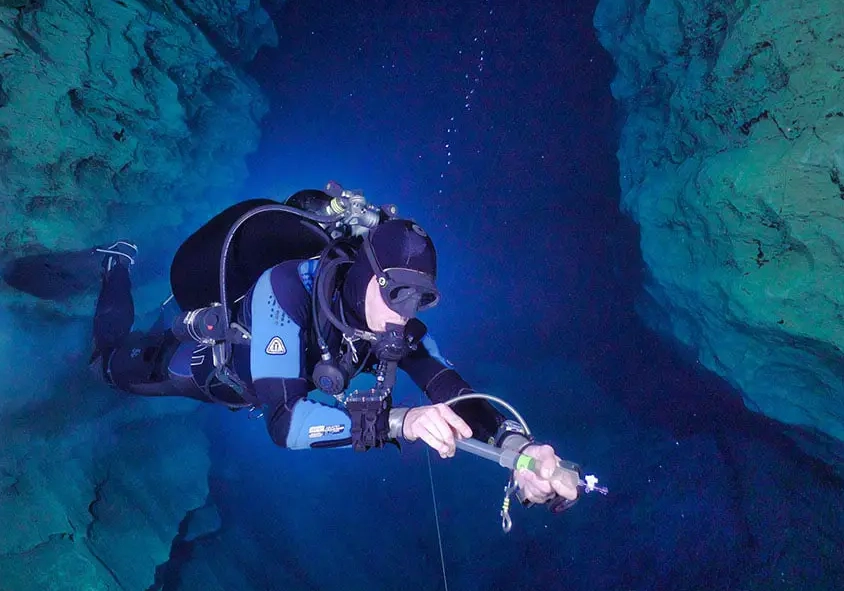
2. Freediving (Breath-Hold Diving): No external air. You dive on a single breath. It's about physiology, mental calm, and efficiency of movement. This is the minimalist, purist approach—like underwater yoga or sprinting.
3. Snorkeling (Surface Diving): Breathing through a snorkel while floating at the surface, with occasional short dives down by holding your breath. It's the most accessible and equipment-light option.
Within these categories, especially scuba, dozens of subtypes have evolved. The table below compares the main ones you'll encounter.
| Type of Diving | Core Category | Typical Depth | Key Equipment | Primary Appeal | Certification Needed? |
|---|---|---|---|---|---|
| Open Water Diving | Scuba | Up to 18-30m (60-100ft) | Single Tank, BCD, Regulator | Reefs, Marine Life, Warm Water Travel | Yes (PADI Open Water/equivalent) |
| Wreck Diving | Scuba | Varies (often 20-40m) | Same as Open Water + reel/line | History, Adventure, Photography | Yes (Specialty after Open Water) |
| Night Diving | Scuba | Shallow (5-15m) | Primary & Backup Lights | Nocturnal Creatures, Unique Atmosphere | Yes (Specialty or guided dive) |
| Ice Diving | Scuba (Technical) | Shallow (under ice) | Dry Suit, Redundant Systems, Safety Lines | Extreme Adventure, Surreal Environment | Yes (Specialized Technical Course) |
| Recreational Freediving | Freediving | 5-20m | Mask, Snorkel, Long Fins, Wetsuit | Connection with Ocean, Simplicity, Challenge | Strongly Recommended (e.g., AIDA, Molchanovs) |
| Coastal Snorkeling | Snorkeling | Surface (dives to 3-5m) | Mask, Snorkel, Fins | Family-Friendly, Low Cost, Easy Access | No |
Recreational Scuba Diving: The Main Gateway
This is where 95% of divers start. Recreational scuba is governed by limits that prioritize safety: maximum depth of 30-40 meters (depending on certification), no mandatory decompression stops, and diving with a buddy. The most common entry point is the PADI Open Water Diver or equivalent SSI/NAUI course. It takes 3-4 days and teaches you the fundamentals.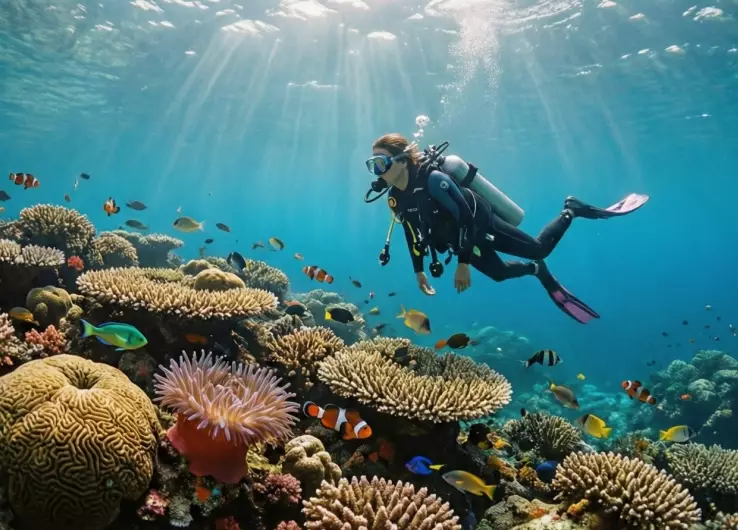
But "recreational scuba" isn't monolithic. Your experience changes drastically based on location and goal.
A common mistake I see: New divers get their Open Water certification in a local quarry or murky lake and think that's what all diving is like. They get discouraged. The truth is, your first ocean dive on a vibrant reef is a completely different universe. If your initial experience was bland, try a warm-water tropical dive before you judge the sport.
What You Actually Do on a Recreational Dive
You're not just swimming around. A typical reef dive involves:
- Planning: Briefing with a guide on depth, time, route, and notable wildlife ("look for the octopus under the coral head at 15 meters").
- Descent: Following a mooring line or doing a giant stride entry from a boat.
- Exploration: Moving slowly, practicing buoyancy control to avoid touching anything. You might follow a guide who points out hidden creatures.
- Monitoring: Constantly checking your air gauge, depth, and no-decompression time on your computer.
- Ascent: A slow, controlled rise with a safety stop at 5 meters for 3 minutes to off-gas nitrogen.
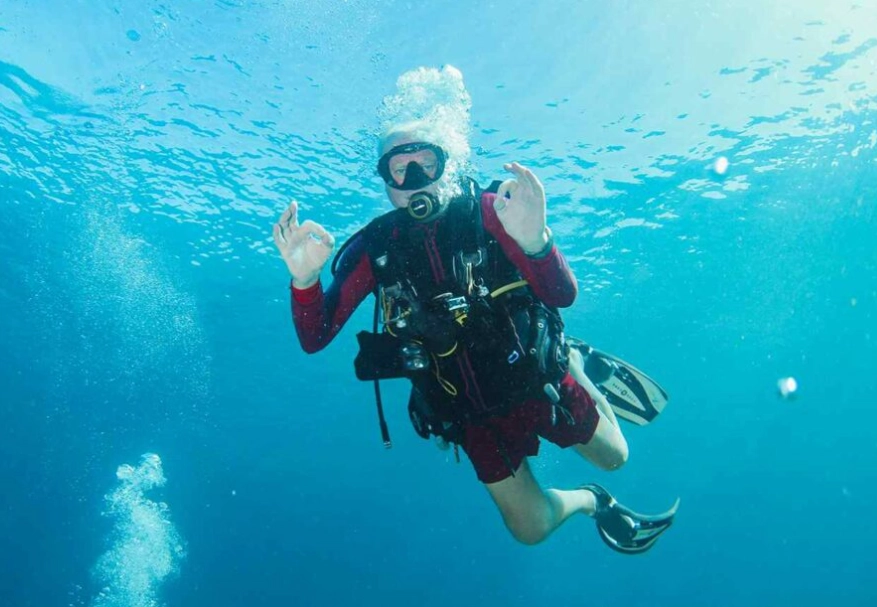
Popular destinations for this include the Great Barrier Reef, Thailand's Similan Islands, the Red Sea, and the Cenotes of Mexico (which is a unique form of cavern diving, often considered a bridge to technical diving).
Specialty & Niche Scuba Types
Once you're hooked on recreational diving, specialties allow you to tailor your skills. These aren't separate "types" per se, but focused applications of scuba.
Wreck Diving: My personal favorite. It's not about just seeing a wreck; it's about understanding its story. There's a huge difference between a non-penetration dive (swimming over and around) and a penetration dive (going inside), which requires advanced training in lines, reels, and managing silt-outs. Famous sites: SS Yongala (Australia), USS Liberty (Bali).
Drift Diving: Let the current carry you. It's effortless flying. You cover large distances, often seeing pelagic life. Key skill: staying close to your buddy and group, and a clear pickup plan with the boat. Done right, it's exhilarating. Done poorly, you get separated.
Night Diving: The reef transforms. Parrotfish sleep in mucus cocoons, lobsters march about, and your torchlight brings out colors you don't see in daylight. It feels more intimate. A pro tip: get a light with a wide beam for general vision and a narrow focus beam for pointing at things.
Underwater Photography/Videography: This becomes its own kind of diving. You're focused on composition, lighting, and staying incredibly still. Your buoyancy control has to be perfect. It's less about covering ground and more about patience. I started with a GoPro and now use a housed mirrorless camera—it's a deep (and expensive) rabbit hole.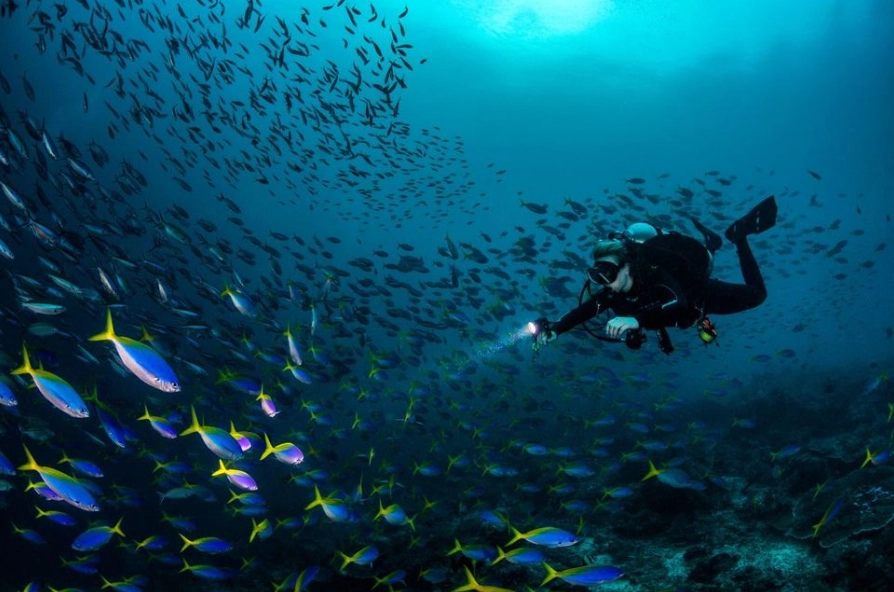
Freediving: The Art of Breath-Hold
Freediving is often misunderstood as just "diving without tanks." It's a discipline combining mental focus, relaxation techniques, and specific physical training. The goal isn't always depth; it can be about underwater hunting (spearfishing), synchronized swimming routines, or simply the meditative feeling of being one with the water.
The most accessible form is recreational apnea, where you learn proper breathing (not hyperventilation!), equalization techniques, and safety with a buddy. Organizations like AIDA and Molchanovs offer structured courses.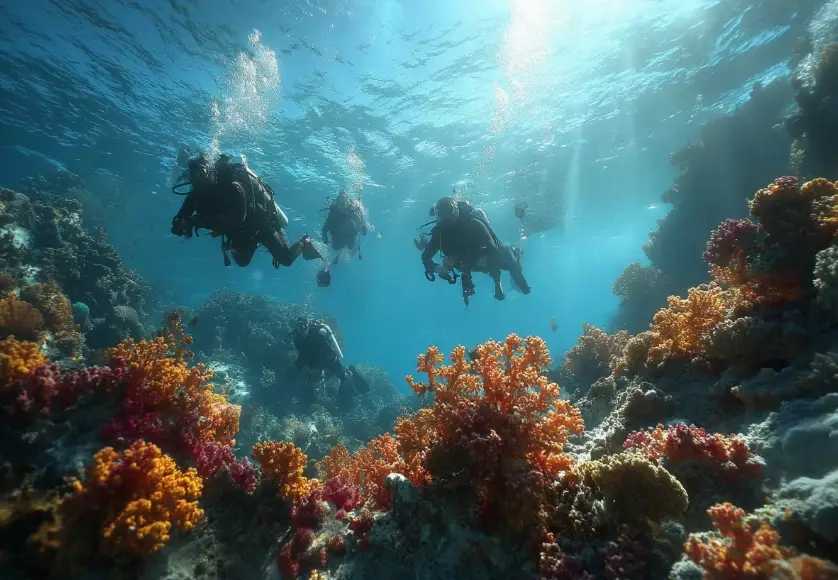
My freediving revelation: When I first tried it, I fought the water. I kicked hard, held my breath tightly, and my dive lasted 30 seconds. My instructor taught me to relax every muscle, to move slowly, to embrace the urge to breathe. Suddenly, a minute passed effortlessly. The silence is profound. It's the most connected I've ever felt to the ocean.
Spearfishing is a major sub-discipline. It's selective, sustainable harvesting when done ethically. It requires not just freediving skills but also knowledge of fish species, regulations, and humane techniques.
Snorkeling: Surface-Based Exploration
Never underestimate a good snorkel trip. In places with shallow, clear reefs—like Hanauma Bay in Hawaii, parts of the Maldives, or the Great Barrier Reef's outer edges—you can see 80% of what a scuba diver sees at 10 meters. It's affordable, requires no certification, and is perfect for families.
The key to great snorkeling is location and conditions. Calm, clear water with a reef starting just below the surface is ideal. A common pitfall is using cheap, leaky masks. Investing $50 in a properly fitted mask and a dry-top snorkel transforms the experience.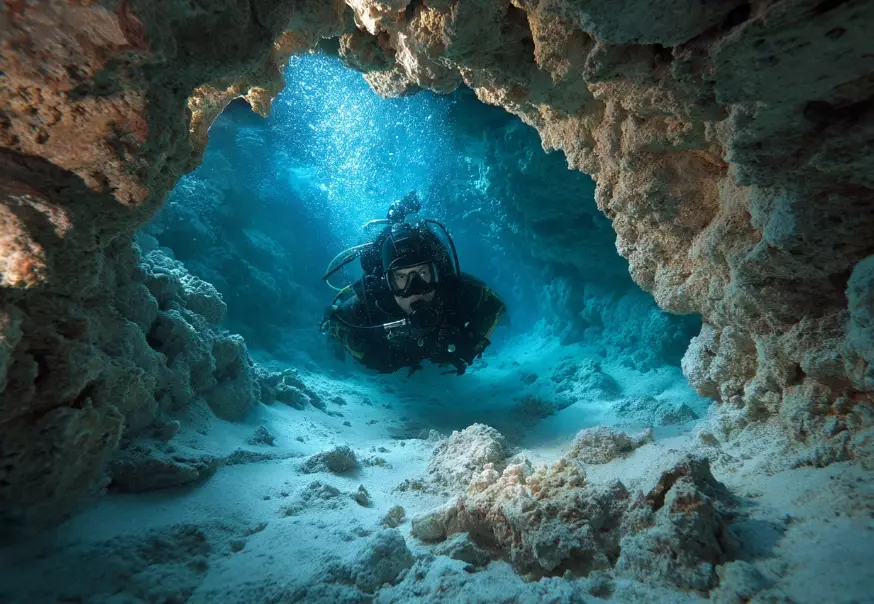
The Professional Diving World
Beyond recreation lies the vast world of professional diving. This answers the "how many types" question with a resounding "many more."
- Technical Diving: This pushes beyond recreational limits. It involves mixed gases (like Trimix, Nitrox), multiple tanks, staged decompression, and exploring deep wrecks or caves. It's for the highly trained, methodical, and risk-aware. It's not about adrenaline; it's about meticulous planning and execution.
- Commercial Diving: This is work. Underwater welding, construction, salvage, offshore oil rig maintenance. It often uses surface-supplied air (an umbilical from the surface) and communication systems.
- Scientific Diving: Marine biologists, archaeologists, and geologists use scuba as a tool for research—surveying coral health, excavating sites, or collecting samples.
- Public Safety Diving: Performed by police and fire departments for recovery and evidence searches. Often in zero-visibility, dangerous conditions.
How to Choose Your Diving Path
So, with all these options, where do you start? Ask yourself:
- Budget: Scuba has higher startup costs (certification, gear). Snorkeling is cheapest. Freediving is in between.
- Comfort in Water: If you're uneasy, start with snorkeling in a pool. Scuba courses begin in confined water for a reason.
- Travel vs. Local: Do you live near the coast? If not, scuba becomes a travel-based activity.
- Your Personality: Are you a tech-geek who loves gear and planning (leaning towards scuba/tech)? Or a minimalist seeking a pure physical challenge (leaning towards freediving)?
My universal advice: Try a Discover Scuba Diving (DSD) experience and a introductory freediving session in a pool. They're one-day tasters. See which sensation resonates with you. The feeling of breathing underwater versus the feeling of flying down on a single breath are fundamentally different joys.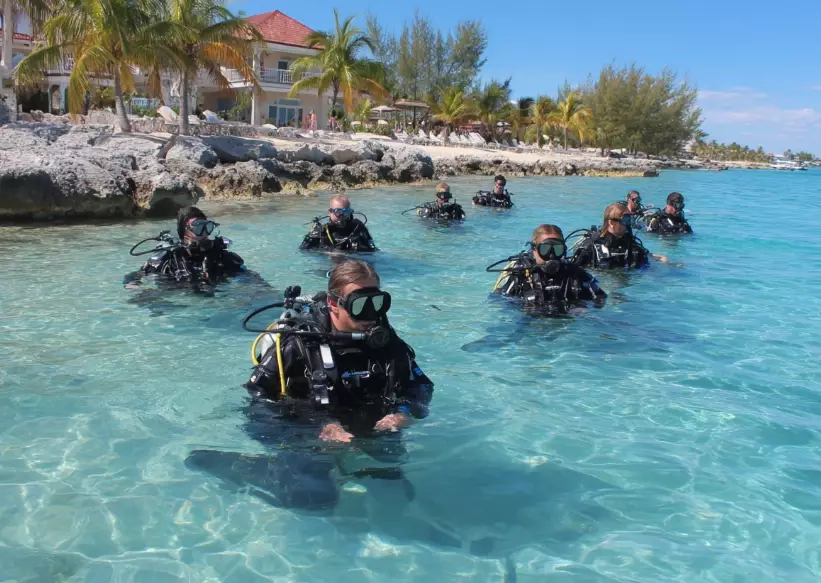


Comments