If you've ever wondered how dives are classified, you're not alone. The underwater world isn't just one uniform experience—it's a spectrum of adventures, each with its own rules, gear, and mindset. Getting this classification right isn't about memorizing textbook definitions. It's about safety, planning, and unlocking the right experience for your skills. A misclassified dive can range from boring to outright dangerous.
I learned this the hard way early on. I signed up for what was billed as a "simple reef dive" in low visibility. My brain, tuned for a relaxed recreational dive, wasn't prepared for the navigation challenge. That murky dive felt more like a technical mission, and it taught me that the labels matter. They dictate your preparation, your gear checks, and your mental script for the day.
Your Quick Dive Guide
How Are Dives Classified? The Two Main Categories
At the highest level, dives are split into two families: Recreational and Technical. This isn't a value judgment—one isn't "better" than the other. It's a fundamental safety boundary defined by decompression obligations and gas supply.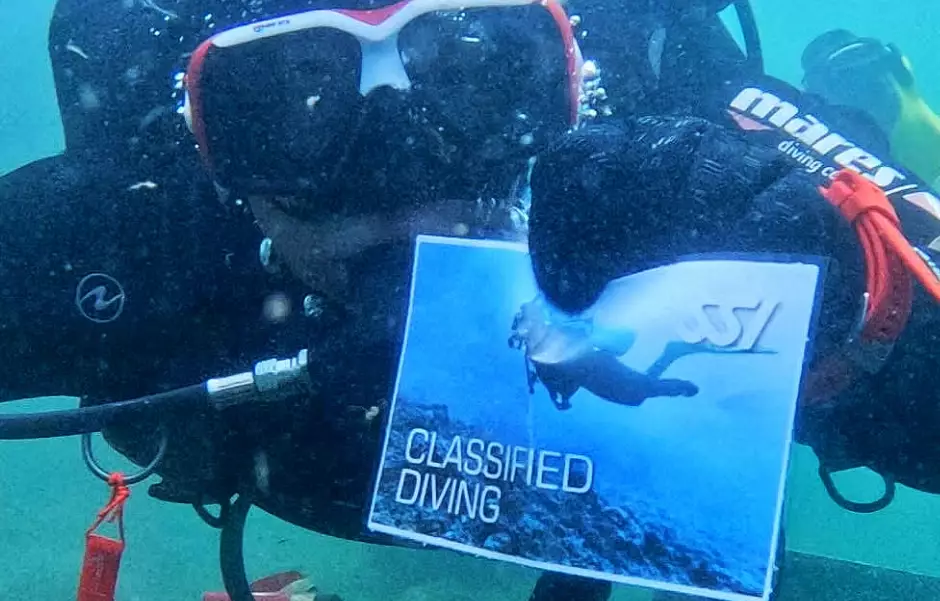
Recreational diving operates under one golden rule: you must be able to make a direct, uninterrupted ascent to the surface at any point during the dive. This means you stay within no-decompression limits (NDLs) and use a single gas—air or enriched air nitrox (up to 40% oxygen). The depth limit for most recreational agencies is 40 meters (130 feet), but the sensible sweet spot for fun and safety is 18-30 meters.
Technical diving intentionally crosses that line. Tech dives plan for staged decompression stops, use multiple gas mixes (like trimix—a blend of oxygen, nitrogen, and helium), and often exceed recreational depth limits. The equipment becomes more complex, the planning is meticulous, and the training is extensive. The Professional Association of Diving Instructors (PADI) and Technical Diving International (TDI) have clear standards separating these worlds.
Recreational Diving: Exploring Accessible Underwater Worlds
This is where 95% of divers live. Recreational diving is classified further by environment, purpose, and specific techniques. Let's break down the common types you'll book on vacation or at your local dive shop.
Shore Dive vs. Boat Dive
This is a logistical classification. Shore dives start from land. Think walking into the water from a beach in Bonaire or climbing down a ladder in Cornwall. They're often cheaper and let you set your own pace, but can involve a long surface swim. Boat dives get you to sites further offshore, like reefs, walls, or wrecks inaccessible from land. The type of boat—from a simple inflatable to a liveaboard—further defines the experience.
Day Dive vs. Night Dive
A night dive transforms a familiar site. Nocturnal creatures emerge, and your focus shrinks to the beam of your torch. It's classified separately because the procedures, skills (like light signals), and potential hazards (disorientation) are distinct. Most operators require a dedicated night diving specialty certification or proof of experience.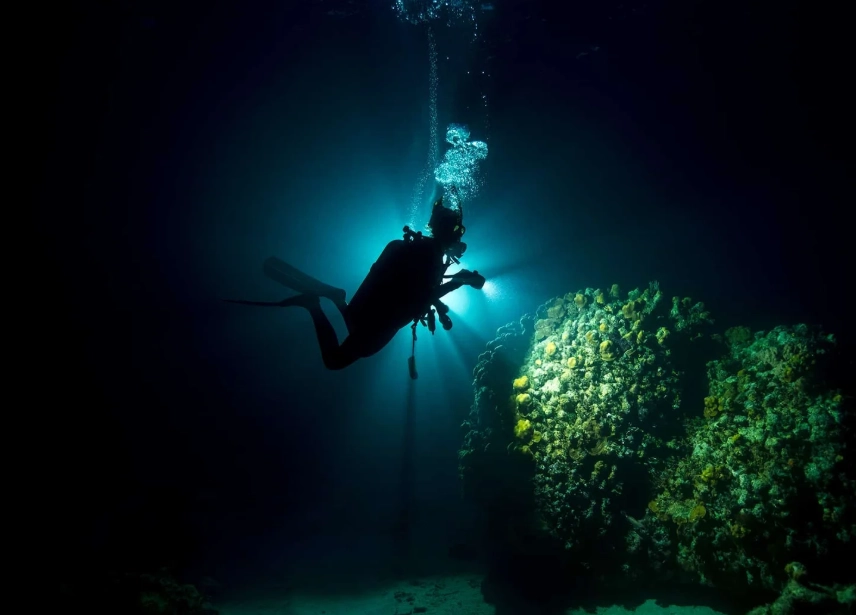
Single Tank vs. Twin Tank (or Sidemount)
The standard is a single tank on your back. For longer dives or as a safety redundancy, divers might use a twin set (two tanks manifolded together) or sidemount configuration (two independent tanks slung at the sides). While twins/sidemount are tech staples, they're increasingly used recreationally for extended no-deco bottom times at moderate depths.
The Common Recreational Dive Types in Practice
- Wreck Diving (Penetration vs. Non-penetration): Swimming around a sunken ship is recreational. Swimming inside it is a separate classification. Penetration requires overhead environment training, lines, and specific protocols. Never follow someone into a wreck without this training.
- Drift Diving: The boat drops you in a current, you fly along, and picks you up downstream. Easy on air consumption, heavy on situational awareness.
- Wall Diving: Diving along a near-vertical reef or drop-off. Depth control is critical, as it's easy to drift deeper while mesmerized by the abyss.
- Muck Diving: Popular in places like Lembeh Strait. You hover over barren-looking sand or silt to find tiny, weird critters. It's about buoyancy control to avoid stirring up sediment.
Technical Diving: Pushing the Boundaries with Precision
Tech diving isn't just "deeper recreational diving." It's a different philosophy. Dives are classified by their precise parameters, which are planned and often simulated in software beforehand.
Key Parameters for Classification
Tech divers classify a dive by its maximum operating depth (MOD) for each gas mix, the decompression schedule (total deco time), and the gas logistics (what you breathe, when, and where it's staged). A dive to 60 meters on air is reckless. A dive to 60 meters on a 18/35 trimix (18% O2, 35% He) with 20 minutes of decompression is a planned technical dive.
Major Technical Dive Types
- Decompression Diving: Any dive that cannot make a direct ascent to the surface. The deco obligation might be 5 minutes or 5 hours.
- Deep Diving (beyond 40m): Requires gas mixes to combat nitrogen narcosis and oxygen toxicity.
- Cave Diving: The gold standard of overhead environment diving. Classified by distance from the entrance (e.g., "full cave" vs. "intro to cave"), and follows the strict "rule of thirds" for gas management.
- Wreck Penetration (Technical): Going beyond the "light zone" of a wreck, involving multiple rooms or complex layouts.
- Mixed-Gas Diving: Using blends other than air or standard nitrox, primarily trimix or heliox.
| Dive Type | Typical Depth Range | Key Equipment | Primary Purpose / Mindset |
|---|---|---|---|
| Recreational Reef Dive | 5-25 meters | Single tank, BCD, computer | Sightseeing, relaxation, photography |
| Wreck Dive (Non-penetration) | 10-35 meters | As above, maybe a pointer | Historical exploration, marine life observation |
| Drift Dive | 10-30 meters | Surface marker buoy (SMB), reef hook | Effortless travel, covering large areas |
| Technical Decompression Dive | 40m+ | Twin tanks/sidemount, multiple deco gases, redundant computers | Mission-oriented, precise execution of a plan |
| Cave Dive (Intro Level) | Overhead environment | Primary & backup lights, guideline reels, harness | Exploration within strict safety limits (rule of thirds) |
Specialty & Purpose-Driven Dives
Some dives are classified by their goal, not just their depth or gas. The procedures change accordingly.
Search and Recovery Diving: You're looking for a lost object or planning to bring something up. This often involves underwater search patterns, lift bags, and extra focus on teamwork and communication.
Ice Diving: Conducted under a solid ice sheet. It's an overhead environment with unique risks (freezing regulators). A secured tether line to the surface is mandatory. It's incredibly quiet and surreal.
Scientific/Research Diving: Follows protocols set by institutions like the American Academy of Underwater Sciences (AAUS). Data collection is the priority—transects, photo quadrats, species counts. Efficiency and minimal environmental disturbance are key.
Public Safety Diving: Performed by law enforcement or rescue teams. Often in zero visibility, contaminated water, and around hazards. It's about procedure, not recreation.
How to Choose and Plan Your Dive Type
So how do you apply this? You don't just pick a type from a menu. You match your objective with your training, your buddies, and the conditions.
Start with your goal. Want to see a specific deep wreck? That points you toward technical training. Want to photograph nudibranchs? A calm, shallow muck dive is your target. Then, honestly assess your certification and recent experience. A PADI Open Water Diver is certified for dives to 18 meters in conditions similar to their training. That doesn't automatically qualify them for a 25-meter drift dive in strong current, even though it's technically within the recreational realm.
Talk to the dive operator. Describe your experience level and ask them to classify the dive they're offering. A good operator will say, "Tomorrow's dive is a recreational boat dive to 22 meters on a wall, with mild current. It's suitable for divers with at least 20 logged dives." A red flag is an operator who says, "It's just a dive, you'll be fine."
Finally, plan your gas. For a recreational no-deco dive, the rule is to surface with 50 bar/500 PSI. For a tech dive, you'll calculate your rock bottom gas based on the worst-case scenario. For a cave dive, you'll follow the rule of thirds: one third for the swim in, one third for the swim out, one third as a safety reserve.
Comments