That moment you sink beneath the surface and breathe for the first time on scuba is pure magic. But before you get there, you need to know what you're signing up for. The term "dive" isn't one-size-fits-all. As a beginner, choosing the right type of dive is the difference between a terrifying experience and the start of a lifelong passion. I've been teaching new divers for over a decade, and I still see the same confusion. Let's clear it up.
Forget complex technical jargon. Your entry into scuba boils down to four main pathways, each with a different purpose, environment, and commitment level. Think of this as your menu before ordering your underwater adventure.
Your Quick Dive Plan
Key Takeaway for New Divers: Your goal isn't to "go deep." Your goal is to build comfort and master basic skills in a controlled setting. The best beginner dives prioritize calm conditions, good visibility, and minimal currents over exotic locations. A 6-meter dive in a crystal-clear bay where you see a turtle is infinitely better than a rough, murky 18-meter dive.
1. The Training Ground: Pool/Confined Water Dive
This is where every certified diver starts, and for good reason. It's not a "real" dive in the ocean sense, but it's the most important one you'll ever do.
What It Really Is
A confined water dive happens in a swimming pool or a pool-like environment (think a very calm, shallow lagoon with a sandy bottom). The depth is usually between 2 to 5 meters. This is the practical skill component of the Open Water Diver course from agencies like PADI or SSI. You're not there to sightsee. You're there to learn how the equipment works, how your body feels underwater, and how to perform essential safety skills like clearing a flooded mask or sharing air with a buddy.
I tell my students this is the "driving lesson in the empty parking lot." Nobody learns to parallel park on a busy city street on their first try.
Who It's For & What to Expect
This is mandatory for anyone pursuing a full certification. You'll spend several sessions, often over 2-3 days, repeating skills until they become muscle memory. Expect to pay anywhere from $300 to $600 as part of your full Open Water course fee, which includes theory and open water dives. The cost varies massively by location.
Here's the insider tip most blogs don't mention: Your comfort in the pool is the single biggest predictor of your comfort in the ocean. If you struggle to hover neutrally buoyant in 3 meters of pool water, the open ocean will feel overwhelming. Don't rush through this phase. Ask your instructor to repeat skills if you need to. A good instructor will never make you feel bad for needing more time.
2. The Test Drive: Discover Scuba Diving
This is the most popular entry point for curious vacationers. You'll see it offered at every tropical resort from Mexico to Thailand.
The Resort Dive Experience
A Discover Scuba Diving (DSD) program, often called a "resort course" or "try dive," is a supervised introduction. It typically includes a brief theory session, gear fitting, practice in shallow water (pool or very calm sea), and then one or two actual ocean dives to a maximum depth of 12 meters. An instructor is with you the entire time, literally holding your hand if needed.
The big sell is that no prior experience or lengthy course is required. You can often go from your beach towel to seeing fish on a reef in under 3 hours.
The Fine Print Every Beginner Should Know
The quality of these programs varies wildly. A great one in the Maldives with a 1:2 instructor-to-student ratio is a dream. A chaotic one with one instructor herding eight nervous beginners can be a nightmare.
Cost: Usually between $100-$150 USD for the experience, often including photos. It's not cheap, but it's a packaged experience.
The Critical Question to Ask: "What is your student-to-instructor ratio?" If they say more than 4:1, consider looking elsewhere. Also, ask where the confined water training is done. A proper pool is ideal. Doing it in the ocean with small waves can make learning basic skills unnecessarily difficult.
One more thing—if you love it, the DSD often counts as the first dive of your Open Water course, saving you time and money if you decide to get certified later.
3. The Walk-In: Beginner Shore Dive
Once certified (or on the final dives of your course), your first real independent dives are often shore dives. This means you walk from the beach or a rocky entry point into the water, swim out on the surface, and then descend.
| Characteristic | Details for Beginners |
|---|---|
| Entry/Exit | Sandy beach, gentle slope. Avoid rocky, surge-prone entries. |
| Typical Depth | 5-12 meters. Perfect for practicing buoyancy. |
| Conditions | Calm seas, minimal current, good visibility (>10m). |
| Gear Handling | You carry and set up your own gear. A workout! |
| Cost (post-certification) | Tank rental: $10-$20. Guided shore dive: $50-$80. |
Shore dives teach you self-reliance. You learn to manage your gear, navigate using natural landmarks (that big coral head, the sand channel), and conserve air because you have to swim back. It's foundational.
A common beginner mistake on shore dives? Overweighting. New divers often ask for too much lead weight, thinking it will help them sink. It does, but then they fight to stay off the bottom, burn through air, and have a miserable time. A proper buoyancy check at the surface is non-negotiable.
Great beginner shore dive locations include House Reef at Sunset Beach in Bonaire (an easy sandy entry), many spots in Sharm El-Sheikh's Naama Bay, or the protected bays of Roatan, Honduras.
4. The Express Lane: Beginner Boat Dive
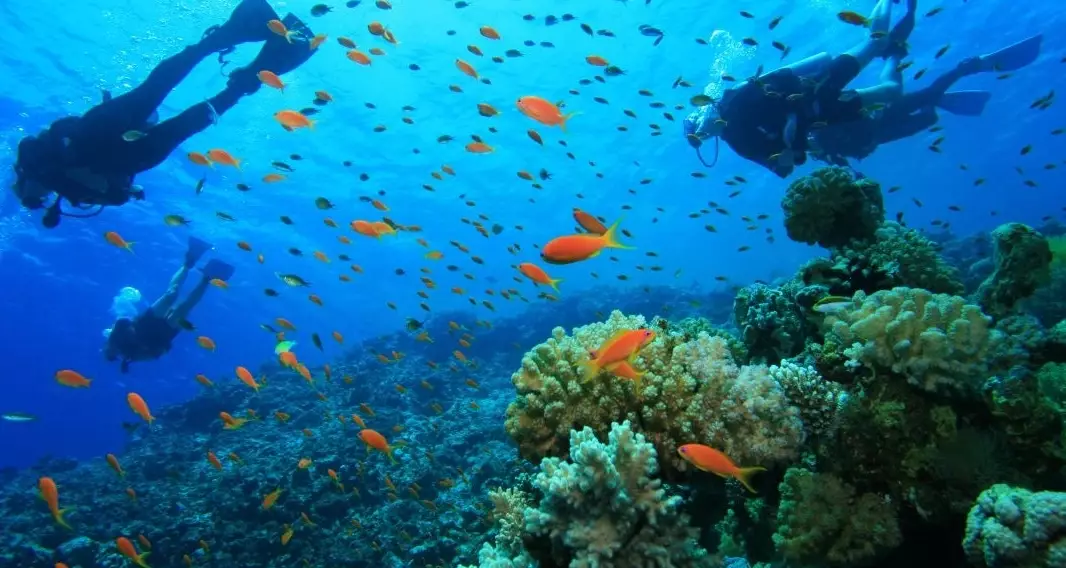
This feels like the "real" diving you see in brochures. You ride a boat to a dive site, often a more pristine reef further from shore.
Boat Diving 101 for Newbies
For a newly certified diver, a dedicated beginner boat dive is a game-changer. The boat does the hard work of getting you to the good stuff. You're usually diving in a small group led by a divemaster, following a guide who knows the site.
The procedures can be intimidating at first: gear setup on a moving deck, the "giant stride" entry, managing your surface swim back to the boat's ladder. Listen carefully to the briefing. Everyone was new once, and crews are used to it.
Choosing Your First Boat Dive
Don't book the "Advanced Wall Dive" or "Shark Encounter." Look for boat trips labeled explicitly for beginners, novices, or easy reefs. Names like "Gardens," "Paradise Reef," or "Sunset Cruise" are good clues. Depths should be 12-18 meters max.
Cost: More expensive than shore diving. A two-tank beginner boat dive typically ranges from $80-$150 USD, including tanks, weights, and sometimes snacks.
My personal advice? Take seasickness medication preventatively if you have any doubt. Nothing ruins a beautiful dive like being nauseous on the surface interval. I learned this the hard way on my first boat dive in rough seas off Bali.
Also, boat dives often have less swimming because you descend directly onto the site. This can mean longer bottom time to just relax and look at the marine life—the whole point!
Your Beginner Dive Questions Answered
I'm not sure I want to get certified. Is the pool dive worth it on its own?
Absolutely. Think of it as a self-contained workshop. Even if you never dive again, you've learned a unique skill in a controlled, safe environment. Many dive centers offer "Scuba Experience" programs that are just the pool session. It's a low-cost, low-commitment way to see if you enjoy the sensation of breathing underwater without the pressure (pun intended) of the open ocean.
If I do a Discover Scuba Diving and love it, can I just keep doing those instead of getting certified?
Technically, yes, but it's a poor long-term strategy. DSD programs are designed as introductions. You are always under the direct, one-on-one supervision of an instructor, which limits your freedom and is more expensive per dive. Certification (Open Water Diver) is your driver's license for the underwater world. It's cheaper per dive, allows you to dive with a buddy without an instructor, rent gear, and go on boat dives. The DSD is a great sampler; certification is the full meal deal.
As a new certified diver, should I choose shore dives or boat dives first?
Start with 3-5 guided shore dives. I'm serious. Shore dives force you to be more aware of your air consumption, navigation, and energy levels because you have to swim back. They build core diving fitness and confidence without the added variables of boat procedures. Once you're comfortable managing your gear and buoyancy on a simple shore dive, a boat dive becomes a relaxing reward, not a stressful event.
What's the one piece of advice you give every beginner that most ignore?
Slow down. Your breathing rate is your dashboard. New divers often fin furiously and breathe like they're running a marathon, which kills their air supply and clouds their mask from exertion. My mantra is: "Move like you're in zero gravity, not like you're swimming a race." Take a moment at the start of the dive to just float, breathe slowly, and look around. Calm your mind, and your body will follow. This simple act doubles your enjoyment and halves your air consumption.
The path underwater starts with a single breath. Whether it's in a chlorinated pool or the warm ocean, the type of dive you choose sets the tone. Skip the ego, embrace the learning curve, and pick the experience that matches where you are right now—not where you think you should be. The reefs aren't going anywhere. Building a solid foundation of skills and comfort is what turns a one-time adventure into a lifetime of exploration.
See you down there.

Comments