If you've ever watched a swimming lesson or a beginner diving competition, you've almost certainly seen a jackknife dive. It's that classic, clean-looking dive where the body folds sharply at the hips in mid-air, legs straight, hands reaching for pointed toes, before straightening out to enter the water headfirst. But calling it just a "beginner dive" sells it short. The jackknife, officially known in competitive circles as the forward dive pike, is a foundational skill. Mastering it builds the body awareness, control, and entry technique that every single more advanced dive depends on. Get this one wrong, and you'll struggle with everything that comes after.
Let's clear up a common point of confusion right away. "Jackknife" is the common, colloquial name. In the formal language of competitive diving, as governed by the International Swimming Federation (FINA), this dive is categorized as a forward dive in the pike position. The term "pike" refers specifically to that sharp bend at the hips with straight legs. So when you search for techniques or rules, knowing both terms is key.
What You'll Learn in This Guide
What Exactly is a Jackknife Dive?
At its core, the jackknife dive is a forward take-off from a springboard or poolside, where the diver performs a single, distinct pike in the air before straightening the body for a vertical entry. The visual is unmistakable: a human body mimicking the closing action of a pocket knife. But there's more to it than just the shape.
The dive's primary purpose in training is to teach mid-air body control and a clean, splashless entry. It breaks down the complex motion of diving into manageable phases: the hurdle (the jump on the springboard), the flight, the pike manipulation, and the entry. It's often one of the first dives taught after basic head-first entries because it introduces the concept of changing body position in flight.
In competition, the forward dive pike (number 101B in the FINA diving code) is a required dive in many novice and junior events. Judges look for a tight pike (minimal gap between torso and legs), pointed toes, a controlled opening, and a vertical entry with minimal splash. A perfectly executed jackknife, even though it's a "simple" dive, scores high on grace and technical precision.
How to Perform a Jackknife Dive Correctly
Let's break it down step-by-step. I've taught this to hundreds of new divers, and the ones who succeed focus on one phase at a time before putting it all together.
The Starting Position and Hurdle
Stand at the end of the board or poolside, body tall and straight, arms relaxed by your sides or extended overhead. Your focus should be on the entry point in the water, not your feet. The approach and hurdle (the jump on the springboard) generate the all-important lift. A weak, timid hurdle means you'll have no time to pike. You need a strong, confident jump upwards, not just outwards. As you leave the board, your body should be straight and stretched, reaching for the sky.
The Take-Off and Initial Flight
This is the moment of truth. As you reach the peak of your jump, initiate the pike. Don't throw your head down—this is a classic error that causes over-rotation. Instead, think about bringing your hips to your hands. Your arms should sweep down and forward in a smooth, powerful motion to meet your legs. Your core muscles do the work of folding you in half. Your legs must stay perfectly straight, knees locked, toes pointed. A bent knee instantly makes it a failed dive in judges' eyes.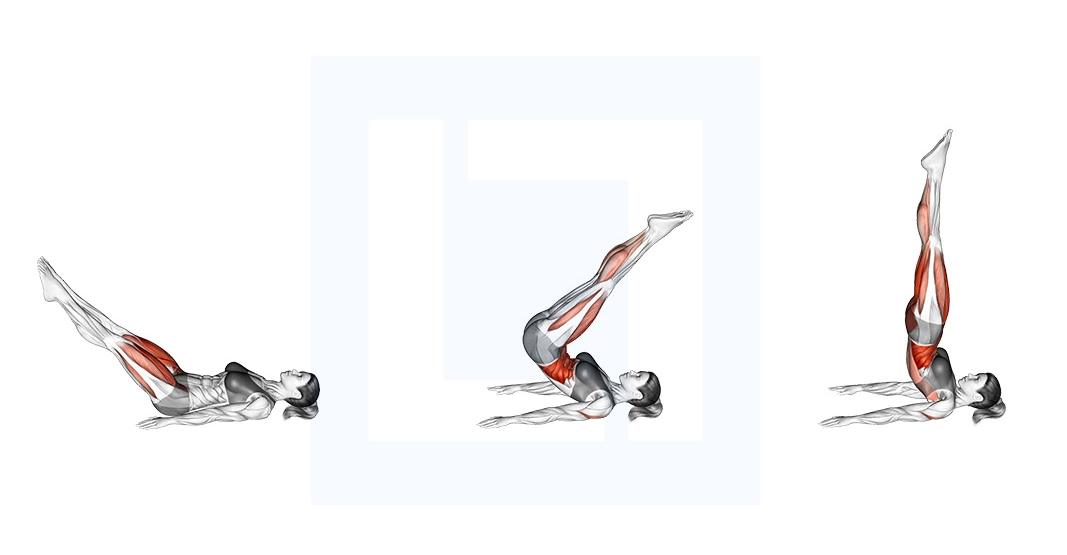
The Pike and Opening
Hold the pike position for a split second. It's not a long pause, but a definite, controlled shape. You should see your toes. The tighter the pike (the smaller the angle between your torso and legs), the better. Then, to prepare for entry, you must open up. This is where many people panic. They either open too late and land on their back, or open too early and lose the shape. The opening is a controlled unwinding: you throw your arms forward and upward in the direction you want your body to go (towards the water), while simultaneously driving your legs and hips down and back to straighten the body line.
The Entry
The goal is a "rip" entry—the sound of the water being parted cleanly, not a "smack." Your body should be straight, rigid, and perfectly vertical. Arms are extended overhead, locked tight against the ears, hands together forming a single point to pierce the surface. You enter through a "hole" your hands make. A common mental trick is to imagine reaching for the bottom of the pool to keep your body straight as you submerge.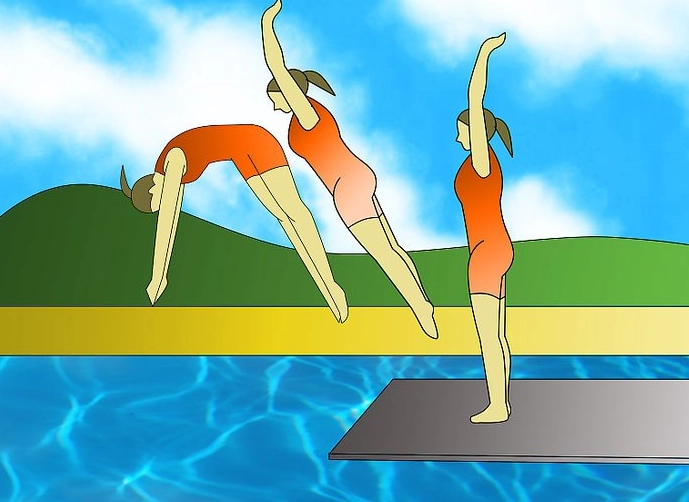
Common Mistakes and How to Fix Them
Here's where my decade of coaching gives you an edge. Most articles list "belly flop" as the main mistake. That's too vague. Let's get specific about why belly flops and other errors happen.
| The Mistake | What's Really Happening | The Expert Fix |
|---|---|---|
| The "Banana" Back Arch on Entry | You're opening from the pike too late or with insufficient force. Your legs are still coming up as your upper body goes down, creating a curved back. This almost guarantees a painful, flat back slap. | Initiate the opening earlier than you think you need to. Practice the opening motion on dry land, focusing on a powerful, simultaneous arm throw and leg drive. Think "stretch long" not "bend." |
| Knees Bent in the Pike | Lack of leg strength or focus. Divers often bend knees trying to get their hands closer to their feet, thinking it makes the pike tighter. It does the opposite—it ruins the line. | Forget touching your toes for now. Focus on keeping legs like steel rods. Practice pike sits on the ground: sit with legs straight, back straight, and reach forward. That feeling of a flat back and straight legs is the target. |
| Over-rotation (Going Past Vertical) | You're throwing your head and shoulders down too aggressively on take-off. This creates too much forward momentum, spinning you past the vertical entry point. | Your take-off must be upward. Spot your entry point as you jump. Initiate the pike by hinging at the hips, not diving headfirst. Imagine a ceiling above you that you're trying to avoid. |
| The "Loosey-Goosey" Entry | Arms are apart, body is relaxed, and you "mush" into the water. This creates a huge, embarrassing splash even if you're roughly vertical. | Tension is your friend. Squeeze every muscle from fingertips to toes the moment before entry. Lock those biceps to your ears. Practice pencil jumps into the pool, focusing on a tight, splash-free entry. |
One subtle error I rarely see mentioned: looking at the board as you leave it. Your head position dictates your spine's alignment. If you look down at the board, your shoulders follow, and you're doomed to over-rotate. Keep your eyes on the horizon or your target entry spot from start to finish.
Jackknife Dive vs. Other Forward Dives
It's easy to mix them up. Here’s the quick family tree of basic forward dives.
Forward Dive Straight (101A): The simpler sibling. The body remains completely straight from take-off to entry, with no pike or tuck. It teaches basic flight and entry but doesn't involve mid-air shape changes.
Forward Dive Pike (101B) - The Jackknife: As discussed, the body is straight, then folds sharply at the hips (pike), then straightens again.
Forward Dive Tuck (101C): Often confused with the pike by beginners. In a tuck, the knees are pulled to the chest, and the body is curled into a tight ball. It's a faster rotation than a pike. The jackknife requires straight legs; the tuck is all about bent knees.
Mastering the jackknife pike is a prerequisite for moving on to forward dives with somersaults (like 102B, forward 1 somersault pike), because the piking motion is the same—just faster and more aggressive.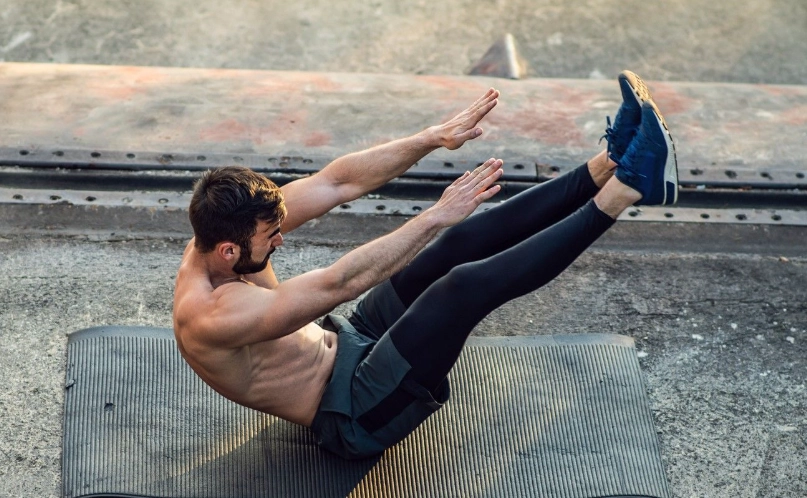
Taking Your Jackknife Dive Further
Once you can consistently perform a clean jackknife from the poolside or a 1-meter springboard, what's next?
Add Height: Move to the 3-meter springboard. The extra height is psychologically challenging but gives you more time to set your pike and opening. The technique is identical, but the timing feels different.
Add Approach: The competitive forward dive pike uses a three-step approach followed by a hurdle on the springboard. This generates more power and lift, allowing for a higher, more dramatic pike. Learning the rhythm of the approach—step, step, hurdle—is a skill in itself.
Refine for Competition: Work on the finer points: the height of the hurdle, the sharpness of the pike (can you get your nose to your shins?), the stillness of the head, and the absolute verticality of the entry. Video analysis is invaluable here. What you feel you're doing and what you're actually doing are often two different things.
Remember, the FINA rulebook is the bible for competitive details. While the core skill is athletic, the scoring is deeply technical.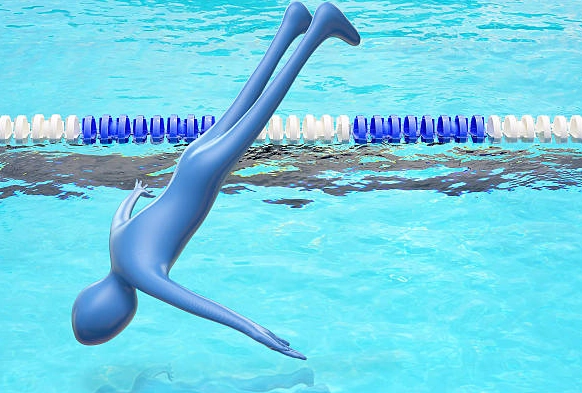
Your Jackknife Dive Questions Answered
I always seem to land on my back or upper back when trying a jackknife. What am I doing wrong?
You're almost certainly opening from the pike too late. Your body is still folded when it hits the water. The fix is to initiate the opening motion the instant your hands touch or pass your toes in the pike. Don't wait to see the water. It will feel like you're opening too early for a while. Practice on land: jump, simulate a quick pike, and immediately throw your arms forward to the "entry" position. That timing needs to become muscle memory.
How can I get a tighter pike? I can't seem to bring my legs close to my torso.
First, ensure you're jumping up enough. A low jump gives you no time. Second, it's less about flexibility and more about technique. You need explosive core engagement. Think of it as a crunch in mid-air. Practice dryland drills like standing pike jumps: jump straight up and try to slap your shins at the peak. Also, improve your active flexibility with exercises like leg lifts and v-sits. A tight pike comes from strength, not just passive stretching.
Is the jackknife dive dangerous for beginners?
Any dive carries risk if done improperly in shallow water or without supervision. The jackknife itself is a controlled, relatively slow-rotating dive and is considered foundational for safety because it teaches controlled entry. The primary danger is the belly or back flop from incorrect technique, which can sting. Always learn in deep water (at least 9-10 feet for adults) under the guidance of a certified instructor. The real danger is attempting more advanced dives without first mastering the body control the jackknife teaches.
Why do my legs always separate or knees bend during the dive?
This is a focus and tension issue. You're likely so focused on the piking motion that you forget about your legs. A mental cue I use with students is "glue your knees together and point your toes to the sky during the pike." Consciously think about maintaining leg tension from the moment you leave the board until you enter the water. Dryland practice holding a pike position on the ground while someone gently tries to pull your legs apart can build the right muscle awareness.
Can I learn a jackknife dive as an adult with no prior diving experience?
Absolutely. I've taught plenty of adults. The process is the same, but adults often have more initial fear and stiffness. Start in the water, practicing streamlined, head-first jumps from the side to get comfortable with the entry. Then practice the piking motion while standing in chest-deep water: jump up, pull into a pike, and land on your feet. This removes the fear of entry. Progress to a seated pike dive off the side, then a crouching dive, and finally the full standing dive. Be patient with yourself; adult learners often understand the mechanics faster but need time to overcome instinctual fears.

Comments