Watching a diver launch from the springboard, twist through the air, and slice into the water with barely a ripple is one of the most mesmerizing sights in sports. If you've ever tried to replicate that, you know it's not as easy as it looks. The first step to understanding this athletic art form is knowing the basic building blocks. In competitive swimming and diving, dives are categorized into six distinct groups. This isn't just technical jargon; it's the language of the sport, defining everything from a simple beginner's jump to an Olympian's most complex routine.
I remember coaching a young swimmer who could do a beautiful forward dive but would panic at the thought of going backwards. That's a common hurdle. Breaking down the types of dives demystifies the process. It's not magic; it's mechanics, body control, and courage, all built on a clear classification system.
Your Dive Guide at a Glance
The Six Core Groups of Competitive Dives
Every single dive performed in a FINA (now World Aquatics) sanctioned competition belongs to one of these six groups. The group is determined by the diver's starting position and the direction of rotation.
| Dive Group | Starting Position | Rotation Direction | Common Name Example | Approx. DD Range (Beginner to Elite) |
|---|---|---|---|---|
| Forward Group (Group 1) | Facing the water | Forward | Front Dive | 1.2 - 3.7 |
| Backward Group (Group 2) | Back to the water | Backward | Back Dive | |
| Reverse Group (Group 3) | Facing the water | Backward | Reverse Dive | 1.6 - 3.6 |
| Inward Group (Group 4) | Back to the water | Forward | Inward Dive | 1.5 - 3.5 |
| Twist Group (Group 5) | Any | Includes a lateral twist | Forward 1½ Somersault with 1 Twist | 1.8 - 3.9 |
| Armstand Group (Group 6) - Platform only |
The Degree of Difficulty (DD) is a pre-assigned number that reflects how hard a dive is. Judges' scores are multiplied by the DD. A perfectly executed hard dive beats a perfectly executed easy one. That number in the table? It's the secret currency of diving.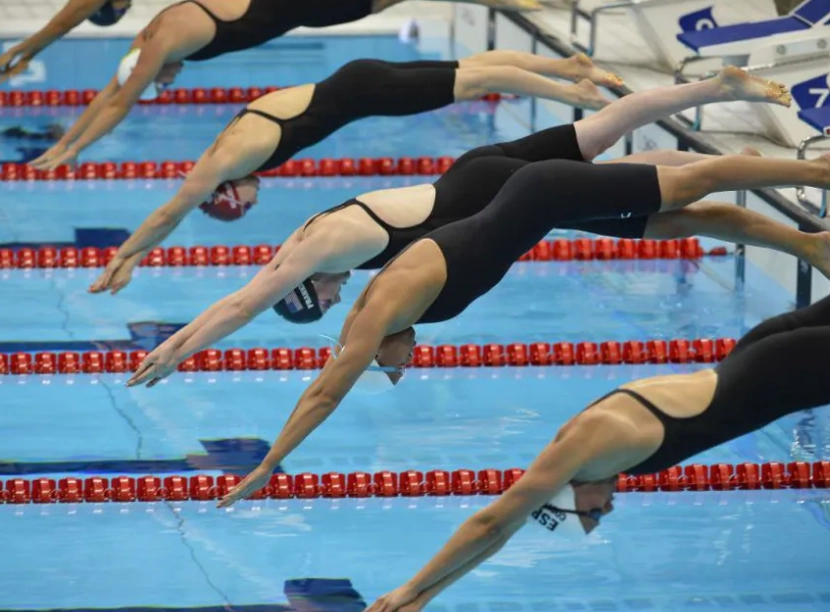
Why the Reverse Dive Feels So Counterintuitive
Groups 3 and 4 confuse most newcomers. Here's the trick: the group name describes the starting position, not the rotation. A Reverse Dive (Group 3) starts facing the water (like a forward dive) but then rotates backwards toward the board. It feels like you're diving back onto the concrete, which is why it requires serious trust in your take-off height. An Inward Dive (Group 4) starts with your back to the water (like a back dive) but you rotate forward toward the water. These dives are often where form breaks down because the visual cues are opposite to the body's momentum.
The Three Body Positions: Straight, Pike, Tuck
Within each of the six groups, a dive can be performed in one of four body positions. This is the second layer of the dive's code.
- Straight (A): No bend at the hips or knees. It looks the simplest but is deceptively hard. It requires immense core strength to maintain rigidity. A tiny knee bend can cause a huge splash.
- Pike (B): Body bent at the hips, legs straight. Imagine touching your toes in mid-air. This position allows for faster rotation than straight.
- Tuck (C): Body compacted, knees pulled to chest, hands holding shins. The smallest shape, allowing the fastest rotation. Most multiple somersaults are done in tuck.
- Free (D): A combination used only in twisting dives. The diver uses any position to initiate the twist before assuming a straight position for entry.
Here's a piece of advice most beginners don't get: Don't rush into a tight tuck. A frantic, over-tight tuck can throw off your axis. A controlled, compact tuck initiated at the right moment is far more effective than grabbing your knees as hard as you can the second you leave the board.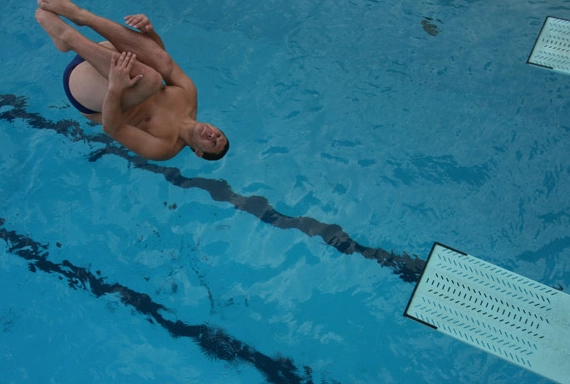
Cracking the Dive Number Code
Ever hear an announcer call "105B" or "305C"? That's the dive number. It's not random. It's a precise formula.
- First Digit: The dive group (1 through 6).
- Second & Third Digits: The number of half-somersaults. "05" means 2½ somersaults (5 half-rotations). "01" is a plain dive with no somersault.
- Letter: The body position (A, B, C, or D).
So, 105B breaks down as: Group 1 (Forward), 05 (2½ somersaults), B (Pike position). It's a Forward 2½ Somersault in Pike. 305C is: Group 3 (Reverse), 05 (2½ somersaults), C (Tuck position). A Reverse 2½ Somersault in Tuck.
For twists, a fourth digit is added before the letter to indicate half-twists. 5253B means: Group 5 (Twist), 2 somersaults (04 half-rotations), 3 half-twists, B (Pike). That's a Back 1 Somersault with 1½ Twists in Pike.
How to Choose Your First Dive (Beyond the Obvious)
Everyone says start with a front dive (101A). That's correct, but incomplete. The real key is mastering the entry. A sloppy, painful belly flop on a simple front dive teaches bad habits. Spend time on the pool deck practicing a tight, streamlined "finish" position—body straight, arms locked over ears, toes pointed. Then, from the side of the pool, practice falling into the water in that position, aiming to make the smallest hole possible.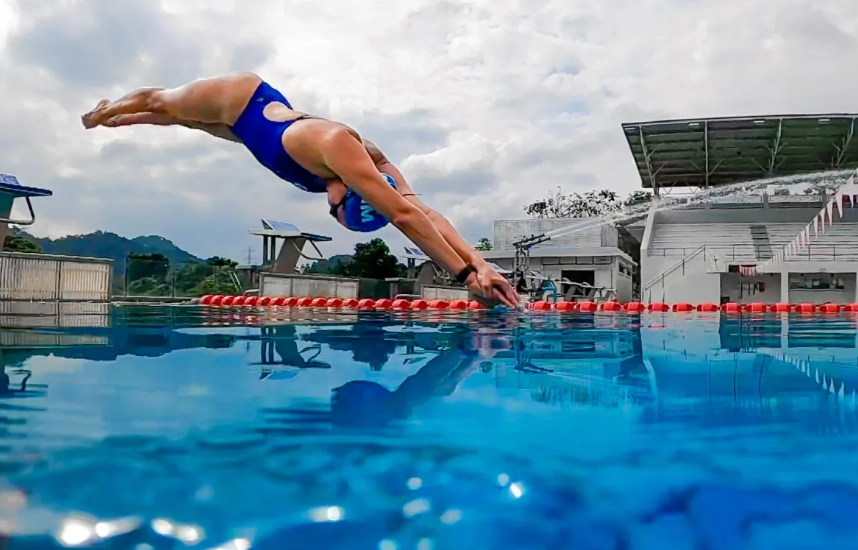
Your progression should look more like this:
- Front Jump (feet first), focusing on vertical entry.
- Kneeling Dive from the side of the pool.
- 101A - Front Dive Straight. The king of basics.
- 201A - Back Dive Straight. Conquering the fear of the unknown.
- 401A - Inward Dive Straight. Teaches you to generate rotation from a still, backward start.
Notice I didn't jump to somersaults. A clean, splash-less entry on a plain dive is worth more than a messy, over-rotated somersault.
Common Mistakes and How to Fix Them
The Over-rotated Forward Dive
The diver lands on their upper back with a painful, loud slap. Cause: Kicking the legs up too aggressively on take-off. Fix: Think "up and out," not "over." Your hurdle (the jump before the dive) should project you forward, not just upward. Drive your chest toward the far end of the pool, not down toward the water.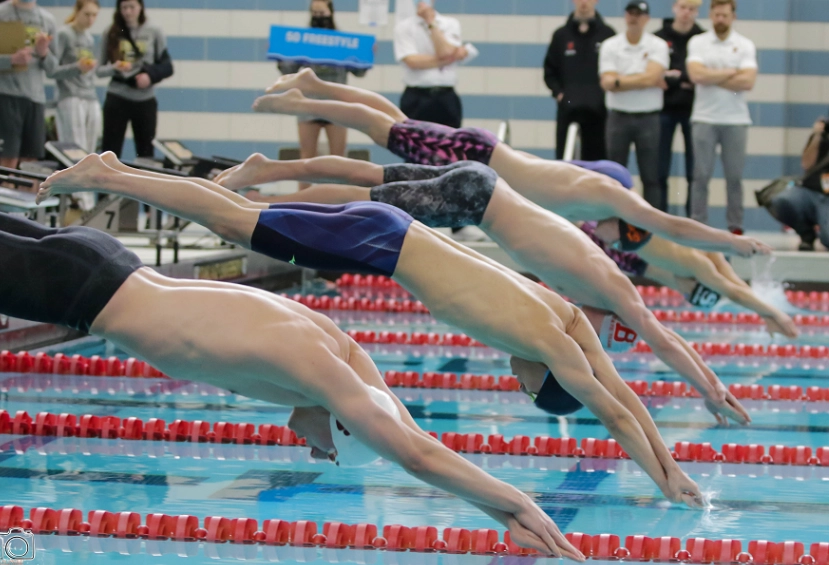
The "Ballerina" Back Dive
The arch is too extreme, causing the diver to land flat. Cause: Throwing the head and shoulders back too early. Fix: Initiate the rotation by lifting your knees upward toward your chest (in a straight position, this is a subtle lift), not by throwing your head. Spot a fixed point on the ceiling until your hips leave the board.
Your Dive Questions Answered
What's the hardest type of dive for most beginners?
Psychologically, it's the Backward Group (Group 2). Taking off with your back to the water requires pure trust in your technique and spatial awareness. Physically, the Reverse Group (Group 3) is often tougher to master because generating backward rotation from a forward-facing start disrupts natural instincts. The take-off has to be exceptionally precise.
Why does my dive always go to the left or right?
This is almost always a take-off issue. On the board, your feet aren't aligned symmetrically, or you're pushing off one foot harder than the other. On the platform, you might be leaning slightly during your approach. Film yourself from behind. You'll likely see a shoulder dip or a foot turned out. Practice simple jumps, aiming to land in the center of the pool every time before adding rotation.
How do divers know when to open up from a tuck or pike for entry?
It's a mix of muscle memory, air awareness (knowing where you are in space), and visual spotting. For a forward 1½ somersault, they might see the water appear, then count a split-second before opening. For multiple rotations, it's a precise internal timer developed through thousands of repetitions. A common drill is to do the dive on a trampoline with a spotter calling "open!" to build that timing.
Is a higher Degree of Difficulty (DD) always better?
Only if you can execute it well. A poorly performed high-DD dive (score of 4 x 3.5 = 14.0) will lose to a well-performed medium-DD dive (score of 7 x 2.5 = 17.5). Coaches build lists with a balance of high-risk/high-reward dives and consistent, high-scoring dives. Consistency often wins over one spectacular but erratic dive.
What's the most common mistake in a twisting dive?
Initiation. Divers often try to start the twist with their shoulders alone, which throws the entire dive off axis. The twist should start from the hips and a sharp head turn in the direction of the twist. Think of it as a coiled spring uncoiling, not just turning your upper body. A good early drill is a simple forward jump with a half-twist, focusing on a clean, straight entry after the twist.





Comments