Let's be honest. When you first think about scuba diving, the amount of gear can look intimidating. Tanks, hoses, vests, gadgets—it's a lot. But here's the thing: every single piece of that basic scuba diving equipment has a specific, life-supporting job. Understanding what each item does, and more importantly, how to choose the right one for you, is the difference between a stressful, leaky experience and gliding effortlessly into a whole new world. I've been guiding new divers for over a decade, and the most common mistake isn't a skills error; it's buying or renting gear based on looks or price alone without knowing why it matters.
What You'll Find in This Guide
The Life Support System: BCD and Regulator
This is the core of your scuba setup. Get this wrong, and nothing else feels right.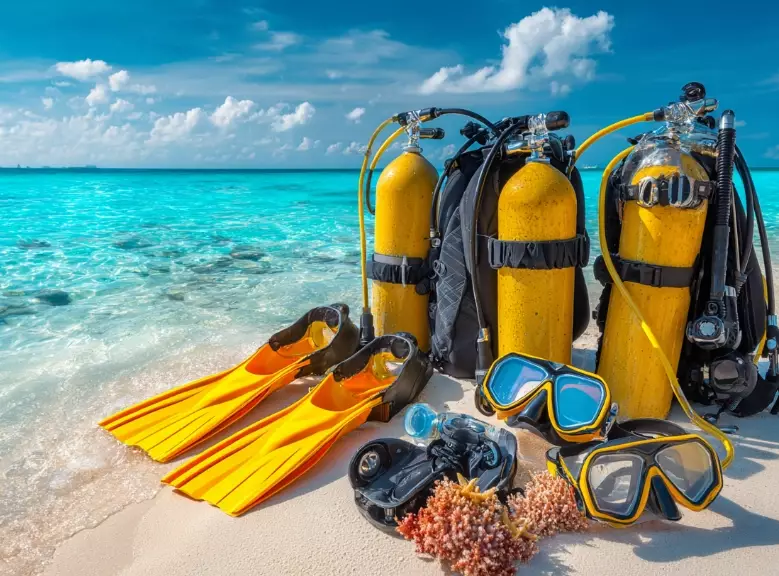
Buoyancy Control Device (BCD)
Think of your BCD as your underwater elevator and harness. It holds your tank, and by adding or releasing air from it, you control your depth. New divers often inflate and deflate too aggressively. The key is tiny bursts of air.
You'll mainly see jacket-style and back-inflation (wing) BCDs. Jacket styles wrap around you, offering more torso stability—great for beginners who want to feel secure. Back-inflation wings lift from behind, promoting a more horizontal, streamlined trim in the water, which is better for air consumption and finning technique. I started with a jacket and switched to a wing after 50 dives; the difference in comfort and control was night and day.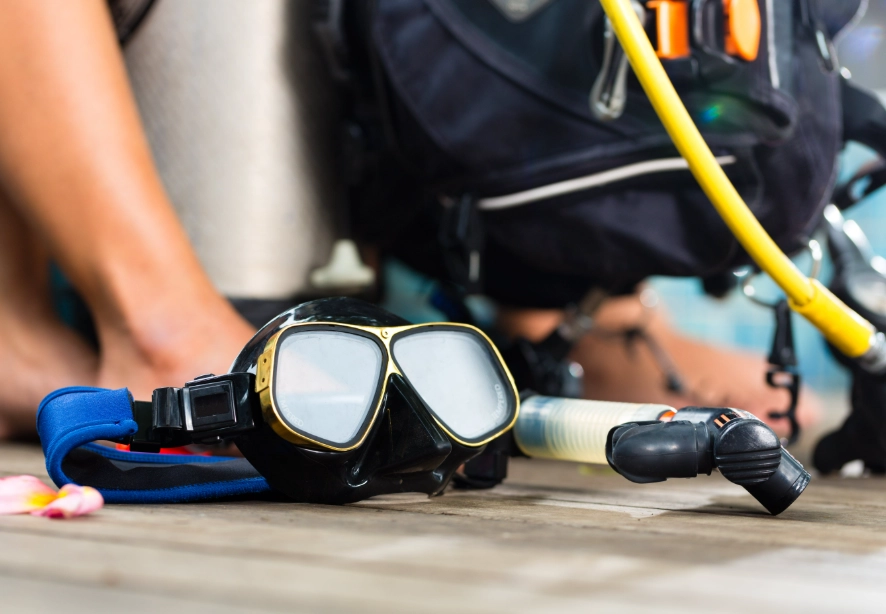
Regulator First and Second Stages
Your regulator is your lifeline. It reduces the high-pressure air from your tank to a breathable pressure. The first stage attaches to the tank valve. The second stage is the mouthpiece you breathe from.
Most beginner regulators are balanced, meaning they deliver air easily regardless of tank pressure or depth. The real choice is in the second stage. Some are designed for easy breathing with minimal effort. If you ever feel like you're "sucking" for air, it's often a regulator issue. Brands like Apeks, Scubapro, and Atomic Aquatics are benchmarks for reliability, but even their entry-level models are excellent. Rent a few different ones if you can to feel the difference.
Your regulator set also includes an alternate air source (octopus) for your buddy and a submersible pressure gauge (SPG) to check your air. Don't cheap out here. Servicing is critical—follow the manufacturer's schedule (usually annually) with a certified technician.
Staying Warm: Exposure Protection Essentials
You lose heat 25 times faster in water. Being cold isn't just miserable; it's dangerous, speeding up air consumption and increasing fatigue.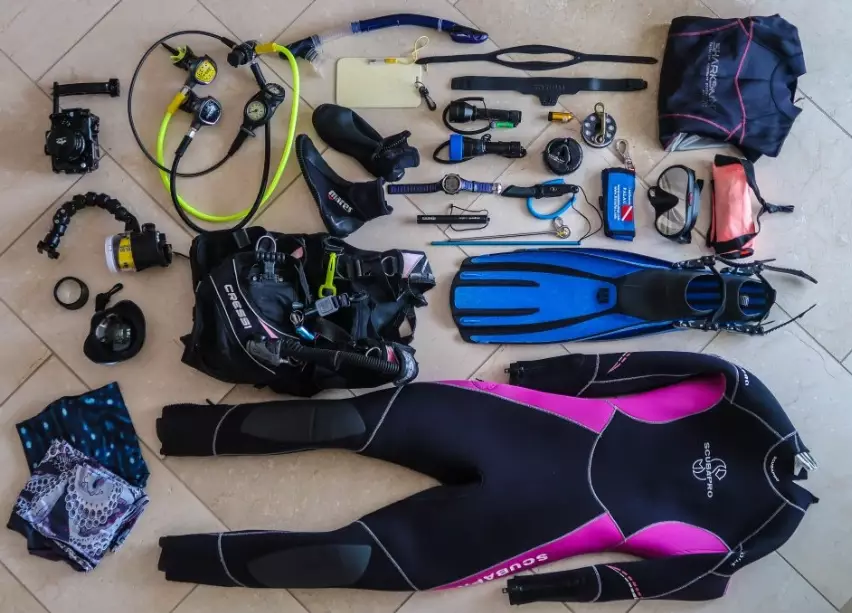
Wetsuits and Drysuits
For most tropical diving (77-84°F / 25-29°C), a 3mm to 5mm neoprene wetsuit is perfect. It traps a thin layer of water that your body heats up. Fit is everything. It should be snug like a second skin without restricting breathing or circulation. Too loose, and water flushes in and out, making you cold. A common mistake is buying a suit that's too big, thinking it will be more comfortable. It won't be—once you're in the water.
For colder water, you move into 7mm wetsuits, semi-dry suits (with tighter seals), or full drysuits. Drysuits keep you completely dry by sealing at the neck and wrists; you wear insulating clothes underneath. They're a bigger investment and require additional training, but they open up year-round diving in temperate regions.
Boots, Hoods, and Gloves
These accessories make a huge difference. Booties protect your feet from rocks and sand, and more importantly, allow you to use open-heel fins with adjustable straps. A hood conserves a massive amount of body heat, even in warm water. Gloves protect your hands but are banned in many marine parks to prevent coral damage—check local rules. Neoprene socks can add warmth inside your boots.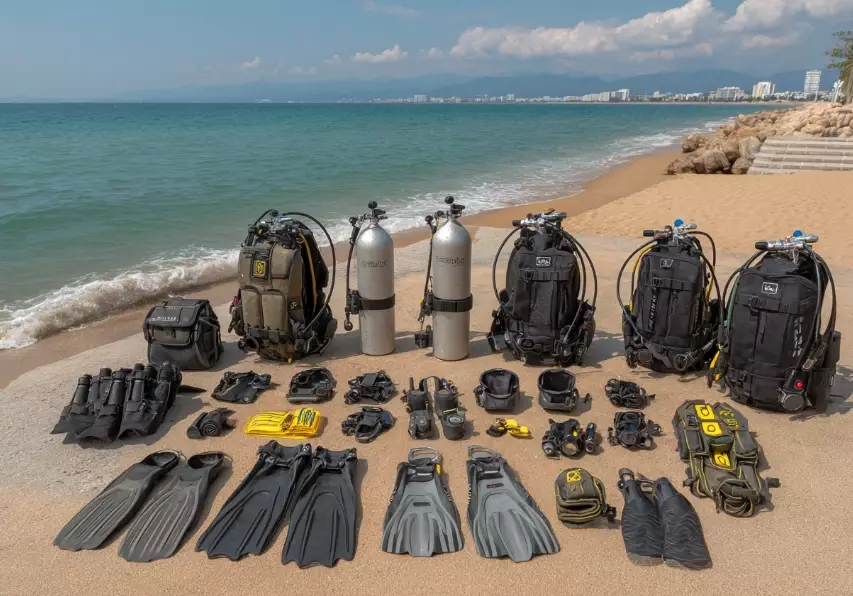
Your Personal Interface: Mask, Fins, Snorkel
This is the gear you'll develop the strongest personal preference for. A leaky mask or fins that cramp your feet can ruin a dive.
Choosing and Fitting a Dive Mask
The mask creates an air space in front of your eyes so you can see. To test the fit, place the mask on your face without the strap, inhale gently through your nose, and let go. It should stay suctioned to your face for a few seconds. No hair should be under the skirt. Try on dozens. Low volume masks (with less air space inside) are easier to clear and offer a wider field of view. I prefer a black skirt over clear silicone—it reduces glare and helps you focus on what's outside the mask.
Prescription lens inserts are a game-changer if you need glasses. Don't try to dive without seeing clearly.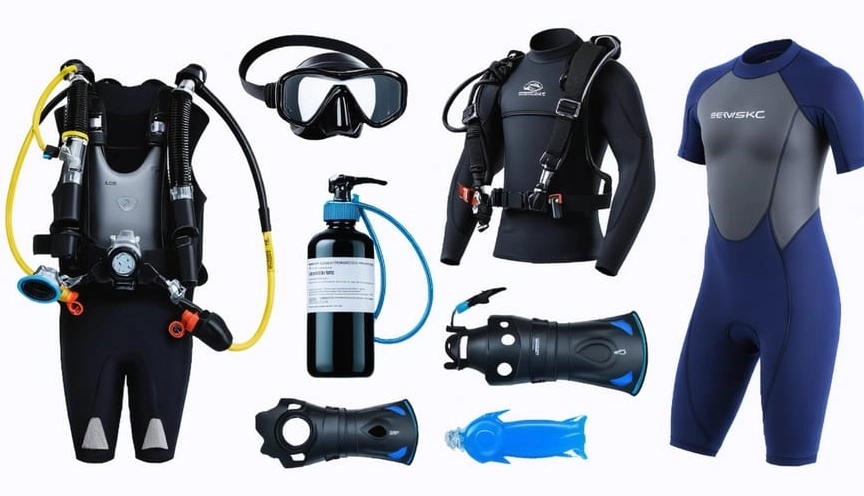
Selecting the Right Fins
Fins provide propulsion. You have two main types: open-heel (with an adjustable strap, worn with booties) and full-foot (like a slipper, for warm water with no boots). Open-heel fins are more versatile and powerful. The blade style is key. Paddle fins are simple and effective. Split fins are easier on the knees and good for a flutter kick. Channel or vented fins are stiff and powerful, great for strong currents but can tire a new diver. Go for a medium stiffness to start.
The Humble Snorkel
It seems basic, but a snorkel saves tank air on the surface. A simple J-shaped snorkel is often better than a complex "dry" snorkel with a purge valve and splash guard, which can fail or cause drag. Just make sure the mouthpiece is comfortable.
Information and Control: Instruments and Weights
Dive Computer: Your Underwater Brain
This non-negotiable gadget tracks your depth, time, and calculates your no-decompression limits to keep you safe. It replaces old-fashioned dive tables. Wrist-mounted computers are most common. Air-integrated models connect to your regulator and show tank pressure on the screen—incredibly convenient. A basic, reliable computer from Suunto, Cressi, or Shearwater is one of your best first purchases. Relying on a guide's computer means you don't know your own data.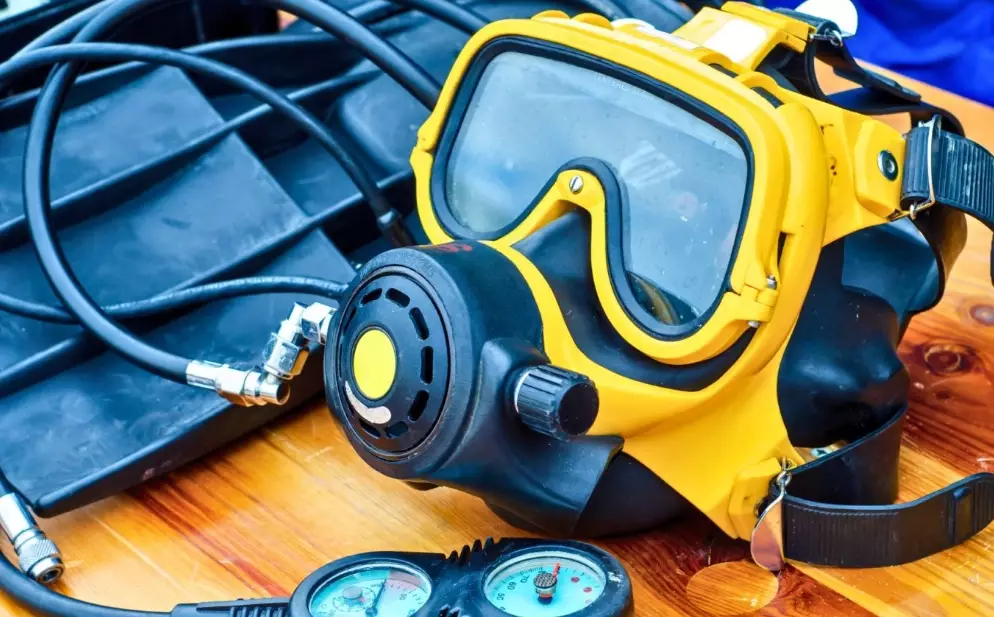
Weight System
You need weight to offset the natural buoyancy of your body and gear. Integrated weight systems, where pockets slide into your BCD, are clean and secure. A weight belt is the traditional, lower-cost option. The correct amount is just enough to let you hover at your safety stop with an almost empty tank and nearly empty BCD. Over-weighting is a rampant beginner error, leading to excessive BCD inflation, poor trim, and faster air consumption.
Quick-Reference Scuba Gear Checklist
| Equipment | Core Function | Key Selection Points & Tips | Approx. Price Range (USD) |
|---|---|---|---|
| BCD (Buoyancy Control Device) | Buoyancy control, tank harness | Jacket (beginner-friendly) vs. Back-inflation (streamlined). Get adequate lift. Check hose routing. | $400 - $1,000+ |
| Regulator Set | Delivers breathable air from tank | Balanced 1st stage. Comfortable 2nd stage mouthpiece. Must include SPG & alternate air source. | $500 - $1,500+ |
| Exposure Suit (Wetsuit) | Thermal protection | Snug fit is critical. 3mm for tropics, 5mm/7mm for cooler water. Neoprene quality varies. | $150 - $600 |
| Dive Computer | Tracks depth, time, safety limits | Wrist-mounted. Nitrox-capable. Air-integration is a luxury. Reliability over bells/whistles. | $250 - $1,200+ |
| Mask, Fins, Snorkel | Vision, propulsion, surface breathing | Mask: Fit test is essential. Fins: Open-heel with boots is standard. Medium flex. Snorkel: Simple is best. | $200 - $500 (for set) |
| Weight System | Counteracts buoyancy | Integrated pockets (convenient) or belt (traditional). Use only the weight you absolutely need. | $50 - $200 |
Prices are for new, mid-range gear. The used market and package deals can lower costs significantly.
Answers to Real Diver Questions
Your gear is your partner underwater. Taking the time to understand each piece, prioritizing fit and function over flash, and maintaining it well means you can focus on what matters: the dive itself. Start with the essentials that touch your body, build your kit slowly, and never stop asking questions. The ocean's waiting.

Comments